Activewear is not cut-and-sew with a different fabric. It is a different manufacturing discipline, run on different machines, by factories that mostly do not make woven shirts. Sending an activewear brief to a general garment factory is the most common and most expensive mistake in this category. For production with our group, see our page on activewear manufacturing in China.
Polyester now accounts for 59% of all fibre produced worldwide, and global fibre production reached a record 132 million tonnes in 2024 (Textile Exchange Materials Market Report 2025). Activewear sits at the centre of that, and China supplies a large share of both the fabric and the finished garment.
This guide covers what makes the category technically different, which fabrics factories actually run, what minimums to expect, the machines a real activewear factory has on the floor, and how to check a performance claim before you believe it.
Note: China Clothing Manufacturer places clothing production with documented factories in China that our team has visited in person, for brands from 100 units. Ranges in this guide come from published industry sources and are given as market ranges, not as quotes from a specific factory. We confirm exact MOQ and price with the factory when you send a brief.
Key takeaways
- Polyester is 59% of world fibre production, and 88% of it is fossil-based (Textile Exchange, 2025).
- Recycled fibres are only 7.6% of global production. Recycled polyester alone is 6.9%, and 98% of it comes from plastic bottles, not old clothes.
- Activewear needs flatlock, coverstitch and often bonding equipment. A factory without them is quoting work it cannot do well.
- The fabric mill, not the sewing factory, usually sets your real minimum.
- Ask for certificate numbers, never logos. bluesign, OEKO-TEX and GRS all publish verifiable records.
- Fujian, and Jinjiang in particular, is China's sportswear cluster. Guangdong handles most small-brand work.
- Never brief "sportswear" without saying which construction you mean. The word covers four different factories.
What Makes Activewear Different From Ordinary Cut-and-Sew?
Three things separate activewear production from a woven shirt line: the fabric stretches, the seams carry load, and the finish has to survive repeated washing while still performing. Each one changes which factory can do the work, and none of them is a matter of skill that a good general factory can simply apply. They are equipment and process questions, which is why the right answer is a different supplier rather than a better briefing.
Stretch fabric behaves differently under the cutter. Knit fabric with elastane relaxes and recovers, so it has to be relaxed before cutting and cut in shorter plies. A factory used to woven cotton will cut it like woven cotton, and the garments will come out inconsistent.
Seams are structural. A leggings side seam takes tension every time the wearer moves. Flatlock and coverstitch exist because a normal overlock seam is bulky, chafes, and fails under repeated stretch.
Performance claims have to survive testing. Moisture-wicking, four-way stretch, UPF and antimicrobial finishes are all measurable, and a buyer who cares will test them. A factory that cannot tell you which finish was applied and by whom is a factory that does not know.
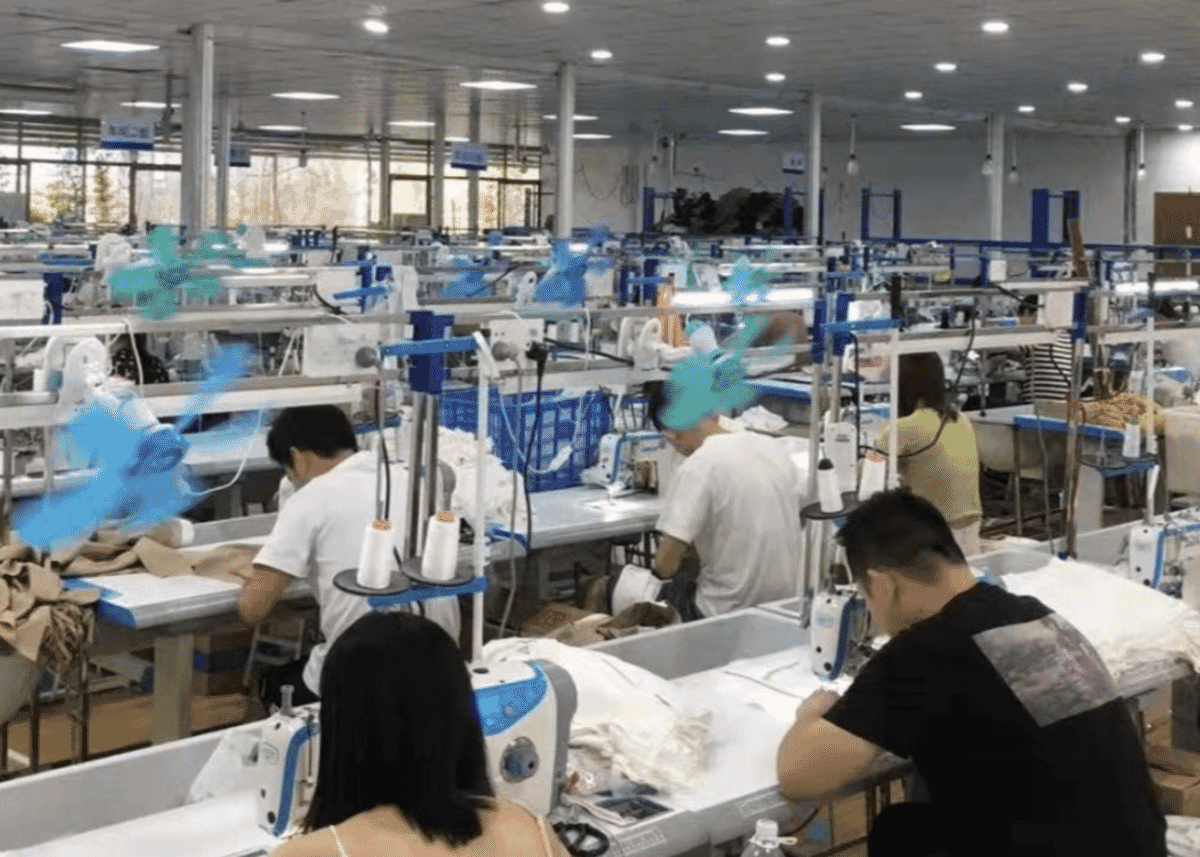
Citation Capsule: Activewear manufacturing differs from woven cut-and-sew in three measurable ways: stretch knit fabric must be relaxed before cutting and cut in shorter plies, seams are structural and require flatlock or coverstitch rather than overlock, and performance finishes such as moisture management and UPF are testable claims that must be traceable to the mill that applied them.
Not sure which construction your product needs? Send a reference garment and we will tell you which machines it was made on, at no cost. Send it here.
The closest neighbouring category is swimwear, which shares the fabric science and adds chlorine exposure; our guide to swimwear manufacturers in China covers where the two diverge.
What Fabrics Do Chinese Activewear Factories Actually Run?
Polyester dominates, and the numbers are not close. Polyester is 59% of total global fibre output, of which 88% is fossil-based, and global fibre production hit a record 132 million tonnes in 2024, up from 125 million in 2023 (Textile Exchange, 2025).
The four constructions you will actually be quoted
Poly-spandex interlock and jersey for leggings, tops and shorts. The workhorse. Weight and elastane percentage are the two numbers that matter.
Nylon-spandex for a softer hand and better abrasion resistance, at a higher price. Common in premium leggings and swim.
Brushed-back or French terry poly blends for training layers and hoodies.
Seamless knit, produced on circular knitting machines rather than cut and sewn. Completely different equipment, completely different factory, and usually a much higher minimum.
What Does "Recycled Polyester" Actually Mean in 2026?
Recycled polyester production rose from 8.9 million tonnes in 2023 to 9.3 million tonnes in 2024, but it still represents only about 12% of total polyester output, and 98% of it is made from plastic bottles rather than from recycled textiles (Textile Exchange, 2025).
That last figure is the one brands misunderstand. Bottle-to-fibre recycling takes PET out of a closed bottle loop and puts it into a garment that will probably not be recycled again. It is a genuine improvement on virgin polyester and it is not circularity, and a brand claiming the latter on the strength of the former is exposed.
Citation Capsule: Global recycled polyester production rose from 8.9 million tonnes in 2023 to 9.3 million tonnes in 2024, around 12% of all polyester output, and 98% of it is produced from plastic bottles rather than recycled textiles. Bottle-to-fibre recycling reduces virgin polyester demand but does not constitute textile circularity.
Try it free: pressure-test your landed cost with the China production cost calculator. 60 seconds, no email required.
What MOQ Should You Expect for Activewear in China?
The sewing factory rarely sets your minimum. The mill does. Performance fabric is knitted and dyed to order, and the mill holds its own minimum per colour, which the garment factory passes straight through to you. This is why negotiating the piece count with a sewing line rarely moves an activewear minimum, and why the colour count in your range matters more than the total units.
That has a practical consequence worth planning around: reducing your unit count rarely reduces your fabric commitment. Cutting an order from 500 to 200 pieces does not change the dye lot the mill will run. It changes how much fabric you pay for and do not use. Our guide to fabric suppliers in China explains why the dye lot sets the minimum.
Two levers actually work. Using a stock fabric the mill already holds removes the dye-lot problem entirely, at the cost of choosing from what exists. And consolidating colourways, running three colours instead of six, halves the number of minimums you are buying against.
Skip the search: the China factory directory ($49) lists documented factories by category, city and capability, with the verification status of each. One-time payment, instant download.
Where minimums originate across every category, and the structural levers that reduce them, is set out in producing in China at small quantities.
What Does Activewear Cost to Produce in China?
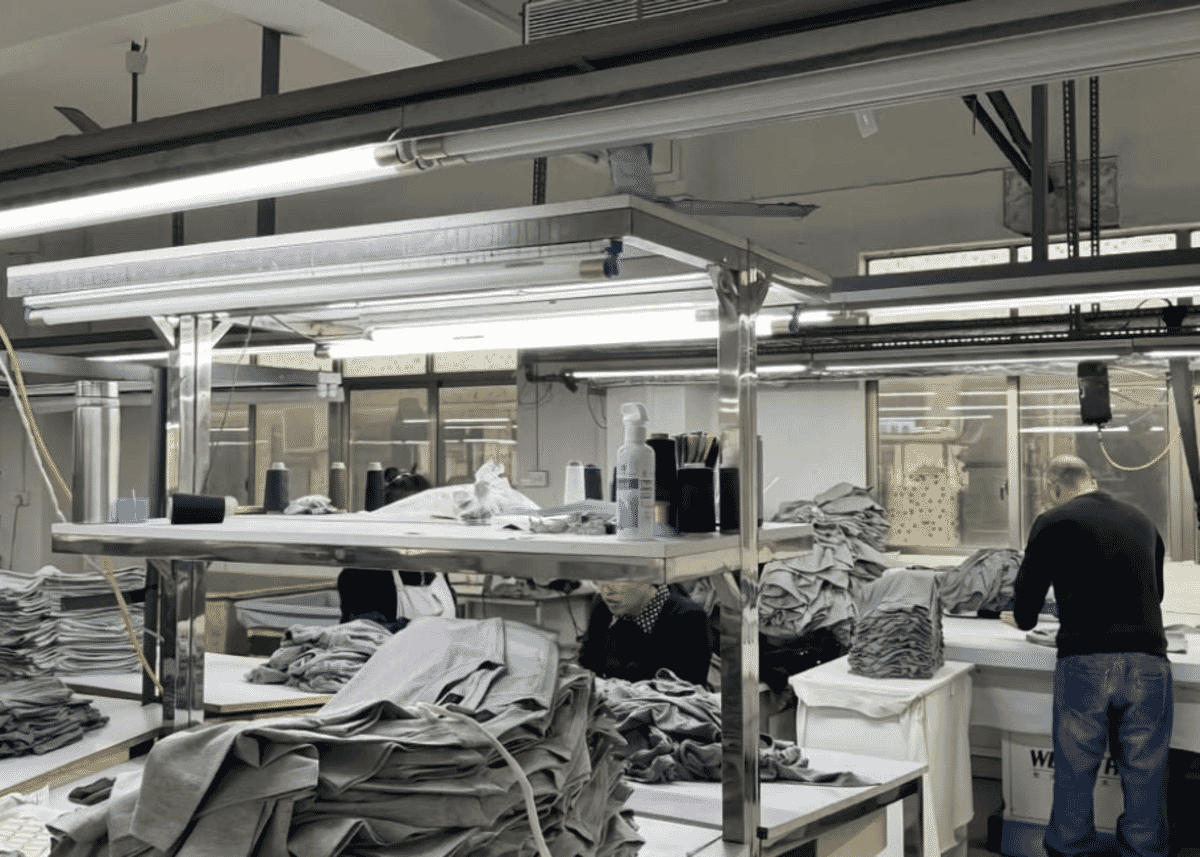
Activewear costs more to make than a woven tee and less than most brands expect, and the split between the components is different from ordinary cut-and-sew. Fabric carries more of the number, and sampling carries more risk, because a performance fabric that fails a wash test after bulk has been knitted is a loss with no easy recovery.
| Component | What drives it | Where it bites |
|---|---|---|
| Fabric | Fibre blend, weight, elastane percentage, finish | The largest single line, and the one set by the mill rather than the factory |
| CMT | Panel count, seam type, machine time | A six-panel legging costs more to sew than a two-panel one, every time |
| Trims | Drawcords, elastic, silicone grippers, labels | Small individually, and they carry their own minimums |
| Finishing | Moisture management, antimicrobial, UPF | Applied at the mill, priced per metre, often forgotten in the brief |
| Sampling | Pattern, proto, fit rounds, PP sample | The real cost is calendar, not money |
| Duty | HTS classification and Section 301 layers | Can exceed the CMT line entirely on some codes |
Panel count is the lever you control
Every seam is machine time, and machine time is most of CMT. A legging with six panels and a contrast waistband has roughly twice the sewing operations of a simple two-panel version. If the unit price comes back higher than you budgeted, the pattern is usually where to look first, before the factory.
Name the finish in the brief, not after the quote
Moisture management, antimicrobial and UPF finishes are applied at the mill and priced into the fabric. A quote given before you specified them is not a quote for your product, and the revised number arriving later is one of the most common reasons an activewear project stalls at sampling.
Citation Capsule: In activewear production the fabric line is usually larger than the sewing line, and the mill rather than the garment factory sets both the price and the minimum. Panel count drives cut-make-trim cost because each seam is machine time, and performance finishes such as moisture management or UPF are applied at the mill and must be specified in the brief before a quote means anything.
For a full breakdown of how a garment price is built, and how to sanity-check a quotation against it, see what it costs to manufacture clothing in China.
What Equipment Does a Real Activewear Factory Have?
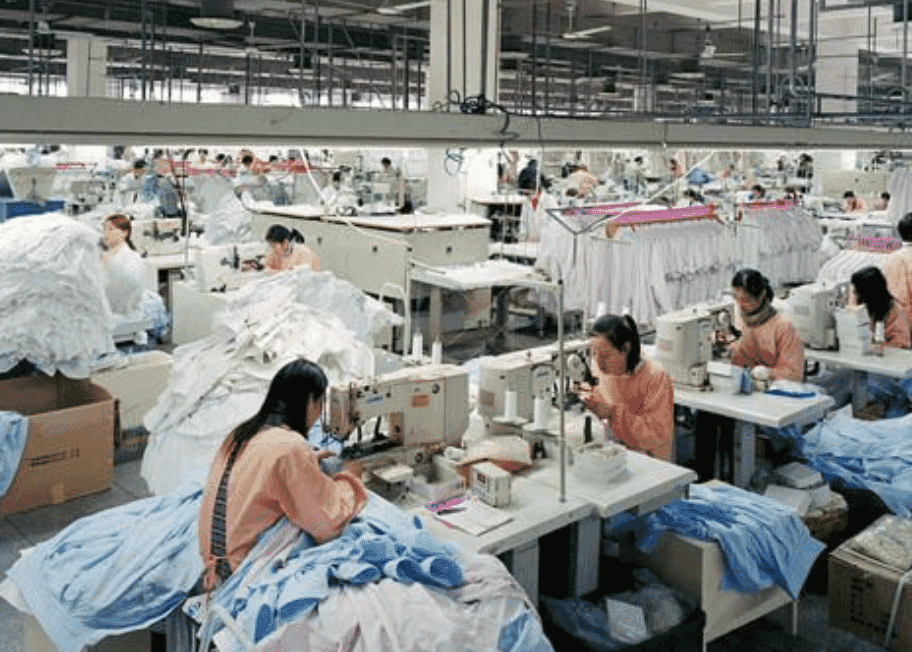
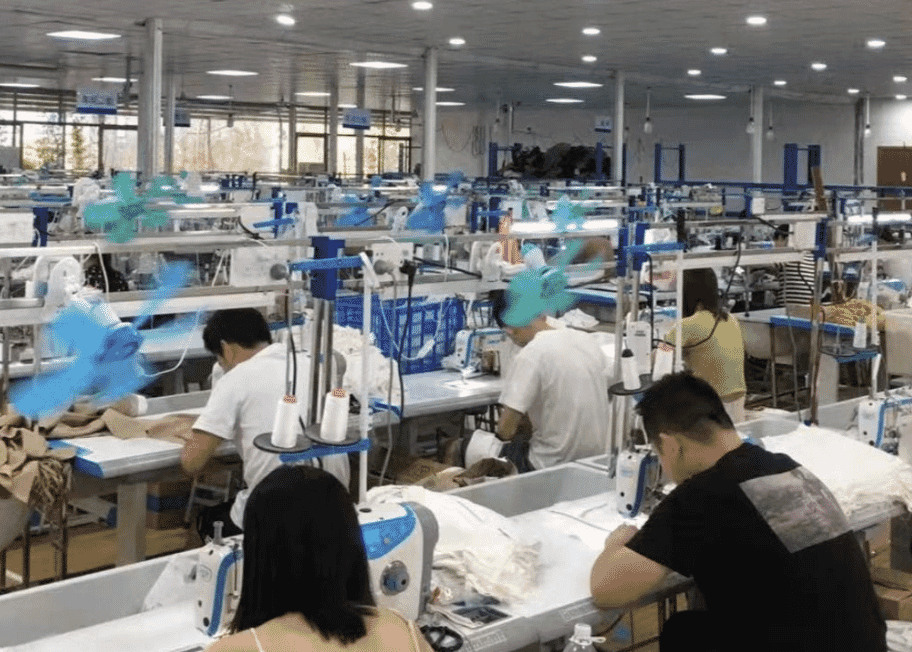
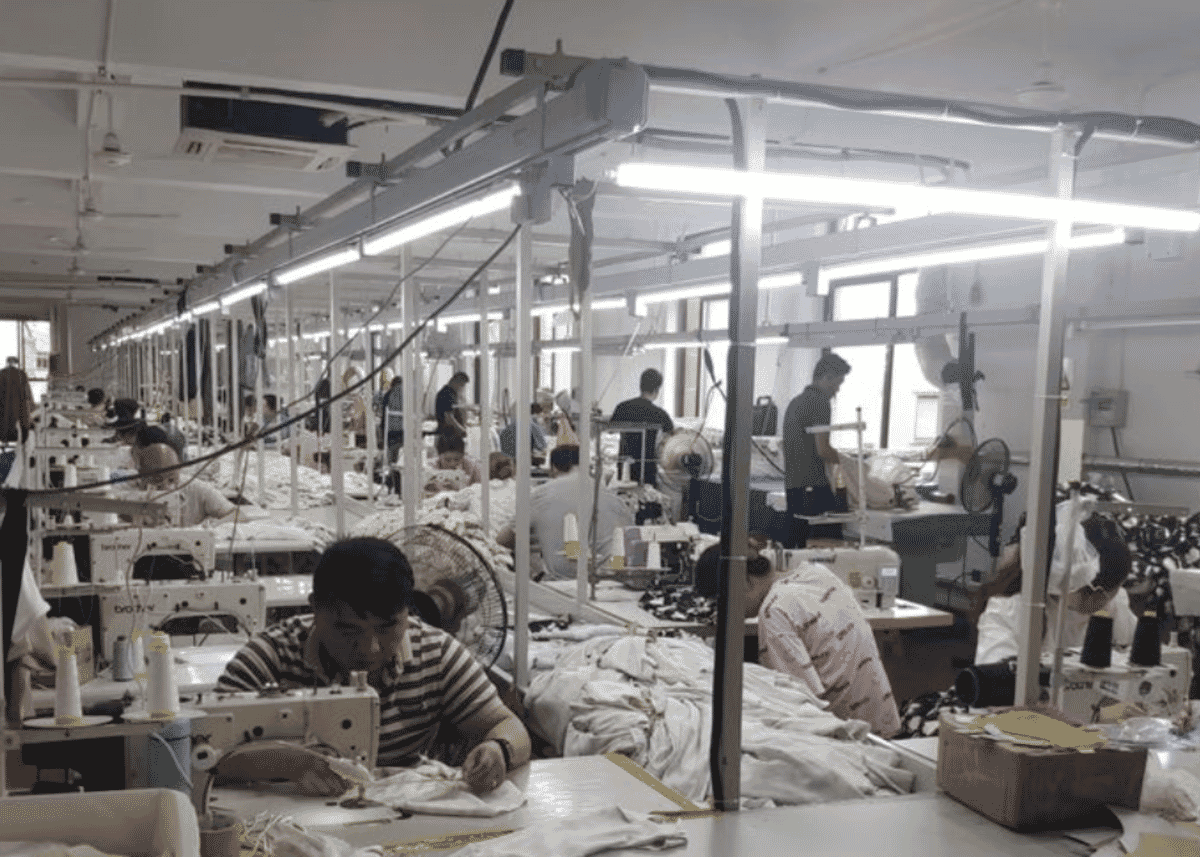
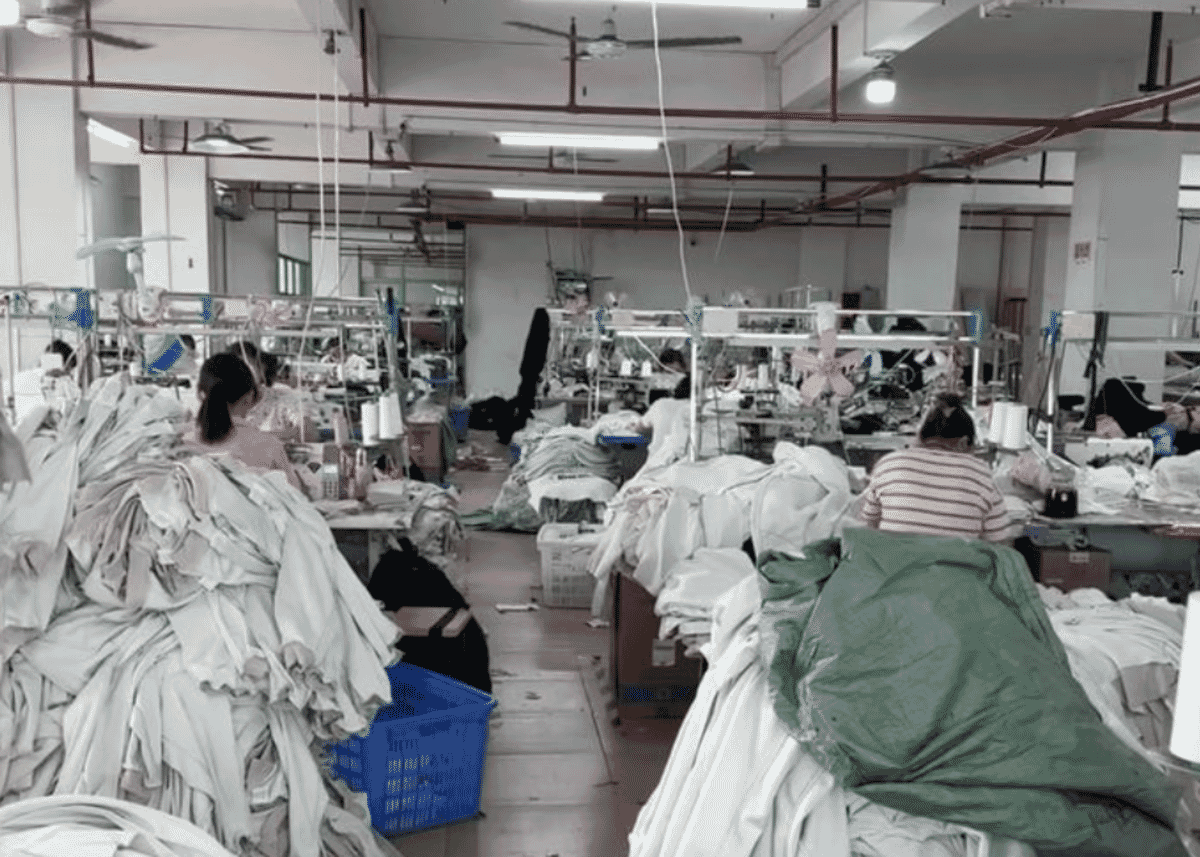
This is the fastest way to tell a genuine activewear factory from a general garment factory that wants the order. Ask what is on the floor, by name. A factory that runs activewear answers immediately and specifically, because the machines are its differentiator. One that intends to subcontract the work hesitates, generalises, or redirects the question to capacity.
| Machine | What it does | Needed for |
|---|---|---|
| Flatlock | Joins two edges flat, no seam bulk | Leggings, base layers, anything skin-contact |
| Coverstitch | Stretchable hem and topstitch | Hems, waistbands, necklines on knit |
| Overlock with differential feed | Controls stretch while sewing | All knit construction |
| Bartack | Reinforces stress points | Pocket corners, drawcord exits |
| Bonding or taping | Seamless joins with adhesive film | Premium and seam-free constructions |
| Circular knitting | Knits the garment tube directly | Seamless activewear only |
Ranges come from published industry sources. We confirm exact MOQ and price with the factory when you send a brief.
The question that settles it
Ask how many flatlock machines they run and what brand. A factory that does this work daily answers immediately and specifically. A factory that subcontracts it answers vaguely, or answers with a photograph of somebody else's floor.
What else a factory floor should contain, and how to read one on a visit or a video call, is covered in our guide to what is actually inside a garment factory.
How Long Does Activewear Sampling Take?
Longer than woven, and for a reason worth understanding before you set a launch date. Stretch garments fit differently on different bodies, so the fit rounds that a woven shirt resolves in one pass often take two or three here.
The sequence is pattern and first proto, then fit rounds on a real fit model, then a pre-production sample approved before bulk cutting. Each round is a shipment in both directions. If you approve fit from photographs rather than on a body, you will approve something that does not fit. You can see finished runs on our production examples page.
Why stretch multiplies the fit rounds
A woven garment fits or it does not. A stretch garment fits differently depending on how much recovery the fabric has, how it was cut, and how tightly the seams were sewn. Change the fabric after approving the fit and you have changed the fit, which is why the fabric has to be locked before the fit round rather than after.
Lock the fabric before the pattern
This is the single scheduling decision that saves the most time. Approve the fabric, including its weight and elastane percentage, before the pattern is cut. A pattern developed on one fabric and produced in another produces a garment nobody signed off.
The other calendar item is Chinese New Year. Factories close for roughly two to four weeks around it, output falls before the break as workers travel, and it ramps unevenly afterwards. A delivery due in February is really due in January or March.
Citation Capsule: Activewear sampling takes longer than woven production because stretch fabric fit depends on recovery, cutting and seam tension together. Locking the fabric, including weight and elastane percentage, before the pattern is cut prevents the most common failure: a pattern developed on one fabric and produced in another, which yields a garment nobody approved.
Working to a launch date? Send the date first and the product second. We will tell you whether it is achievable before anyone quotes a price. Send the brief.
The full sequence from approved sample to loaded container is in our guide to the garment production process in China.
How Do You Verify an Activewear Performance Claim?
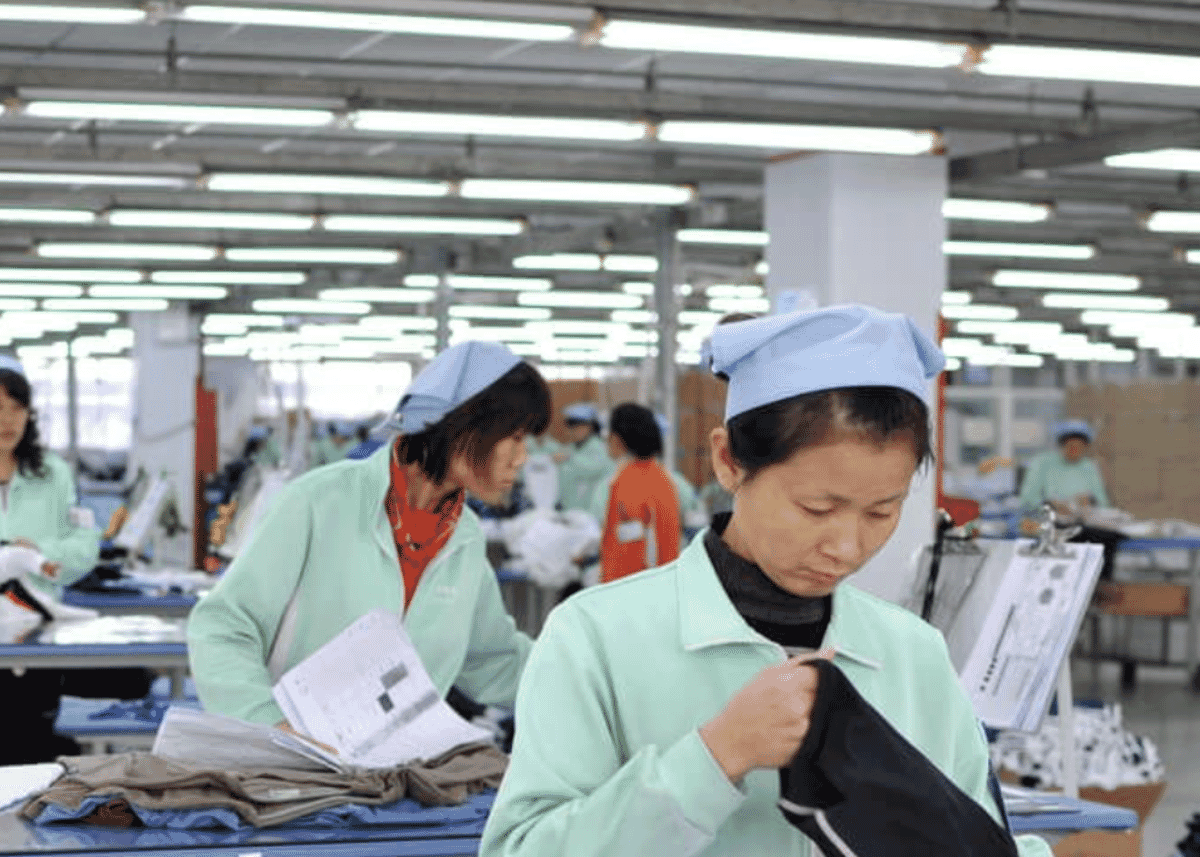
Performance and sustainability claims in this category are checkable, and most brands never check them. All three of the relevant systems publish verifiable records, searchable by certificate number rather than by company name. That distinction matters: a logo on a supplier deck proves nothing, and the number takes two minutes to check against the issuing body.
- bluesign certifies chemical inputs and the mill's process, not the garment. If a factory claims bluesign, ask which mill and which fabric, because the certification sits upstream of them.
- OEKO-TEX runs a public label check. Enter the certificate number and it either exists or it does not.
- Global Recycled Standard requires an unbroken chain of custody. A GRS claim without transaction certificates covering your specific order is a claim about someone else's fabric.
The pattern across all three is the same. Certification attaches to a specific mill, a specific process and a specific batch. It does not attach to a company in general, and a logo on a website is not evidence of anything.
Citation Capsule: Activewear certifications attach to specific mills, processes and batches rather than to companies. bluesign certifies chemical inputs and mill processes upstream of the garment factory, OEKO-TEX publishes a searchable label check by certificate number, and the Global Recycled Standard requires transaction certificates covering the specific order rather than a general company claim.
Verification continues after the order is placed: pre-shipment inspection, AQL and defect lists covers the checks during production.
Where Are China's Activewear Factories?
Fujian province, and Jinjiang in particular, is China's sportswear and footwear cluster, while Guangdong handles most small and mid-sized apparel work. Zhejiang supplies much of the synthetic fabric that both of them cut, which means a typical activewear order already spans two provinces before anything is sewn. Knowing which province holds which part of your supply chain decides who you call when a problem appears.
The concentration is easy to underrate. Chendai town in Jinjiang alone produces over a billion pairs of sneakers a year across more than 7,000 shoe manufacturers and related firms, which is one pair in five worldwide (China Daily, 2025). Supporting trades cluster with the factories, which is why a technical trim is findable there and awkward everywhere else.
For a brand starting out, Guangdong is usually the right answer: smaller minimums, faster sampling, and fabric markets close enough to visit in the same trip. Fujian becomes interesting at volume, and when the product moves toward technical footwear-adjacent categories. Gym and sports bags follow the same pattern, as our guide to bag suppliers in China explains.
Want a shortlist? Send the garment type, the fabric, the colour count and your target quantity. We come back with factories that actually run that construction, usually within 24 hours. Send the brief.
How the manufacturing regions differ, and which to start in by product category, is in our guide to clothing manufacturing cities in China.
When Should You Not Make Activewear in China?
Three cases, and a supplier who never names them is selling rather than advising. In each of them the obstacle is structural rather than a question of finding a better factory, which means more searching will not resolve it and recognising the situation early saves a season.
When your volumes are genuinely tiny and the fabric is custom. Below the mill's dye-lot minimum, you are paying for fabric you will not use. Either switch to a stock fabric or produce somewhere the mill minimums are lower.
When speed matters more than cost. Sea freight plus customs into Europe or the US is a long clock, and activewear ranges that turn quickly on social demand often cannot wait for it.
When the duty position kills it. Run your HTS classification and the Section 301 layers before you negotiate a unit price. Some codes reach a point where Vietnam or Cambodia wins on landed cost even at a higher ex-works number. Confirm against the live USTR and CBP schedules.
How we check an activewear factory
- Machine list confirmed by type and count: flatlock, coverstitch, differential-feed overlock, bonding.
- Mill named for the performance fabric, and its minimum per colour confirmed separately from the garment minimum.
- Certificate numbers verified in the issuing database, with the mill identified for any bluesign or GRS claim.
- Elastane percentage and fabric recovery checked on the sample, not taken from the spec sheet.
- Seam construction inspected on a finished piece for chafe points at the side seam and gusset.
A factory that cannot name the mill behind its performance fabric is quoting somebody else's capability.
Before you brief an activewear factory
- Name the construction: cut-and-sew knit, bonded, or seamless. They are different factories.
- Specify the fabric by fibre percentages, weight and elastane content, not by description.
- Lock the fabric before the pattern is cut, so the fit is developed on what you will produce.
- Ask how many flatlock machines are on the floor, and what brand.
- Get the mill named for any bluesign, OEKO-TEX or GRS claim, plus the certificate number.
- Ask for the minimum per colourway, and check whether a stock fabric removes the dye lot.
- Never write "sportswear" in a title or brief when you mean activewear.
Specify these seven and the quotes you receive will describe the same garment. Leave them open and none of them will.
Conclusion
Activewear is the category where sending a brief to the wrong factory costs the most, because the failure does not show up in the quote. It shows up in the fit sample, three weeks late, on a seam that chafes.
The three checks that matter are all answerable before you commit. Which machines are on the floor. Which mill supplies the fabric and what its minimum is. And which certificate number backs the performance claim.
Polyester at 59% of world fibre production is not going anywhere, and recycled polyester at 6.9% is growing but is still mostly bottles. Know which of those two you are buying, and say so accurately in your own marketing.
We place clothing production with documented factories in China that our team has visited in person, for brands from 100 units. Tell us the construction, the fabric and the colour count, and we place the brief with a factory that actually runs it, normally within 24 hours. You work directly with the factory. Flat fees, no factory commissions.
Get in contact Download the directory ($49)Need a tech pack? Get a factory-ready single-style tech pack for $79. See what's included.
Frequently Asked Questions
What is the minimum order for activewear manufacturers in China?
The fabric mill usually sets the minimum, not the sewing factory. Performance knit is dyed to order and the mill holds its own minimum per colour, which the factory passes through. Using a stock fabric or consolidating colourways reduces it more effectively than cutting unit count. We work from 100 units.
What fabric is most activewear made from?
Polyester dominates, at 59% of total global fibre production, of which 88% is fossil-based (Textile Exchange, 2025). Most Chinese activewear runs poly-spandex interlock or jersey, with nylon-spandex used for a softer hand at higher cost, and seamless knit produced on entirely different machinery.
Is recycled polyester actually recycled clothing?
Almost never. 98% of recycled polyester is made from plastic bottles rather than recycled textiles, and recycled polyester is about 12% of all polyester produced (Textile Exchange, 2025). It reduces virgin polyester demand, but it is not textile-to-textile circularity and should not be described as such.
What machines does an activewear factory need?
Flatlock and coverstitch are the minimum, plus overlock with differential feed to control stretch while sewing, and bartack for stress points. Premium and seam-free constructions also need bonding or taping equipment. Seamless activewear requires circular knitting machines and a completely different factory.
How do I verify a bluesign or GRS claim from a Chinese factory?
Ask for the certificate number and the mill name, not the logo. bluesign certifies chemical inputs and mill processes upstream of your factory. OEKO-TEX publishes a searchable label check. GRS requires transaction certificates covering your specific order, not a general company claim.
Editorial note: all company names, certification marks and trademarks referenced here are the property of their respective owners. MOQ, cost and lead-time figures are market ranges compiled from the published sources listed below, not quotes from any individual factory, and they vary by product, fabric and season. Tariff figures were correct at the date of publication and the 2026 position is still moving. Always verify your own HTS classification and confirm terms directly with the factory before committing.
Sources
- China Daily / Invest in China (2025): Chendai, Jinjiang footwear cluster scale and firm count.
- Textile Exchange, Materials Market Report 2025: global fibre production, polyester share, recycled fibre volumes and feedstock.
- Grand View Research: global activewear market size and regional share.
- China National Garment Association, Industry Overview: provincial concentration of garment output and the national cluster map.
- bluesign: chemical input and mill process certification.
- OEKO-TEX Label Check: public verification of certificate numbers.
- Textile Exchange, Global Recycled Standard: chain of custody requirements for recycled content claims.
- Sheng Lu, FASH455, University of Delaware (2025): WTO-based analysis of global textile and apparel trade.
- Office of the United States Trade Representative: Section 301 tariff actions and exclusion process.
- US Customs and Border Protection: trade remedies and duty administration.
Related Reading
No commissions. No markups. The factory bills you directly.