By David Stan, Founder at China Clothing Manufacturer. Published October 2026.
Most bag suppliers in China sit in four places, and which one you pick decides price, quality and minimums more than any single factory does. Baigou in Hebei makes value backpacks and luggage at enormous volume. Shiling in Guangzhou is the leather and PU handbag town. Quanzhou and Jinjiang in Fujian lean towards sports and travel bags. Yiwu sells stock bags and small custom runs.
The scale is real. A China Daily report put Baigou's annual bag output at 800 million units, and Shiling produces about 700 million products a year (China Daily, 2025). So supply isn't the problem. Picking the right cluster, writing a tight spec and checking the details that fail on bags is.
This guide is for clothing brands adding totes, canvas bags, nylon backpacks or leather and PU handbags.
Note: China Clothing Manufacturer is a group of documented clothing factories in China, producing for brands from 100 units. Ranges in this guide come from published industry sources and are given as market ranges, not as quotes from a specific factory. We confirm exact MOQ and price with the factory when you send a brief.
Key takeaways
- Baigou (Hebei) is the volume base for backpacks and luggage, with annual output reported at 800 million units.
- Shiling (Guangzhou) is the leather goods town; Fujian leans to sports and travel bags; Yiwu sells stock bags.
- Published guides put custom bag MOQs at about 300 to 500 units per design.
- US duty on bags is high for apparel-adjacent goods: 17.6% general rate for man-made fibre handbags and backpacks, before any Section 301 layer.
- Chemical rules bite: chromium VI in leather, PAHs in plastic trims, PFAS in California, lead in children's bags.
Where Are Bags Made in China?
Four clusters cover most of what a clothing brand will buy. Each grew up around a different product, so a supplier's address tells you a lot before you've seen a sample.
Baigou, Hebei: volume backpacks and luggage
Baigou is a town in Baoding, south of Beijing. Its bag trade has grown over more than four decades into a full industrial chain that exports to more than 200 countries and regions (Great Wall International Communication Center, 2026). Annual output was reported at 800 million bags in 2018.
It's strongest on price, with a dense web of workshops, fabric sellers and hardware traders. Quality varies widely between workshops, so the spec and the inspection matter most here.
Shiling, Guangzhou: leather and PU handbags
Shiling sits in Guangzhou's Huadu district and calls itself a leather capital. It produces around 700 million products a year and draws more than 500,000 leather merchants annually (China Daily, 2025). Handbags, wallets, belts and small leather goods are the core.
This is where you go for leather and good-quality PU, with tanneries, edge-paint specialists and hardware suppliers close by. Our Guangdong cluster page covers the wider province.
Quanzhou and Jinjiang, Fujian: sports and travel bags
Fujian's bag trade sits next to its footwear and sportswear industry. Jinjiang and Licheng districts host a growing cluster of bag and luggage factories making backpacks, travel bags, cooler bags, sports bags and school bags, many with over 15 years of export experience (WorldFirst).
For technical or padded bags this is a natural place to look, since the shoe trade uses the same webbing and zips. See our Fujian cluster page for the apparel side.
Yiwu, Zhejiang: stock bags and small runs
Yiwu's International Trade City is a wholesale market, not a factory town. District 2 is the bags floor, listed as bags and cases, umbrellas and rain wear, plastic bags and shopping bags (UCLG ASPAC). The stalls are mostly showrooms for factories elsewhere in Zhejiang.
It's useful for stock totes with a printed logo and quick comparisons, and weaker for a fully custom bag, because the stall often isn't the maker. See our Zhejiang cluster page.
| Cluster | Strongest in | Watch for |
|---|---|---|
| Baigou, Hebei | Value backpacks, school bags, luggage | Uneven quality between workshops |
| Shiling, Guangzhou | Leather and PU handbags, small leather goods | Very wide quality range; "leather" that's PU |
| Quanzhou and Jinjiang, Fujian | Sports, travel, cooler and outdoor bags | Minimums set for volume programmes |
| Yiwu, Zhejiang | Stock totes, promotional bags, small runs | The stall usually isn't the factory |
Cluster strengths compiled from China Daily, the Great Wall International Communication Center, WorldFirst and UCLG ASPAC. Specialisms, not a quality ranking.
Is Your Supplier a Factory, a Trader or a Market Stall?
Ask this first, because it changes who's responsible when something goes wrong. A bag factory cuts, sews and finishes in-house. A trading company places your order with one or more factories and adds a margin. A market stall shows samples from several makers and may not know which one will run your order.
None of these is wrong. A good trader can suit a small mixed order of totes and backpacks. The problem is not knowing which one you're dealing with, because then you can't tell who buys the hardware and who signs off quality.
Three quick tests help. Ask for a video call walking the cutting table and sewing lines, live, not a pre-recorded tour. Ask which machines they run for heavy seams, since bags need post-bed and cylinder-bed machines that ordinary garment lines don't have. And ask where the zips and buckles come from, by supplier name.
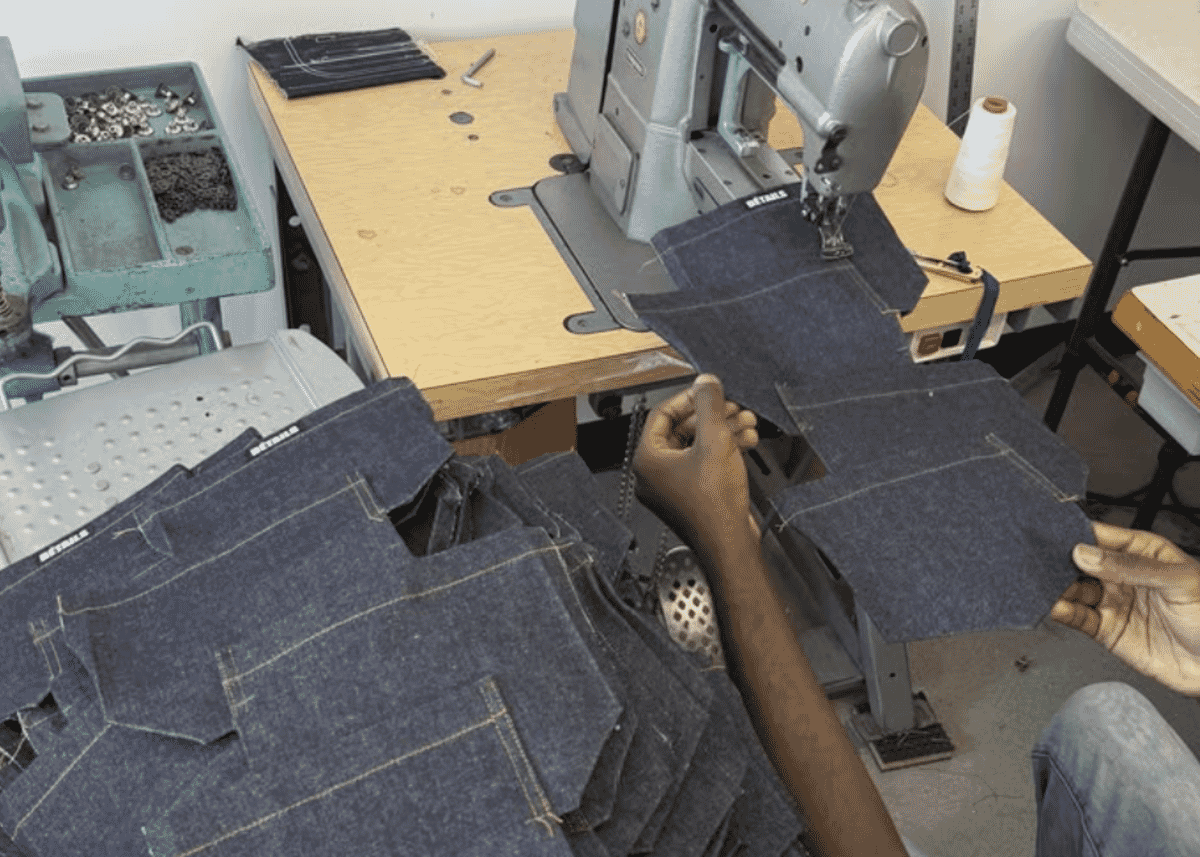
If your clothing factory offers to add bags, ask whether it has an in-house bag line or passes the order to a workshop. For more on vetting, see how to find and vet a clothing supplier in China; the same checks apply.
Which Material Suits Your Bag?
Pick the material for the job the bag does, then write it down precisely. "Canvas tote" leaves the factory to choose weight, coating and construction, and it'll choose whatever it usually runs.
Cotton canvas and duck. The default for totes. Specify the weight in ounces or grams per square metre, the weave and whether it's washed or dyed after weaving.
Polyester and nylon. Measured in denier, which describes yarn thickness. Lower denier is lighter and smoother; higher denier is tougher and rougher. Name the coating as well, since PU or PVC backing changes water resistance, stiffness and the chemical profile.
PU (polyurethane) coated fabric. The usual "vegan leather" for fashion handbags. Cheap PU cracks at folds and peels at edges within months.
PVC. Cheaper and stiffer than PU, common on clear bags and budget items. It's the material most likely to raise phthalate and Prop 65 questions, so check the chemical paperwork.
Leather. Name the hide, the tannage (chrome or vegetable) and the finish. Chrome-tanned leather brings the chromium VI rule into play for the EU, which we cover below.
Trims carry as much weight as the shell
Zips, webbing, buckles, D-rings, magnets and rivets are where bags fail in use. Name the zip brand or grade, the tooth size and whether pullers are metal or plastic. Name webbing width and the hardware's base metal and plating. If you leave trims open, they'll be swapped for the cheapest version on the shelf.
What MOQs and Prices Should You Expect?
Published sourcing guides put custom private-label bag minimums at about 300 to 500 units per design (Epic Sourcing, 2026). Stock bags with your logo printed on can go lower. New moulds for custom hardware, or a pattern built from scratch, push the minimum up.
The same guide gives published 2026 unit ranges of $1 to $3 for simple polyester drawstring or tote bags, $4 to $8 for standard daypacks and $9 to $15 for technical or laptop backpacks with padding and branded zips. Leather handbags sit in a different bracket entirely and depend on the hide.
They're published ranges, not quotes. Lining, padding and branded hardware can double the price of two bags that look alike. We confirm exact MOQ and price with the factory when you send a brief.
What pushes the minimum up
Colour count is the big one. Each colourway of fabric, webbing and zip tape has its own minimum at the mill, so five colours of one bag can cost more in minimums than one colour of five bags. Custom-dyed zip tape, logo-engraved pullers and moulded rubber patches all carry their own minimums too. Keep those for the second order if the first is a test.
Try it free: pressure-test your landed cost with the China production cost calculator. 60 seconds, no email required.
How Should Bag Sampling Work?
In three rounds, each with a different job: a proto for shape and function, a materials sample, and a pre-production sample that becomes the reference for inspection. Skipping one usually means finding the problem in bulk.
Proto sample. Built from your tech pack, often in substitute materials. You're checking size, shape, pocket layout and how the bag carries. Load it with what the customer will carry and walk around with it.
Materials sample. Same pattern, real fabric, real trims, real hardware, real branding. This is where colour, hand-feel and print or embroidery quality get approved.
Pre-production sample (PPS). Made from bulk materials, ideally on the bulk line. Sign it, photograph it, and keep one.
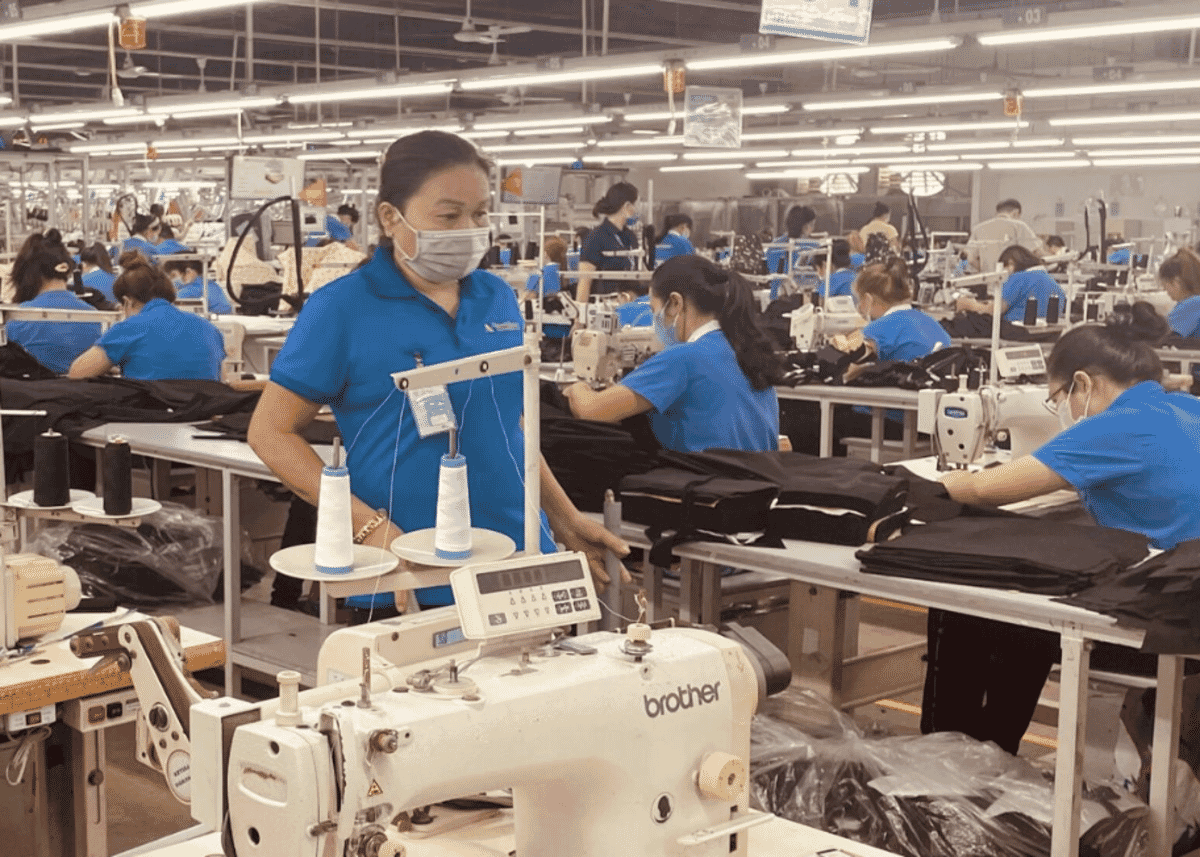
A tech pack makes all three rounds faster. It should show every dimension, trim specs, stitches per inch and artwork placement. If you don't have one, our tech pack service covers single styles.
What Should a Bag Quality Check Cover?
Stress points first, appearance second. A bag that looks perfect on a table can fail the first time someone loads it, so test seams, handles, zips and hardware before finish and branding.
Stitching and seams
Check stitches per inch against the spec, consistent tension, no skipped stitches and enough seam allowance that the seam can't pull out of the fabric. Back-tacking or bar-tacking at the ends of load-bearing seams should be there, not optional.
Handles and straps
Handles fail at the anchor, not in the middle. Check how they're attached: box-and-cross stitching, rivets or bar-tacks, and whether there's a reinforcing patch behind. Agree a load test in writing: a set weight, hung by each handle for a fixed time, then checked for seam slippage.
Zips
Run every zip end to end several times. It should run smoothly without snagging the lining. Check the puller is the specified one, that it doesn't detach under a firm pull, and that the zip stops are secure. A zip that sticks on a sample will stick on thousands of bags.
Hardware and finishing
Look for sharp edges on buckles and rings, plating that chips or rubs off, magnets in the right orientation and rivets set straight. Check edge paint on leather and PU for cracking. Then check logo placement against the artwork, measuring rather than eyeballing.
When to inspect
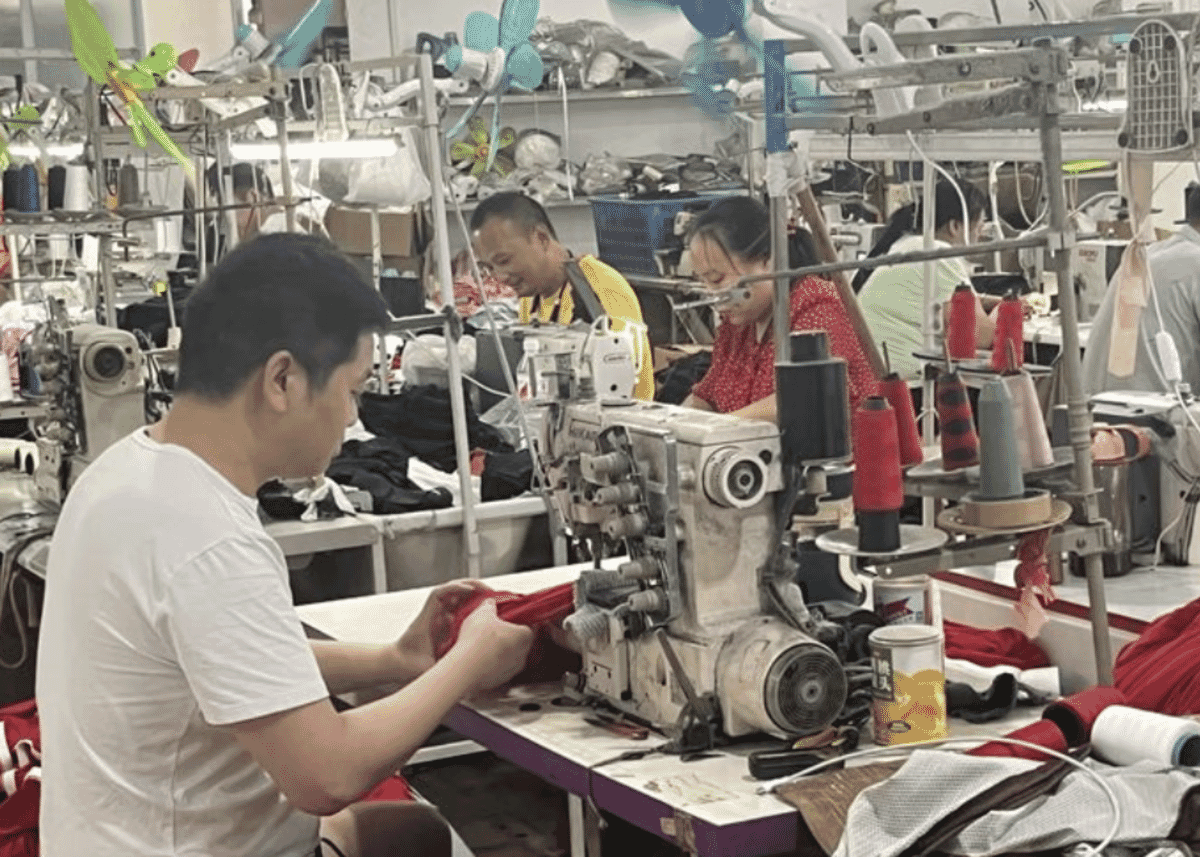
At least once before the balance is paid, as a pre-shipment inspection against the signed PPS. On a first order, add a during-production check.
Which Chemical and Safety Rules Apply to Bags?
Several, depending on where you sell. The rules below are the ones that most often catch bag importers. Checked on 9 October 2026; confirm the current text with an accredited test lab before you order.
EU: REACH restrictions
Chromium VI in leather. Leather articles that touch the skin can't be placed on the EU market with chromium VI at or above 3 mg/kg of the leather's dry weight, and the limit applies to each leather part of an article (Regulation (EU) No 301/2014).
PAHs in rubber and plastic parts. Rubber or plastic components that have prolonged or repeated short-term skin contact can't contain more than 1 mg/kg of any of the eight listed PAHs, for articles supplied to the general public (Regulation (EU) No 1272/2013). Handles, grips and PVC trims are the parts to test.
California: Prop 65 and PFAS
Proposition 65 requires a clear and reasonable warning before exposing people in California to listed chemicals. Businesses with fewer than 10 employees are exempt from the warning requirement, but retailers often pass the obligation upstream by contract anyway (OEHHA). PVC and some coatings are the usual concern on bags.
PFAS (AB 1817). Since 1 January 2025, textile articles with more than 100 ppm PFAS can't be sold in California, and the limit falls to 50 ppm on 1 January 2027. The law names handbags and backpacks, and manufacturers must give sellers a signed certificate of compliance (Kelley Drye). Water-repellent finishes are the usual source.
US: children's bags and CPSIA
A bag designed or intended mainly for children 12 or younger is a children's product. Accessible components can't contain more than 100 ppm total lead (CPSC), and the importer must issue a Children's Product Certificate backed by tests from a third-party, CPSC-accepted laboratory (CPSC). School backpacks are the classic case.
How Do Duty and Shipping Change the Price?
More than most brands expect, because bags carry higher US duty than many garments. The rate depends on what the outer surface is made of, so the material choice you made for looks also sets your duty. Get the HTS line confirmed by a licensed customs broker before you lock the material.
As listed in the US Harmonized Tariff Schedule and checked on 9 October 2026, the general (MFN) rate is 17.6% for handbags with an outer surface of man-made fibres (4202.22.81) and for man-made fibre backpacks and travel bags (4202.92.31). Handbags with an outer surface of plastic sheeting, which covers most PU and PVC, are 16% (4202.22.15). Leather handbags are 10% if valued at $20 or less and 9% above $20.
On top of the general rate, Chinese-origin goods can carry Section 301 layers, and those have changed repeatedly. Check the live position on the USTR Section 301 page for your exact HTS line.
Freight: bags ship volume, not just weight
Bags are bulky for their weight, so freight is often charged on volume rather than kilos. Ask the factory to quote carton dimensions and units per carton early, and test whether bags can be packed flat or nested without creasing.
Ask every supplier for FOB at a named port so quotes are comparable, then add freight, duty, brokerage and delivery yourself. The production cost calculator helps you see the landed number before you agree a unit price.
Citation Capsule: As checked on 9 October 2026, the US general duty rate is 17.6% for handbags with an outer surface of man-made fibres and for man-made fibre backpacks and travel bags, 16% for handbags with an outer surface of plastic sheeting, and 9% to 10% for leather handbags depending on value. Section 301 layers can apply on top for Chinese origin.
What Are the Red Flags With Bag Suppliers?
Most show up before you pay a deposit. One on its own might have an innocent explanation. Two together is a reason to keep looking.
- "Genuine leather" at a PU price. Ask for the hide type and tannery. If the answer is vague, it's probably PU or bonded leather.
- No named trim suppliers. If they won't say where the zips and buckles come from, expect a swap between sample and bulk.
- A perfect sample in two days. It's likely a stock bag from the showroom, not one made to your pattern.
- No test reports for leather, PVC or children's bags. A supplier that sells into the EU or US should have them or know which lab to use.
- Refusing a live video walk-through of the cutting room and sewing lines, or offering only a pre-recorded tour.
- Pushing for 100% upfront. A deposit with the balance after inspection is the norm; full prepayment removes your bargaining power.
- Offering to under-declare value on the invoice. That's customs fraud, and the liability is the importer's.
Before you order bags
- Pick the cluster that fits the bag: Baigou for value, Shiling for leather and PU, Fujian for sports and travel, Yiwu for stock.
- Write the material spec with weight or denier, coating, and named trims.
- Confirm the HTS line and duty with a broker before locking the material.
- Get test reports for leather, PVC, water-repellent finishes and children's bags.
- Inspect before the balance, against the signed sample.
None of these is expensive next to a return rate.
Conclusion
Bag suppliers in China aren't hard to find. What's hard is getting the bag you specified, at the cost you modelled, without a chemical or duty surprise at the end.
Start with the cluster that fits the product. Write a spec that names the material weight, the coating and every trim. Sample in three rounds and sign the last one. Inspect the stress points before you pay the balance.
And remember that the outer material sets your duty rate, and the trims and finishes decide your chemical testing.
We are a group of documented clothing factories in China, producing for brands from 100 units. Tell us the bag, the material and the market, and we come back with what to specify, what to test and the real minimum, normally within 24 hours. You work directly with the factory. Flat fees, no factory commissions.
Get in contact Download the directory ($39)Need a tech pack? Get a factory-ready single-style tech pack for $79. See what's included.
Frequently Asked Questions
Where are most bags made in China?
Four places come up most for brands. Baigou in Hebei for value backpacks, school bags and luggage; Shiling in Guangzhou's Huadu district for leather and PU handbags; Quanzhou and Jinjiang in Fujian for sports, travel and outdoor bags; and Yiwu's International Trade City, District 2, for stock bags and small custom runs.
What is the MOQ for custom bags from China?
Published sourcing guides put custom private-label bag minimums at around 300 to 500 units per design. Stock bags with a printed logo can go lower, and new moulds or fully bespoke hardware push the minimum up. These are published ranges, not quotes, so confirm in writing with each supplier.
What duty do I pay on bags from China into the US?
It depends on the HTS line. As checked on 9 October 2026, the general rate is 17.6% for handbags and backpacks with an outer surface of man-made fibre, 16% for handbags with an outer surface of plastic sheeting, and 9% to 10% for leather handbags depending on value. Section 301 layers can apply on top for Chinese origin.
Do bags need chemical testing?
Usually, yes, depending on the market. The EU limits chromium VI in leather to below 3 mg/kg and PAHs in skin-contact rubber and plastic parts to 1 mg/kg. California bans PFAS above 100 ppm in handbags and backpacks, falling to 50 ppm in 2027. Children's bags in the US need CPSIA lead testing and a Children's Product Certificate.
What should I check on a bag before paying the balance?
Stitch density and seam allowance at stress points, handle and strap anchoring under load, zip running and puller strength, hardware plating and edges, lining and edge finishing, print or logo placement, and the carton count. Do it at a pre-shipment inspection, before the balance is paid, against the approved sample.
Editorial note: all company names, certification marks and trademarks referenced here are the property of their respective owners. MOQ, cost and lead-time figures are market ranges compiled from the published sources listed below, not quotes from any individual factory, and they vary by product, material and season. Duty rates and chemical limits were checked on 9 October 2026 and can change. Always verify your own HTS classification and confirm terms directly with the factory before committing.
Sources
- China Daily (2018): Baigou annual bag output of 800 million units.
- Great Wall International Communication Center (2026): Baigou's four-decade luggage chain and exports to more than 200 countries and regions.
- China Daily (2025): Shiling's 700 million products a year and 500,000 visiting leather merchants.
- WorldFirst sourcing guide: bag and luggage cluster in Jinjiang and Licheng, Quanzhou, and its product range.
- UCLG ASPAC: Yiwu International Trade City District 2 categories (bags and cases, plastic and shopping bags).
- Epic Sourcing (2026): published custom bag MOQ range and 2026 unit price ranges.
- US International Trade Commission, Harmonized Tariff Schedule: general duty rates for headings 4202.21, 4202.22 and 4202.92 (checked 9 October 2026).
- Office of the United States Trade Representative: Section 301 tariff actions.
- Commission Regulation (EU) No 301/2014: REACH Annex XVII entry 47, chromium VI in leather articles.
- Commission Regulation (EU) No 1272/2013: REACH Annex XVII entry 50, PAHs in rubber and plastic components.
- California OEHHA: Proposition 65 warning duty and the under-10-employee exemption.
- Kelley Drye: California AB 1817 PFAS limits, dates and covered articles including handbags and backpacks.
- US Consumer Product Safety Commission: 100 ppm total lead limit for children's products.
- US Consumer Product Safety Commission: Children's Product Certificate and third-party testing.
Related Reading
No commissions. No markups. The factory bills you directly.