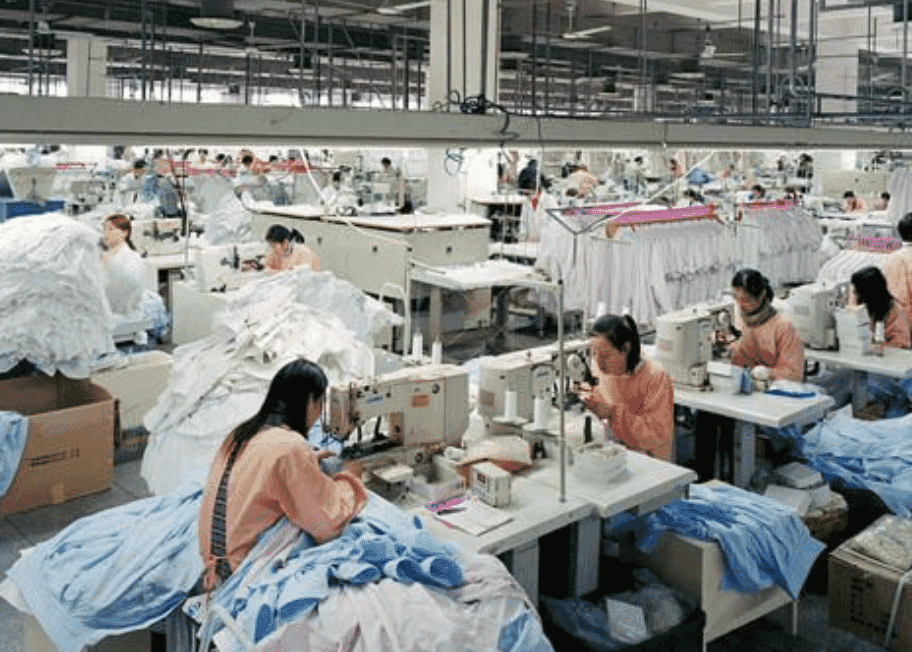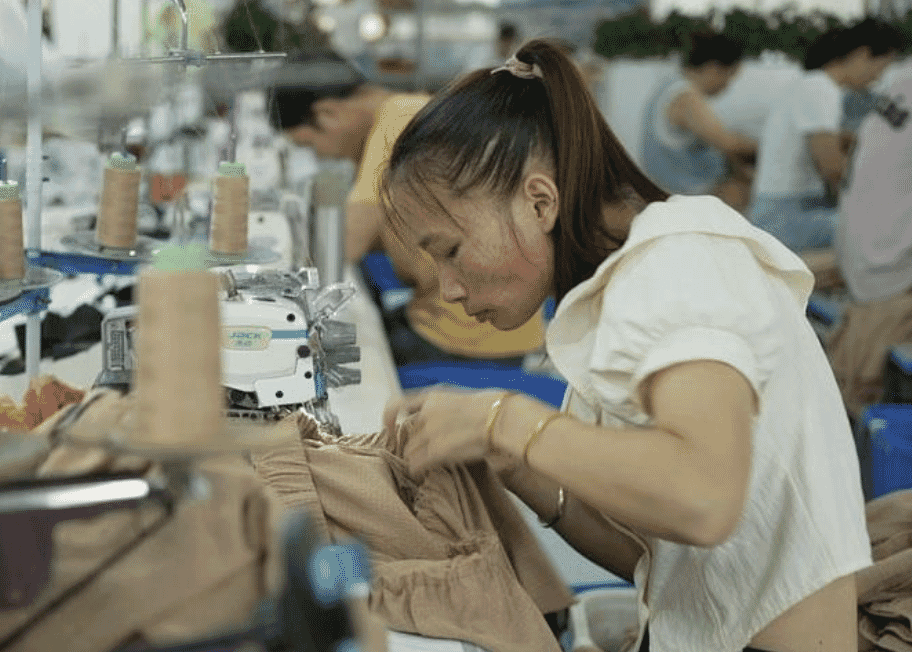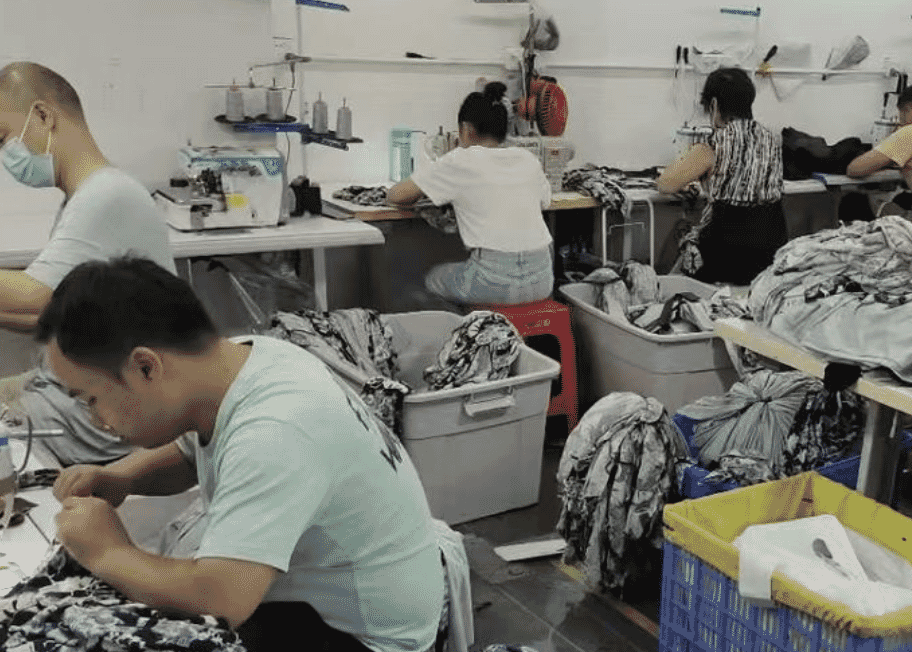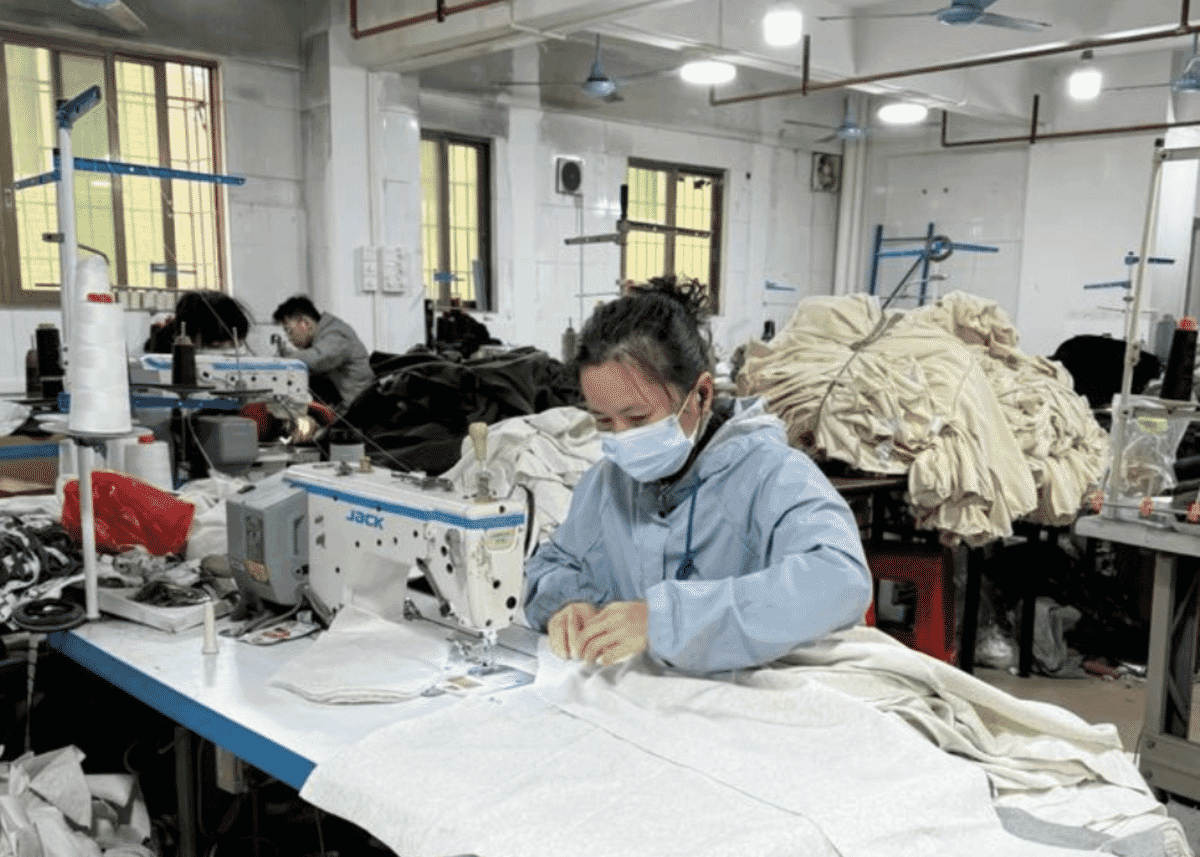
Guangzhou is where most small and mid-sized apparel brands actually produce in China, and the reason is density. Panyu and Haizhu districts alone host a large cluster of garment factories, and the fabric market sits a short drive from the sewing floors.
But "Guangzhou" is not one place. It is a set of districts with genuinely different specialisms, and turning up in the wrong one costs you a day. Denim is not made where wedding dresses are made, and neither is made where the wholesale markets are. For what to check before you brief a dress factory, see our guide to dress manufacturers in China.
Guangdong sits inside the five provinces that produce over 70% of China's garment output (China National Garment Association). This guide covers which district does what, where the fabric comes from, and how to plan a trip that is worth taking.
Note: China Clothing Manufacturer is a group of documented clothing factories in China, producing for brands from 100 units. Ranges in this guide come from published industry sources and are given as market ranges, not as quotes from a specific factory. We confirm exact MOQ and price with the factory when you send a brief.
Key takeaways
- Panyu and Haizhu host a large cluster of garment factories between them. This is the production core.
- Xintang, in Zengcheng district, is known as an international jeans city. Denim concentrates there.
- Zhongda Fabric Market in Haizhu covers a very large floor area of fabric across every construction.
- Shisanhang in Liwan holds thousands of booths of fast-turnover womenswear. It is wholesale, not production.
- Haizhu also holds a dedicated wedding and occasion-wear cluster.
- Markets and factories are different trips. Confusing them wastes a day each way.
- Guangdong is downstream cut-and-sew. Zhejiang, upstream, supplies much of the fabric.
Why Do Most Small Brands End Up in Guangzhou?
Three reasons, and they compound rather than simply adding up. Each one makes the next more effective, which is why the advantage of producing here is larger than any single factor would suggest and why it is difficult for another region to replicate piecemeal.
Density of cut-and-sew capacity. With a large cluster of factories across Panyu and Haizhu, there is almost always a factory that runs your specific construction. Density is also what makes smaller minimums possible: a factory that fills its line easily can afford to take a 300-piece order.
Fabric within driving distance. Zhongda Fabric Market puts a very wide range of fabrics within a short trip of the sewing floors. Sampling moves faster when the fabric decision does not require a courier.
Sampling turnaround. Because the supply chain is local, a fit round that takes three weeks elsewhere can take days. For a brand developing a first range, that is the difference between one season and two.
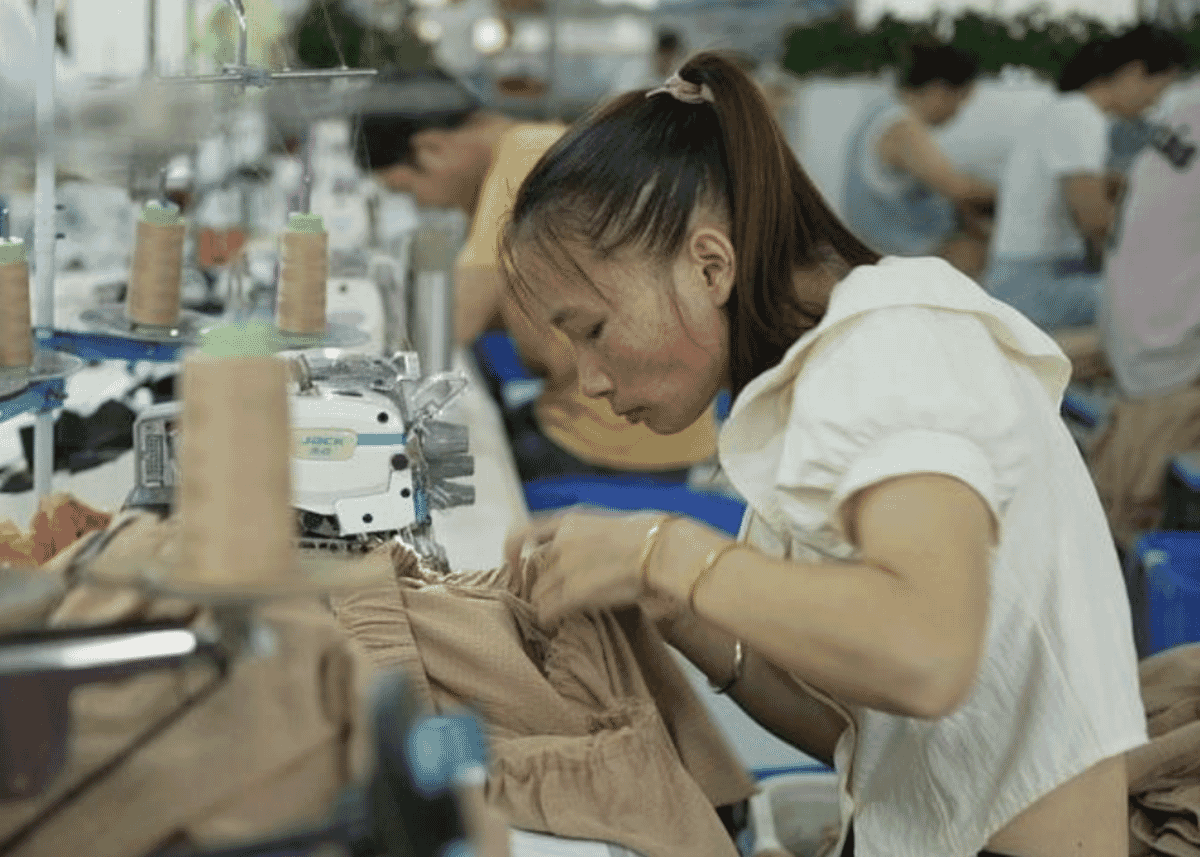
Citation Capsule: Guangzhou suits small and mid-sized apparel brands because of production density: Panyu and Haizhu districts host a large cluster of garment factories, the Zhongda Fabric Market covers a very large floor area within driving distance of the sewing floors, and local supply chains compress sampling turnaround from weeks to days.
Which Guangzhou District Does What?
This is the part worth planning around, and doing so saves more time than any other decision on a sourcing trip. Each district has a genuine specialism, and the addresses are not close together. Each district specialises, and the specialisms are not signposted in a way a visitor can read on arrival.
| District or town | Known for | Go there for |
|---|---|---|
| Panyu | Large cut-and-sew concentration | General apparel production, knit and woven |
| Haizhu | Factories plus the fabric market | Production, fabric sourcing, occasion wear |
| Xintang, Zengcheng | International jeans city | Denim, washing and finishing |
| Liwan | Shisanhang wholesale district | Buying finished stock, not commissioning |
| Humen, Dongguan | Fast-fashion production, just outside the city | Quick-turn womenswear at volume |
Ranges come from published industry sources. We confirm exact MOQ and price with the factory when you send a brief.
Denim has its own geography
Xintang is a jeans town in the literal sense: the washing plants, the finishing and the sewing sit together because denim needs all three in one place. If your product is denim, producing it outside a denim cluster means shipping garments between towns for washing, and paying for it twice.
Occasion wear too
Haizhu holds a well-established wedding and occasion-wear cluster centred on the Shiergong area. Beaded and heavily embellished work is hand labour, and the skill concentrates where the work is.
Skip the search: the China factory directory ($49) lists documented factories by category, city and capability, with the verification status of each. One-time payment, instant download.
Where Does the Fabric Come From?
Zhongda Fabric Market on Ruikang Road in Haizhu is the answer for most brands and the reason the city works the way it does. Its proximity to the sewing floors is what compresses a sampling cycle from weeks into days, which is the practical advantage of producing in Guangzhou. It covers a very large floor area and carries chiffon, silk, lace, linen, denim and most constructions in between.
Two things to understand before going. First, the market sells fabric, and a factory needs a fabric it can actually buy in production quantity, which is a different conversation from buying three metres for a sample. Second, Guangdong is downstream: much of what is sold in Zhongda was made in Zhejiang, which supplies a large share of China's synthetic fabric.
The practical approach is to source the sample fabric at the market with your factory's sourcing person present, then let the factory place the production order against the mill's minimum.
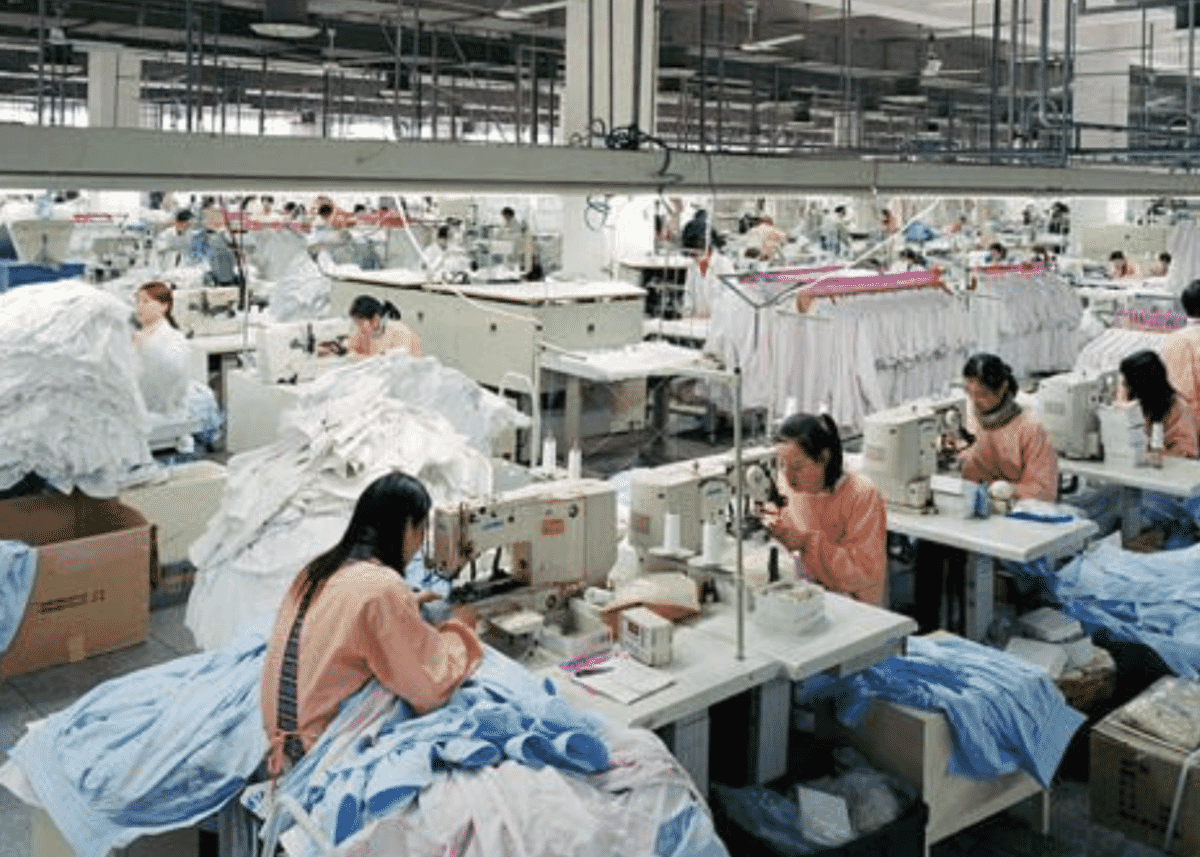
Citation Capsule: Guangzhou's garment geography splits by district: Panyu and Haizhu hold the general cut-and-sew capacity, Xintang in Zengcheng is the denim cluster with washing and finishing co-located, Haizhu also holds the wedding and occasion-wear cluster, and Liwan's Shisanhang district is wholesale stock rather than production.
Markets or Factories: Which Trip Are You Taking?
This is the single most common planning error, and it costs a day each time it is made. The two serve opposite functions and sit in different districts, so an itinerary that attempts both without allowing for travel between them achieves neither properly.
The wholesale markets, Shisanhang and Baima among them, sell finished stock. Shisanhang alone holds thousands of booths of fast-turnover womenswear. You go there to buy garments that exist. Our Guangzhou clothing wholesale guide covers which market sells what and how buying works there.
The factories are in Panyu, Haizhu, Xintang and the surrounding towns. You go there to commission garments that do not exist yet. For what small, quick runs here can and cannot copy from the fast-fashion platforms, see Shein and Temu manufacturers.
Both are legitimate trips. They are not the same trip, they are not in the same districts, and a schedule that mixes them without allowing for travel will achieve neither properly.
What MOQ Will a Guangzhou Factory Accept?
Lower than the rest of China, and density is the reason rather than any difference in how factories here negotiate. A line that fills easily can afford to take a smaller order than one competing for work, which is a structural advantage rather than a favour. With so many factories across Panyu and Haizhu, most lines fill easily.
The number still depends on the same three things it depends on everywhere. Fabric first, because the mill's dye lot sets a floor the factory cannot go under. Colourway count second, since each colour is a separate lot. Construction third: a complex garment carries more set-up to absorb.
The practical lever in Guangzhou specifically is the fabric market. Because Zhongda sits beside the factories, using a stock fabric the market already holds removes the dye-lot minimum entirely, which is how small runs become possible here and not elsewhere.
Ask for the number per colourway, not per style
A quote of "300 pieces" means nothing without knowing whether that is across your range or per colour. Three hundred units across four colours is four dye lots, and most factories will price it as four orders.
How Long Does Production Take in Guangzhou?
Faster than most of China for the same reason minimums are lower, and the mechanism is worth understanding because it is the thing you are paying a premium for: the supply chain is local. Fabric, trims and finishing are within driving distance, so the handoffs that add weeks elsewhere add days here.
The sequence is still the sequence. Pattern and first proto, fit rounds, pre-production sample approved, then bulk. What changes in Guangzhou is that a fit round can turn in days rather than a fortnight, because nothing needs to be couriered between provinces.
Two fixed points will move your dates whatever the factory promises. Chinese New Year closes factories for roughly two to four weeks, with reduced output before and a slow ramp after. The two Canton Fair windows take the sales teams out of the office (China Import and Export Fair), which does not stop production but does stop responsiveness.
Citation Capsule: Guangzhou supports lower minimums and faster sampling than most Chinese production regions because the supply chain is geographically compressed: with a large cluster of factories across Panyu and Haizhu and the Zhongda fabric market adjacent to them, fit rounds turn in days rather than weeks and stock fabric can remove the mill dye-lot minimum entirely.
Have a delivery date in mind? Send the date and the product and we will tell you whether it survives Chinese New Year before anyone quotes a price. Send the brief.
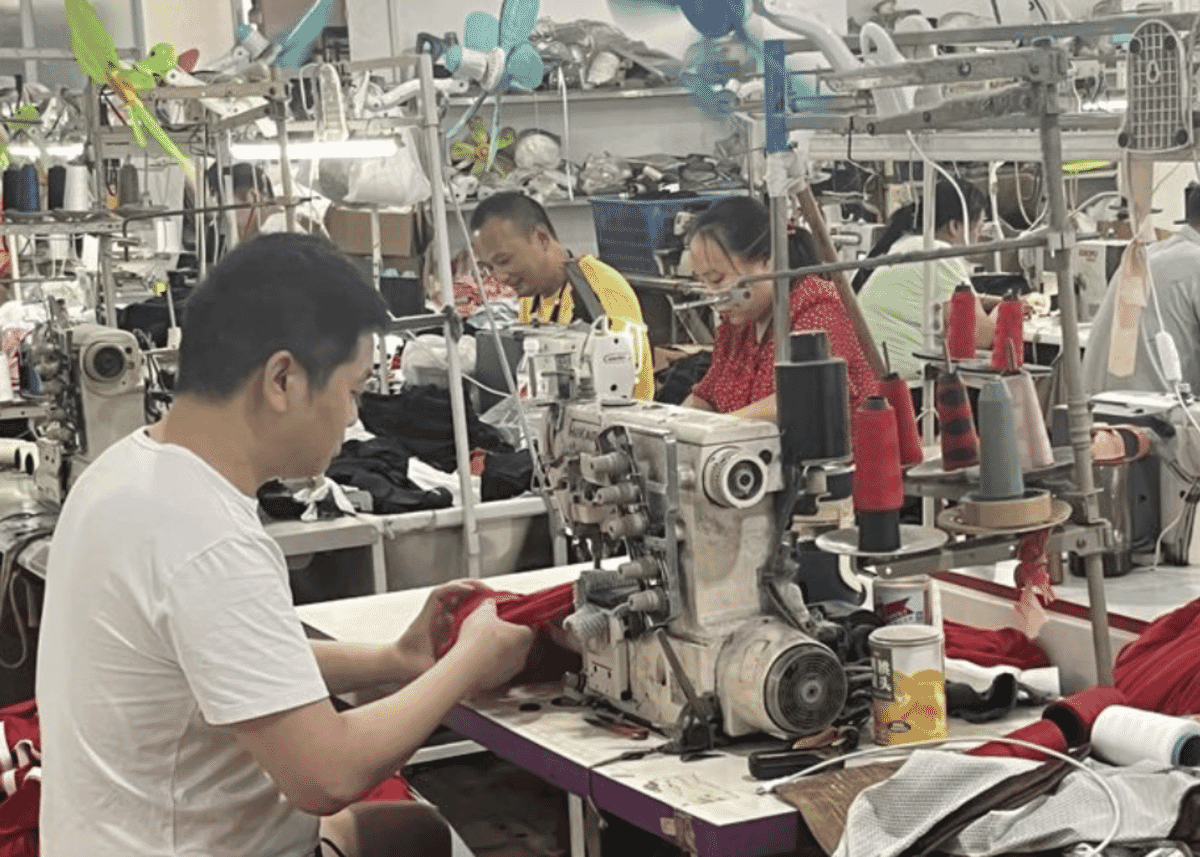
Citation Capsule: Guangzhou's wholesale markets and its factories serve opposite functions and occupy different districts. Shisanhang in Liwan holds thousands of booths selling finished stock, while commissioned production sits in Panyu, Haizhu and Xintang. A single itinerary that attempts both without allowing for inter-district travel typically achieves neither properly.
How Should You Plan a Factory Visit?
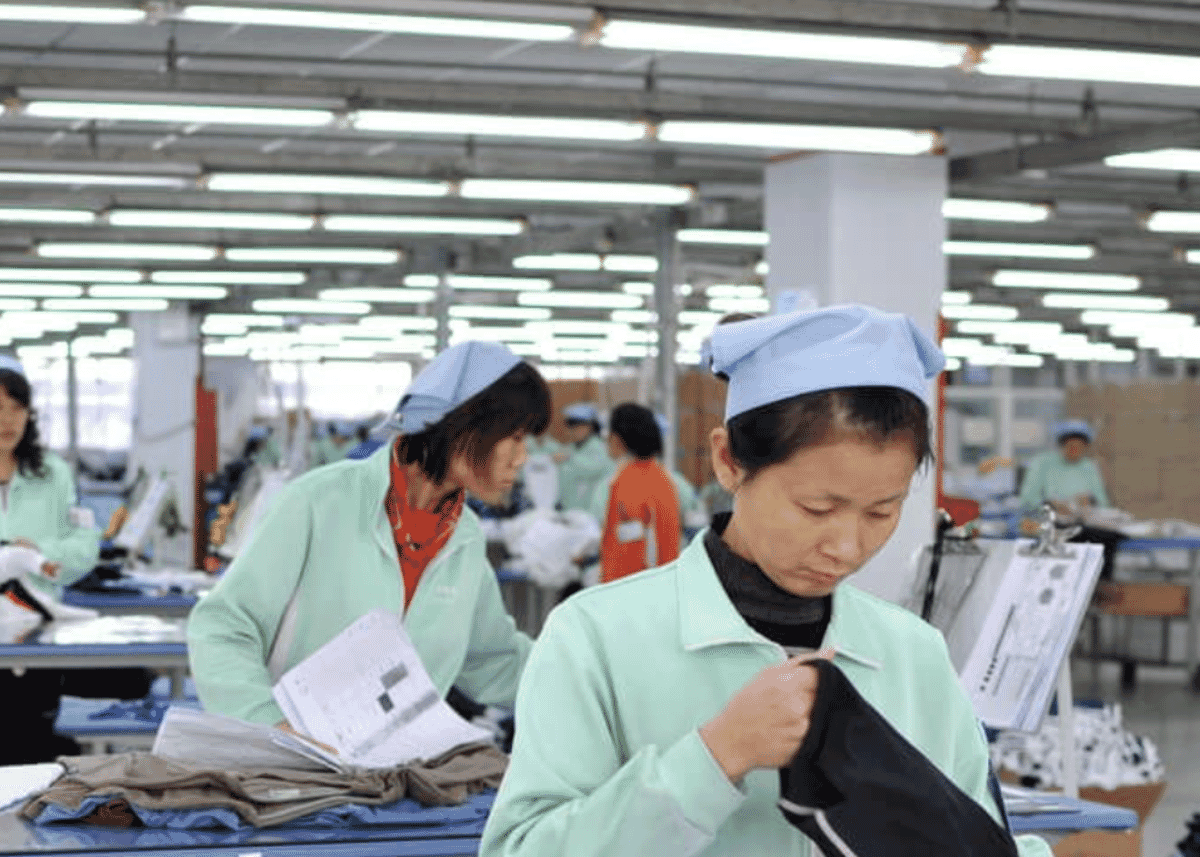
Four things that make the difference between a useful week and an expensive tour. None is complicated and all four have to be decided before you fly, because the choices that matter most are about where you go rather than what you do once you arrive.
- Two or three factories a day, maximum. Traffic between districts is real, and a rushed visit teaches you nothing.
- Go during working hours, unannounced where you can. A floor that is running tells you more than a floor prepared for you.
- Take your tech pack and a reference garment. Conversations about capability become concrete the moment there is a physical sample on the table.
- Ask to see the machines by name. Count the flatlocks, look at the cutting table, check whether the sample room is staffed.
Avoid the two Canton Fair windows if you want the factory's attention, because the sales teams will be at the fair rather than with you (China Import and Export Fair).
Two Guangzhou markets are named in the 2025 USTR Notorious Markets List (2026). Kinsun Market near Zhanxi Road is described as five floors selling almost exclusively counterfeit goods, the first two floors openly offering counterfeits of well-known clothing brands. Baiyun Leather Trading Center is named for counterfeit bags, garments and accessories. Neither is a sourcing destination, and being seen buying there is a problem of its own.
What Does It Cost to Produce in Guangzhou?
Guangzhou is not the cheapest place in China to sew a garment, and brands arriving expecting it to be are usually comparing against the wrong benchmark. Labour costs more here than in inland provinces, and more than in Vietnam or Bangladesh.
What you buy for the difference is speed and flexibility: lower minimums, faster sampling and a supply chain dense enough that a problem has a solution nearby. For a brand running small and mid-sized runs per style, that is usually worth more than a lower CMT rate. Minimums vary by factory and fabric, so confirm them per style.
| Cost line | What drives it | Guangzhou specifics |
|---|---|---|
| Fabric | Composition, weight, finish, dye lot | Zhongda market nearby lowers sampling cost |
| CMT | Panel count, seam type, machine time | Higher than inland China, lower than nearshore Europe |
| Trims | Labels, zips, elastic, drawcords | Locally available, short lead times |
| Sampling | Pattern, protos, fit rounds | Fastest turnaround in China for most categories |
| Freight and duty | Incoterm, HTS code, Section 301 layers | Nansha and Shenzhen ports both close |
Get every quote on the same Incoterm
FOB at a named port and DDP to your warehouse are different numbers describing the same garment. Comparing two DDP quotes compares two freight forwarders, not two factories. Ask everyone for FOB, then add freight and duty yourself so the factory comparison is actually a factory comparison.
Citation Capsule: Guangzhou carries higher labour costs than inland Chinese provinces and than Vietnam or Bangladesh. What the premium buys is lower minimums, faster sampling and supply chain density, which favours small and mid-sized runs per style over brands optimising purely for cut-make-trim rate at higher volumes.
How Do You Verify a Guangzhou Factory?
Same checks as anywhere in China, and the business licence still does most of the work. What changes here is the density of options, which means a supplier who will not produce one has no scarcity argument to fall back on.
- Business licence and unified social credit code, matched to the receiving bank account name.
- Registered scope: manufacturing, or wholesale and retail trade. The document answers the factory-or-trader question.
- Certificate numbers, not logos. OEKO-TEX runs a public label check and amfori BSCI publishes how its audits work.
- Production address, not a registered office. Ask which one the address on the licence is.
Want a shortlist before you fly? Send the garment type, the fabric and your target quantity. Our team replies within 24 hours with factories in the right district for the product. Send the brief.
Before you book the trip
- Decide whether you need factories or markets. They are different districts and different days.
- If the product is denim, go to Xintang. If it is occasion wear, go to Haizhu.
- Book two or three factory visits per day, no more. Traffic between districts is real.
- Take a tech pack and a reference garment to every meeting.
- Ask to see the machines by name, and count them.
- Avoid the two Canton Fair windows if you want the factory's attention.
A week planned around district specialisms achieves more than a fortnight spent crossing the city.
How we shortlist in Guangzhou
- District chosen by product first: denim to Xintang, occasion wear to Haizhu, general cut-and-sew to Panyu.
- Business licence and unified social credit code checked against the receiving bank account name.
- Registered scope read to separate manufacturers from trading companies.
- Machine counts requested by name and brand, not capacity in pieces per month.
- Fabric route confirmed: whether the factory buys at Zhongda or direct from a Zhejiang mill.
Sending a brief to the wrong district costs a sample round. We place your production in the right one before anyone quotes.
Conclusion
Guangzhou works for small brands because of density: a large cluster of factories across Panyu and Haizhu, a large fabric market in the middle of them, and sampling that moves in days rather than weeks. The planning mistake is treating the city as a single destination rather than a set of districts with different jobs.
The planning mistake is treating the city as one destination. Denim is in Xintang, occasion wear is in Haizhu, the wholesale booths are in Liwan, and the general cut-and-sew is spread across Panyu and Haizhu. Decide which of those you actually need before you book anything.
And keep the two trips separate. Markets sell what exists; factories make what does not. Mixing them in one schedule is how a week in Guangzhou produces neither a supplier nor a stock order.
The wider point is that Guangzhou suits a particular size of brand. Below a hundred units you are better off decorating blanks. Above several thousand per style, inland provinces and Southeast Asia will beat it on rate, and the flexibility you are paying for stops being worth the premium.
In the band between those two, the combination of low minimums, adjacent fabric supply and same-week sampling is genuinely difficult to replicate anywhere else in the world. That is the case for Guangzhou, and it is worth being clear that it is a case about flexibility rather than about price.
We are a group of documented clothing factories in China, producing for brands from 100 units. Tell us the garment, the quantity and the fabric, and we place the brief with the factory in the right district for it. Our team replies within 24 hours. You work directly with the factory. Flat fees, no factory commissions.
Get in contact Download the directory ($49)Need a tech pack? Get a factory-ready single-style tech pack for $79. See what's included.
Frequently Asked Questions
Which Guangzhou district should I visit for clothing manufacturing?
Panyu and Haizhu host the general cut-and-sew capacity, with a large cluster of garment factories between them. Xintang in Zengcheng is the denim cluster, Haizhu also holds the wedding and occasion-wear cluster, and Liwan's Shisanhang district is wholesale rather than production. Choosing the right district before you book anything is most of what makes a trip productive. For the wider map beyond Guangzhou, see our guide to the China clothing market.
Is Guangzhou better than Dongguan or Shenzhen for clothing?
For small and mid-sized apparel brands, Guangzhou usually wins on density and sampling speed. Humen in Dongguan is strong on quick-turn fast-fashion womenswear at volume. Shenzhen has far less garment cut-and-sew capacity than its general manufacturing reputation suggests.
Where is the fabric market in Guangzhou?
Zhongda Fabric Market on Ruikang Road in Haizhu district is the main one, covering a very large floor area and carrying chiffon, silk, lace, linen, denim and most constructions in between. Take your factory's sourcing person with you, because sample quantities and production quantities are different transactions.
What is the difference between Shisanhang and a Guangzhou factory?
Shisanhang in Liwan district holds thousands of booths selling finished stock, mostly fast-turnover womenswear. Factories in Panyu, Haizhu and Xintang make garments to your pattern. They are different districts and different trips, and mixing them into one schedule usually achieves neither.
How many factories should I visit per day in Guangzhou?
Two or three at most. Traffic between districts is significant and a rushed visit teaches you very little. Go during working hours, take a tech pack and a reference garment, and ask to see the machines by name rather than accepting a tour of the showroom.
Editorial note: all company names, certification marks and trademarks referenced here are the property of their respective owners. MOQ, cost and lead-time figures are market ranges compiled from the published sources listed below, not quotes from any individual factory, and they vary by product, fabric and season. Tariff figures were correct at the date of publication and the 2026 position is still moving. Always verify your own HTS classification and confirm terms directly with the factory before committing.
Sources
- Office of the United States Trade Representative (2026): 2025 Review of Notorious Markets for Counterfeiting and Piracy, naming online platforms and physical markets in China.
- China National Garment Association, Industry Overview: provincial concentration of garment output and the national cluster map.
- Sheng Lu, FASH455, University of Delaware (2025): WTO-based analysis of global textile and apparel trade.
- OEKO-TEX Label Check: public verification of certificate numbers.
- amfori BSCI: social audit system documentation.
- Office of the United States Trade Representative: Section 301 tariff actions and exclusion process.
- US Customs and Border Protection: trade remedies and duty administration.
- China Import and Export Fair (Canton Fair): official fair information and phase structure.
Related Reading
No commissions. No markups. The factory bills you directly.