By David Stan, Founder at China Clothing Manufacturer. Published October 2026.
Alibaba is safe in the sense that it is a real company running a real marketplace with real protections. It is not safe in the sense most people mean, which is that a supplier you find there has been checked by someone before you send money.
That gap is where every Alibaba horror story lives. The platform is not the problem and the platform is not the solution. It is a listings site with an escrow layer attached, and what it verifies is much narrower than the badges suggest.
This guide covers what the verification badges actually mean, what Trade Assurance does and does not cover, the failure modes that occur most often, and the checks that reduce your risk to something reasonable.
Note: China Clothing Manufacturer is a group of documented clothing factories in China, producing for brands from 100 units. What Alibaba's programmes cover is taken from Alibaba.com's own pages, checked in October 2026; terms change, so confirm them on your own order. We confirm exact MOQ and price with the factory when you send a brief.
Key takeaways
- Alibaba verifies that a company exists. It does not verify that the company can make your product well.
- Gold Supplier is a paid membership tier with a basic check of the business registration, not a quality assessment.
- Verified Supplier is a higher paid tier: a third-party body inspected the company. Read the report to see what was inspected.
- Trade Assurance holds your payment in escrow and refunds breaches of the order terms. Claims about fabric, composition or fit are only as strong as the specification you agreed.
- Many listings are trading companies, not factories. Check the business licence rather than the listing.
- The business licence check costs nothing and filters out much outright fraud.
- Never pay outside the platform, and never to an account name that differs from the licence.
What Do the Verification Badges Actually Mean?
Two paid tiers appear on many listings, and they measure different things, none of which is the quality of your product. Each verifies something specific about the company rather than the goods, and reading them as a quality signal is a common misuse of the platform.
Gold Supplier is a paid annual membership. Alibaba.com's own seller blog describes it as a paid programme for visibility, with a basic third-party check of the business licence and company registration but no on-site factory inspection (Alibaba.com Seller Blog). It signals that the supplier is a registered business that has committed money to selling on the platform, which is mildly useful, and nothing about what they make.
Verified Supplier is Alibaba.com's higher, also paid, tier. An inspection body (Alibaba names SGS and TÜV) checks the business licence, facilities, quality-control process and R&D capability, and the results are shown as a verified capability report with factory video (Alibaba.com, Verified Supplier). Many buyers never open the report. Read it, because it says what was inspected and where, and the useful part is the report, not the badge.
What none of them establish is whether this supplier can make your garment to your specification at a quality you will accept. That question is answered by a sample from the production factory, and by nothing else.
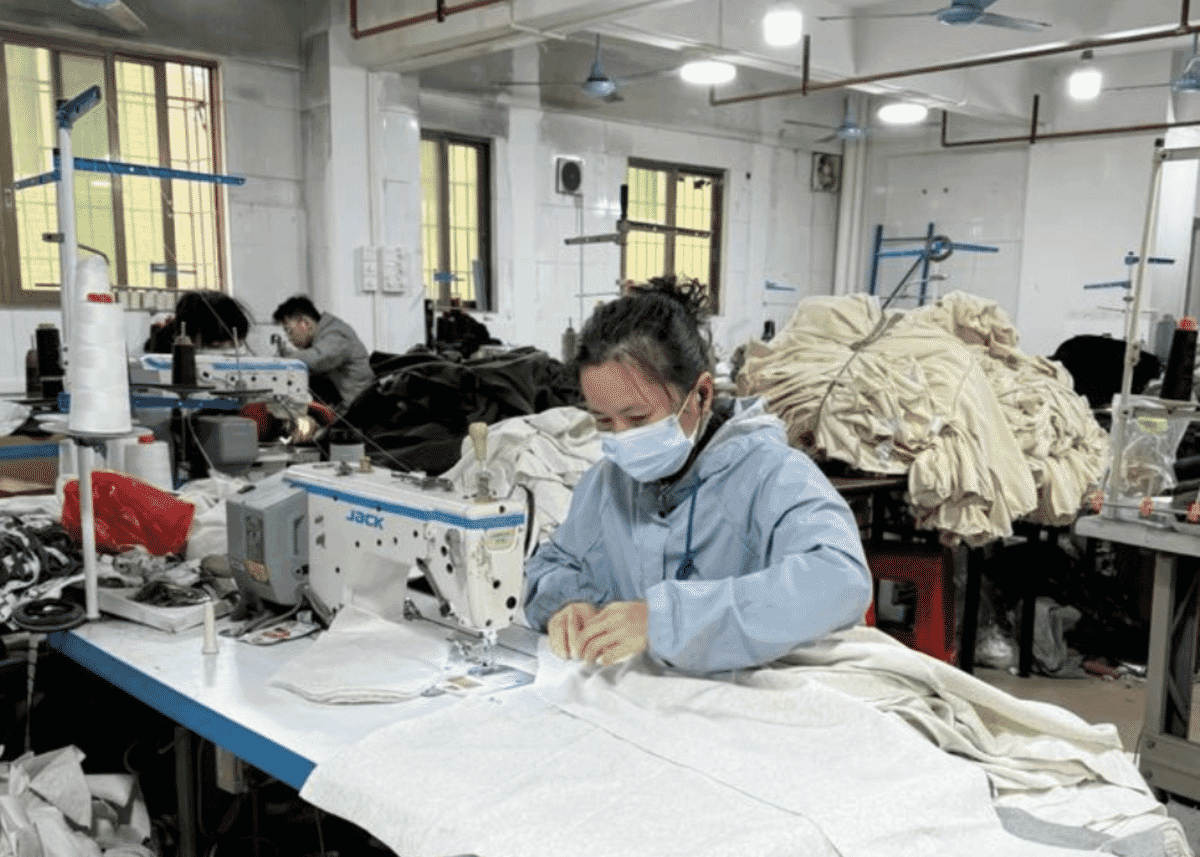
Citation Capsule: Alibaba supplier badges verify corporate existence rather than production quality. Gold Supplier denotes a paid annual membership tier with a basic check of business registration. Verified Supplier is a higher paid tier for which a third-party inspection body checks the business licence, facilities, quality-control process and R&D capability, and the resulting report states what was actually checked. No badge establishes that a supplier can manufacture a given product to a given specification.
Got a shortlist from Alibaba? Send us the company names and we will tell you which are factories and which are traders, at no cost. Send the list.
What Does Trade Assurance Actually Cover?
Trade Assurance is Alibaba.com's escrow and dispute mechanism. When you pay through Alibaba.com, your payment is held in escrow and released to the supplier after the product is received and confirmed (Alibaba.com, Trade Assurance). If the order is not shipped, goes missing, or arrives defective, incorrect or damaged, you can apply for a refund within 30 days of delivery (60 days for Enterprise and Enterprise Pro buyers), negotiate with the supplier, and escalate to Alibaba.com if you cannot agree (Alibaba.com, money-back policy).
What it handles well: non-delivery, gross non-conformity, and quantity shortfalls. These are objective and documentable, which is exactly what a dispute process can handle.
What it handles poorly: anything requiring judgement. Whether the fabric hand is what you expected, whether the fit is correct, whether the colour is within tolerance, whether the stitching quality is acceptable for your market. Alibaba's policy does cover product-quality issues, but a claim is judged against what the order agreed, and these complaints turn on a specification most buyers never wrote down.
The practical conclusion is not that Trade Assurance is worthless. It is that escrow protects you against a supplier who disappears, and a written specification protects you against a supplier who delivers something you did not want. You need both, and only one of them comes from the platform.
Skip the search: the China factory directory ($39) lists documented factories by category, city and capability, with the verification status of each. One-time payment, instant download.
| Complaint | Trade Assurance claim | Why |
|---|---|---|
| Goods never arrived | Strong | Objective and documentable |
| Wrong quantity shipped | Strong | Countable against the order |
| Obviously not the product ordered | Strong | Gross non-conformity is visible |
| Fabric hand is not what you expected | Weak | Requires judgement, and nothing agreed defines it |
| Colour outside your tolerance | Weak | Only arguable against a stated tolerance and sealed sample |
| Stitching below your standard | Weak | No agreed quality limit to measure against |
| Composition is not what the label says | Hard to prove | Only with a stated composition and a lab report you commissioned |
| Paid outside the platform | Not protected | Protection applies to orders paid through Alibaba.com |
The pattern: the platform resolves what is objective and cannot resolve what nobody wrote down. A sealed sample, a stated tolerance and an agreed quality limit move complaints from the lower half of this table to the upper half.
Can You Trust the Reviews and Transaction History?
They are more useful than the badges and less useful than they look, and the difference is in what the numbers actually count. Transaction volume and review scores reflect activity and dispute rates rather than whether the product matched a specification.
Transaction volume counts orders, not satisfaction. A supplier with hundreds of completed transactions has been trading for a while, which is genuinely informative. It does not mean those buyers were happy, only that the orders closed.
Response rate measures speed, not competence. A fast responder may be a well-staffed trading company. A slower one may be a factory where the person answering also runs the floor.
Read the negative reviews specifically. Volume of positives tells you little; the pattern in complaints tells you a lot. Recurring mentions of shade variation, sizing inconsistency or late delivery describe how this supplier fails, which is the useful information.
Watch the review dates. A cluster of positive reviews in a short window followed by silence is a different signal from steady feedback over two years.
Citation Capsule: Marketplace supplier signals measure narrower facts than buyers typically infer. Transaction volume records completed orders rather than buyer satisfaction, response rate measures reply speed rather than reliability, and Verified Supplier confirms a site visit rather than product inspection. Recurring themes in negative reviews are more informative than the volume of positive ones.
Is the Listing a Factory or a Trading Company?
Many are traders, and the listing alone rarely settles it. A trading company buys from factories and resells, adding margin you cannot see and a layer of distance between you and the people making your goods. That distance is what determines how quickly a technical problem gets solved, and it is invisible in a listing.
Three tells, none of which require special knowledge:
Product range breadth. A listing offering t-shirts, hoodies, backpacks, water bottles and phone cases is not a factory. No factory has machines for all of those.
The business licence. Ask for it. The registered scope distinguishes manufacturing from wholesale and retail trade, and the document settles the question whatever the listing claims.
The capability answer. Ask how many flatlock machines they run, or how many sewing lines. Factories answer immediately and specifically. Traders give you a number they have not counted.
Trading companies are not inherently bad. A good one absorbs coordination work and carries quality risk. The problem is buying from one while believing you are buying from a factory, because then you are managing a relationship you do not understand.
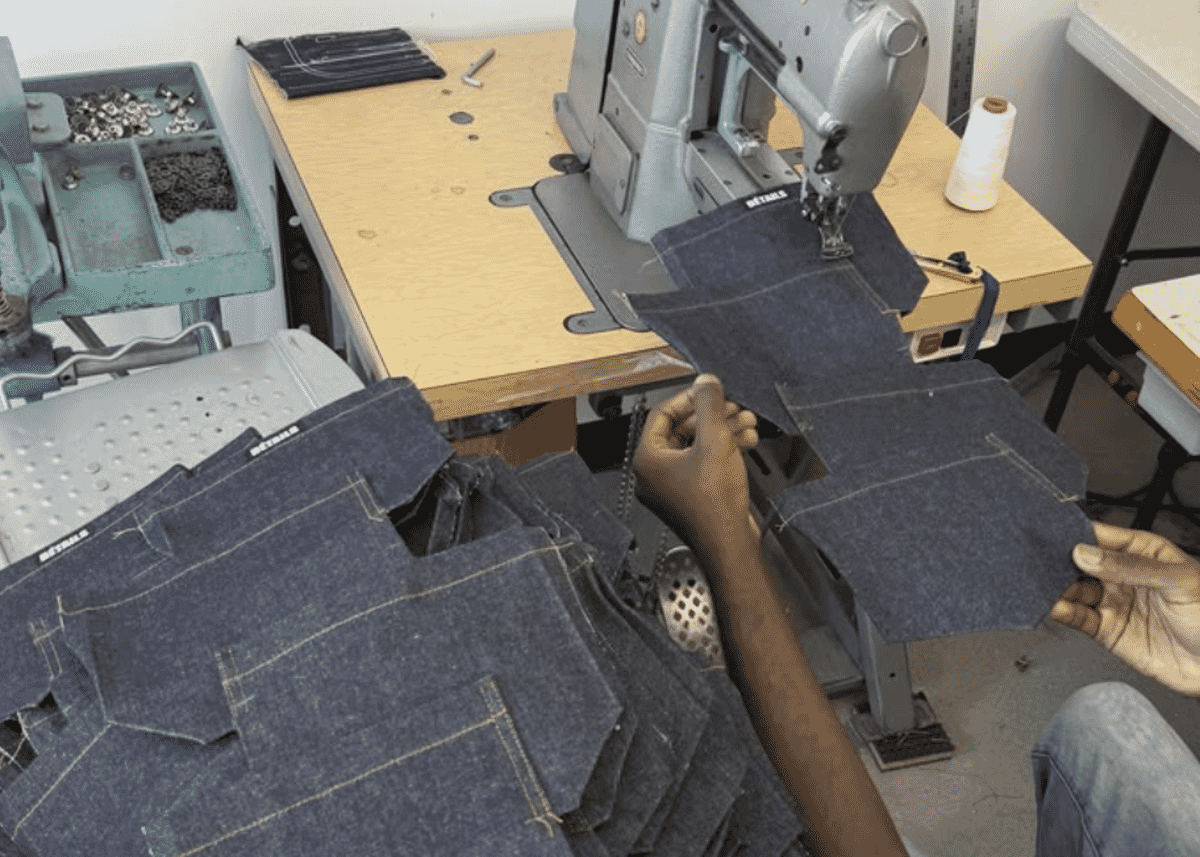
Citation Capsule: Many Alibaba apparel listings represent trading companies rather than manufacturers, and the listing alone rarely settles which. Three indicators identify a trader: an implausibly broad product range spanning unrelated categories, a business licence registered for wholesale and retail trade rather than manufacturing, and vague answers to specific questions about machinery counts or production lines.
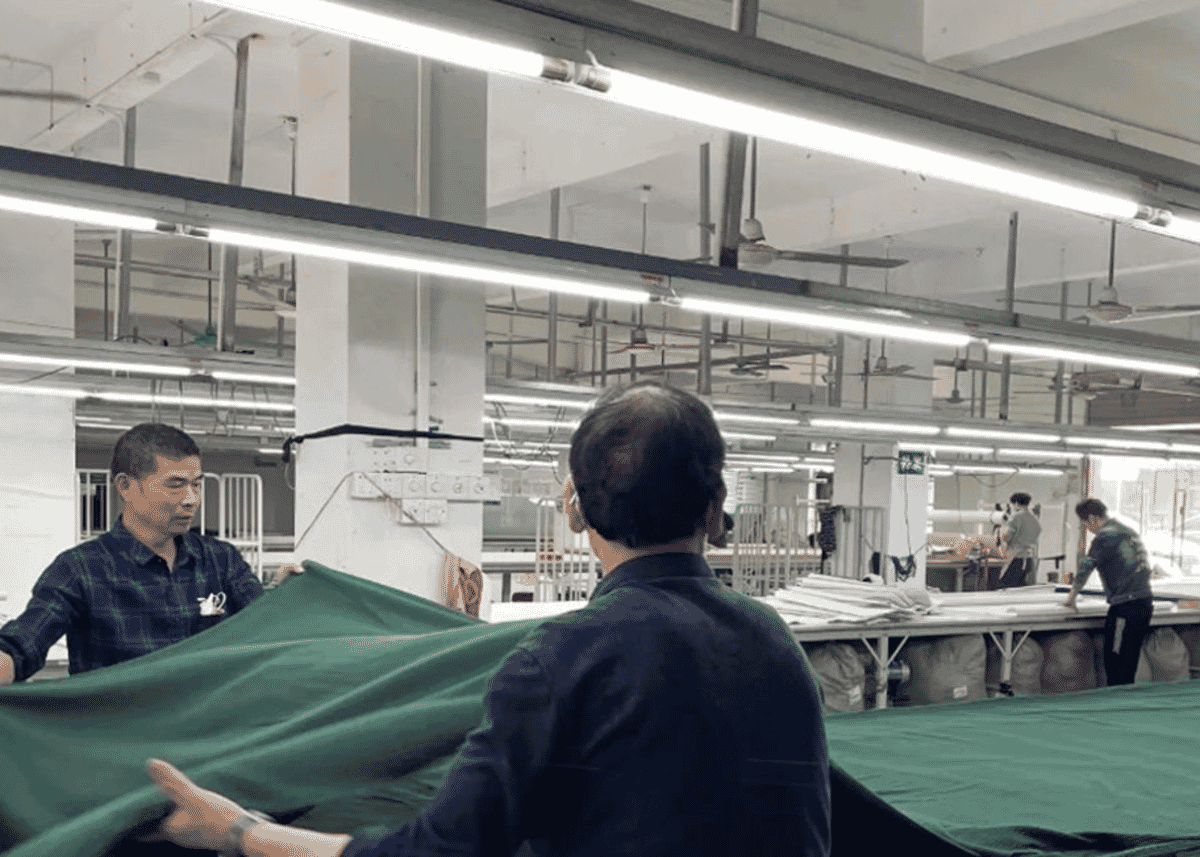
Citation Capsule: Many marketplace suppliers are trading companies rather than factories, and a listing does not always make the distinction clear. A trading company buys from factories and resells, adding margin and distance between the buyer and the people producing the goods, which changes who can resolve a technical problem and how quickly.
What Actually Goes Wrong?
Five failure modes come up again and again, and only one of them is fraud. The other four are ordinary commercial failures that would occur with any supplier found any way, which is why the platform is blamed for problems it did not cause.
The sample was not made where the bulk was made. A common problem. A supplier sources an excellent sample from one factory and places production somewhere cheaper. Ask, in writing, whether the sample and the bulk come from the same facility.
The specification was never written down. You approved a photograph and a price. Fabric weight, yarn, construction and colour tolerance were never agreed, so the supplier chose them, reasonably, in their own interest.
The price was too low to be real. A quote well under the market is a quote for a different product. Somebody has to pay for the difference, and it will be you, in fabric weight or construction.
Quantity crept. The MOQ discussed was per style; the invoice is per colourway. Both parties believed they agreed.
Outright fraud. The risk rises once a conversation moves off the platform to email and payment moves to a personal account, outside Trade Assurance. This is the one the business licence check catches.
Which Checks Actually Reduce Your Risk?
Six, in order of how much risk each removes per minute spent. None requires technical knowledge or travel, and the first three together eliminate the majority of what goes wrong on a first order. They are also the three that suppliers with something to hide are most reluctant to complete.
- Business licence. Ask for the scan. Check the unified social credit code and that the registered name matches the receiving bank account exactly.
- Registered scope. Manufacturing or trade. This answers the factory question definitively.
- Video call from the floor. During Chinese working hours, walking, unannounced. Twenty minutes, and the most informative thing you will do.
- A written specification. Fabric, weight, construction, colour standard, tolerance. Without it you have no basis for any complaint.
- Sample from the production factory. Not a showroom piece, not a sample room elsewhere.
- Certificate numbers, not logos. OEKO-TEX publishes a label check; amfori BSCI documents its audit system.
Note what is not on that list: the badges. They cost you nothing to read and they should not change your process.
Check what the MOQ is actually per
A common quiet dispute on the platform is not fraud, it is a minimum that meant different things to each party. A supplier quoting 500 pieces usually means 500 per colourway, because that is how the dye lot works. The buyer heard 500 across the range. Both believed they had agreed, and the invoice settles it in the supplier's favour.
Ask the question explicitly: is that per style, per colourway, or across the order. Put the answer in the written specification alongside the fabric and the tolerance.
Citation Capsule: Supplier verification on marketplace platforms follows a fixed order of value: business licence and registered scope first, certificate numbers checked in the issuing body database second, an unscheduled video call of the production floor third. None requires technical knowledge and together they remove most first-order risk.
How Should You Pay?
On the platform, through the escrow mechanism, every time on a first order. The protection is imperfect and it is considerably better than nothing, and a common pattern behind reported losses is a buyer persuaded to move payment somewhere the platform cannot see it.
Never move payment off-platform on a first order. A common request preceding a loss is a supplier asking to complete the transaction by direct transfer, usually with a small discount attached. The discount is the price of removing your protection.
Match the account name to the licence. A receiving account in a different name is one of the clearest fraud signals in this market, on or off platform.
Do not pay in full up front. A deposit and balance structure is standard and gives you leverage at the point where leverage matters.
Budget duty separately. The $800 de minimis exemption ended for China and Hong Kong on 2 May 2025 and worldwide on 29 August 2025 (US Customs and Border Protection). Sample orders and small first runs now attract duty, which many Alibaba landed-cost calculations still omit.
Try it free: pressure-test your landed cost with the China production cost calculator. 60 seconds, no email required.
Split the first order if you can
Where a supplier will accept it, running a first order as two shipments rather than one reduces your exposure meaningfully. You see bulk quality from the first batch before the second is cut, and you retain leverage over the balance payment at the moment it matters most.
Not every supplier will agree, and a refusal is not itself a warning sign, since split shipments cost them money. But the willingness to discuss it tells you something about how the relationship is likely to run.
Citation Capsule: Payment fraud in marketplace sourcing often follows the same pattern: the buyer is persuaded to move payment off-platform, or to an account in a name that does not match the registered company. Keeping transactions within platform escrow and verifying any mid-order change of bank details through an established channel closes off that pattern.
When Should You Stop Using Alibaba?
It is an excellent discovery tool and a poor long-term production relationship, and the transition point is fairly clear. It arrives when a product starts selling and has to be reproduced identically, which is the thing platform sourcing is least able to guarantee.
When the product becomes yours. Once you have a pattern you developed, a fabric you specified and a fit you own, you need a direct factory relationship rather than a listing intermediary.
When you reorder. Consistency across runs requires the same factory, the same fabric lot discipline and the same people. That is a relationship, not a transaction.
When margin matters. Every layer between you and the sewing machine is priced in. At small volumes that is a reasonable trade for convenience. At scale it stops being one.
Most brands use the platform to learn what exists and what it costs, then move to direct relationships for the products that work. That is a sensible progression rather than a failure of the platform.
| Risk | Likelihood driver | Mitigation |
|---|---|---|
| Trading company as factory | Vague profile claims | Licence and scope |
| Sample and bulk differ | No sealed sample | Seal and test bulk |
| Payment fraud | Off-platform pressure | Established channels only |
| Fake certificates | Logos only | Verify by number |
| No recourse | No written specification | Document everything |
Where the real risks sit and what reduces each.
Before you send money
- Ask for the business licence and check the unified social credit code.
- Read the registered scope: manufacturing, or wholesale and retail trade.
- Open the verification report and read what was actually inspected.
- Do a live video call from the production floor during working hours.
- Write a specification: fabric, weight, construction, colour standard, tolerance.
- Confirm in writing that sample and bulk come from the same facility.
- Keep payment on-platform and match the account name to the licence exactly.
These seven take an afternoon. They remove most of the risk that people attribute to the platform itself.
How we verify before placing production
- Business licence pulled and the registered name matched exactly to the receiving bank account.
- Registered scope read to establish manufacturing rather than trade.
- Certificate numbers checked in the issuing body database, never accepted as a logo.
- Live video walk of the production floor during Chinese working hours, unannounced.
- Written confirmation that sample and bulk run in the same facility.
Send us a company name from any platform and we will run these five at no cost.
Conclusion
Alibaba is safe in the way a phone book is safe. Paid suppliers there have at least had their business registration checked, the escrow works for the disputes it is designed for, and nothing about that tells you whether a given supplier can make your product.
The badges verify existence. Trade Assurance protects delivery. Neither addresses the complaints that actually arise, because those turn on a specification that most buyers never write and no platform can supply for them.
The checks that matter are unglamorous and cheap. The business licence, the registered scope, a video call from the floor, and a written specification. Do those four and the platform becomes a reasonable place to find suppliers.
And know when to leave. Alibaba is a discovery tool. Once the product is genuinely yours, a direct factory relationship gives you the consistency and the margin that a listings marketplace structurally cannot.
We are a group of documented clothing factories in China, producing for brands from 100 units. Send the brief and we place your production with a factory we have checked: licence, registered scope, certificate numbers and a walk of the floor. You work directly with the factory. Flat fees, no factory commissions.
Get in contact Download the directory ($39)Need a tech pack? Get a factory-ready single-style tech pack for $79. See what's included.
Frequently Asked Questions
Is Alibaba safe to buy from?
It is a real marketplace with escrow protection, and that protection covers non-delivery, quantity shortfalls and gross non-conformity. It does not verify that a supplier can make your product to your standard. The business licence check, a video call from the production floor and a written specification do more for your risk than any badge.
What does Gold Supplier actually mean on Alibaba?
It is a paid annual membership tier giving enhanced listing features and a basic check of the business licence and registration. It indicates the supplier has committed money to selling on the platform and says nothing about production quality, factory ownership or whether they can manufacture your specific product.
Does Trade Assurance cover quality problems?
Alibaba's money-back policy covers orders that are not shipped, go missing or arrive defective, incorrect or damaged, and claims are judged against the agreed order terms. In practice it handles objective, documentable failures well: goods that never arrive, quantity shortfalls, and products obviously different from what was ordered. It handles judgement-based complaints poorly, such as fabric hand, fit, colour tolerance or stitching quality, because those require a written specification that most buyers never agreed.
How do I know if an Alibaba supplier is a factory?
Ask for the business licence and read the registered scope, which distinguishes manufacturing from wholesale and retail trade. A listing spanning unrelated categories such as garments, bags and electronics is almost certainly a trading company. Factories answer specific machinery questions immediately; traders give numbers they have not counted.
Should I pay an Alibaba supplier outside the platform?
No, especially not on a first order. A request to complete payment by direct transfer, usually with a small discount attached, is a common precursor to a loss. Keep payment within the escrow mechanism and confirm the receiving account name matches the business licence exactly.
Editorial note: all company names, certification marks and trademarks referenced here are the property of their respective owners. Descriptions of Alibaba.com programmes are taken from Alibaba's own pages listed below, checked in October 2026. Platform terms change, so confirm them on your own order, and confirm terms directly with the factory before committing.
Sources
- US Customs and Border Protection: suspension of duty-free de minimis treatment.
- Alibaba.com, Trade Assurance: escrow, payment through Alibaba.com and what is covered.
- Alibaba.com, Trade Assurance money-back policy: refund cases, 30 or 60-day claim window, escalation.
- Alibaba.com, Verified Supplier: third-party inspection scope and inspection bodies.
- Alibaba.com Seller Blog, Gold Supplier membership: Gold Supplier as a paid membership with basic registration checks.
- OEKO-TEX Label Check: public verification of certificate numbers.
- amfori BSCI: social audit system documentation.
Related Reading
- Clothing Suppliers in China: How to Find and Vet a Factory
- China Sourcing Agent vs Working Direct With the Factory
No commissions. No markups. The factory bills you directly.