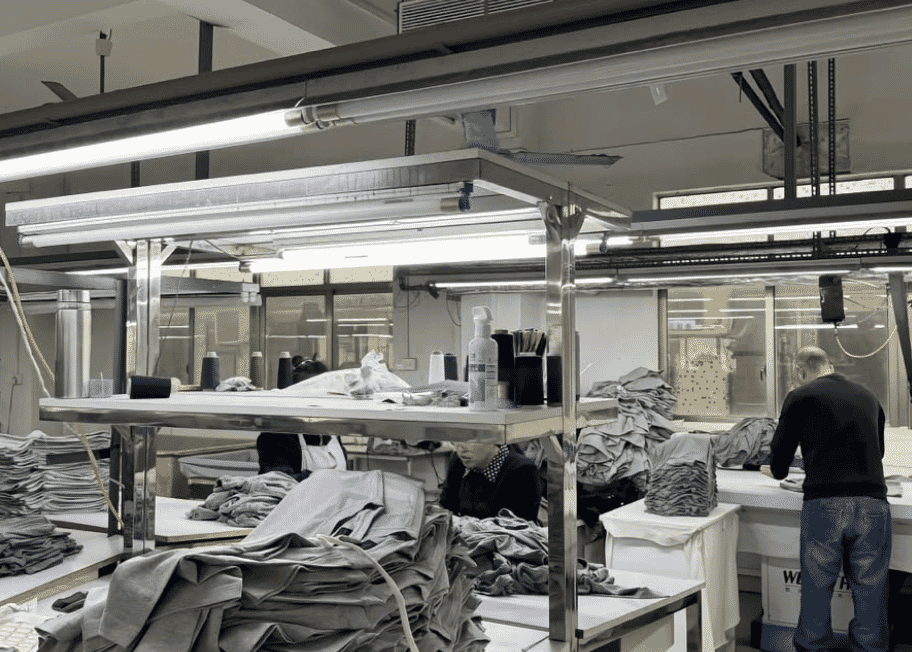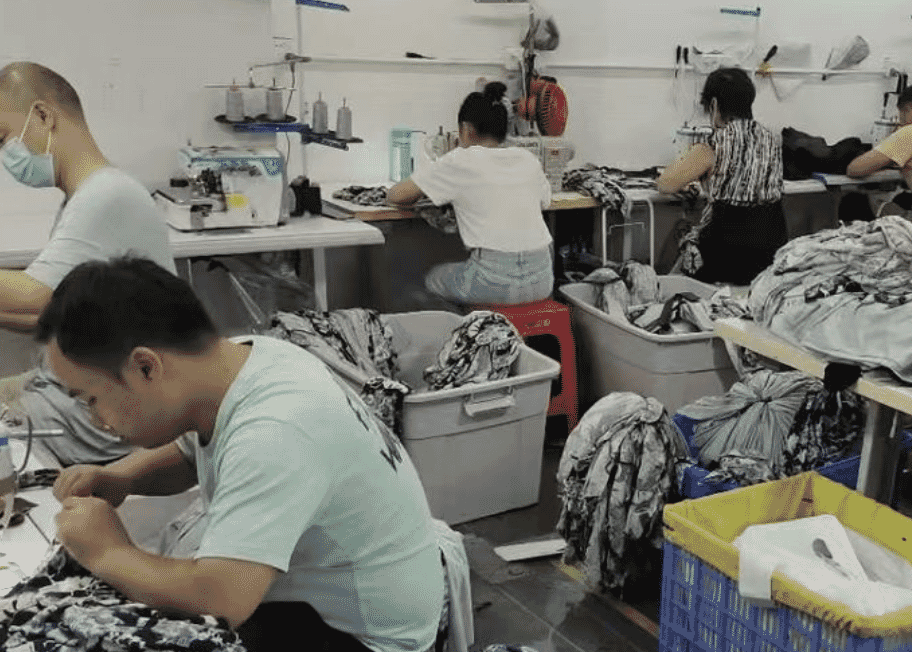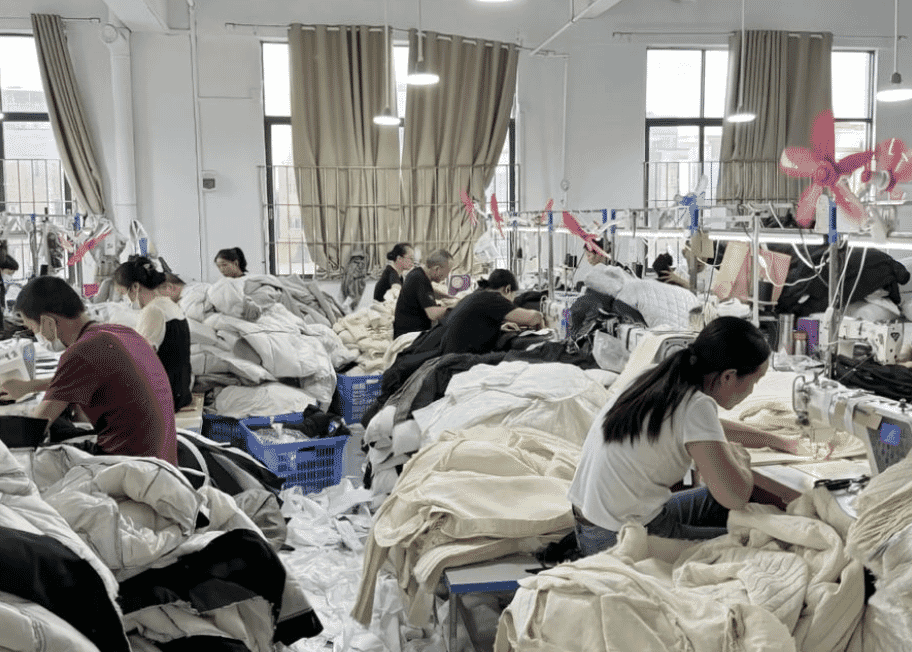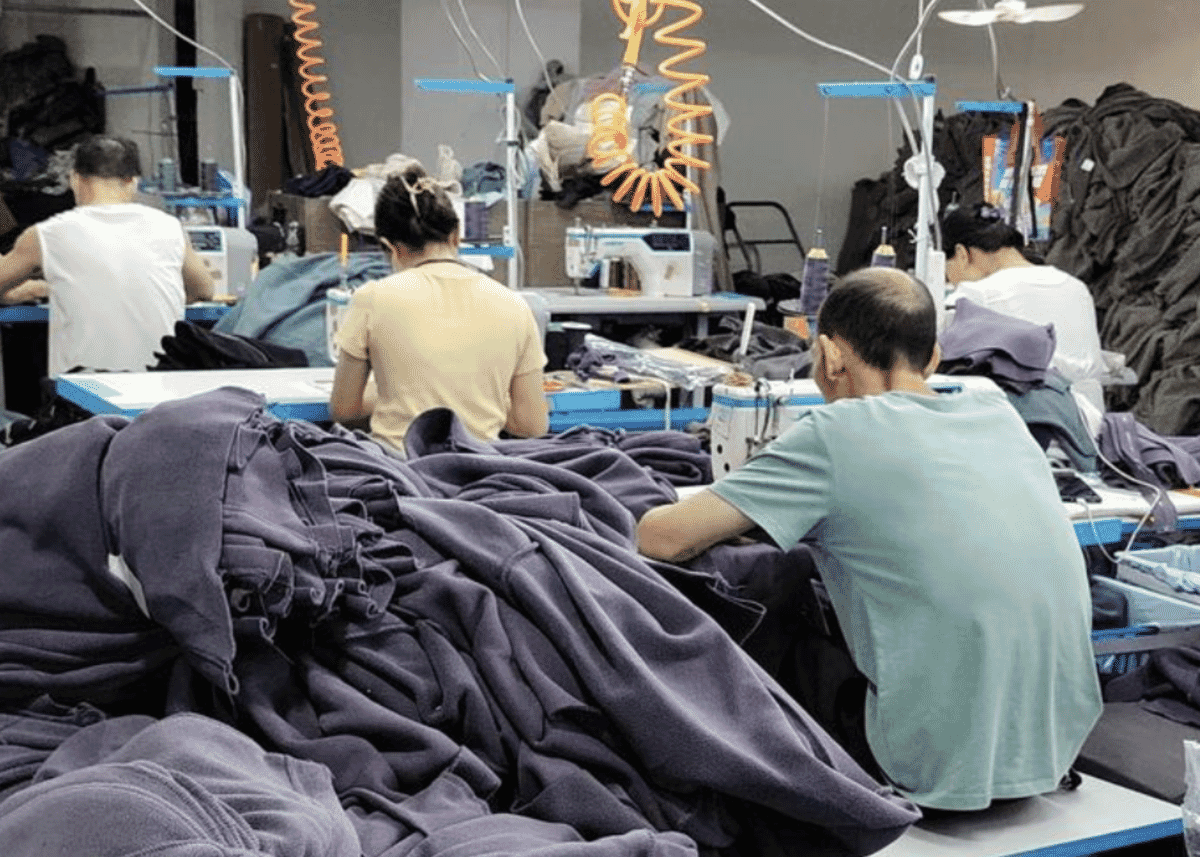
A t-shirt is the most commoditised garment in the world and the easiest to get wrong, because almost everything that separates a good one from a cheap one is invisible in a photograph.
Yarn type, knit construction, weight and finishing all sit inside a garment that looks identical across a $3 price range. Brands specify the colour and the logo, leave the rest open, and then wonder why the sample feels like a promotional giveaway.
Cotton is where this starts. Around 34% of global cotton production now comes from certified sources, and global fibre production reached a record 132 million tonnes in 2024 (Textile Exchange Materials Market Report 2025). Supply is not your problem. Specification is.
Note: China Clothing Manufacturer is a group of documented clothing factories in China, producing for brands from 100 units. Ranges in this guide come from published industry sources and are given as market ranges, not as quotes from a specific factory. We confirm exact MOQ and price with the factory when you send a brief.
Key takeaways
- Four fields decide a t-shirt: yarn, knit, weight and finishing. Colour is not one of them.
- Ring-spun yarn is smoother and stronger than open-end. Combed removes short fibres before spinning.
- Weight in GSM is the number brands quote and the one that means least on its own.
- Tubular knit has no side seams and twists after washing. Side-seamed costs more and holds shape.
- Around 34% of world cotton is now certified, so organic and BCI options are genuinely available.
- Shrinkage is a finishing decision. Ask whether the fabric is pre-shrunk and to what tolerance.
- Decoration method changes the fabric requirement. Specify it before the fabric, not after.
What Actually Decides T-Shirt Quality?
Four fields, and if you specify all four you will get comparable quotes from every factory. If you specify one, you will get four different garments at four prices that cannot be compared. That is the whole problem with buying tees: the variation hides inside a product that photographs identically whatever was actually made.
Yarn. How the cotton was spun, and whether the short fibres were removed first. This decides smoothness, strength and how the surface holds print.
Knit construction. Single jersey, slub, pique, interlock. Different machines, different drape, different price.
Weight. Grams per square metre. More weight means more material, which means more cost and a different hand.
Finishing. Pre-shrinking, enzyme wash, silicone softening, peaching. This is where two identical-on-paper fabrics diverge completely in feel.

Citation Capsule: T-shirt quality is determined by four specification fields: yarn type and spinning method, knit construction, fabric weight in grams per square metre, and finishing treatments such as pre-shrinking and softening. A brief specifying only colour and logo produces quotes that cannot be compared, because each factory will assume different values for the other four.
Have a reference tee you like? Send it and we will come back with the yarn, knit, weight and finishing to specify. No cost. Send it here.
Ring-Spun or Open-End: Which Yarn Do You Want?
This is the single biggest quality lever in a t-shirt and the one most brands have never heard of. It decides how the fabric feels, how it prints, how much it pills and how it looks after twenty washes, and it never appears on a product page.
Open-end, sometimes called rotor-spun, is fast and cheap. The yarn is coarser, the surface rougher, and the fabric feels dry. Almost all promotional and entry-price tees use it.
Ring-spun twists the fibres continuously into a finer, stronger, smoother yarn. The fabric drapes better, feels softer and takes a cleaner print. It costs more, and the difference is obvious in the hand within a second.
Combed is a separate step that can apply to either: short fibres are combed out before spinning, producing a cleaner, more uniform yarn with less pilling. "Combed ring-spun" is the specification most premium basics use.
Skip the search: the China factory directory ($39) lists documented factories by category, city and capability, with the verification status of each. One-time payment, instant download.
Citation Capsule: Yarn spinning method is the largest quality variable in a t-shirt and appears on no product page. Ring-spun yarn is spun with fewer protruding fibre ends than open-end yarn, producing a smoother, stronger fabric that pills less and prints more cleanly. A lighter ring-spun tee outperforms a heavier open-end one on feel, print surface and appearance after washing.
| Yarn and knit | How it feels and prints | What it suits |
|---|---|---|
| Open-end, single jersey | Coarser hand, more pilling, print detail softens | Promotional runs and price-led volume |
| Ring-spun, single jersey | Smoother, stronger, cleaner print surface | The default for a brand tee |
| Combed ring-spun | Smoothest hand, least lint, best print detail | Premium basics and fine artwork |
| Slub ring-spun | Deliberate texture; print sits unevenly by design | Fashion and vintage-look ranges |
| Interlock or double knit | Denser, more structured, less transparent | Heavier tees and pale colourways |
Structural comparison, not a price list.
What Does GSM Actually Tell You?
Less than brands assume. GSM is mass per square metre, and it correlates with substance but does not determine it. A 180 GSM fabric in combed ring-spun cotton and a 180 GSM fabric in open-end are the same weight and completely different garments.
What GSM does usefully signal is category. Lighter fabrics drape and suit fashion fits. Heavier fabrics hold structure, feel substantial and suit boxy cuts. Very heavy fabrics read as premium streetwear and cost proportionally more, because you are buying more cotton.
The practical approach is to give GSM and yarn together, then approve a physical swatch. GSM alone tells the factory almost nothing about what you want.
Yarn count is the other number to ask for
Yarn count describes fineness, and in cotton the convention runs backwards from what people expect: a higher number means a finer yarn. A 30s single jersey is finer and lighter than a 20s at the same construction. Quoting a weight without a count leaves the factory free to hit your GSM with a coarser, cheaper yarn.
The GSM trap
Because heavier sounds better, some brands chase GSM and end up with a stiff, hot garment that customers do not wear twice. Weight is a design decision matched to the fit and the market, not a quality score.
Tubular or Side-Seamed: Which Construction?
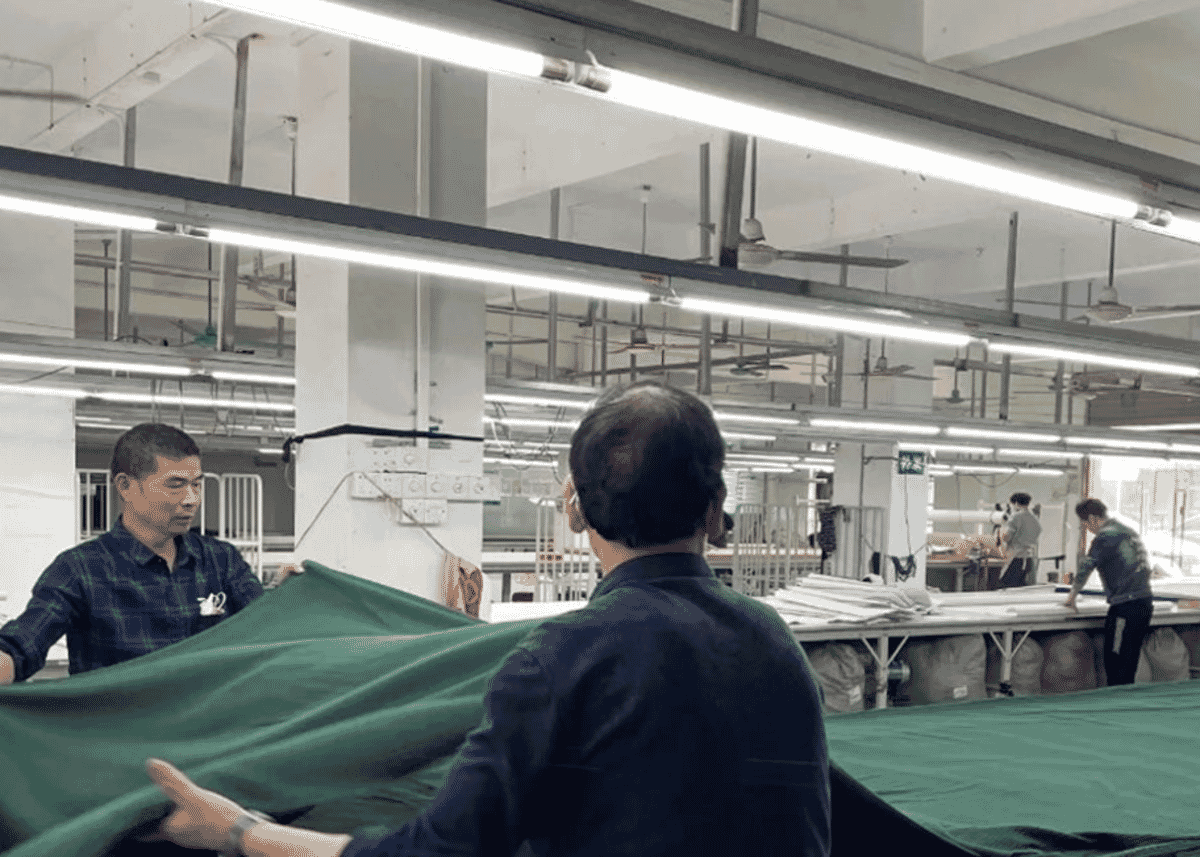
Tubular fabric is knitted as a continuous tube, so the body has no side seams. It is cheaper because there is less sewing and less cutting waste. The downside is torque: the fabric twists in the wash, and after a few cycles the side of the garment rotates visibly.
Side-seamed means the body is cut as two panels and joined. It costs more and it holds its shape, because the seam stabilises the garment. Most premium basics use it.
The other construction fields worth specifying: shoulder taping, which stops the neckline stretching out, collar rib composition, usually with a small elastane content for recovery, and whether the hem is double-needle stitched.
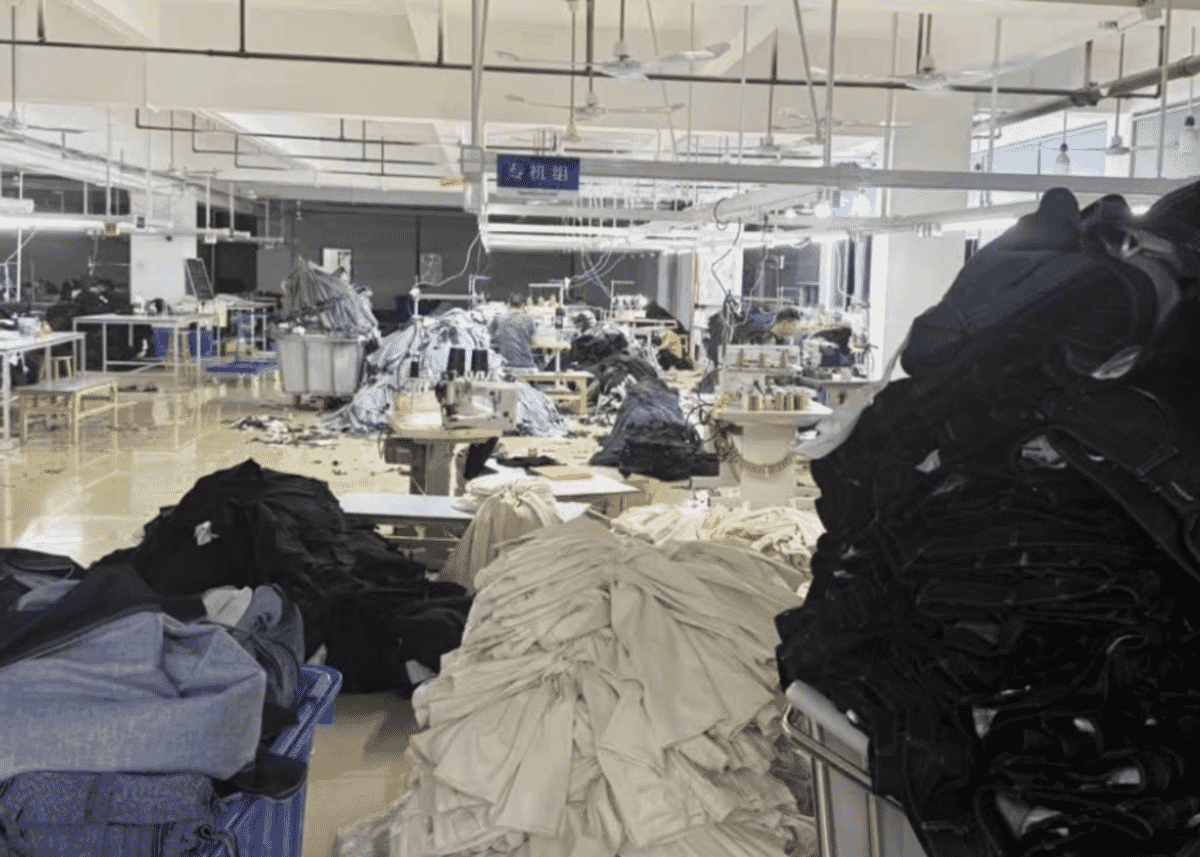
Citation Capsule: Tubular t-shirt bodies are knitted as a continuous tube without side seams, which reduces sewing and cutting waste but allows torque, causing the garment to twist visibly after repeated washing. Side-seamed construction cuts the body as two panels and joins them, stabilising the shape at higher cost, and is standard on premium basics.
Which Cotton Should You Specify?
Certified cotton is now genuinely available rather than a niche request: around 34% of global cotton production comes from certified sources (Textile Exchange, 2025). That changes the conversation from whether you can get it to which certification answers your claim.
Organic cotton certified to a recognised standard covers the growing. If you intend to say "organic" on a label, you need certification covering your specific batch, not a supplier's general statement.
BCI and similar programmes operate on a mass-balance basis, which means the cotton in your garment is not necessarily the certified cotton. That is a legitimate model and it supports a different claim from organic.
Product safety is separate again. OEKO-TEX tests the finished material for harmful substances and says nothing about how the cotton was grown.
The pattern is the same as everywhere in this supply chain: match the certificate to the claim, and verify the number in the issuing body's own database rather than accepting a logo.
How Does Decoration Change the Specification?
Decoration is not applied to a finished garment as an afterthought. It constrains the fabric, and specifying it late is how brands end up re-sampling. The method has to suit the knit and the fibre, so a decoration chosen after the fabric is locked can force a change to the fabric rather than the other way round.
| Method | What it needs from the fabric | Best for |
|---|---|---|
| Screen print | Smooth surface, stable fabric | Bold graphics, volume runs |
| Water-based / discharge | 100% cotton, dyeable ground | Soft hand, vintage looks |
| DTG | Combed cotton, light colours preferred | Small runs, photographic detail |
| Embroidery | Enough weight to carry the stitch | Logos on heavier jersey |
| Sublimation | Polyester, not cotton | All-over print on synthetics |
Structural comparison, not a price list.
Two that catch people out. Discharge printing only works on dyeable cotton, so a poly-cotton blend cannot take it. And sublimation requires polyester, which means an all-over print brief and a 100% cotton brief are incompatible.
What MOQ Should You Expect for T-Shirts?
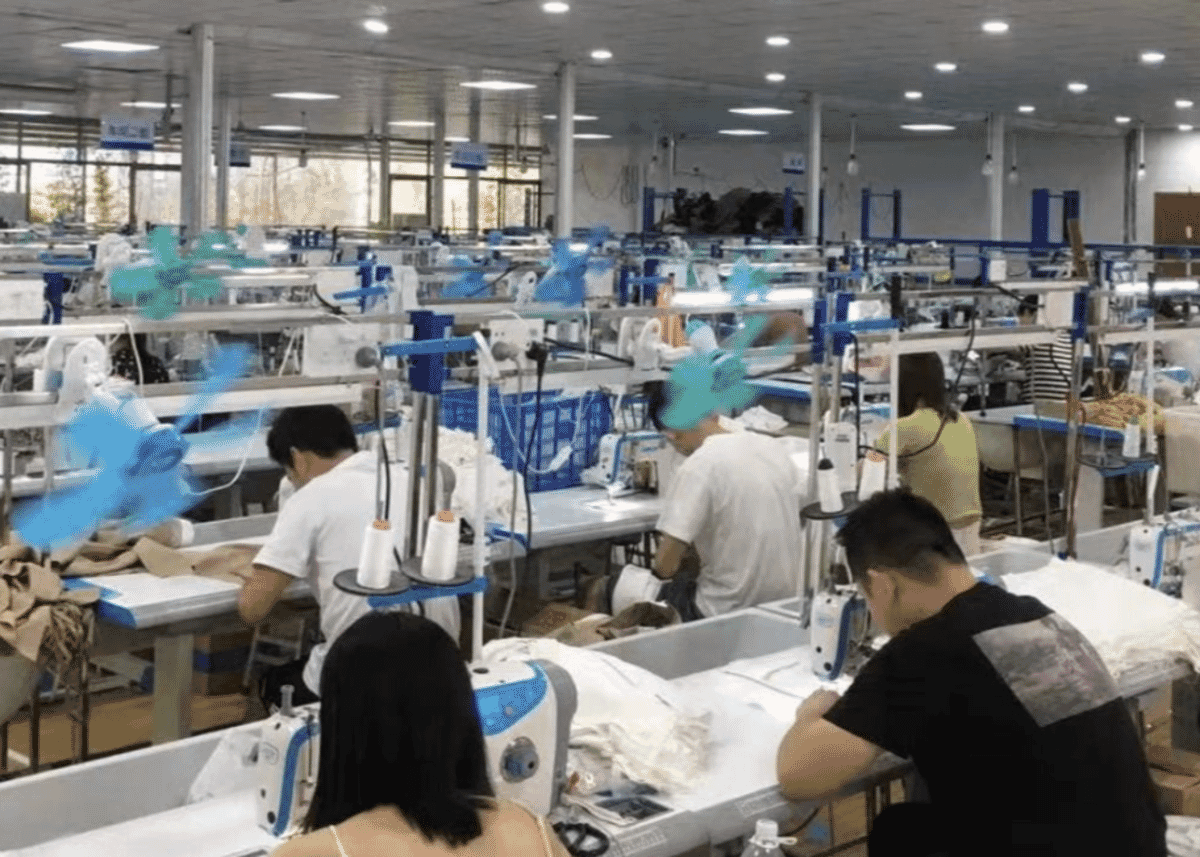
The dye lot sets it, as it does everywhere. Each colourway is a separate dyeing run, and the vessel size is a physical constraint rather than a negotiating position. This is why a brand asking for three colours at low quantity is asking a harder question than one asking for a single colour at three times the volume.
T-shirts do have one advantage: because the fabric is standard, mills carry stock in common colours. Black, white, navy and grey are frequently available from stock, which removes the dye-lot minimum entirely. A custom colour does not have that option.
The levers, in order of effectiveness: use stock colours, reduce the number of colourways, and only then talk about unit count. Cutting units without cutting colours changes very little.
Where Does the Money Go in a T-Shirt?
Fabric dominates, and that single fact explains most of what confuses brands about t-shirt pricing. Sewing a tee is fast and the operations are few, so cut-make-trim is a smaller share of the cost here than in almost any other garment.
The practical consequence: negotiating hard on cut-make-trim moves a small number. Changing the yarn specification moves a large one, in either direction. If a quote comes back above budget, look at the fabric before you look at the factory.
Yield is the hidden line
How many metres your pattern consumes per garment depends on the fabric width and the marker. A wider fabric that cuts efficiently can beat a cheaper narrow one on cost per garment, so ask for the yield alongside the fabric price and compare on the finished unit rather than the metre.
Citation Capsule: Fabric is the largest cost component in a basic t-shirt because sewing operations are few and fast, making cut-make-trim a smaller share than in most garments. Consequently, changing the yarn specification moves the unit price substantially more than negotiating the sewing rate, and fabric yield per garment matters more than price per metre.
When Should You Not Make T-Shirts in China?
Three cases, and they are more common with tees than with most categories because the product is so widely available elsewhere. A plain tee is the most commoditised garment there is, which means the case for producing one has to rest on something specific rather than on price alone.
When you need fewer than a few hundred pieces. Below the dye lot, buying blank tees and decorating them locally is almost always cheaper and faster. You give up control of the blank, which matters only if the blank is part of what you are selling.
When the timeline is short. Sea freight and customs are a long clock for a garment that is available from stock in every market in the world. If the deadline is weeks, decorate blanks.
When duty erases the gap. Cotton t-shirt classifications carry their own rates and the Section 301 layers apply. Run the HTS classification before the unit price, and confirm it against the live USTR and CBP schedules rather than assuming last year's number.
Custom manufacturing earns its place when the tee itself is the product: a fit you developed, a fabric you chose, a weight nobody else is using. If the garment is a canvas for a graphic, blanks will serve you better for longer than most brands expect.
Citation Capsule: Custom t-shirt manufacturing in China is justified when the garment itself is the product, through a developed fit, chosen fabric or distinctive weight. Where the tee functions as a canvas for a graphic, purchasing blanks and decorating locally is typically cheaper and faster below a few hundred units, and avoids sea freight and customs timelines entirely.
How Do You Verify a T-Shirt Factory?
- Business licence and registered scope. Manufacturing or trade. The document answers it.
- Ask what yarn they are quoting. A factory that answers "combed ring-spun, 30s" knows its product. One that answers "good quality cotton" is quoting whatever is cheapest.
- Ask for a shrinkage tolerance in writing. Then wash the sample yourself and measure it.
- Check the certificate numbers, not the logos. OEKO-TEX publishes a label check; amfori BSCI documents its audit system.
- Get the sample from the production factory, not a sample room elsewhere.
Skip the guesswork: send a reference tee and your target price and we will tell you which specification gets you closest, usually within 24 hours. Send the brief.
Before you brief a t-shirt
- Specify the yarn: open-end, ring-spun or combed ring-spun, and the yarn count.
- Specify the knit construction: single jersey, slub, pique or interlock.
- Give GSM alongside the yarn, never on its own.
- Choose tubular or side-seamed, and say whether you want shoulder taping.
- Name the decoration method before the fabric is locked, not after.
- Ask for a written shrinkage tolerance, then wash the sample and measure it yourself.
Specify these six and every quote you receive describes the same garment. Leave them open and none of them do.
How we check a t-shirt factory
- Yarn specified and confirmed: open-end, ring-spun or combed ring-spun, with the count.
- Knit construction and GSM given together, never GSM alone.
- Tubular or side-seamed confirmed, along with shoulder taping and hem stitch.
- Written shrinkage tolerance obtained, then the sample washed and measured against it.
- Sample confirmed as made in the facility that will run bulk, in writing.
Two factories quoting the same colour and GSM can be quoting garments a customer would never confuse.
Conclusion
T-shirts punish vague briefs more than any other garment, because the variation hides in fields brands do not know exist. Two factories quoting the same colour, the same logo and the same GSM can be quoting garments a customer would never confuse.
Yarn is the lever that matters most. Combed ring-spun costs more than open-end and the difference is apparent instantly, which makes it one of the few specification upgrades customers actually notice.
Construction is the second. Tubular saves money and twists in the wash; side-seamed costs more and still looks right after twenty cycles. Which of those you want is a brand decision, not a budget one.
And decide the decoration before the fabric. Discharge printing needs dyeable cotton, sublimation needs polyester, and discovering that after the fabric is approved means starting the sample round again.
We are a group of documented clothing factories in China, producing for brands from 100 units. Send the reference tee, the yarn and the weight you want, and we place your production with a factory that runs that specification, normally within 24 hours. You work directly with the factory. Flat fees, no factory commissions.
Get in contact Download the directory ($39)Need a tech pack? Get a factory-ready single-style tech pack for $79. See what's included.
Frequently Asked Questions
What is the difference between ring-spun and open-end cotton?
Open-end, or rotor-spun, yarn is faster and cheaper to produce, coarser and drier to the touch. Ring-spun twists fibres continuously into a finer, stronger, smoother yarn that drapes better and takes a cleaner print. Combed ring-spun adds a step removing short fibres, reducing pilling further.
What GSM should a good t-shirt be?
GSM alone tells you very little, because a 180 GSM fabric in combed ring-spun and the same weight in open-end are completely different garments. Give GSM alongside the yarn specification and approve a physical swatch. Lighter fabrics drape and suit fashion fits; heavier fabrics hold structure.
Should I choose tubular or side-seamed t-shirts?
Side-seamed if the garment needs to look right after repeated washing. Tubular bodies are knitted as a continuous tube without side seams, which is cheaper but allows torque, so the garment twists visibly after a few wash cycles. Most premium basics use side seams.
Can I get certified organic cotton t-shirts from China?
Yes. Around 34% of global cotton production now comes from certified sources (Textile Exchange, 2025). If you intend to label a garment organic, you need certification covering your specific batch rather than a supplier's general statement, and mass-balance programmes support a different claim from organic.
Does the print method affect which fabric I can use?
Yes, and specifying it late causes re-sampling. Discharge printing needs dyeable cotton and will not work on a poly-cotton blend. Sublimation requires polyester, so an all-over print brief is incompatible with a 100% cotton brief. Name the decoration method before the fabric is locked.
Editorial note: all company names, certification marks and trademarks referenced here are the property of their respective owners. MOQ, cost and lead-time figures are market ranges compiled from the published sources listed below, not quotes from any individual factory, and they vary by product, fabric and season. Tariff figures were correct at the date of publication and the 2026 position is still moving. Always verify your own HTS classification and confirm terms directly with the factory before committing.
Sources
- Textile Exchange, Materials Market Report 2025: global fibre production and certified cotton share.
- Sheng Lu, FASH455, University of Delaware (2025): WTO-based analysis of global textile and apparel trade.
- China National Garment Association, Industry Overview: provincial concentration of garment output and the national cluster map.
- OEKO-TEX Label Check: public verification of certificate numbers.
- amfori BSCI: social audit system documentation.
- Office of the United States Trade Representative: Section 301 tariff actions and exclusion process.
- US Customs and Border Protection: trade remedies and duty administration.
- China Import and Export Fair (Canton Fair): official fair information and phase structure.
Related Reading
- Clothing Suppliers in China: How to Find and Vet a Factory
- Activewear Manufacturers in China: Fabrics, MOQs and Machines
No commissions. No markups. The factory bills you directly.