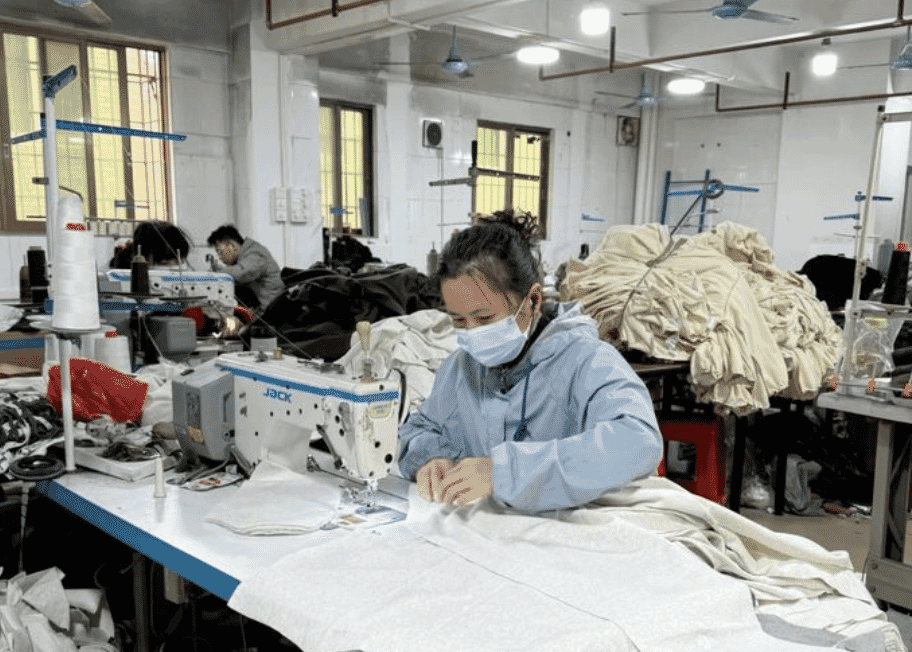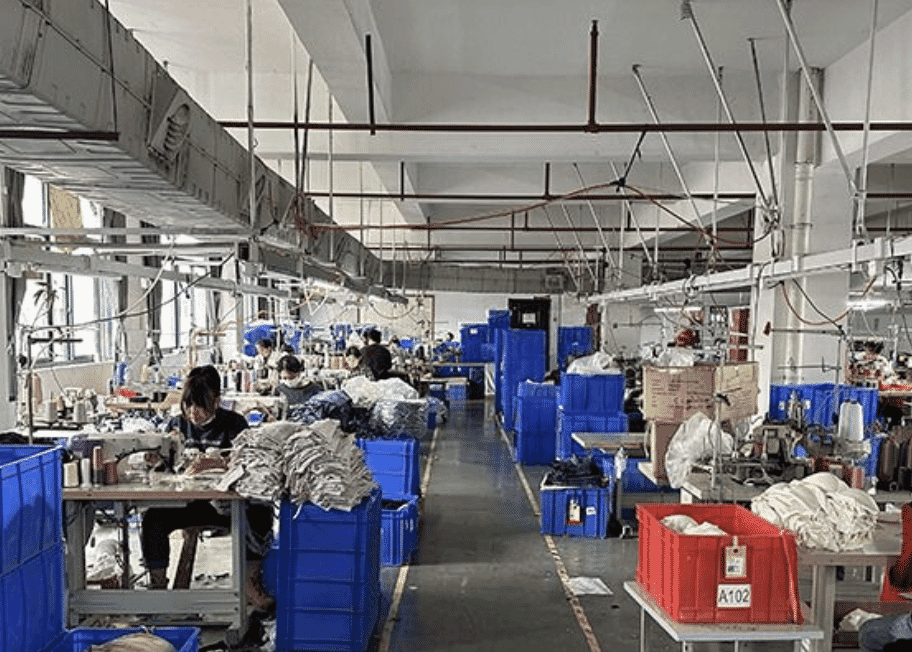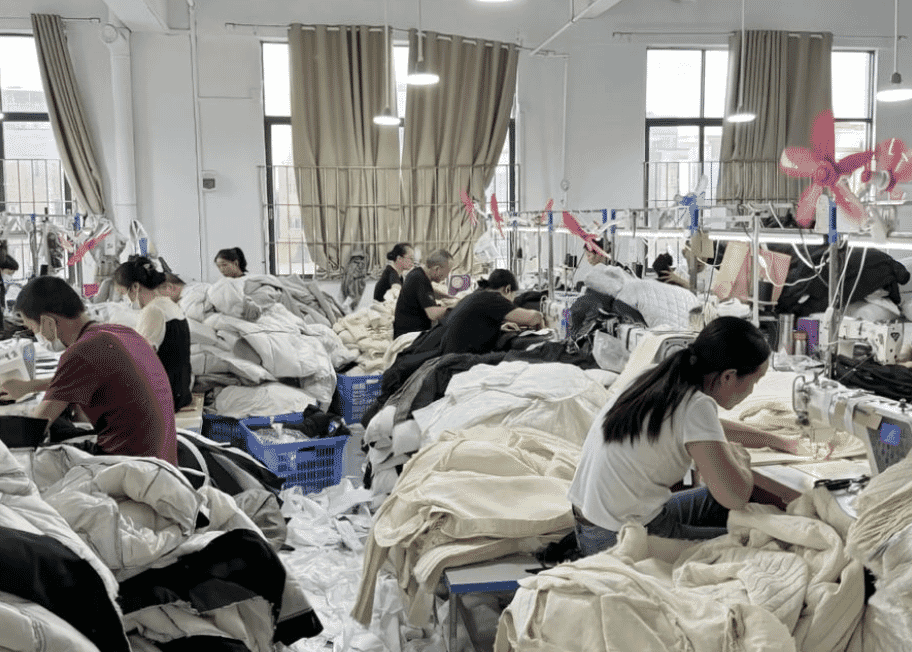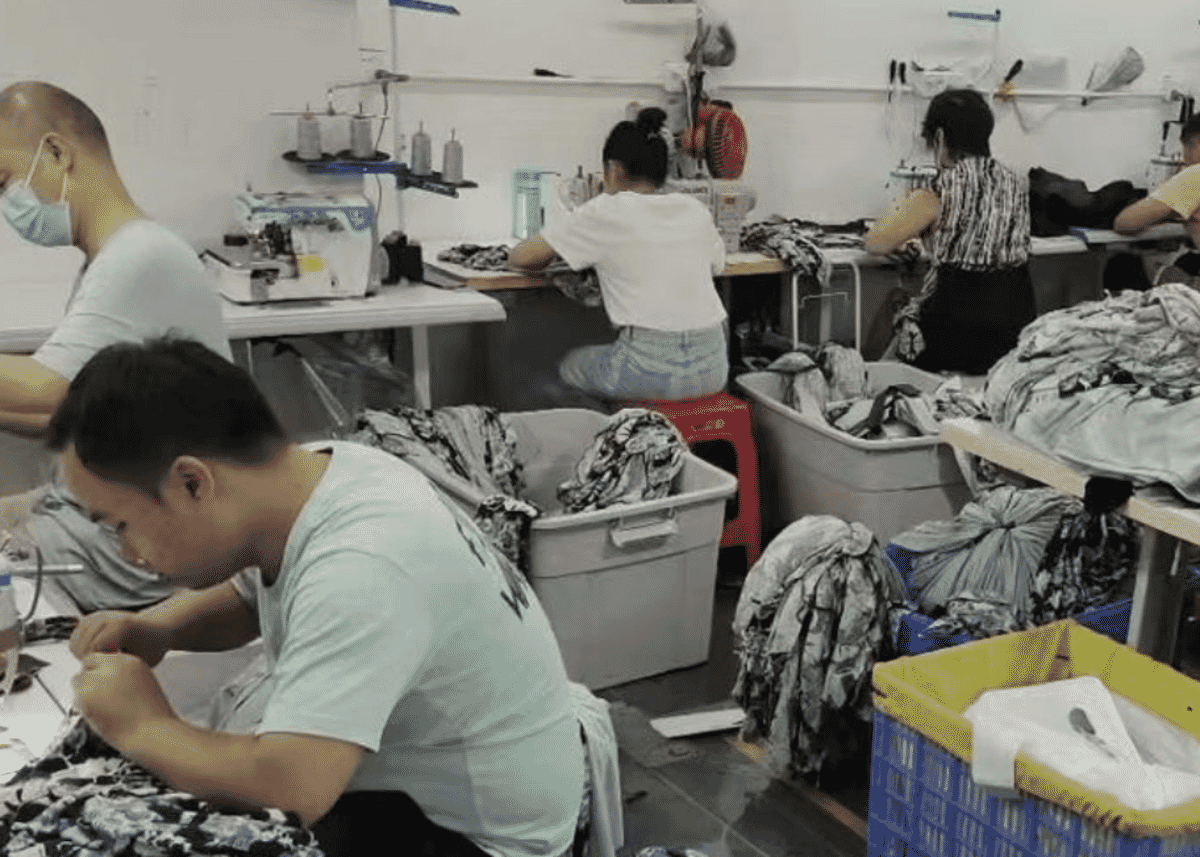
A textile factory does not make clothes. It makes the cloth the clothes are made from, and the distinction matters because the two are almost never the same company.
This is the part of the supply chain China is winning. Its share of world clothing exports fell to 29.6% in 2024, the lowest since 2010, while its share of world textile exports rose to 43.3%, up from 41.5% a year earlier (Sheng Lu, FASH455, citing WTO data, 2025).
Garment assembly is migrating to Vietnam, Bangladesh and Cambodia. The mill supplying them is still in China. This guide covers what a textile factory actually does, the difference between a vertical mill and a specialist, where they are, and how to judge one.
Note: China Clothing Manufacturer is a group of documented clothing factories in China, producing for brands from 100 units. Ranges in this guide come from published industry sources and are given as market ranges, not as quotes from a specific factory. We confirm exact MOQ and price with the factory when you send a brief.
Key takeaways
- China's share of world textile exports rose to 43.3% in 2024, while its clothing share fell to 29.6%.
- A textile factory spins, weaves or knits, dyes and finishes. Most do two or three of those, not all five.
- Vertical mills control the whole chain. Specialists do one stage well and buy the rest in.
- Global fibre production hit a record 132 million tonnes in 2024, and polyester is 59% of it.
- Zhejiang alone generated $95.33bn of textile exports, 32.4% of China's national total.
- Dyeing and finishing is where quality and compliance problems concentrate. Ask about it first.
- Certification attaches to the mill and the batch, not to the garment factory that bought the cloth.
What Does a Textile Factory Actually Do?
Five stages turn fibre into sellable fabric, and almost no single factory runs all of them. Knowing which stages your supplier owns tells you where the quality risk sits, and just as importantly which problems they can actually fix rather than pass along to somebody you have never spoken to.
Spinning turns staple fibre into yarn. Cotton, polyester staple and blends all start here. Yarn count and twist are set at this stage and cannot be changed later.
Weaving or knitting turns yarn into cloth. These are different machines and different factories: a weaving mill does not knit, and a circular knitting operation does not weave.
Dyeing puts colour in. This is the stage with the highest environmental load, the tightest compliance requirements and the most common source of a failed batch.
Finishing applies the performance: moisture management, water repellency, softening, UPF, anti-pilling. It happens after dyeing and it changes the hand feel entirely.
Inspection and rolling grades the fabric and packs it. Fabric is sold by grade, and a mill that does not grade is a mill you cannot hold to a standard.
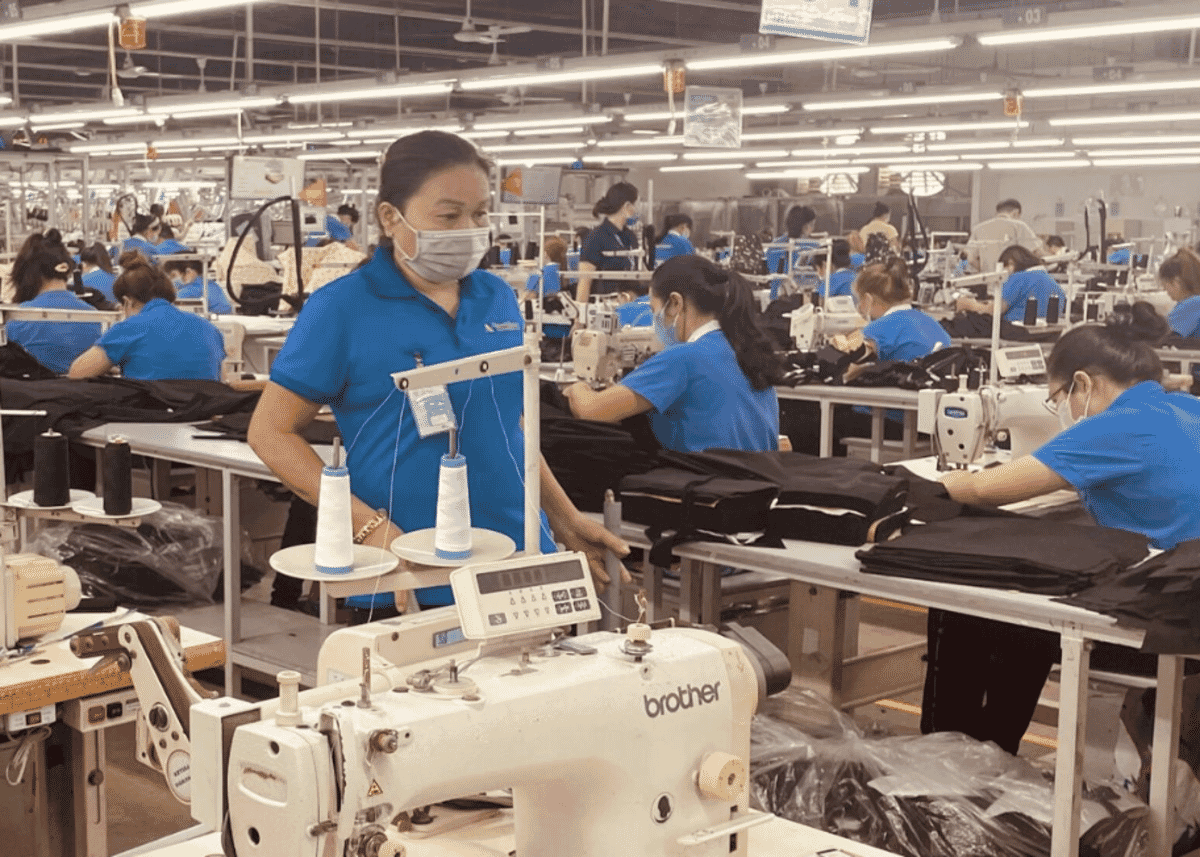
Citation Capsule: Textile production runs through five stages: spinning fibre into yarn, weaving or knitting yarn into cloth, dyeing, finishing, and inspection and rolling. Weaving and knitting require entirely different machinery and are rarely performed by the same factory. Dyeing carries the highest environmental load and is the most frequent source of a failed batch.
Citation Capsule: Textile production divides into five stages that almost no single facility performs end to end: fibre preparation, spinning, weaving or knitting, dyeing and finishing. Identifying which stages a supplier owns establishes where quality risk sits and which problems that supplier can resolve directly rather than relay to a facility the buyer has never contacted.
Vertical Mill or Specialist: Which Do You Want?
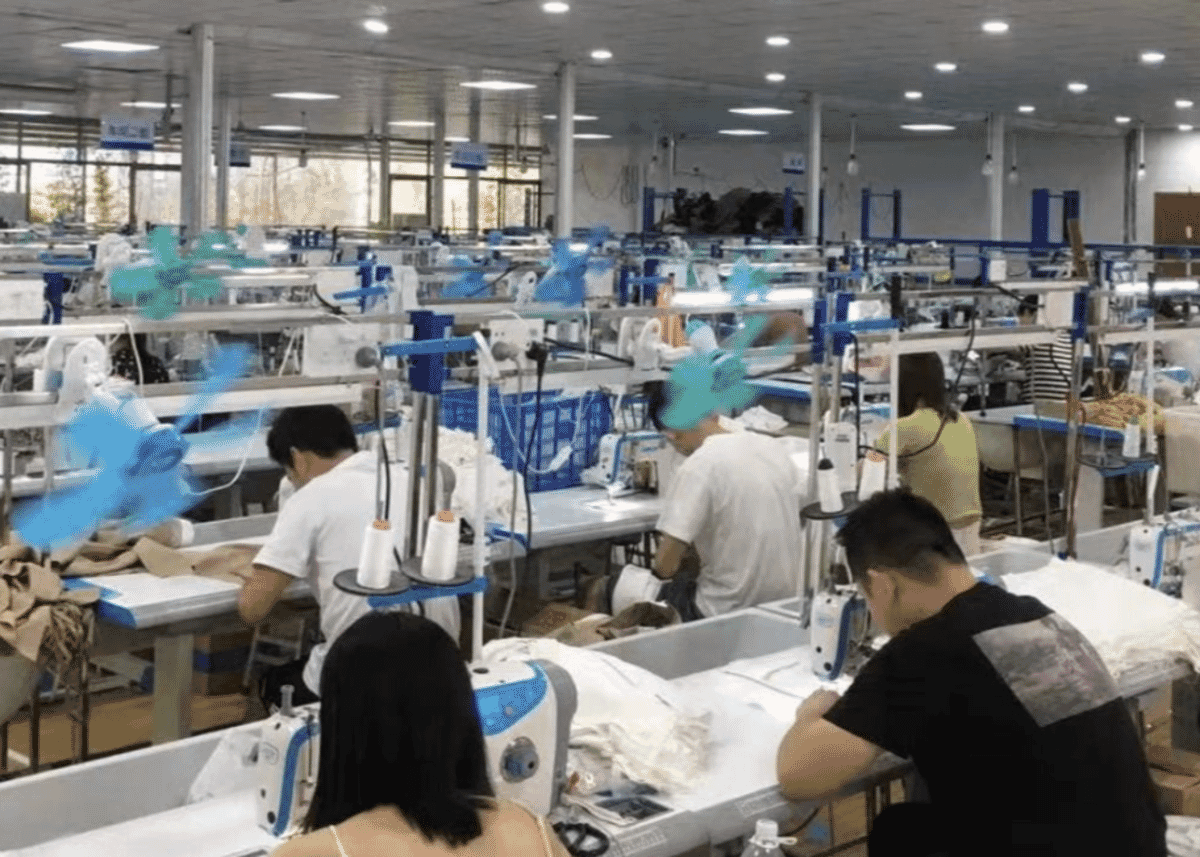
A vertical mill owns several stages, often from yarn through to finished fabric. Colour consistency is better because the same company controls dyeing and finishing, lead times are usually shorter, and there is one party to hold responsible when a batch fails.
A specialist does one stage exceptionally well and subcontracts the others. The capability at that stage is often higher than a vertical mill's, and the price can be better, but the chain has more joints and each joint is a place for a batch to go wrong.
For most brands, the rule is simple. If colour consistency across repeat orders matters commercially, go vertical. If you need a specific technical capability, a specialist will usually do it better.
| Vertical mill | Specialist | |
|---|---|---|
| Colour consistency | Better, same dyehouse each time | Varies with the subcontractor |
| Lead time | Usually shorter | Longer, more handoffs |
| Technical capability | Broad | Deeper in its stage |
| Accountability | One party | Several |
| Minimum order | Often higher | Sometimes lower |
Ranges come from published industry sources. We confirm exact MOQ and price with the factory when you send a brief.
Skip the search: the China factory directory ($39) lists documented factories by category, city and capability, with the verification status of each. One-time payment, instant download.
Citation Capsule: Vertical mills own several production stages, typically from yarn through dyeing to finished fabric, which improves colour consistency across repeat orders because a single company controls dyeing and finishing. Specialist mills perform one stage to a higher standard and subcontract the rest, introducing more handoffs and more points at which a batch can fail.
Where Are China's Textile Factories?
Zhejiang dominates. The province generated $95.33bn of textile exports in 2025, 32.4% of China's national total, and 1.12 trillion yuan of textile and garment revenue, which is 25.5% of the national figure. That concentration is the most useful thing about the sector, because it means a fabric that exists in China almost certainly exists within a short drive of Shaoxing (China Daily Ningbo, 2026).
Keqiao, in Shaoxing, is the centre of gravity. China Textile City there is among the largest textile trading complexes in the world, with thousands of textile enterprises and trading companies operating in one place.
Jiangsu and Shandong carry more of the technical and larger-volume work. Guangdong is downstream: it cuts and sews the cloth that the others make.
Why Does Dyeing Decide Everything?
Dyeing is where fabric projects fail, and it fails in three predictable ways. It is also the stage brands can least often name, because it happens at a facility that is usually neither the mill they bought from nor the factory sewing their garment.
Shade variance between lots. Two batches of the same colour dyed months apart will not match unless the mill holds a physical standard and measures against it. Ask whether they do, and ask to see the lab dip approval process.
Fastness failure. Colour that transfers in the wash or fades in light is a dyeing and finishing problem, not a fibre problem. It is testable, and if it matters to your market you should test it rather than assume.
Compliance exposure. Restricted substances are introduced at dyeing and finishing. This is exactly what bluesign certifies at the input level and what OEKO-TEX verifies in the finished material, and it is why both certifications sit at the mill rather than the garment factory.
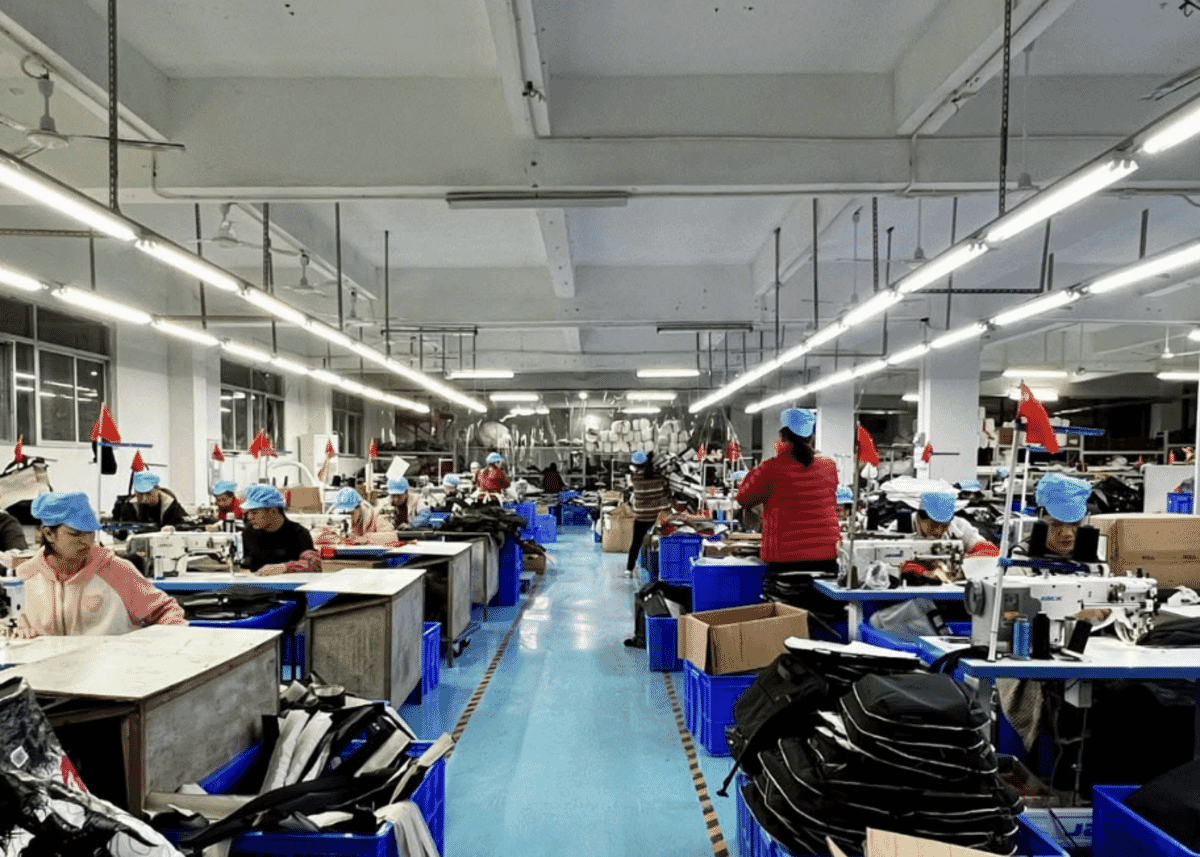
Citation Capsule: Fabric quality problems concentrate at the dyeing and finishing stage rather than in the fibre. The three recurring failures are shade variance between dye lots, colour fastness failure in wash or light, and restricted-substance compliance. Both bluesign and OEKO-TEX certify at mill level for this reason, which is why a garment factory cannot hold those certifications on its own account.
Knitting or Weaving: Which Mill Do You Need?
These are not two settings on one machine. They are different factories, and briefing the wrong one is the most common way a fabric search goes nowhere. The machinery, the operators and the finishing routes differ entirely, which is why a mill will politely decline rather than explain that you have come to the wrong kind of place.
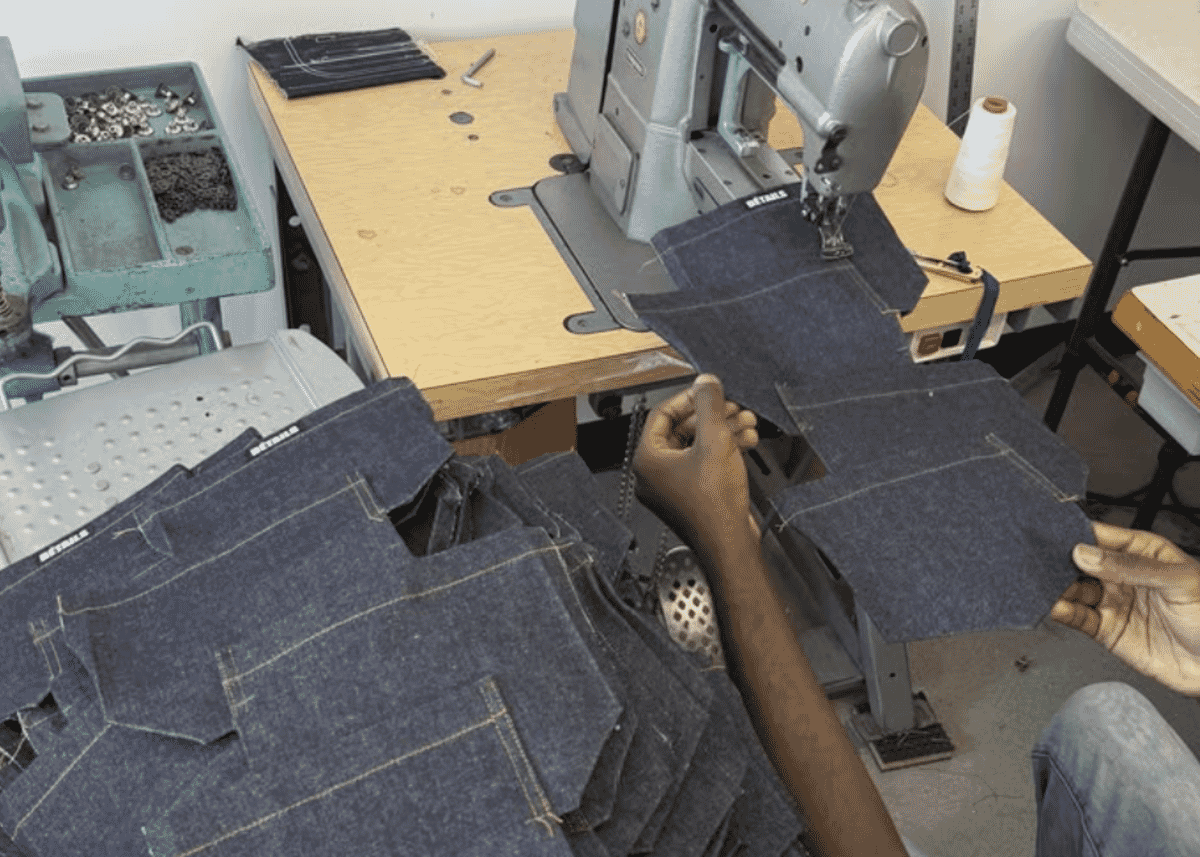
Weaving interlaces two yarn systems at right angles, warp and weft. The cloth is stable, it does not stretch much without elastane, and it holds a crisp finish. Shirting, chinos, denim and most tailoring are woven.
Knitting forms loops from a single yarn system. The cloth stretches by construction rather than by fibre, drapes softly and recovers. T-shirts, jersey, interlock, fleece and almost all activewear are knitted.
The commercial consequences differ too. Weaving mills set up a warp, which is a slow and expensive operation, so their minimums are usually higher and their lead times longer. Circular knitting mills change yarn faster, which is part of why knit minimums tend to be lower.
| Weaving mill | Knitting mill | |
|---|---|---|
| Makes | Shirting, twill, denim, suiting | Jersey, interlock, rib, fleece |
| Stretch | Only with elastane | By construction |
| Set-up | Warp, slow and costly | Yarn change, faster |
| Typical minimum | Higher | Lower |
| Dyeing | Piece or yarn dyed | Usually piece dyed |
Yarn-dyed solves a problem piece-dyed cannot
In yarn-dyed fabric the colour goes into the yarn before the cloth exists, which is how stripes, checks and true colour-woven patterns are made. It also behaves better across repeat orders, because you are matching yarn rather than matching a dye bath.
How Long Does Fabric Actually Take?
Longer than brands plan for, and it is the usual reason a garment delivery slips. The garment factory cannot cut until the cloth arrives, so the mill's calendar becomes your calendar whether or not anybody told you that when the order was placed. Asking for the fabric delivery date as a separate milestone is the single most useful scheduling question available.
The sequence runs: yarn sourced, lab dips submitted and approved, bulk dyeing, finishing, inspection and rolling, then shipping to the garment factory. Lab dip approval is the step brands control and the step they most often delay, because it sits with them rather than with the mill.
Stock fabric collapses all of that. If the mill already holds the cloth in your colour, you are buying from a shelf, and the trade is that you choose from what exists.
Citation Capsule: Weaving and knitting are separate mill types with different economics. Weaving requires a warp set-up that is slow and costly, producing higher minimums and longer lead times, while circular knitting changes yarn faster and supports lower minimums. Yarn-dyed fabric, where colour enters the yarn before the cloth is formed, repeats more reliably across orders than piece-dyed solids.
How Do You Assess a Chinese Textile Factory?
Six questions, in order, and the answers to the first two usually settle it. None is technical and none requires a visit, which is what makes this the cheapest filter available before any sample is commissioned. A supplier who answers all six without hesitation is describing how their business already works.
- Which stages do you own? Spinning, weaving or knitting, dyeing, finishing. Anything they do not own is subcontracted, and you should know to whom.
- Where is the dyehouse? If it is not theirs, the colour consistency promise is somebody else's promise.
- What is the minimum per colour? The dye lot sets it. This is the number that will govern your garment minimum too.
- Do you hold a physical colour standard? And how do you measure against it between lots.
- Which certificate numbers? Not logos. OEKO-TEX publishes a label check, and amfori BSCI documents its audit system.
- Can I have the business licence? Registered scope distinguishes a manufacturer from a trading company, whatever the website says.
Working out whether you need a mill or a garment factory? Send the product and we will tell you which part of the chain you are actually looking for, at no cost. Send it here.
Which Certifications Should a Mill Actually Hold?
Certification in textiles is layered, and the layers answer different questions. Knowing which question you are asking stops you accepting the wrong certificate as an answer. A chemical safety certificate and an organic content certificate verify entirely different things, and neither one tells you whether a mill can hold your colour across a production run.
Product safety. OEKO-TEX STANDARD 100 tests the finished material for harmful substances. It answers whether the cloth is safe against skin. It says nothing about how the mill operates or who worked there.
Process and chemical input. bluesign works upstream, approving the chemistry entering the process rather than testing what comes out. This is the stronger signal for environmental management, and it is also the rarer one.
Content claims. Global Recycled Standard tracks recycled content through an unbroken chain of custody. Without transaction certificates covering your specific order, a GRS logo describes someone else's fabric.
Social audit. amfori BSCI and comparable schemes audit labour conditions. They answer a question about people, not about the cloth.
Match the certificate to the claim
A mill holding OEKO-TEX cannot support an environmental-management claim with it, and a mill holding BSCI cannot support a chemical-safety claim. Brands routinely cite whichever certificate the mill happens to have against whichever claim they want to make, and that is the version that gets challenged.
Ask for certificate numbers and check them in the issuing body's own database. Every scheme named above publishes a way to verify, and a logo on a website is not one of them.
Before you commit to a mill
- Establish which of the five stages the mill owns and which it subcontracts.
- Find out where the dyehouse is. If it is not theirs, the colour promise is somebody else's.
- Ask for the minimum per colour, because that number will govern your garment minimum too.
- Confirm the mill holds a physical colour standard and measures against it between lots.
- Match each certificate to the claim you intend to make with it.
- Verify certificate numbers in the issuing body's own database.
The first two answers tell you where your quality risk lives. Everything after that is detail.
How we assess a mill
- Which of the five stages the mill owns, and who it subcontracts the rest to.
- Location and ownership of the dyehouse, because that governs colour consistency and lead time.
- Minimum per colour established at the mill, since it will govern the garment minimum downstream.
- Whether a physical colour standard is held, and how the mill measures against it between lots.
- Certificate numbers matched to the claim: bluesign for process, OEKO-TEX for product, GRS for content.
The first two answers tell you where the quality risk sits. We ask them before anything else.
Conclusion
China's textile position is strengthening while its garment position weakens, and that single fact should change how you think about sourcing. Moving assembly to Vietnam does not necessarily move the fabric, and the origin rules that matter turn on more than where the garment was sewn.
When you assess a mill, start with which stages it owns and where the dyehouse is. Those two answers tell you where your quality risk lives, and everything else is detail.
It is also worth holding the trade picture in view when you plan. China is losing finished-garment share and gaining fabric share, which means the mill relationship is becoming more durable than the garment relationship. A brand that moves assembly to Vietnam in 2027 may well still be buying the same cloth from the same Zhejiang mill in 2030.
That argues for investing in the fabric relationship specifically: knowing the mill, holding a physical colour standard with them, and understanding their minimums, rather than treating fabric as something the garment factory handles invisibly on your behalf.
We are a group of documented clothing factories in China, producing for brands from 100 units. Tell us the product and we will place your production with the right part of the chain, normally within 24 hours. You work directly with the factory. Flat fees, no factory commissions.
Get in contact Download the directory ($39)Need a tech pack? Get a factory-ready single-style tech pack for $79. See what's included.
Frequently Asked Questions
What is the difference between a textile factory and a clothing factory in China?
A textile factory makes cloth: it spins, weaves or knits, dyes and finishes. A clothing factory cuts and sews that cloth into garments. They are almost never the same company, and certification such as bluesign or OEKO-TEX attaches to the mill rather than to the garment factory.
Is China still growing in textiles?
Yes, and it is the opposite of the garment picture. China's share of world textile exports rose to 43.3% in 2024 from 41.5% a year earlier, while its share of world clothing exports fell to 29.6%, the lowest since 2010 (WTO data via Sheng Lu, FASH455, 2025).
Where is the biggest fabric market in China?
China Textile City in Keqiao, Shaoxing, in Zhejiang province. It covers a very large floor area and hosts thousands of textile enterprises and trading companies. Zhejiang alone accounts for 32.4% of China's textile exports.
What is a vertical mill?
A mill that owns several production stages, often from yarn through dyeing to finished fabric. Colour consistency across repeat orders is better because the same company controls dyeing and finishing, lead times are usually shorter, and there is a single party accountable when a batch fails.
Why does dyeing matter more than the fibre?
Because that is where fabric problems concentrate: shade variance between lots, fastness failure in wash or light, and restricted-substance compliance. Ask whether the mill holds a physical colour standard and measures against it between lots, and ask where the dyehouse is if the mill does not own one.
Editorial note: all company names, certification marks and trademarks referenced here are the property of their respective owners. MOQ, cost and lead-time figures are market ranges compiled from the published sources listed below, not quotes from any individual factory, and they vary by product, fabric and season. Tariff figures were correct at the date of publication and the 2026 position is still moving. Always verify your own HTS classification and confirm terms directly with the factory before committing.
Sources
- Textile Exchange, Materials Market Report 2025: global fibre production, polyester share and recycled fibre volumes.
- China Daily Ningbo (2026): Zhejiang textile and garment revenue and export figures.
- bluesign: chemical input and mill process certification.
- Sheng Lu, FASH455, University of Delaware (2025): WTO-based analysis of global textile and apparel trade.
- China National Garment Association, Industry Overview: provincial concentration of garment output and the national cluster map.
- OEKO-TEX Label Check: public verification of certificate numbers.
- amfori BSCI: social audit system documentation.
- Office of the United States Trade Representative: Section 301 tariff actions and exclusion process.
- US Customs and Border Protection: trade remedies and duty administration.
- China Import and Export Fair (Canton Fair): official fair information and phase structure.
Related Reading
- Clothing Suppliers in China: How to Find and Vet a Factory
- Activewear Manufacturers in China: Fabrics, MOQs and Machines
No commissions. No markups. The factory bills you directly.