By David Stan, Founder at China Clothing Manufacturer. Published September 2026.
Guangzhou's wholesale markets sell finished garments by the dozen, and they are not factories. That distinction is the whole guide: people fly in expecting to commission production, spend three days in buildings full of stock, and leave with neither a supplier nor an order.
The scale is real. Shisanhang alone holds thousands of booths, Baima is one of the largest and best-managed clothing markets, and the Zhongda fabric complex nearby covers a very large floor area. If you want to see what China's garment industry produces, a week here shows you more than a year of browsing listings.
This guide covers which market sells what, how buying actually works, what you can and cannot negotiate, how to get goods home, and when the markets are the wrong answer entirely.
Note: China Clothing Manufacturer is a group of documented clothing factories in China, producing for brands from 100 units. Ranges in this guide come from published industry sources and are given as market ranges, not as quotes from a specific factory. We confirm exact MOQ and price with the factory when you send a brief.
Key takeaways
- The markets sell existing stock. They do not make garments to your pattern.
- Shisanhang in Liwan holds thousands of booths of fast-turnover womenswear.
- Baima is one of the largest and best-managed, skewing mid to high-end fashion.
- Zhongda is fabric, not garments, and covers a very large floor area.
- Minimums are low, often a few pieces per style, because the goods already exist.
- Prices are quoted per piece and drop by quantity band, not by negotiation alone.
- You are responsible for composition claims once you relabel and resell.
What Are the Guangzhou Wholesale Markets?
Multi-storey buildings subdivided into hundreds or thousands of small booths, each run by a trader carrying a range of finished garments. Some traders own the factory behind the stock, most do not, and almost none will commission production to your specification.
The buying model is simple and it is not what most brands expect. You walk, you look, you handle the goods, you ask a price, and you buy from stock. There is no sampling stage, no pattern, no fit development. The garment you take home is the garment that exists.
That has one advantage nothing else matches: you can assess hundreds of products physically in a day. For understanding what a price point actually buys, it is the fastest education available anywhere in the industry.
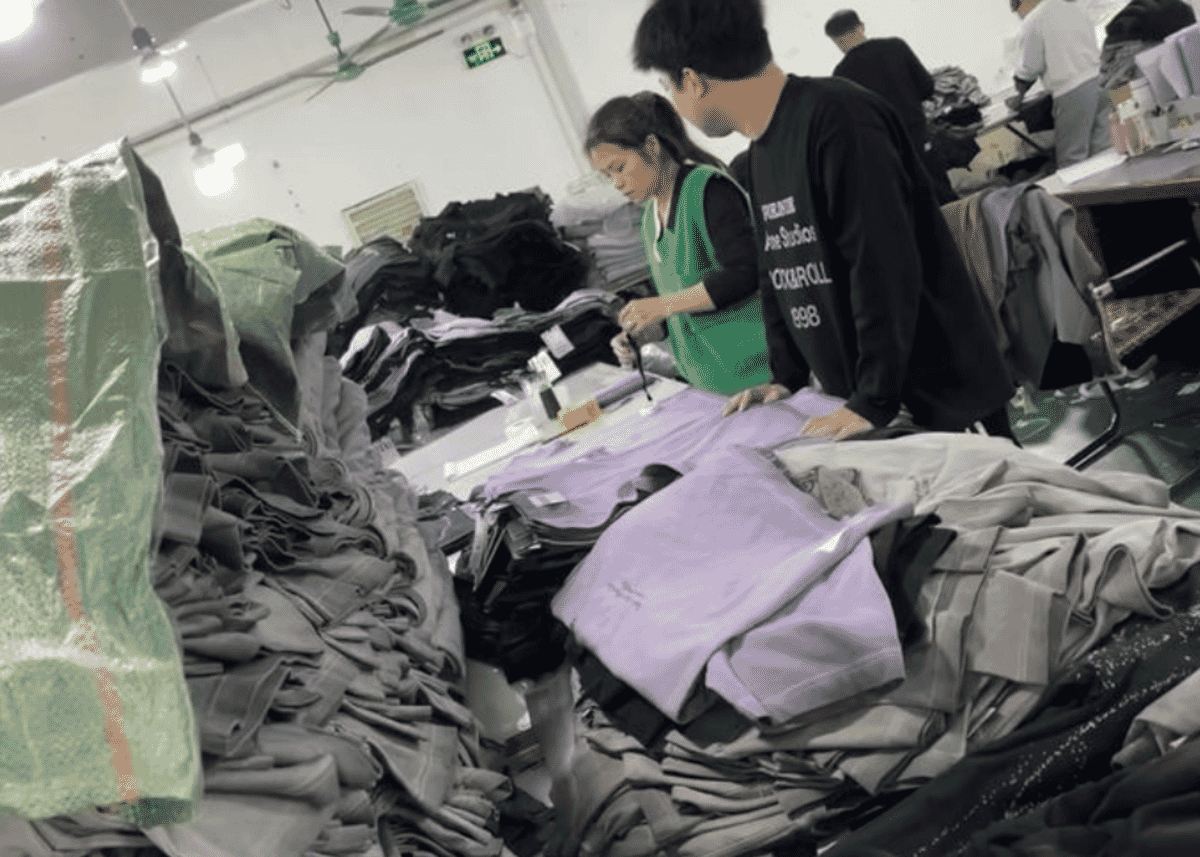
Citation Capsule: Guangzhou's clothing wholesale markets are multi-storey buildings subdivided into booths where traders sell finished garments from existing stock. There is no sampling, pattern development or fit process: the garment purchased is the garment that exists. Shisanhang alone holds thousands of booths, primarily in fast-turnover womenswear.
Which Market Sells What?
They are genuinely different, and going to the wrong one wastes a day. The districts specialise, and the specialisation is not signposted in a way a visitor can read on arrival, which is why the choice is made before you travel.
| Market | District | Known for |
|---|---|---|
| Shisanhang | Liwan | Thousands of booths, fast-fashion womenswear, very fast style turnover |
| Baima | Near Guangzhou railway station | One of the largest and best managed, mid to high-end fashion |
| Zhanxi | Near the station | Export-oriented trading, buyers from many markets |
| Shahe | Tianhe | Lower price points, high volume basics |
| Zhongda | Haizhu | Fabric, not garments, over a very large floor area |
Based on published market guides. Opening hours and trading patterns change; confirm before travelling.
Zhongda is the odd one out
Every other market on that list sells finished garments. Zhongda sells fabric, and it serves a completely different purpose: it is where you go when you have decided to commission production and need to choose the cloth. Brands regularly add it to a garment-buying itinerary and then wonder why nobody is selling clothes.
Shisanhang is where the trend velocity is
The reason Shisanhang matters is turnover speed rather than quality. Styles change extremely fast, which makes it the best place in China to see what is selling right now in the categories it covers, and a poor place to find something you can reorder in six months.
How Does Buying Actually Work?
Four things surprise first-time buyers, and all four are normal rather than signs of a problem. They follow from the market being built for trade buyers who already know how it works, not for visitors learning it on the day.
Prices are per piece and banded. A trader quotes one price for a few pieces and a lower one at higher quantity. The bands are fairly fixed, so the lever is quantity rather than charm.
Minimums are low but not absent. Many booths sell from a handful of pieces per style and colour. Some will sell singles at a retail-adjacent price, which is fine for sampling and not for buying.
Cash and local payment dominate. Card acceptance is patchy. Most transactions run on local mobile payment or cash, which is worth arranging before you arrive rather than in a stairwell.
Photography is often restricted. Designs are copied quickly and traders protect their stock accordingly. Ask before photographing anything.
Skip the search: the China factory directory ($39) lists documented factories by category, city and capability, with the verification status of each. One-time payment, instant download.
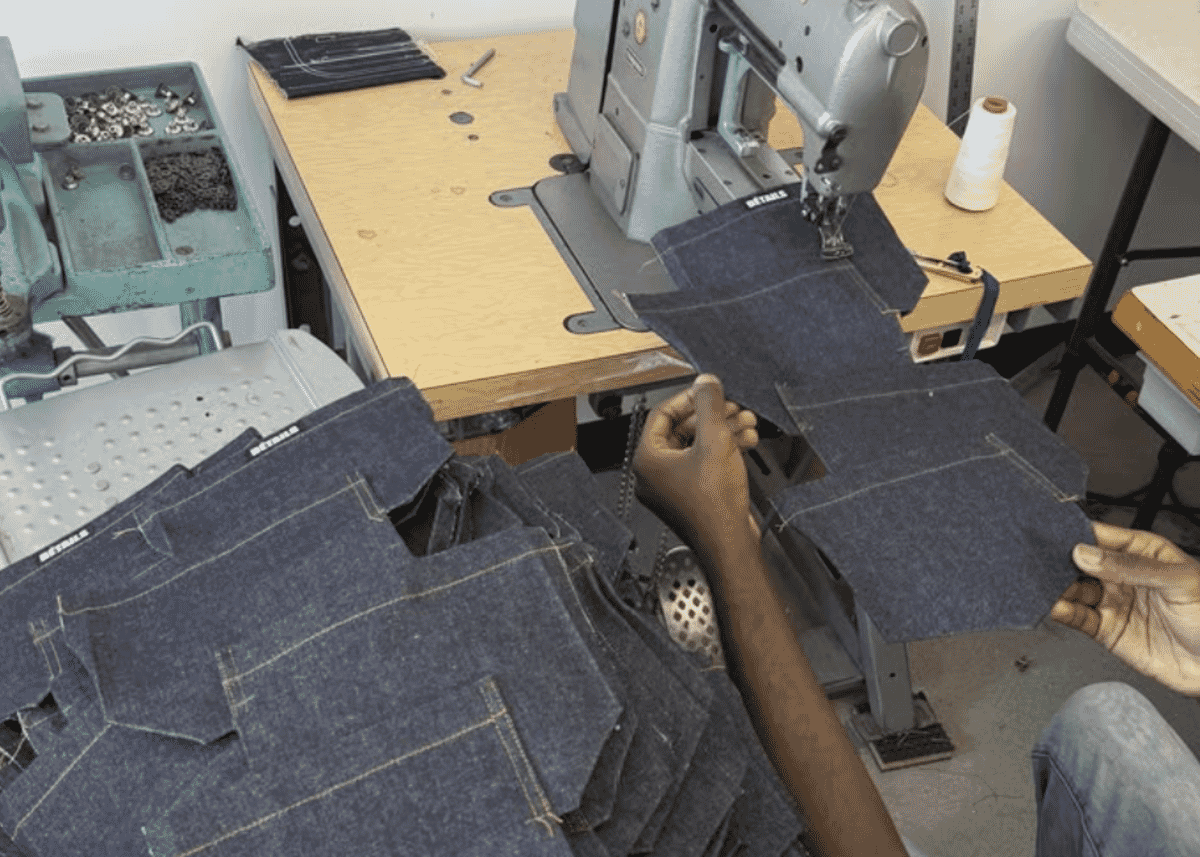
| What you need | Wholesale market | Commissioned production |
|---|---|---|
| Stock this season | Immediate, carton quantities | Months away |
| Your own fabric or fit | Not available | The whole point |
| Reorder the same item | Only while stock lasts | Indefinitely, to specification |
| Composition and safety documents | Rarely obtainable | Obtainable and testable |
| A competitor buying the identical piece | Likely | Only by agreement |
| Where you go | Liwan, Baima, Shahe | Panyu, Haizhu, Xintang |
Markets and factories are different districts and different trips.
How Do You Plan the Trip?
Two days spent well beat a week spent wandering, and the difference is almost entirely preparation done before arrival. The markets are too large to cover exhaustively, so a plan is not an optimisation, it is the only way to leave with anything usable.
Pick the buildings before you fly. Each market covers a different segment and they are not adjacent. A day per market is realistic; two markets in a day is possible if they are near each other and you know exactly what you are looking for.
Go early. Wholesale trading starts early and thins out in the afternoon. The traders with the newest stock are busiest in the morning, and by late afternoon you are looking at what did not move.
Bring a reference garment. Language is a real barrier and a physical example removes most of it. Holding up the thing you want is faster than describing it.
Carry a tape measure and a notebook. Photography is often restricted, so measurements and written notes are how you take information away.
Budget for samples. Buying one piece per candidate style at single-piece pricing is not a waste. It is the cheapest possible way to compare options properly once you are home.
Citation Capsule: Guangzhou wholesale trading begins early and thins through the afternoon, so the newest stock is seen in the morning. Photography is frequently restricted because designs are copied quickly, which makes a tape measure and written notes the practical means of recording product information, alongside buying single sample pieces for comparison later.
How Do You Judge Quality on a Market Floor?
You have the garment in your hand, which is more than most sourcing gives you. Use it properly: turn it inside out, check the seam finishing, feel the fabric weight and look at the labelling, because this is the one advantage the trip actually buys.
Turn it inside out. Seam allowance, overlock consistency and whether the hem is double-needle tell you more than the outside does.
Stretch the neckline and release it. A collar that does not recover will not recover after a wash either.
Check the grading across sizes. Ask for two sizes of the same style and compare. Inconsistent grading is the most common defect in market stock and the hardest to spot on a rail.
Feel the fabric weight against the price. Light fabric at a low price is honest. Light fabric at a high price is the trader pricing on the style, not the garment.
Ask what the composition is, then decide whether to believe it. A burn test on a thread costs nothing and catches most misdescription.
Citation Capsule: Physical market buying provides an assessment opportunity remote sourcing cannot: the garment can be turned inside out, its seam finishing examined, its fabric weight felt and its labelling read before any money moves. This direct inspection is the primary advantage the trip purchases.
How Do You Get the Goods Home?
This is where market buying quietly stops making sense if you have not planned it, because the fixed costs do not scale down. Documentation, consolidation, customs entry and delivery cost broadly the same whether you bought two cartons or twenty, and dividing them across a small purchase produces an uncomfortable per-unit number.
Consolidation first. Buying from six booths in three buildings means six consignments unless someone combines them. A consolidator receives everything, checks it, repacks and ships once. If you are buying across multiple markets, this is the difference between a viable landed cost and a bad one.
Then choose the mode. Courier is fast and expensive per kilo and bundles clearance. Air freight is cheaper per kilo but adds brokerage and handling. Sea LCL is cheapest per kilo and carries port and deconsolidation fees regardless of how little you ship.
And budget duty separately. The $800 de minimis exemption no longer applies: it ended for China and Hong Kong on 2 May 2025 and worldwide on 29 August 2025 (US Customs and Border Protection). Small parcels no longer enter duty-free, and market purchases are exactly the shipments that rule used to cover.
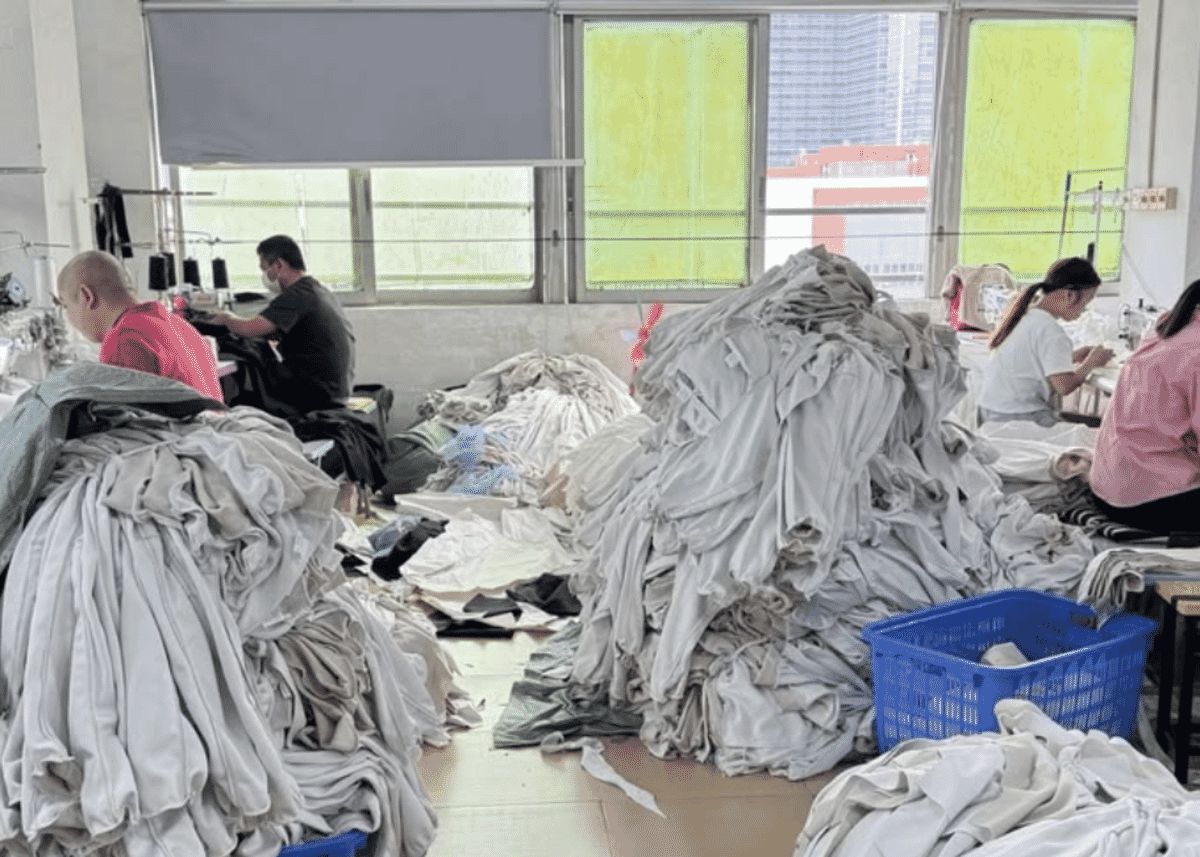
Citation Capsule: Market purchases in Guangzhou were historically shipped under the United States $800 de minimis exemption, which ended for China and Hong Kong on 2 May 2025 and was eliminated worldwide on 29 August 2025. Small consignments now attract duty and require customs entry, which materially changes the landed cost arithmetic of wholesale market buying.
How Should You Pay, and What Should You Avoid?
Market transactions are fast, informal and largely undocumented, which is convenient until something is wrong, at which point the absence of a paper trail becomes the problem. Speed is the market's advantage and documentation is what it trades away to get it.
Expect local mobile payment or cash. Card acceptance is limited and inconsistent between booths. Arrange a local payment method before arriving rather than discovering the problem mid-purchase.
Get a receipt with the booth identifier. Buildings number their booths, and that number is the only way to find a trader again. Without it, a problem two weeks later has nowhere to go.
Inspect before you pay, not after. Once cash changes hands in a market the transaction is closed in practice, whatever anyone says. Open the bag, count the pieces, check the sizes.
Be cautious with large orders on a first visit. A trader you have bought from three times is a relationship. A trader you met an hour ago is a transaction, and the right size for a first transaction is small.
Do not agree to under-declared shipping values. It is offered, it is customs fraud, and the liability sits with the importer rather than the person who suggested it.
What Are the Risks of Buying Market Stock?
Four, and they are different from the risks of commissioned production. In commissioned work the danger is that goods are made wrong; here the goods already exist, so the risks concern what you cannot see, cannot document and cannot repeat.
You inherit the composition claim. Once you relabel and resell, the fibre content statement is yours to defend. Nobody tested it.
You inherit the design. Market stock is sold to many buyers and some of it copies someone else's product. That exposure transfers with the garment.
You cannot reorder reliably. When the stock is gone it is gone, which is a hard conversation when the piece sells.
Certification does not follow loose stock. Certification attaches to a mill, a process and a batch. An OEKO-TEX claim on a booth sign cannot be traced to your units.
Can You Reorder From a Market?
Sometimes, unreliably, and the distinction matters more than buyers realise until a piece sells. The most successful item you buy is the one most likely to be unavailable when you return for more of it, because it sold fastest for the seller too.
Some booths front for a factory and can run the style again. Many are simply reselling what they bought from someone else. The only way to know is to ask directly whether they manufacture and then ask for the factory name, which is the same test that separates a maker from a trader anywhere in China.
Even where a reorder is possible, the second run is rarely identical. The fabric lot changes, the shade moves and trims may differ. If consistency across two deliveries matters to your customer, a market is not the mechanism for it.
Treat a market purchase as finite by default. Sell what that stock gives you, and if a style performs well enough to matter, commission your own version rather than hoping the booth still has it in three months.
Citation Capsule: Reordering from a Guangzhou wholesale booth is unreliable because many traders resell stock they did not manufacture, and even where repeat production is possible the second run typically differs in fabric lot, shade and trims. Market purchases should be treated as finite, with successful styles commissioned independently rather than repurchased.
When Are the Markets the Wrong Answer?
Three cases, and they cover most brands past their first season. Each is a point where the thing the market does well stops being the thing the business needs, which is a transition rather than a failure, and it arrives sooner than most brands plan for.
When fit is part of your product. You cannot adjust a market garment. If your customers return because the fit works, you need a pattern you own.
When you need to reorder. A bestseller you cannot make again is a problem that compounds.
When the claim matters. Organic, recycled or certified anything requires a documented chain you will not get from a booth.
The honest framing is that markets are an excellent way to learn and a poor way to build. Use them to find out what sells at what price, then commission the version you actually want.
Before you go
- Decide whether you need stock or production. Markets are stock; Panyu and Haizhu are production.
- Pick the buildings before you fly: Shisanhang for fast fashion, Baima for mid to high-end, Zhongda for fabric.
- Arrange local mobile payment in advance. Card acceptance is patchy.
- Line up a consolidator before you buy across multiple booths.
- Price freight and duty into your landed cost. De minimis no longer applies.
- Ask before photographing anything, and expect some booths to refuse.
A trip planned around the right buildings and a consolidator achieves more in two days than an unplanned week.
How we separate market stock from production
- Direct question on whether the booth manufactures or resells, then a request for the factory name.
- Business licence and registered scope checked before any quantity is discussed.
- Two sizes of the same style compared, because grading is where market stock most often fails.
- Composition checked independently where the goods will be relabelled and resold.
- Reorder capability established up front, since most booths cannot repeat a style.
Market stock is finite by default. We will tell you whether a style can be made again before you build a range on it.
Conclusion
Guangzhou's wholesale markets are the fastest product education in the industry. In two days you can handle hundreds of garments across every price point and learn more about what a number actually buys than any amount of remote research will teach you.
What they cannot do is make your product. There is no pattern, no fit development, no fabric choice and no way to order it again once the stock clears. That is not a shortcoming of the markets, it is what a wholesale market is.
The mistake worth avoiding is treating one trip as both. Markets and factories are different districts, different buildings and different days, and an itinerary that mixes them without allowing for travel usually achieves neither.
And run the landed cost before you buy. With de minimis gone, the duty and the fixed freight costs on a small consignment are a much larger share of the total than they were, and they are the numbers most market buyers still leave out.
We are a group of documented clothing factories in China, producing for brands from 100 units. Tell us what you saw in the market and what you would change about it, and we place the brief with a factory that can make your version, normally within 24 hours. You work directly with the factory. Flat fees, no factory commissions.
Get in contact Download the directory ($39)Need a tech pack? Get a factory-ready single-style tech pack for $79. See what's included.
Frequently Asked Questions
Can I get clothes manufactured at Guangzhou wholesale markets?
No. The markets sell finished stock that already exists. There is no pattern development, sampling or fit process. Commissioned production happens in the factory districts, principally Panyu, Haizhu and Xintang, which are different parts of the city and a different trip.
What is the minimum order at a Guangzhou wholesale market?
Low, often a handful of pieces per style and colour, because the goods already exist and there is no production set-up to absorb. Prices are quoted per piece in quantity bands, so buying more moves the price more reliably than negotiating does.
Which Guangzhou market should I visit?
Shisanhang in Liwan for fast-turnover womenswear across thousands of booths, Baima for mid to high-end fashion in one of the largest and best-managed buildings, Shahe for lower price points and volume basics, and Zhongda in Haizhu if you want fabric rather than garments.
Do I still get duty-free entry on small market purchases?
No. The United States $800 de minimis exemption ended for China and Hong Kong on 2 May 2025 and was eliminated worldwide on 29 August 2025. Small consignments now attract duty and require a customs entry, which changes the landed cost arithmetic of market buying substantially.
How do I ship goods from several market booths?
Use a consolidator. Buying from multiple booths across multiple buildings means multiple consignments unless someone receives, checks, repacks and ships them together. Without consolidation you pay the fixed freight and clearance costs once per consignment, which quickly exceeds the freight itself.
Editorial note: all company names, certification marks and trademarks referenced here are the property of their respective owners. MOQ, cost and lead-time figures are market ranges compiled from the published sources listed below, not quotes from any individual factory, and they vary by product, fabric and season. Tariff figures were correct at the date of publication and the 2026 position is still moving. Always verify your own HTS classification and confirm terms directly with the factory before committing.
Sources
- US Customs and Border Protection: suspension of duty-free de minimis treatment.
- US Customs and Border Protection: duties collected on low-value shipments.
- Sheng Lu, FASH455, University of Delaware (2025): WTO-based analysis of global textile and apparel trade.
- China National Garment Association, Industry Overview: provincial concentration of garment output and the national cluster map.
- OEKO-TEX Label Check: public verification of certificate numbers.
- amfori BSCI: social audit system documentation.
- Office of the United States Trade Representative: Section 301 tariff actions and exclusion process.
- US Customs and Border Protection: trade remedies and duty administration.
- China Import and Export Fair (Canton Fair): official fair information and phase structure.
Related Reading
No commissions. No markups. The factory bills you directly.