By David Stan, Brands Manager at China Clothing Manufacturer. Published October 2026.
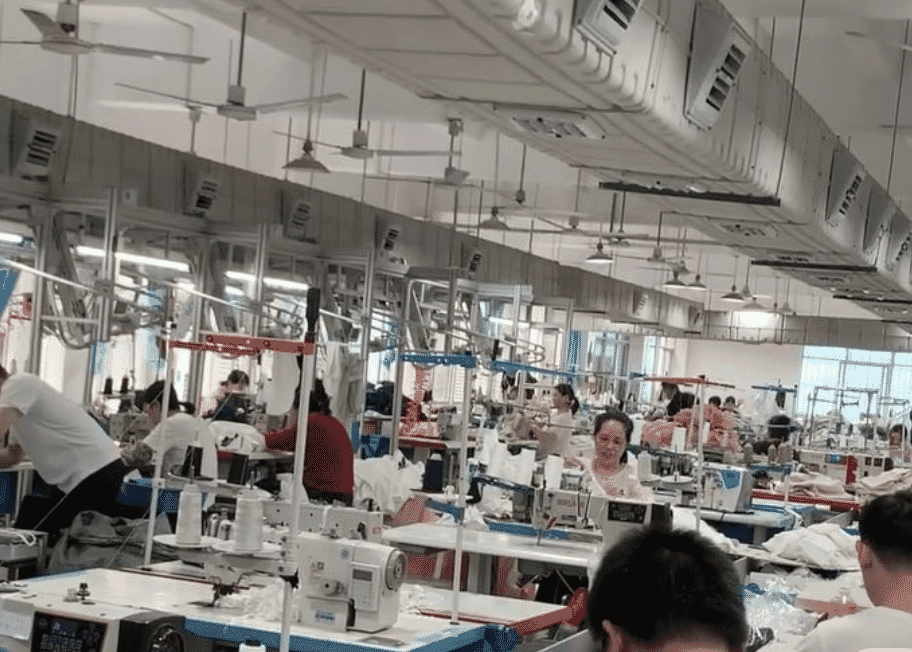
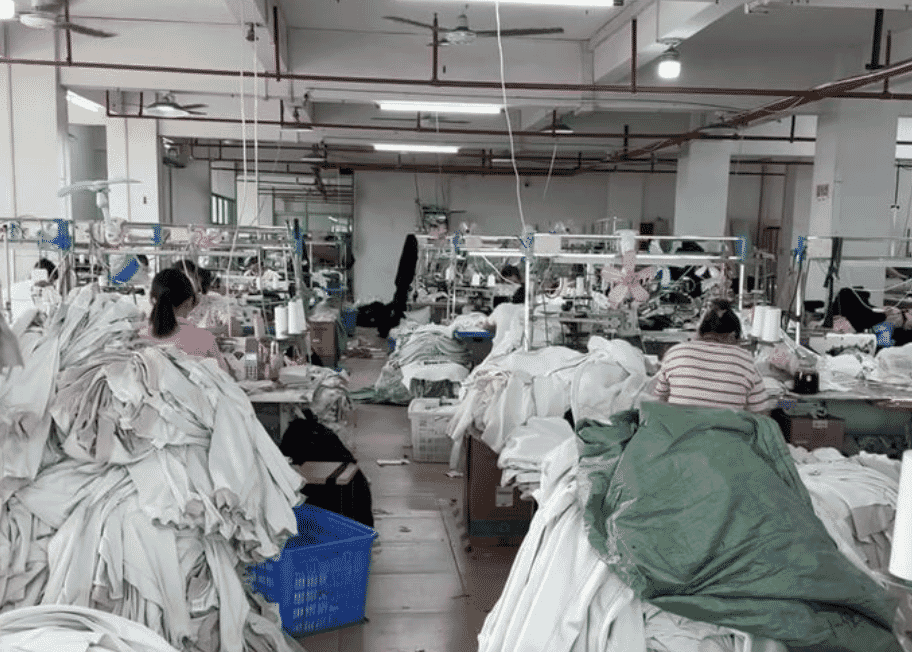
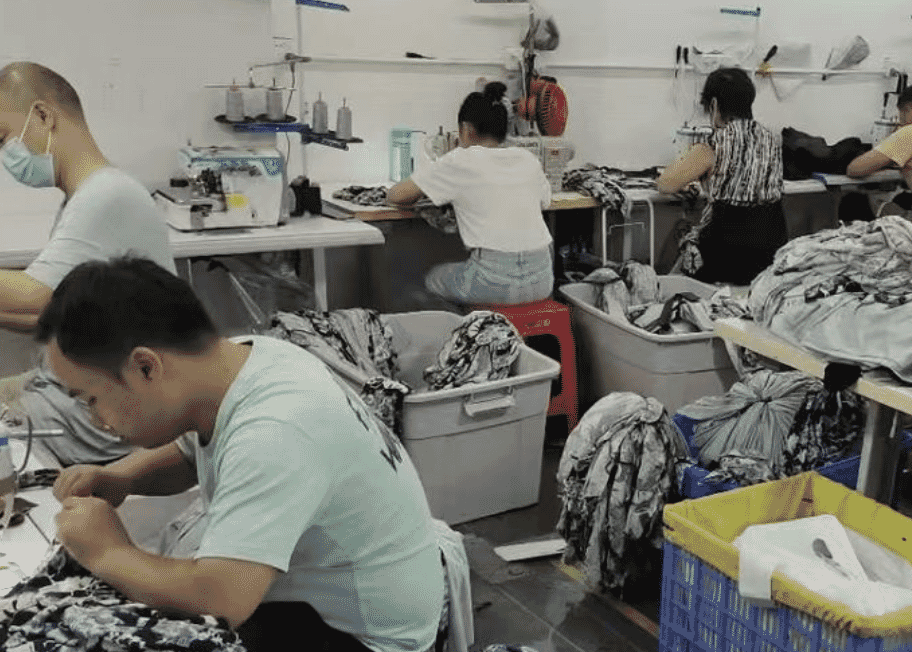
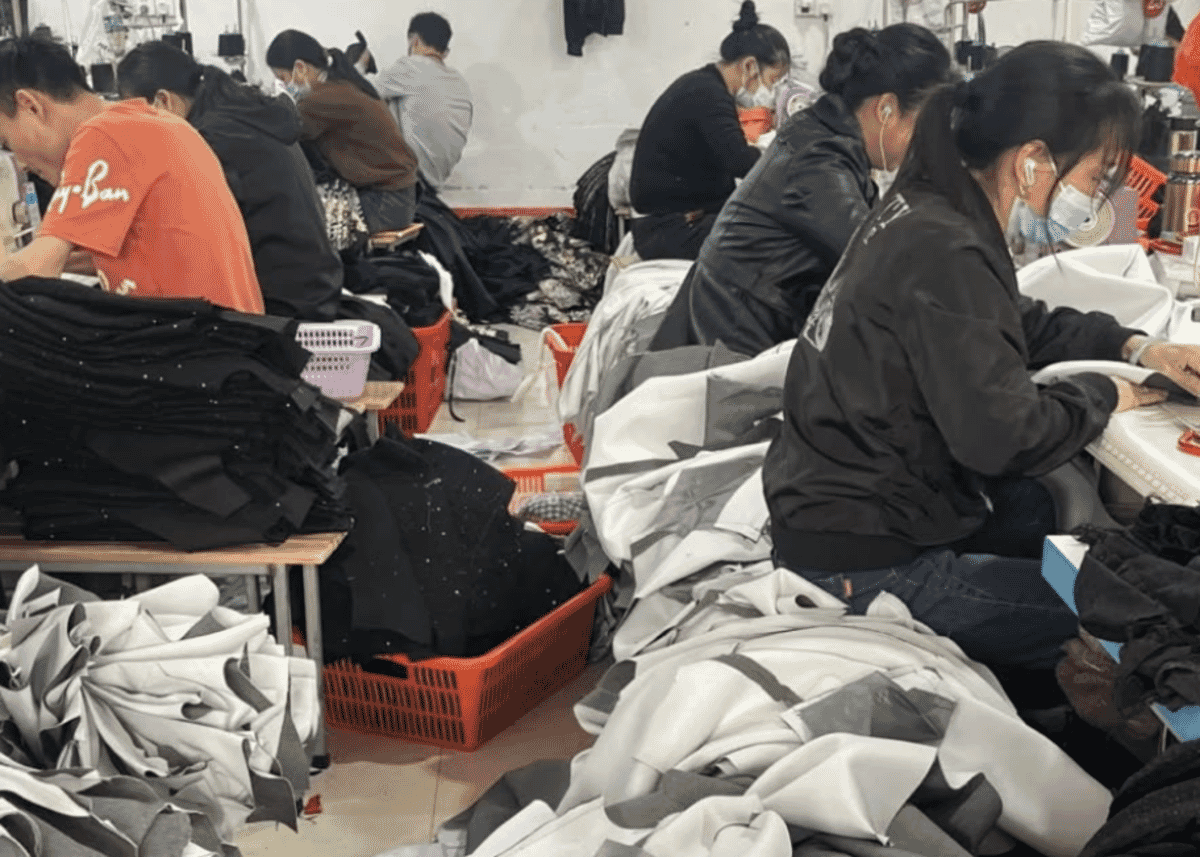
China's clothing industry is not one market and it is not evenly spread. Five eastern coastal provinces produce over 70% of national garment output, and each of them is good at something different (China National Garment Association).
That concentration is the single most useful fact for anyone sourcing here. Knowing which hub does what turns a search of thousands of suppliers into a search of the right few hundred, before you have spoken to anyone.
In 2024 China's share of world clothing exports fell to 29.6%, while its share of textile exports rose to 43.3% (Sheng Lu, FASH455, citing WTO data, 2025). This guide covers what that shift means and where the hubs actually are.
Note: China Clothing Manufacturer is a group of documented clothing factories in China, producing for brands from 100 units. Figures in this guide come from the published sources listed at the end. We confirm MOQ and price with the factory when you send a brief.
Key takeaways
- Five provinces produce over 70% of China's garment output: Guangdong, Zhejiang, Jiangsu, Fujian, Shandong.
- China's clothing export share fell to 29.6% in 2024. Its textile export share rose to 43.3%.
- Zhejiang alone generated 1.12 trillion yuan of textile and garment revenue, 25.5% of the national total.
- Keqiao, in Shaoxing, is one of China's best-known fabric trading centres.
- Guangdong is downstream cut-and-sew. Zhejiang is upstream fabric.
- Assembly is migrating to Southeast Asia. Fabric supply is concentrating further in China.
- Knowing which hub makes your product before you search saves more time than any other single decision.
What Shape Is the Industry In?
Two numbers moving in opposite directions describe it better than any narrative. China's share of world clothing exports fell to 29.6% in 2024, the lowest since 2010. Its share of world textile exports rose to 43.3%, up from 41.5% (Sheng Lu, FASH455, 2025).
Read separately, one looks like decline and the other like growth. Read together they describe a single movement up the supply chain. China is sewing fewer finished garments and supplying more of the cloth that other countries sew.
Citation Capsule: In 2024 China's share of world clothing exports fell to 29.6%, the lowest level since 2010, while its share of world textile exports rose to 43.3% from 41.5%. The two movements describe one shift: garment assembly migrating to Southeast Asia while fabric production concentrates further within China.
Not sure which hub suits your product? Send the garment type and fabric and we will tell you where it is actually made. No cost. Send it here.
Where Are the Manufacturing Hubs?
Five provinces carry over 70% of garment output, and they are not interchangeable. Each grew around a material, a skill or a port, and that history still decides what each is good at decades later, which makes the region a supplier-selection decision before the factory is.
| Province | Strength | Go there for |
|---|---|---|
| Guangdong | Downstream cut-and-sew density | General apparel, small and mid-sized brands |
| Zhejiang | Fabric, yarn, synthetic fibre | Fabric sourcing, when cloth is the product |
| Jiangsu | Larger volume, technical production | Outerwear, performance, scale |
| Fujian | Sportswear and footwear | Athletic categories, Jinjiang and Quanzhou |
| Shandong | Volume, headwear, some technical | Caps in Qingdao, larger runs |
The practical split most brands need: Guangdong for making garments, Zhejiang for buying cloth. Almost everything else is a refinement of that.
Citation Capsule: Chinese garment manufacturing concentrates in five provinces producing over 70% of national output: Guangdong, Zhejiang, Jiangsu, Fujian and Shandong. They are not interchangeable, each having developed around a specific material, skill or port, which makes regional selection a sourcing decision that precedes factory selection.
How Concentrated Is It Really?
More than almost any other manufacturing sector, and the numbers are worth holding in mind when a supplier tells you something is unavailable. In a market this concentrated, unavailable usually means unavailable to that supplier rather than unavailable in China.
Two practical consequences follow from concentration this tight.
Capability is findable. If a construction exists commercially in China, there is almost certainly a cluster that does it at volume. A supplier saying something cannot be done usually means they cannot do it.
Disruption travels. When one region is affected by weather, power restrictions or a holiday pattern, a large share of national capacity moves at once. Concentration cuts both ways, and single-region sourcing carries a risk that is easy to overlook when everything is running.
Citation Capsule: Chinese garment manufacturing is geographically concentrated, with five provinces producing over 70% of national output and Zhejiang alone accounting for 25.5% of textile and garment revenue and 32.4% of textile exports. This concentration makes specialised capability reliably findable, and simultaneously means regional disruption affects a large share of national capacity at once.
Why Does Zhejiang Dominate Fabric?
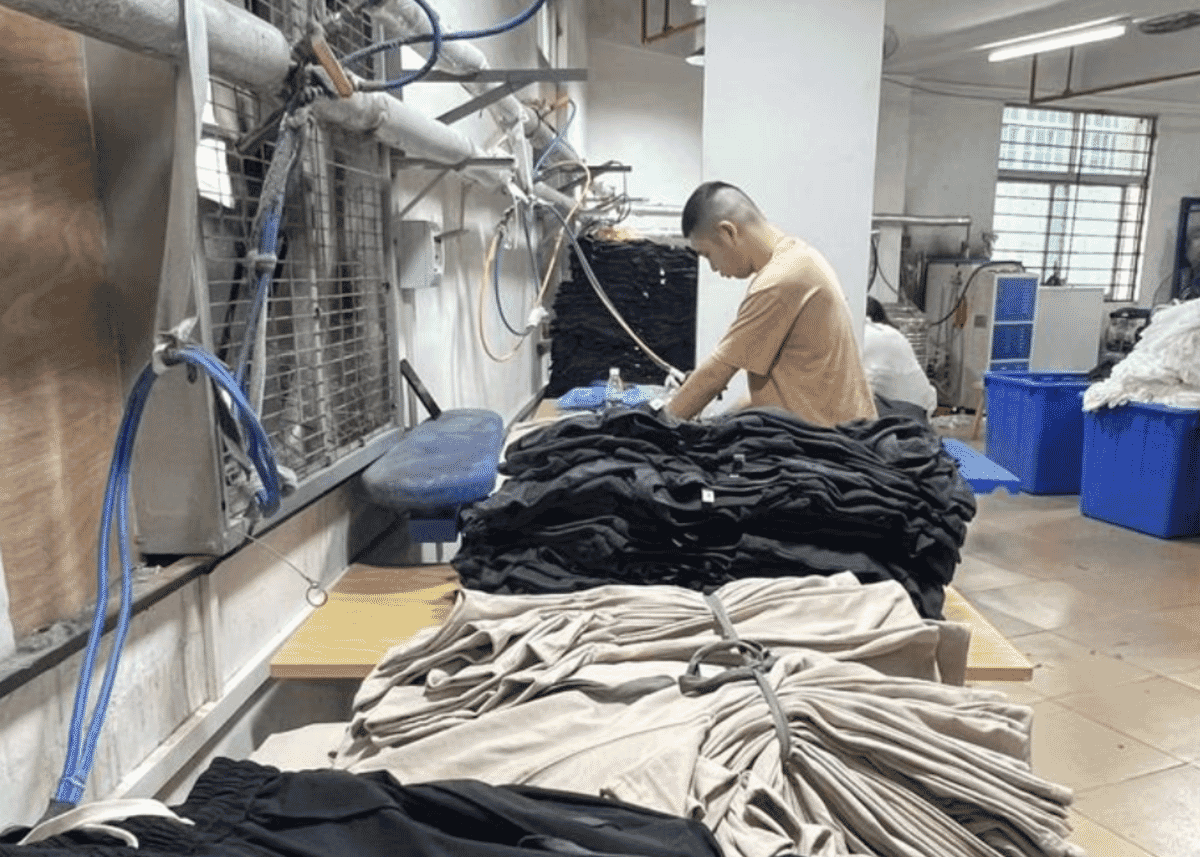
Scale and concentration. Zhejiang generated 1.12 trillion yuan, about $162.21bn, in textile and garment revenue in 2025, which is 25.5% of the national total, and $95.33bn of textile exports, 32.4% of the national figure (China Daily Ningbo, 2026).
The centre of gravity is Keqiao, in Shaoxing. China Textile City there is one of the country's best-known fabric trading centres, with a very large number of textile companies and traders in one place.
What that concentration buys a buyer is choice and speed. A very wide range of constructions in one place, and a supply chain dense enough that a substitute exists when your first choice is unavailable.
Why Do Small Brands End Up in Guangdong?
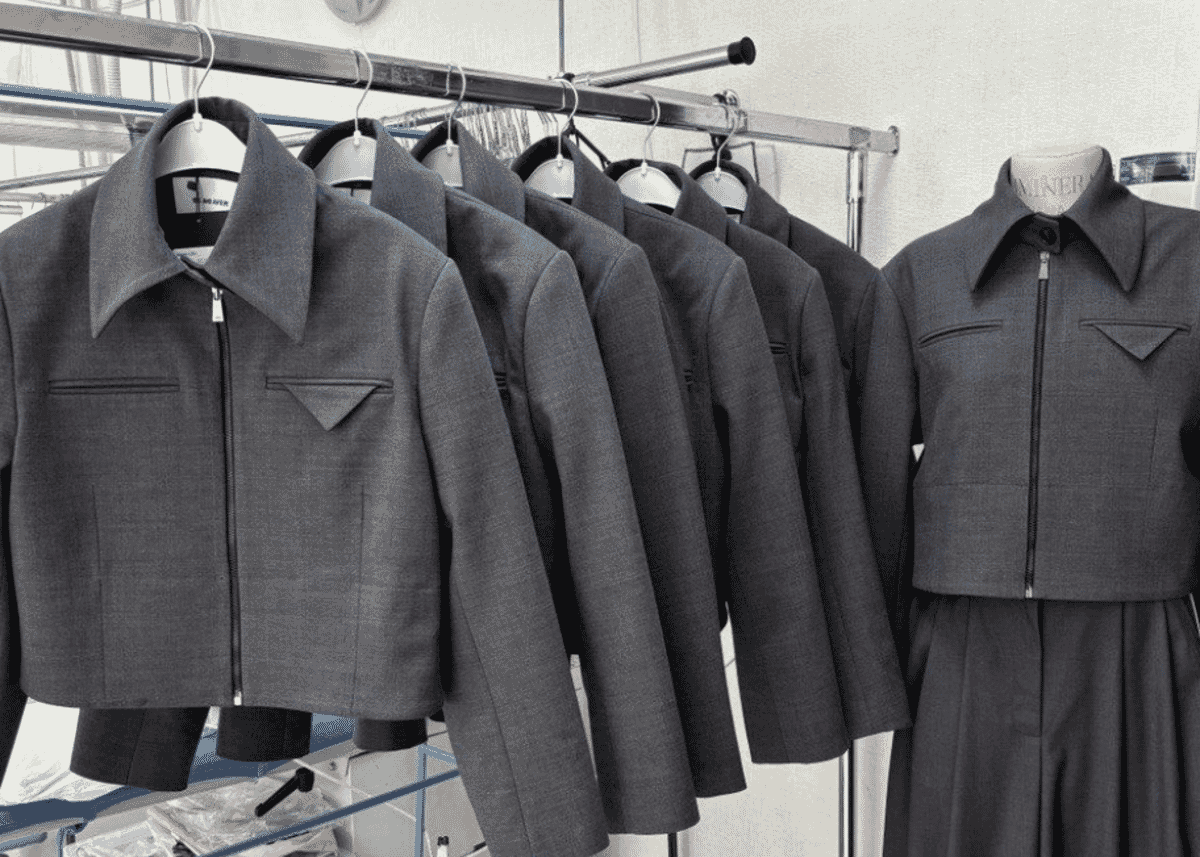
Density of cut-and-sew capacity, and what that density makes possible. When fabric markets, trim suppliers and factories sit within a short drive of each other, a short sample cycle becomes realistic, and that speed is the province's actual product.
Panyu and Haizhu districts of Guangzhou hold a dense mix of garment factories. A factory that fills its line easily can afford to take a small order; one competing for work cannot. That is a large part of why small brands can find workable minimums here.
Sampling is faster for the same reason. The fabric market sits close to the sewing floors, so a fit round can turn faster.
The trade-off is cost. Labour in Guangdong generally costs more than inland China, Vietnam or Bangladesh. What the premium buys is flexibility, which favours small and mid-sized runs per style.
Skip the search: the China factory directory ($49) lists documented factories by category, city and capability, with the verification status of each. One-time payment, instant download.
Which Hubs Are Product-Specific?
Four clusters worth knowing by name, because producing outside them means paying to ship between towns for every material movement. The cost is rarely the freight itself; it is the days each movement adds to a development cycle, and those days compound across every sampling round.
Xintang, Zengcheng is a denim town in the literal sense: sewing, washing and finishing sit together because denim needs all three in one place.
Jinjiang and Quanzhou, Fujian is the sportswear and footwear cluster.
Qingdao, Shandong is the established export headwear centre, with Baoding in Hebei as the other long-standing cap cluster.
Haizhu, Guangzhou holds a dedicated wedding and occasion-wear cluster, where heavily embellished hand work concentrates.
The pattern across all four: specialised processes concentrate geographically because the supporting trades concentrate with them. Producing denim outside a denim cluster means shipping garments to a washing plant and back.
| Cluster | Province | What it makes | Why it is there |
|---|---|---|---|
| Xintang, Zengcheng | Guangdong | Denim | Sewing, washing and finishing sit together because denim needs all three in one place |
| Jinjiang and Quanzhou | Fujian | Sportswear and footwear | Athletic categories built around the province's established footwear base |
| Qingdao (with Baoding, Hebei) | Shandong | Headwear | The established export cap centres, both long-standing |
| Haizhu, Guangzhou | Guangdong | Wedding and occasion wear | Heavily embellished hand work concentrates where the trained hands are |
China's apparel clusters are built around specific product categories. Producing outside the right one means shipping between towns for every material movement.
Citation Capsule: Chinese garment production concentrates by process as well as by province. Xintang in Zengcheng co-locates denim sewing, washing and finishing; Jinjiang and Quanzhou in Fujian form the sportswear and footwear cluster; Qingdao in Shandong and Baoding in Hebei are the established headwear centres; and Haizhu in Guangzhou holds the wedding and occasion-wear cluster.
Is Production Moving Inland?
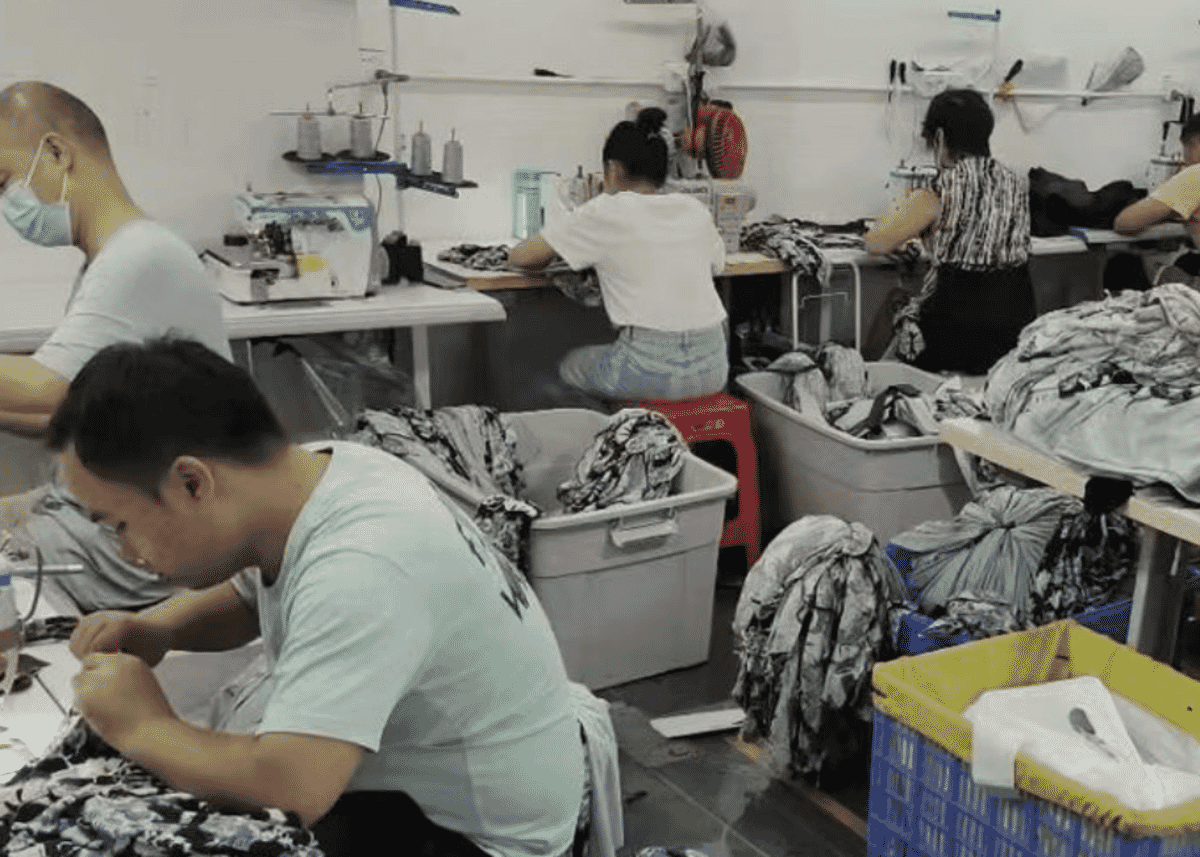
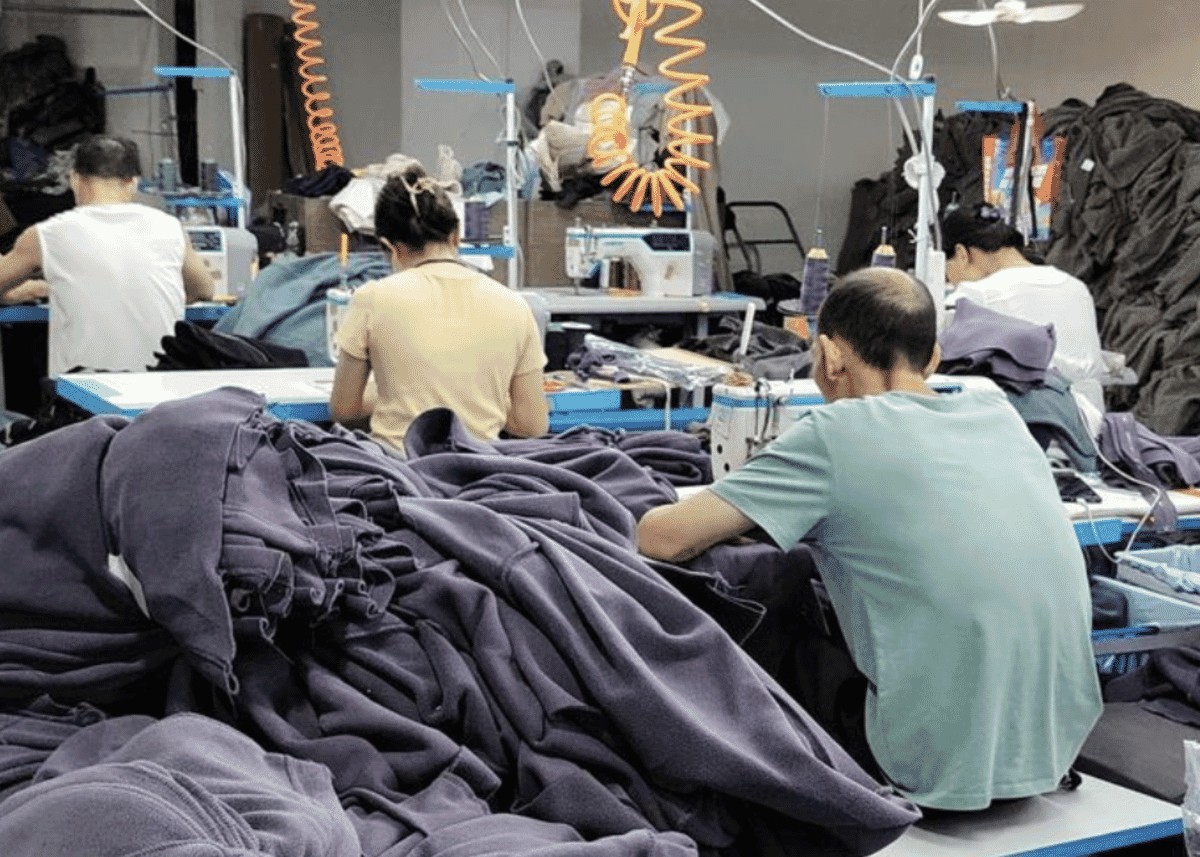
Some of it, and slowly. Coastal labour costs pushed manufacturers to look at inland provinces such as Jiangxi, Anhui and Henan, where wages are lower and local governments have courted the industry. What has not moved inland is the material base, which keeps the coastal clusters central.
What has not moved with it is the supporting supply chain. A factory inland is further from the fabric mills, further from the trim suppliers and further from the ports, which adds days to every handoff and cost to every input.
For a brand, the practical read is that inland production suits large, stable, standard programmes where a lower rate outweighs slower coordination. It suits small or developing ranges badly, because the sampling cycle stretches exactly where you need it tight.
What Is the Difference Between a Market and a Hub?
A manufacturing hub makes things. A wholesale market sells things that are already made. Confusing them is the most common planning error in Chinese sourcing. A brand that books a trip to a wholesale market expecting to commission production has bought flights to the wrong kind of place entirely.
Markets such as Shisanhang in Guangzhou sell finished stock. Low minimums, immediate availability, no pattern development.
Fabric markets such as Zhongda in Haizhu or China Textile City in Keqiao sell cloth to people who will have it made into something.
Manufacturing districts such as Panyu, Haizhu and Xintang commission production to your specification.
Three different trips, three different purposes, and a schedule that mixes them without allowing for travel achieves none of them properly.
Citation Capsule: A manufacturing hub produces goods to a buyer's specification while a wholesale market sells finished stock that already exists. Confusing the two is the most common planning error in Chinese sourcing, and it produces trips booked to the wrong type of destination entirely.
What Does the Calendar Look Like?
Three fixed points move every delivery date in China, and they are the same wherever you produce. None is a surprise, all are published years ahead, and they still disrupt more orders than anything else in the calendar, because brands plan against the closure rather than the window around it.
Chinese New Year is the big one. Factories close for several weeks, output falls beforehand as workers travel home, and it ramps unevenly afterwards as staff return at different times. A delivery due in February is really due in January or March, and the date moves each year with the lunar calendar.
Golden Week at the start of October takes another week out, with less disruption either side.
The two Canton Fair windows do not stop production but do stop responsiveness, because factory sales teams are in Guangzhou rather than answering messages (China Import and Export Fair).
Planning around it
The practical rule is to have fabric in the factory before the New Year break rather than fabric ordered. Goods that are cut and waiting resume quickly; goods waiting on a mill that also closed do not.
What Is Driving Production Out of China?
Cost and tariffs, in that order historically and in reverse order now. What has not changed is where the fabric comes from, which is why a garment assembled elsewhere frequently still contains Chinese cloth, which is the part relocation announcements rarely mention.
Labour costs in the coastal provinces rose above Vietnam, Bangladesh and Cambodia, which moved simple cut-and-sew first. The tariff position accelerated it: with duty layers stacking on Chinese origin, some classifications reach a point where a higher unit price elsewhere still wins on landed cost.
Many Chinese manufacturing groups responded by opening lines in Vietnam and Cambodia themselves, which is why moving production is often a conversation with your existing supplier rather than a new search.
The part that does not move is the fabric. Origin turns on substantial transformation rather than the assembly point, so a garment sewn in Vietnam from Chinese cloth is a case to verify against the live USTR and CBP schedules rather than to assume.
Try it free: pressure-test your landed cost with the China production cost calculator. 60 seconds, no email required.
The fabric question comes first
A garment factory can be changed in a season. A mill relationship, once the colour standard is agreed and the lot discipline is working, is much harder to replace and much more valuable to keep.
That inverts the order most brands search in. They find a factory, then let the factory find fabric. Where the cloth is the product, the better sequence is to settle the mill first and choose a garment factory that already buys from it, because the factory has the relationship and the credit terms you do not.
How Should You Choose a Hub?
Three questions, in order, and they narrow the field fast. Answering them before searching turns a supplier hunt across an entire country into a shortlist inside one cluster, which is most of the work and the part brands skip. Skipping them is why supplier searches sprawl across provinces that were never relevant.
What is the product? Denim, sportswear, headwear and occasion wear all have named clusters. If yours is one of them, the geography is already decided.
What is the quantity? For small and mid-sized runs, Guangdong's flexibility is often worth its cost premium. For larger, steady volumes, Jiangsu, Shandong and inland provinces compete harder on rate.
Is the fabric standard or developed? If the cloth is the product, you are choosing a Zhejiang mill first and a garment factory second, in that order.
Answer those three and you have narrowed thousands of suppliers to a shortlist you can actually work through.
Choosing where to produce
- Check whether your product has a named cluster before searching anywhere else.
- Decide whether the fabric or the garment is the harder problem, and choose that supplier first.
- Fit quantity to region: Guangdong for flexibility, Jiangsu and Shandong for scale.
- Separate the three trip types: manufacturing district, fabric market, wholesale market.
- If you are considering moving assembly out of China, verify where the fabric originates.
- Confirm origin on substantial transformation against the live schedules, not on the shipping point.
Knowing which hub makes your product before you contact anyone removes more wasted time than any other single step.
How we place a brief with a hub
- Product checked against the named clusters first: denim, sportswear, headwear, occasion wear.
- Fabric assessed separately from the garment, since the mill often sets the harder constraint.
- Quantity weighed against region, because Guangdong flexibility and Jiangsu scale suit different volumes.
- Business licence and registered scope checked before any brief is placed.
- Delivery date tested against Chinese New Year before anyone quotes a price.
- Where assembly may move outside China, fabric origin flagged rather than assumed.
If your product belongs in a cluster we do not work in, we will tell you which one it is rather than place it badly.
Conclusion
China's garment industry is highly concentrated, and that concentration is the most useful thing about it. Five provinces carry over 70% of output, and each is good at something specific rather than being a cheaper or more expensive version of the others.
The shift underneath is worth planning around. Finished-garment share is falling while fabric share rises, which makes the mill relationship more durable than the assembly relationship. A brand that moves sewing to Vietnam in 2027 may well still be buying Zhejiang cloth in 2030.
For most brands the split is simple: Guangdong to make garments, Zhejiang to buy cloth, and a named cluster if the product is denim, sportswear, headwear or occasion wear.
And keep markets and manufacturing separate in your head and in your calendar. They are different buildings, different districts and different purposes, and treating them as one trip is how a week in China produces neither a supplier nor an order.
We are a group of documented clothing factories in China, producing for brands from 100 units. Tell us the garment, the fabric and the quantity. Our team replies within 24 hours, then we place your production with the right hub and the right factory. You work directly with the factory. Flat fees, no factory commissions.
Get in contact Download the directory ($49)Need a tech pack? Get a factory-ready single-style tech pack for $79. See what's included.
Frequently Asked Questions
Where is most clothing made in China?
Five provinces produce over 70% of national garment output: Guangdong, Zhejiang, Jiangsu, Fujian and Shandong. Guangdong carries the densest cut-and-sew capacity and suits small and mid-sized brands, while Zhejiang dominates fabric and yarn with 25.5% of national textile and garment revenue.
Is China's clothing industry shrinking?
Its garment share is falling and its fabric share is rising. China's share of world clothing exports fell to 29.6% in 2024, the lowest since 2010, while its share of world textile exports rose to 43.3%. Assembly is migrating to Southeast Asia; fabric production is concentrating further in China.
What is Keqiao?
China Textile City in Keqiao, Shaoxing, Zhejiang, is one of China's best-known fabric trading centres, with a very large number of textile companies and traders in one place.
Which Chinese city is best for my product?
It depends on the product. Denim concentrates in Xintang, Zengcheng. Sportswear and footwear in Jinjiang and Quanzhou, Fujian. Headwear in Qingdao, Shandong and Baoding, Hebei. Occasion wear in Haizhu, Guangzhou. General apparel for smaller brands sits in Panyu and Haizhu.
Should I move production from China to Vietnam?
It depends on classification and volume, and moving assembly does not necessarily move origin. Origin turns on substantial transformation rather than the shipping point, and since China's textile export share rose to 43.3% in 2024, Vietnamese production frequently uses Chinese fabric. Verify against the live USTR and CBP schedules.
Editorial note: all company names, certification marks and trademarks referenced here are the property of their respective owners. Market and trade figures come from the published sources listed below. This guide gives no prices, minimums or tariff rates; confirm those directly with the factory and against the live USTR and CBP schedules before committing.
Sources
- China National Garment Association, Industry Overview: the five coastal provinces' share of national garment output.
- China Daily Ningbo (2026): Zhejiang textile and garment revenue and export figures.
- Sheng Lu, FASH455, University of Delaware (2025): WTO data on China's 2024 shares of world clothing and textile exports.
- Office of the United States Trade Representative: Section 301 tariff actions and exclusion process.
- US Customs and Border Protection: trade remedies and duty administration.
- China Import and Export Fair (Canton Fair): official fair information and phase structure.
Related Reading
No commissions. No markups. The factory bills you directly.