Private label on a sourcing platform usually means less than buyers think. In most listings it means the supplier will sew your label into a garment they already make, which is white label wearing a different name.
Genuine private label means a product developed to your specification: your pattern, your fabric, your fit, made for you and sold to nobody else. The two are priced differently, take different amounts of time, and produce very different businesses.
This guide covers what the term actually means on a platform, what is genuinely customisable at each price level, what it costs in minimums and time, and how to tell which one you are being offered.
Note: China Clothing Manufacturer is a group of documented clothing factories in China, producing for brands from 100 units. This guide explains how private label works; it does not quote market prices or minimums. We confirm exact MOQ and price with the factory when you send a brief.
Key takeaways
- White label is their product with your label. Private label is your product, made for you.
- Most "private label" listings are white label. The word is used loosely and rarely challenged.
- Customisation runs in five tiers: label, then colour, then fabric, then pattern, then full development. Each tier raises the minimum.
- Branding is more than a neck label: care label, hangtag, polybag, carton marking.
- A modified block, starting from the supplier's pattern and changing it, is the underused middle option.
- Ask whether the base product is sold to other buyers. The answer defines which model you are in.
- Your graded pattern is the asset. Establish ownership in writing before sampling starts.
What Does Private Label Actually Mean?
Three models get called private label and only one of them is. The listings rarely distinguish them, which means a brand can believe it has commissioned something exclusive while a competitor buys the identical garment from the same supplier on the same terms.
White label. The supplier's existing product, your label sewn in. The design, fit and fabric are theirs and are sold to other brands simultaneously. Fast, cheap, and your product is not distinctive because it is not yours.
Modified block. You start from the supplier's existing pattern and change things: the fabric, the fit, the trims, the colour. You inherit a proven pattern and avoid developing one from nothing. The result is genuinely yours in the ways customers notice.
Full private label. Your pattern, developed from your specification or your own tech pack. Nobody else sells it. Highest cost, longest lead time, and the only version that produces an asset you own.
The reason this matters commercially: a white label product can be bought by your competitor from the same supplier next month. If the product is what distinguishes you, that is a structural problem rather than a risk.
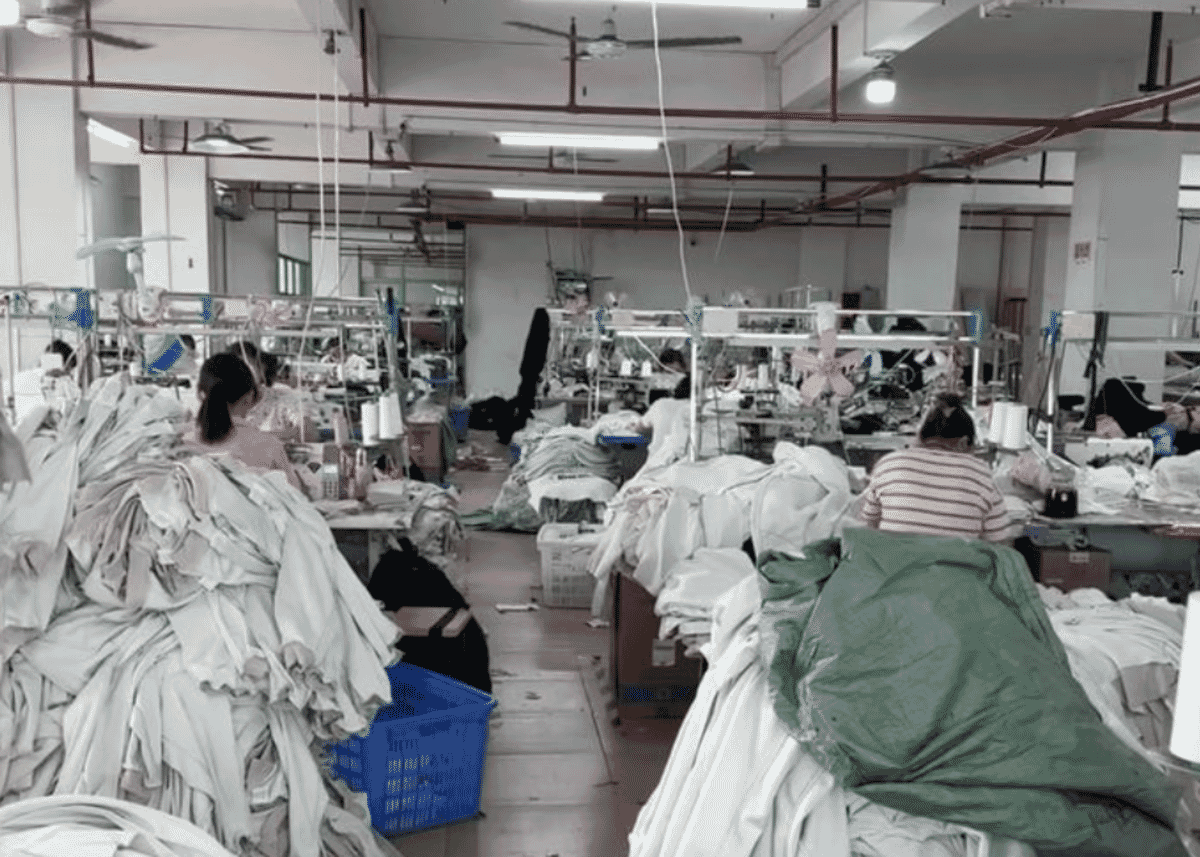
Citation Capsule: Private label is used loosely across sourcing platforms to describe three distinct models. White label attaches a buyer's label to a supplier's existing product sold simultaneously to other brands. A modified block adapts the supplier's pattern through changes to fabric, fit or trims. Full private label develops a pattern to the buyer's specification, exclusive to them.
Not sure which you were quoted? Send the listing and the quote and we will tell you which model it describes, at no cost. Send it here.
What Is Actually Customisable, and at What Cost?
Customisation runs in tiers, and each tier raises the minimum because it touches a different part of the production process. Adding a label touches nothing upstream; changing the fabric reaches back to a mill, and the mill sets a floor the garment factory simply passes on.
| Tier | What changes | Effect on minimum |
|---|---|---|
| 1 · Labelling | Neck label, care label, hangtag, polybag | Minimal. Trims carry their own minimums |
| 2 · Colour | Existing style in your colour | Significant. Each colour is a dye lot |
| 3 · Fabric | Existing pattern, different cloth | Significant. Mill minimum applies |
| 4 · Pattern | Fit, proportions, construction details | Adds development cost and sampling time |
| 5 · Full development | Original design from a tech pack | Highest on both cost and calendar |
The tier most brands want is three or four and the tier most listings offer is one. That gap is where the disappointment happens, and it is visible in the quote if you know to look: a price that barely moves when you change the fabric is a price for a garment nobody is changing.
Skip the search: the China factory directory ($49) lists documented factories by category, city and capability, with the verification status of each. One-time payment, instant download.
Citation Capsule: Private label customisation runs in tiers, each raising the minimum because it touches a different point in production. Applying a label touches nothing upstream; changing fabric reaches back to a mill whose own minimum the garment factory passes through, which is why a single MOQ figure cannot answer the question before the specification exists.
What Does Branding Actually Involve?
More components than most brands budget for, and each carries its own minimum and lead time. Woven labels, care labels, hangtags, polybags and cartons are five separate purchases from five suppliers, and the slowest of them sets your delivery date.
Neck label or printed neck. A woven label is the default; a heat-transfer printed neck is softer and reads more premium on knitwear. Woven labels carry their own minimum, which can be well above your garment quantity on a first order.
Care label. Not optional. Content, care symbols and origin are regulated in most markets, and the requirements differ by market. Specify them rather than accepting the factory default.
Hangtag and attachment. Card stock, string or pin, and whether it is attached at the factory or by you.
Polybag and carton marking. Barcode placement, size stickers, carton labelling for your warehouse. Unglamorous, and a common source of receiving problems.
The practical point: trims have minimums and lead times of their own, and a garment waiting on labels is as late as a garment waiting on fabric. Order them early and order enough.
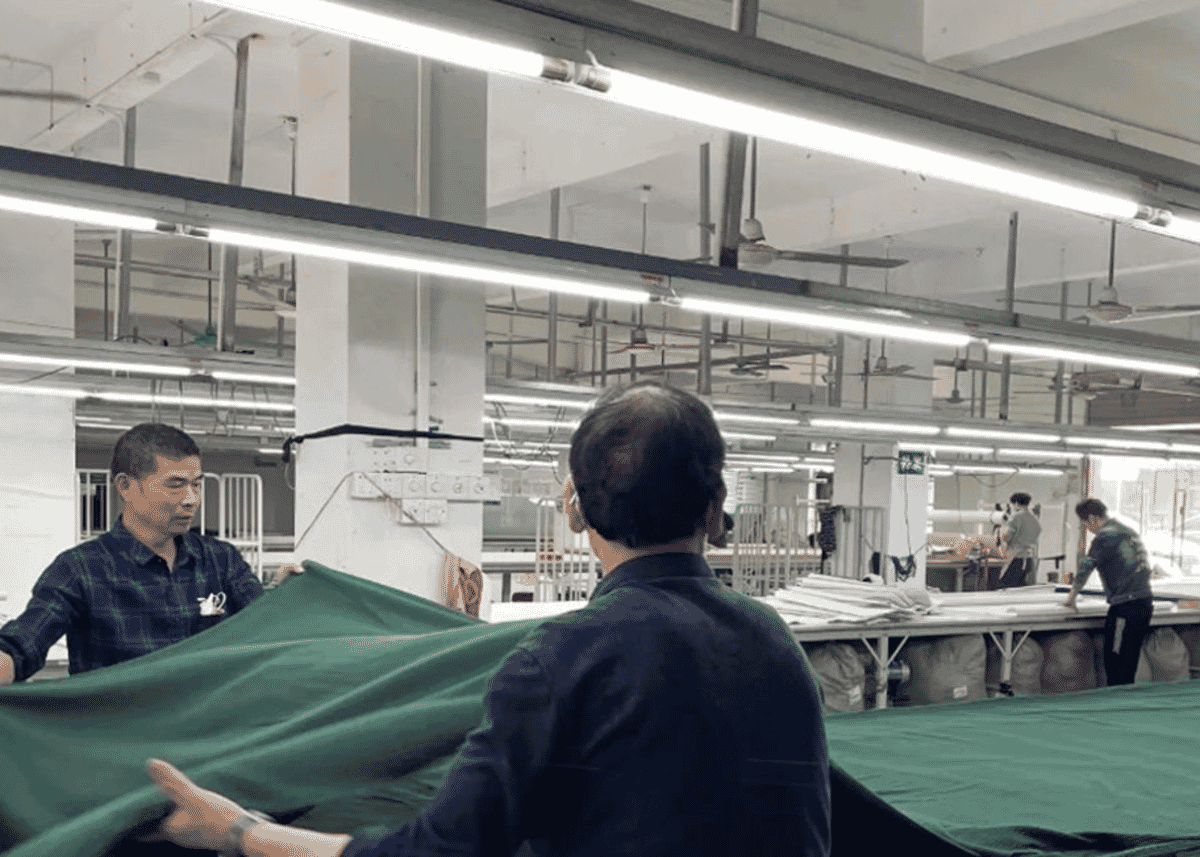
Does Packaging Count as Private Label?
Commercially it often matters more than the garment, and it is the tier brands underinvest in most consistently. It is the first thing a customer touches and the cheapest place to change how a product reads, which is an unusual combination.
A white label tee in a branded box with a printed tissue wrap and a considered hangtag reads as a product. The same tee in a generic polybag reads as stock. Neither statement is about the garment, and customers respond to both.
Four decisions, each with its own minimum and lead time.
Polybag. Printed or plain, and whether it carries the size sticker and barcode. Recycled content, if you want it, is a specification field rather than an assumption.
Hangtag. Card weight, finish, string or pin. This is the cheapest place to look considered and the easiest to get wrong by ordering a stock card.
Inner packaging. Tissue, sticker, card insert. Relevant for direct-to-consumer shipping and irrelevant for wholesale, so decide which channel you are packing for.
Carton marking. The least glamorous element, and a common cause of warehouse receiving problems. Specify what goes on the outer carton before the goods ship, not after they arrive unlabelled.
Citation Capsule: Packaging and trim components each carry independent minimums and lead times, and a garment awaiting labels is as delayed as one awaiting fabric. The hangtag is a low-cost way to change how a product reads, while carton marking, though unglamorous, is a common source of warehouse receiving problems.
How Do You Tell Which Model You Are Being Offered?
Four questions, and the first one usually settles it. Each asks the supplier to be specific about something they would have to be vague about if the answer were inconvenient, which is what makes the hesitation as informative as the reply. None is adversarial and all four are routine for a supplier with nothing to manage.
"Do you sell this same product to other buyers?" An honest yes means white label. Hesitation means white label with reluctance to say so.
"Can I change the fit, and what does that cost?" A supplier offering genuine private label quotes a pattern development cost. One offering white label explains why the fit cannot change.
"Who owns the pattern after development?" If you are paying for development, the pattern should be yours. Establish it in writing before sampling starts, not afterwards.
"What is the minimum if I change the fabric?" A real answer references the mill's dye lot. A flat number that does not move when the fabric does describes stock.
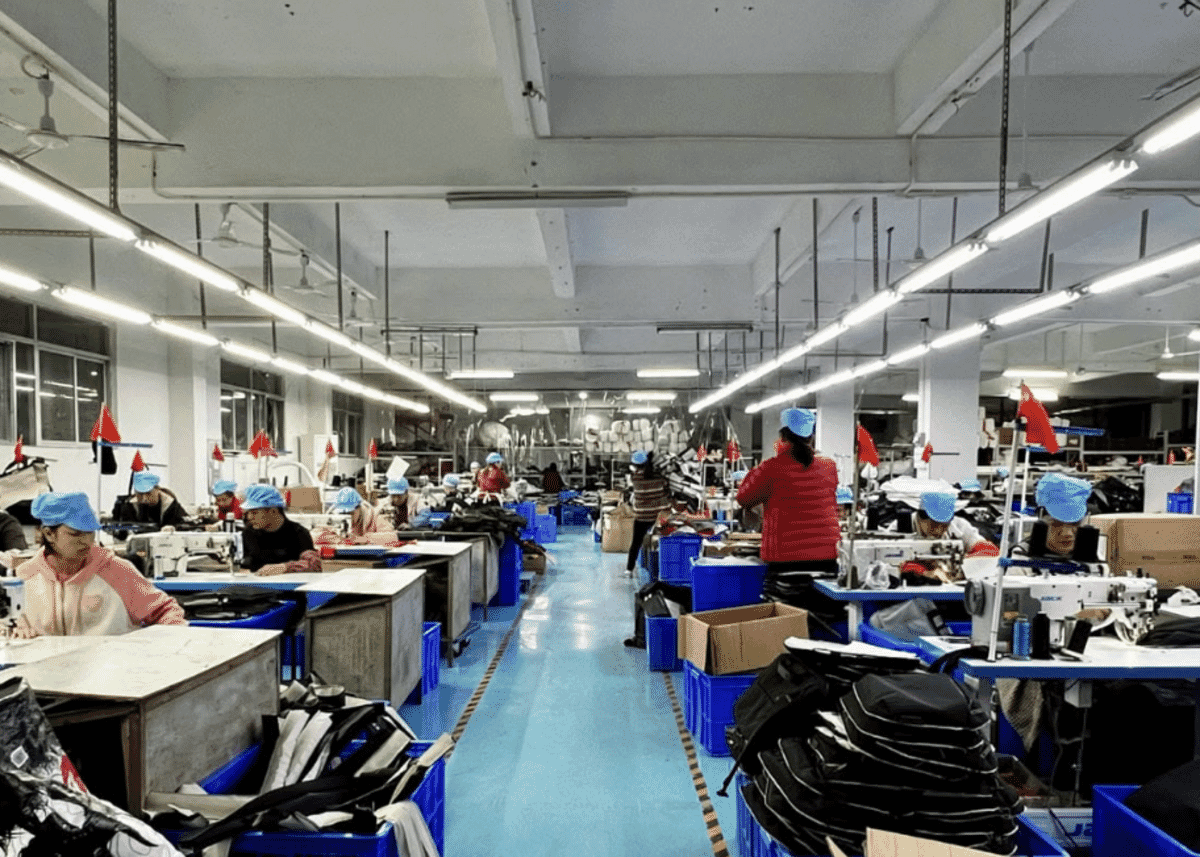
Citation Capsule: Four questions distinguish white label from private label offers: whether the same product is sold to other buyers, whether the fit can be changed and at what development cost, who owns the graded pattern after development, and whether the minimum order changes when the fabric changes. A minimum that does not move with the fabric indicates existing stock rather than production.
Why Is Pattern Ownership the Real Asset?
Because it is the only thing in this process that is portable. A supplier relationship can end. A fabric can be discontinued. A graded pattern that you own moves with you to the next factory. Everything else in the arrangement is rented; the pattern is the one asset the relationship produces that you can take when it ends.
The problem is that patterns are usually digitised by the factory, sit on the factory's system, and are never discussed. If you paid for development and there is no document saying the pattern is yours, recovering it later is a negotiation rather than a right.
Three things to establish before sampling begins. That the pattern and grading are your property. That you can request the files in a standard format. And that the factory will not use your pattern for other buyers.
None of this is unusual to ask, and a factory that resists all three is telling you how the relationship will end.
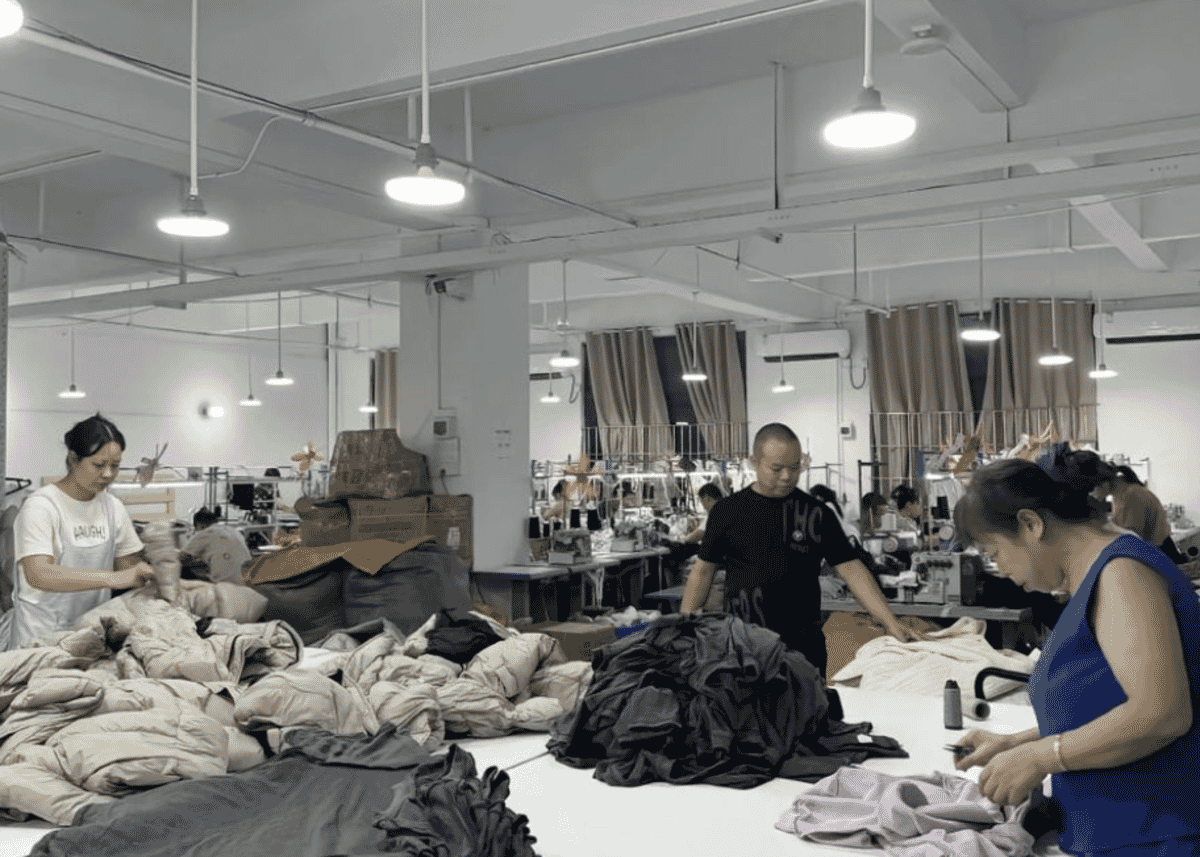
Citation Capsule: A graded pattern is the only transferable asset a manufacturing relationship produces. Supplier relationships end and fabrics are discontinued, but a pattern the brand owns moves to the next factory, which is why ownership should be agreed in writing before development rather than negotiated after.
What Minimums Should You Expect?
They are driven by whichever constraint you touch, and this is why "what is your MOQ" is a question with no single answer. The number changes with what you ask to customise, so a supplier quoting one figure before hearing your specification is quoting for a product other than yours.
Label-only customisation sits close to the supplier's stock minimum, because you have not touched production. The constraint is the label minimum.
Colour changes hit the dye lot, and each colourway is a separate lot. Three colours is three minimums, whatever your total unit count.
Fabric changes hit the mill minimum, which the garment factory passes through unchanged.
Pattern changes do not usually raise the minimum much, but they add development cost and sampling rounds, which is a cost in calendar rather than units.
The lever that works is consolidating colourways rather than cutting units. Running three colours instead of six halves the number of minimums you are buying against, for the same number of garments.
What Should the Sampling Process Look Like?
Four stages, and skipping the third is the most common cause of a bulk delivery nobody expected. The pre-production sample is the only one made in final fabric, final colour and final trims the way bulk will be made. The fourth verifies that bulk matched it.
Proto sample. First interpretation of your specification, usually in whatever fabric is available. Judges construction and proportion, not fit or colour.
Fit sample. Correct fabric, on a real fit model, iterated until the fit is right. One to three rounds is common on a new pattern.
Pre-production sample. The exact specification, in the correct fabric and colour, from the factory that will run bulk. This is the one you sign off, and the one brands skip when the calendar is tight.
Shipment sample. Pulled from the actual production run, before or at pre-shipment inspection.
Approving bulk without a pre-production sample means approving a description. It is the single highest-value step in the whole process and the first one sacrificed under deadline pressure.
| Stage | Made from | What it proves | What goes wrong if you skip it |
|---|---|---|---|
| Proto | Whatever fabric is available | Construction and proportion | You debate fit and colour on a garment that was never meant to answer either |
| Fit | Correct fabric, on a fit model | That the pattern works on a body, across one to three rounds | The graded sizes inherit an error nobody has seen worn |
| Pre-production | Final fabric, final colour, final trims, from the factory running bulk | That the specification is producible as written, by this factory | You approve a description rather than a garment. This is the stage brands skip under deadline pressure |
| Shipment | The actual production run | That bulk matched what you signed off | The first unit you see is the one a customer sees |
Stages run in order and each answers a question the previous one could not. One to three fit rounds is common on a new pattern.
Try it free: pressure-test your landed cost with the China production cost calculator. 60 seconds, no email required.
When Is White Label the Right Answer?
More often than brand advice admits, and it is worth being honest about. There are products where the differentiation a brand is paying for does not exist in the finished garment, and no amount of customisation spend creates it. Saying so early costs a conversation; discovering it after a production run costs the run.
When you are testing demand. Finding out whether customers want the product at all is cheaper with an existing garment than with a developed one.
When the product is not the differentiator. If you compete on community, content or distribution, an excellent white label product serves you better than a mediocre bespoke one.
When speed matters more than distinctiveness. A campaign, a collaboration, a seasonal drop.
The mistake is not using white label. It is using white label indefinitely while describing it as your product, and then wondering why the range never feels like a brand and why the margin never improves.
Before you agree to private label
- Ask directly whether the same product is sold to other buyers.
- Establish which customisation tier you are actually buying: label, colour, fabric or pattern.
- Get pattern and grading ownership in writing before sampling starts.
- Ask what the minimum becomes when the fabric changes, and whether that is per colourway.
- Budget trims separately: neck label, care label, hangtag, polybag, carton marking.
- Insist on a pre-production sample from the factory that will run bulk.
- Specify care and composition labelling for your market rather than accepting the default.
The first and third of these decide whether you are building an asset or renting somebody else's product.
How we handle a private label brief
- We establish which tier you actually need before anyone quotes: label, colour, fabric or pattern.
- We ask for pattern and grading ownership to be agreed in writing before sampling begins.
- We ask the factory directly whether the base product is sold to other buyers, and tell you the answer.
- Trim minimums and lead times are quoted separately, so labels do not delay the garment.
- We ask for a pre-production sample from the bulk factory before you approve bulk.
- Care and composition labelling is specified for your market, not left to the factory default.
If the honest answer is that white label suits your stage better, we will say so rather than sell you development you do not need yet.
There is a documented version of this risk. The 2025 USTR Notorious Markets List (2026) reports that on Pinduoduo, one of the largest e-commerce platforms in China, one stakeholder observed that a large majority of products in certain fashion and sport categories are counterfeits. A white label product you did not develop is a product whose origin you have not established, and putting your name in the neck does not change that.
Conclusion
The term private label covers three different transactions and the listings rarely distinguish them. Most of what is offered is white label: an existing garment with your name in the collar, available to your competitor on the same terms. That is a legitimate business model and a poor foundation for a claim of exclusive design.
What you can actually change runs in tiers, and each tier binds a different constraint. Colour and fabric hit the minimum because they touch the mill. Pattern hits the calendar because it adds sampling rounds. Knowing which constraint you are up against tells you where to spend.
The asset in all of this is the graded pattern. It is the only portable thing you develop, and it usually lives on the factory's system with no document saying it is yours. Fix that before sampling, not after the relationship sours.
And be honest about which model suits your stage. White label is a legitimate way to test demand cheaply. It is a poor way to build something customers return to, and the transition between the two is a decision rather than a drift.
We are a group of documented clothing factories in China, producing for brands from 100 units. Send a reference garment and tell us what you would change, and we place your production with a factory that can develop it. You own the pattern. You work directly with the factory. Flat fees, no factory commissions.
Get in contact Download the directory ($49)Need a tech pack? Get a factory-ready single-style tech pack for $79. See what's included.
Frequently Asked Questions
What is the difference between white label and private label?
White label attaches your label to a supplier's existing product, which is sold to other brands at the same time. Private label is a product developed to your specification with a pattern you own, exclusive to you. Most listings described as private label are actually white label.
What can I actually customise on a private label order?
Customisation runs in tiers. Labelling is cheapest and barely moves the minimum. Colour changes hit the dye lot, so each colourway is a separate minimum. Fabric changes hit the mill minimum. Pattern changes add development cost and sampling rounds rather than raising the unit minimum much.
Who owns the pattern after private label development?
Whoever the written agreement says, and if nothing says, the files sit on the factory's system. Establish before sampling begins that the pattern and grading are your property, that you can request the files in a standard format, and that the factory will not use them for other buyers.
What is the minimum order for private label clothing from China?
It depends which constraint you touch. Label-only customisation sits near the supplier's stock minimum. Colour changes are bound by the dye lot, with each colourway counting separately. Fabric changes are bound by the mill minimum, which the garment factory passes through unchanged.
Is white label ever the right choice?
Yes, more often than brand advice suggests. It is the cheapest way to test whether customers want a product at all, it suits brands competing on community or distribution rather than product, and it works for fast seasonal drops. The mistake is using it indefinitely while calling it your own product.
Editorial note: all company names, certification marks and trademarks referenced here are the property of their respective owners. This guide gives no market prices, minimums or tariff figures; minimums depend on the product, fabric and colour count, so confirm terms directly with the factory before committing.
Sources
- Office of the United States Trade Representative (2026): 2025 Review of Notorious Markets for Counterfeiting and Piracy, naming online platforms and physical markets in China.
Related Reading
No commissions. No markups. The factory bills you directly.