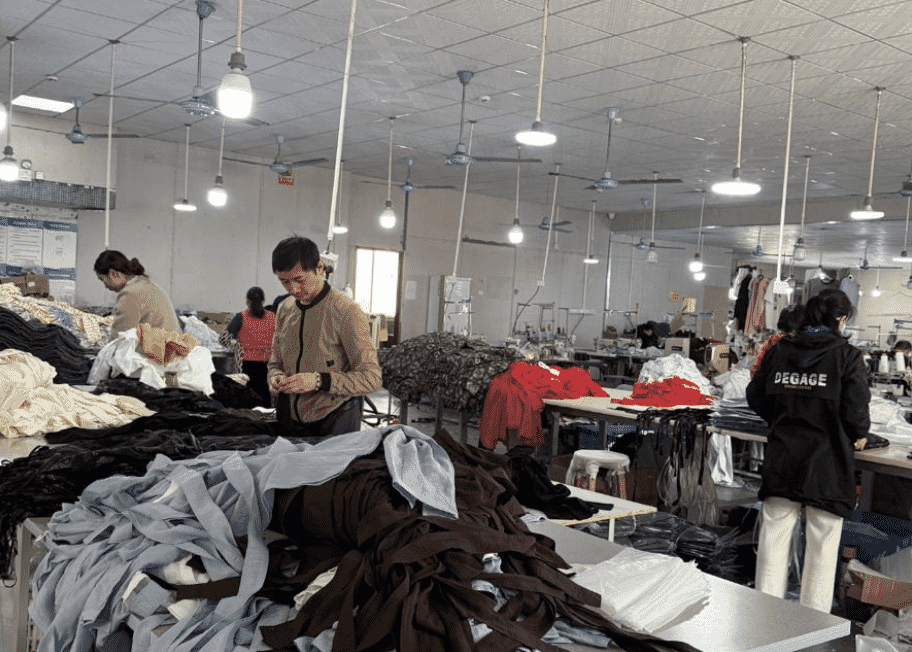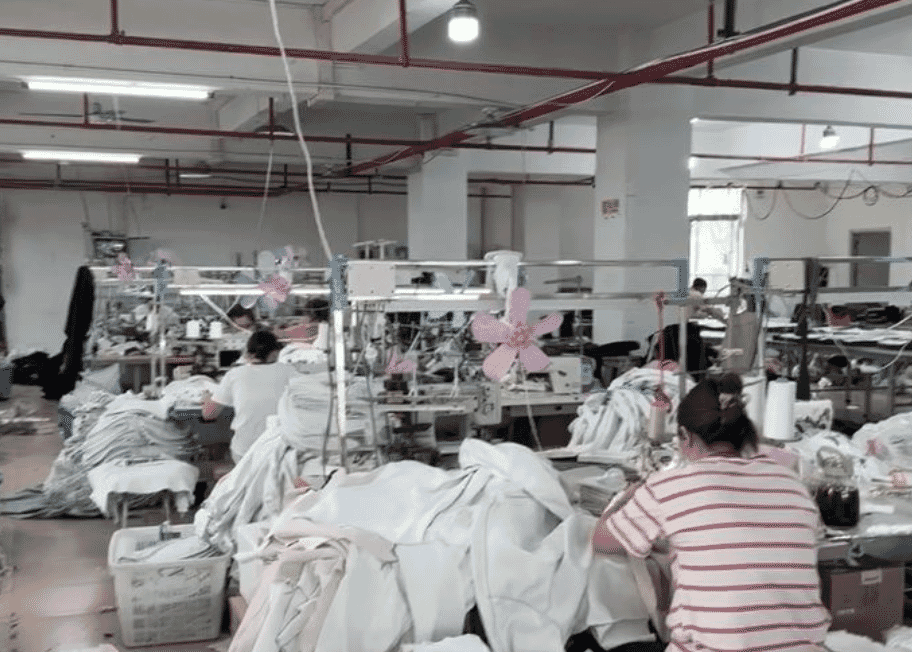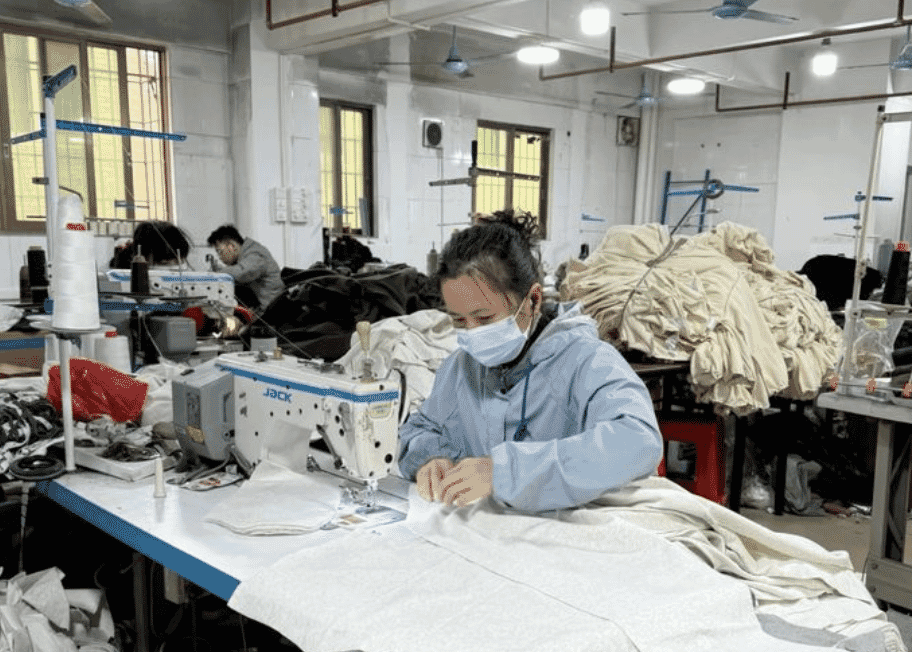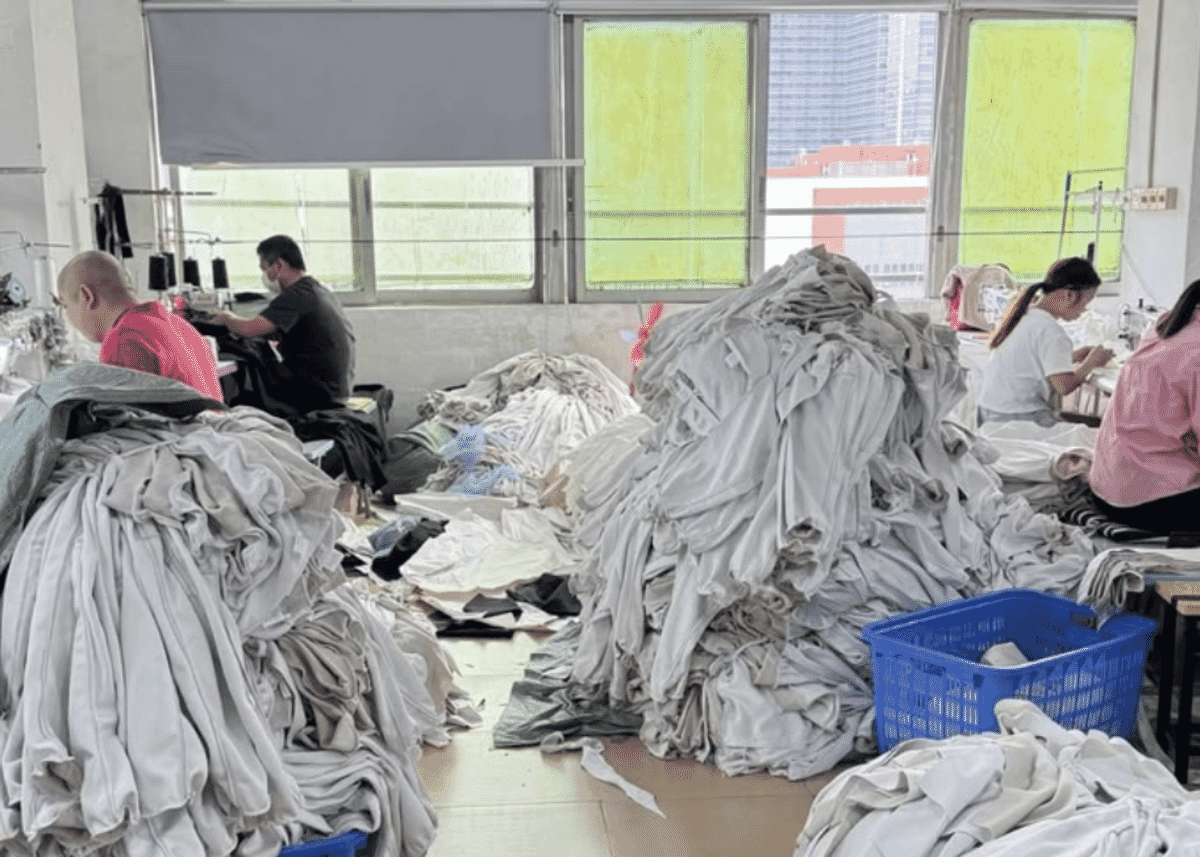
Brands searching for Shein or Temu manufacturers are usually asking one of two questions, and they have very different answers. Either "can I produce small runs the way they do" or "can I produce at those prices". The first is often possible in China. The second usually isn't.
Understanding why starts with what Shein says its model is. It describes small first batches and restocking only what sells: a change in merchandising and planning rather than in the sewing itself. Temu publishes less about how its suppliers produce, so this guide works from Shein's own description and does not describe Temu's model.
China's share of world clothing exports was 29.6% in 2024 (Sheng Lu, FASH455, citing WTO data, 2025). Small-run, quick-turn production is one part of that, and much of it sits around Guangzhou.
Note: China Clothing Manufacturer is a group of documented clothing factories in China, producing for brands from 100 pieces per style. We have no relationship with Shein or Temu, and we do not claim that any factory in our group, or any district named here, supplies either. We confirm exact MOQ and price with the factory when you send a brief.
Key takeaways
- Shein says production starts with 100 to 200 pieces per style and only items in demand are restocked.
- Small-batch testing works for a normal brand too: from 100 pieces per style with our group, then reorder what sells.
- In our view the prices rest on scale, demand data and selling direct, which a single brand does not have.
- Fabric, not sewing, sets the real minimum on a small run. Stock fabric removes the dye lot.
- SCMP has reported a web of factories in Guangzhou behind Shein's growth; Panyu, Haizhu and nearby Humen are the districts to know.
- Quick-turn factories may expect quick decisions. Say early if you need careful sampling.
- The US $800 de minimis exemption is suspended: China and Hong Kong from 2 May 2025, worldwide from 29 August 2025.
What Does Shein Say Its Model Is?
Shein calls it an on-demand model. In its own words, production begins with small batches of 100 to 200 pieces per style, and it restocks only the items that are in demand based on product performance and customer insights, which it says keeps production waste and excess inventory low (SHEIN Group). Nothing in that description is a new way of sewing. It is a way of deciding what to sew, and how much.
In our reading, three things follow from it, and all three are commercial rather than technical.
Small first orders. Instead of committing to thousands of a style, a small initial run tests demand and only proven styles are reordered. This is a merchandising method, not a manufacturing innovation.
Short decision chains. Small batches and data-led reorders shorten the time between a decision and a delivery. Shein does not publish a standard lead time, so treat any day count you read elsewhere with care.
Less unsold stock. Shein says the model keeps excess inventory to a minimum, which it links to cost savings and lower prices. That benefit depends on its demand data, which is the part a brand cannot borrow.
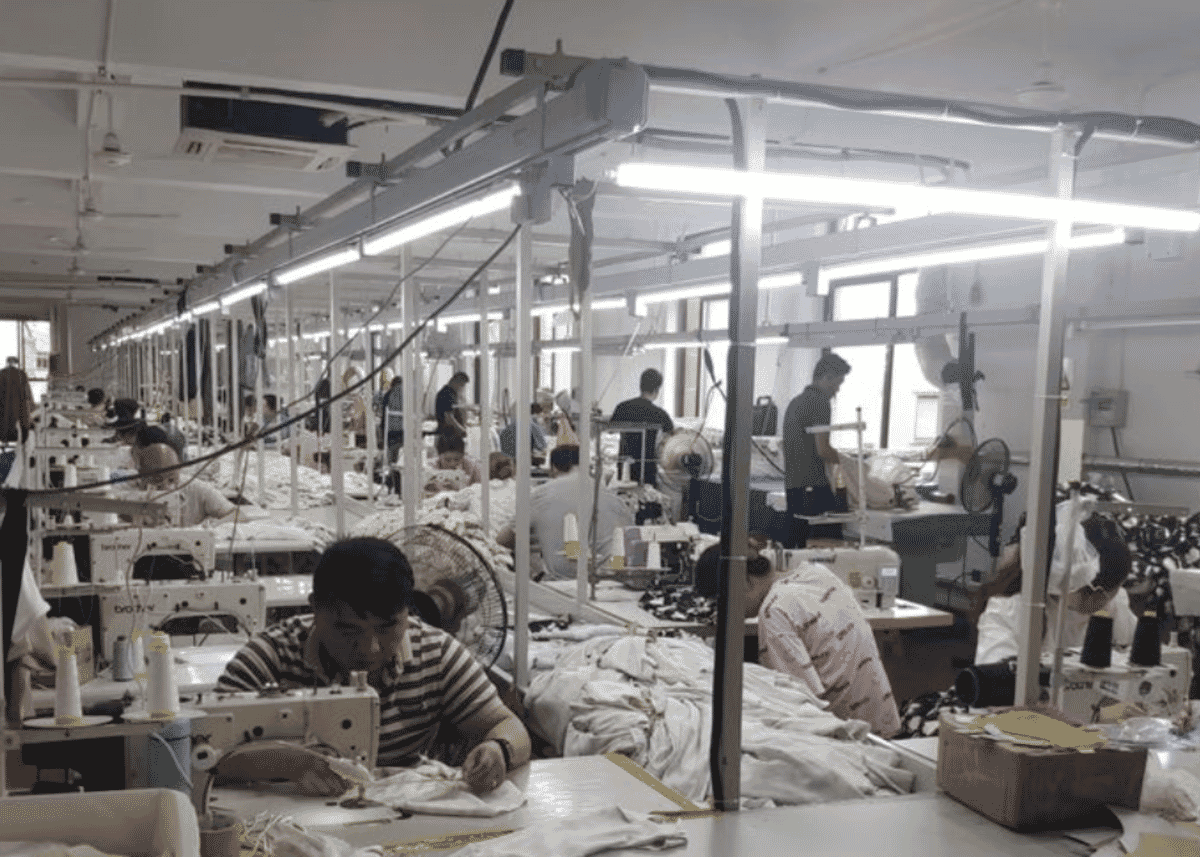
Citation Capsule: Shein describes an on-demand model in which production begins with small batches of 100 to 200 pieces per style and only items in demand are restocked, which it says keeps waste and excess inventory low (SHEIN Group). The change is in merchandising and planning rather than in the sewing itself.
Want small-batch production? Send the garment and quantity: our team replies within 24 hours and tells you what is realistically achievable. No cost. Send it here.
Why Can You Not Get Those Prices?
In our view, four things sit behind the price position, and a brand producing hundreds of units has little access to any of them: scale across a very large number of styles, demand data that decides what is restocked, selling direct without wholesale or retail tiers, and, until it was suspended, the US de minimis exemption for low-value parcels.
Scale. A retailer placing small runs across a very large number of styles is still a large customer to a factory. Your 300 pieces are 300 pieces.
Demand data. Shein says it restocks based on product performance and customer insights, and links that to low waste and cost savings. A small brand has far less data to decide with.
Selling direct. An online retailer selling straight to consumers has no wholesale tier and no retailer tier in between. A direct-to-consumer brand can remove one of those layers too.
De minimis, until it ended. Direct-to-consumer parcels under $800 entered the United States duty-free until this changed for China and Hong Kong on 2 May 2025 and worldwide on 29 August 2025 (US Customs and Border Protection). CBP has since collected over $1 billion in duties on more than 246 million low-value shipments (CBP).
That last point matters for any brand modelling landed cost: low-value parcels to the US no longer enter duty-free, from China or anywhere else.
Skip the search: the China factory directory ($49) lists documented factories by category, city and capability, with the verification status of each. One-time payment, instant download.
| Mechanism | What it gives the platform | Available to you? | Why not |
|---|---|---|---|
| Scale | Scale across a very large number of styles | No | Your 300 pieces are 300 pieces. The leverage comes from the size of the business, not the run size |
| Demand data | Restocking only what sells, which it says keeps waste low | No | It requires owning the demand signal and the production decision in one system |
| Selling direct | No wholesale tier and no retailer tier | Partly | A direct-to-consumer brand removes the retailer layer too |
| De minimis position | Low-value parcels entering duty-free, shipment by shipment | No longer | The exemption was suspended and then extended worldwide (CBP) |
Our editorial comparison. Three of the four are hard to reach at a normal brand's scale. The fourth is no longer available to anyone, which is why price comparisons drawn from before the change no longer describe the same market.
Citation Capsule: In our view, four things sit behind ultra-low platform prices: scale across a very large number of styles, demand data that decides what is restocked, selling direct without wholesale or retail tiers, and, until its suspension in 2025, the US de minimis exemption for low-value parcels. A brand producing hundreds of units has little access to any of them.
Can You Actually Do Small-Batch Production?
Yes, within limits, and the limits are set by fabric rather than by sewing. A factory can run 100 pieces of a style on stock cloth without difficulty. It cannot run 100 pieces on a commissioned fabric, because the mill minimum sits upstream of the sewing line and does not move for anyone.
A factory can sew 150 pieces. A mill cannot dye 150 pieces' worth of fabric economically, because the dye vessel has a size and running it part-full costs much the same as running it full. That is the constraint, and it is physical rather than commercial.
Two things genuinely unlock small batches. Stock fabric the mill already holds removes the dye lot entirely, at the cost of choosing from what exists. And consolidating colourways means fewer minimums for the same total units.
What does not work is asking a factory to be flexible. The vessel does not care how reasonable the request is.
Citation Capsule: Small-batch production on this model is possible within limits, and the limits are set by fabric rather than by sewing. A factory can run 100 pieces of a style on stock cloth. It cannot run 100 pieces on a commissioned fabric, because the mill minimum sits upstream and does not move.
What Should You Expect on Quality?
Whatever you specify, and the factory's default where you don't. Three things vary most: fabric weight and yarn, seam construction, and shrinkage tolerance. The same factory can produce to your standard or to a much lower one, depending on what you wrote down.
Fast, low-cost production can be built to a low standard or a high one; the factory follows the specification. If you assume a standard without writing it down, you get whatever the factory usually runs.
Three things to specify explicitly rather than assume.
Fabric weight and yarn. The single biggest driver of whether a garment feels substantial. A lighter fabric at the same construction costs less and reads cheaper immediately.
Seam construction. Overlock alone versus overlock plus coverstitch, single-needle versus double-needle hems. Small cost differences with a large effect on how the garment survives wear.
Shrinkage tolerance. Ask for a number in writing, then wash the sample and measure it. Customers notice shrinkage quickly, and it goes untested when nobody asks.
Citation Capsule: Small-run production in China can be built to a high or a low standard; the factory follows the specification. Brands should specify fabric weight and yarn, seam construction and a written shrinkage tolerance, since the default otherwise reflects what the factory usually runs.
Where Are These Factories?
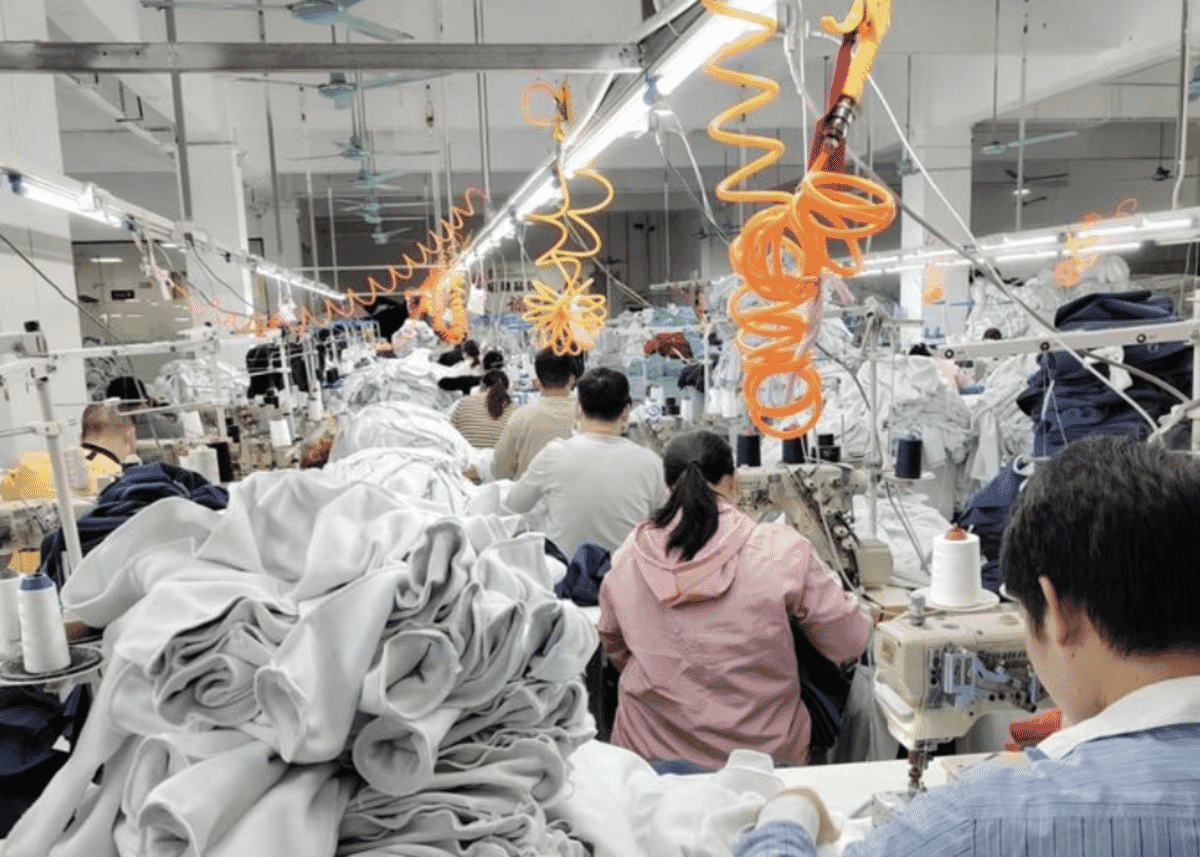
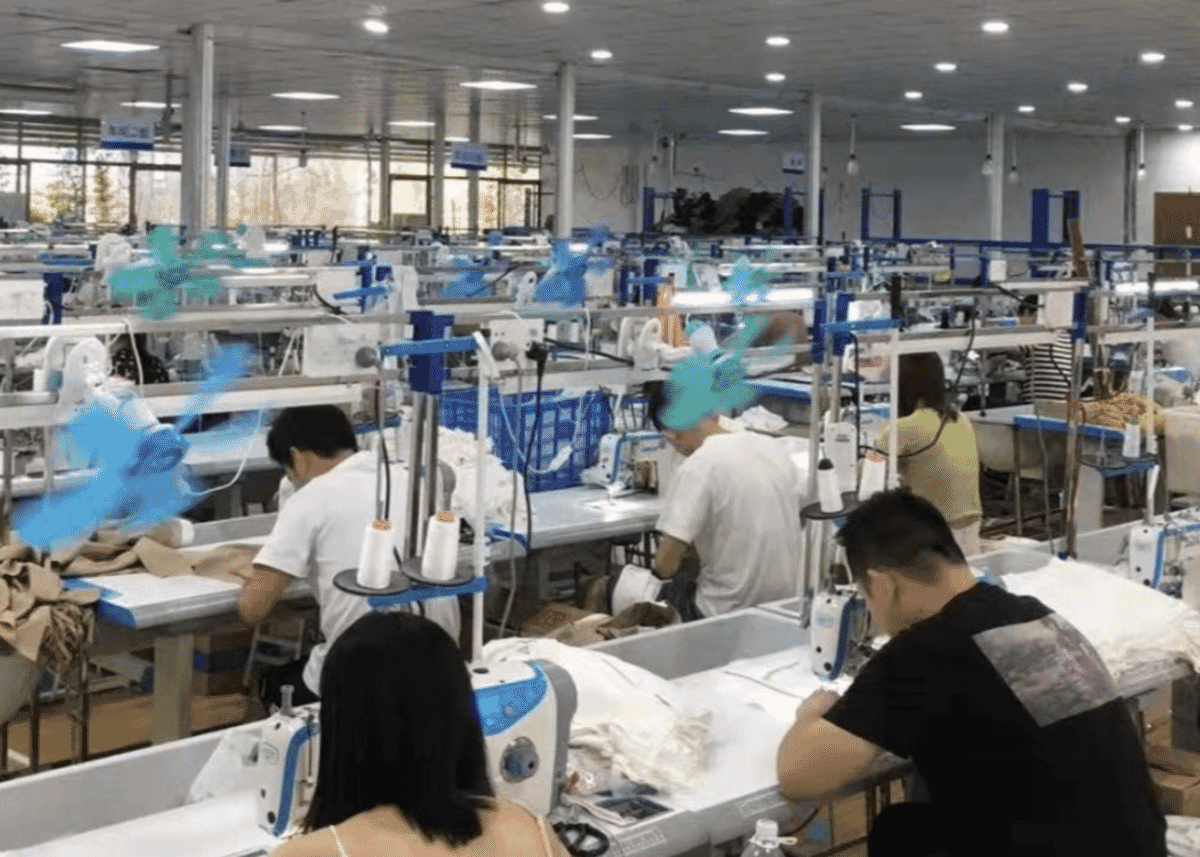
Largely around Guangzhou. The South China Morning Post reported in July 2024 that Shein's growth was fed by a web of factories in Guangzhou, managed through a digital system (SCMP). The city's garment districts put fabric, trims, printing and sewing within a short drive of each other, which is what makes quick turnaround possible.
Panyu and Haizhu are where many of Guangzhou's garment factories sit, Humen in neighbouring Dongguan is known for quick-turn womenswear, and the Zhongda fabric market in Haizhu is within driving distance. Our Guangzhou clothing manufacturers guide maps the districts.
That density is what makes quick turnaround possible. A factory that can buy fabric the same morning and cut the same afternoon operates on a different clock from one waiting for cloth from another province.
For a brand, the useful read: if you want fast turnaround and small runs, Guangzhou is a natural place to look.
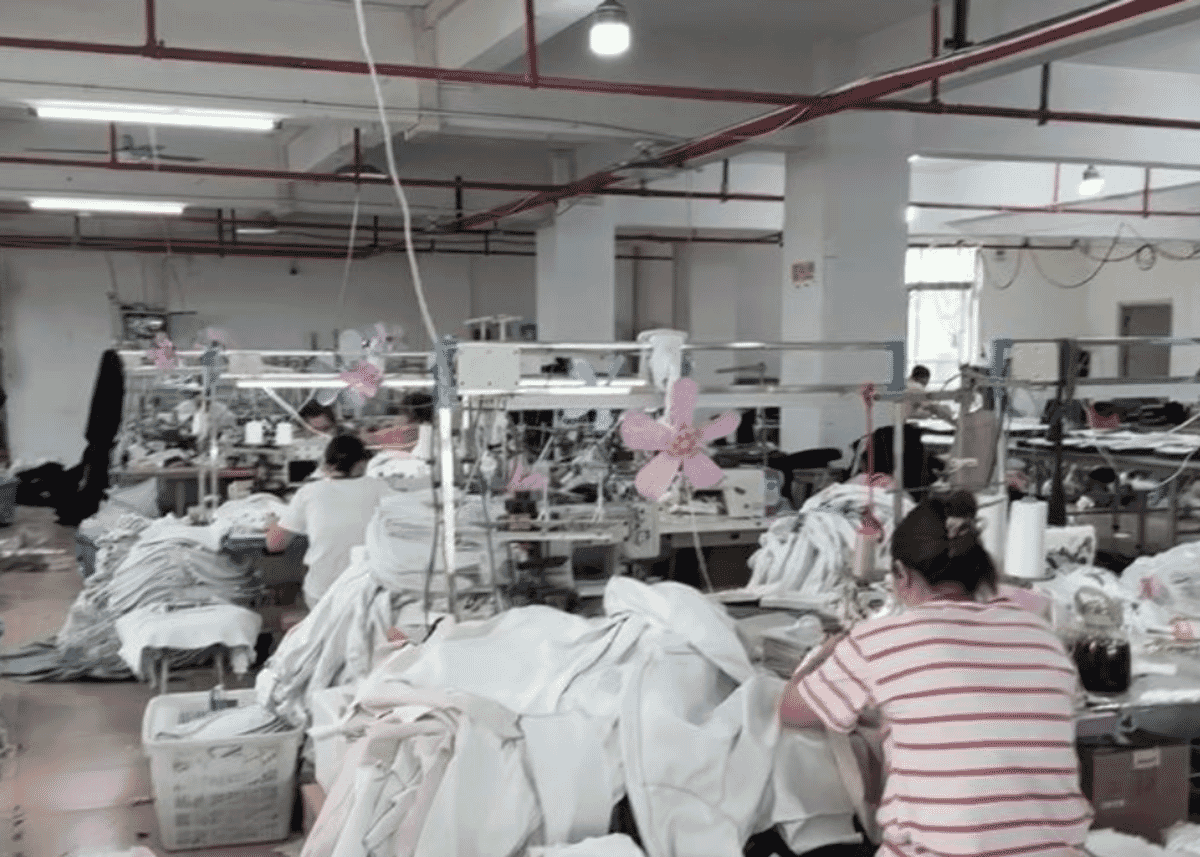
Citation Capsule: Small-run, quick-turn apparel production in China concentrates around Guangzhou, where the South China Morning Post reported in 2024 a web of factories behind Shein's growth. Panyu and Haizhu hold many of the city's garment factories, Humen in Dongguan is known for quick-turn womenswear, and the Zhongda fabric market is within driving distance.
Humen is worth knowing
Humen, in Dongguan, is known for womenswear produced quickly, with fabric and trims close by and batches small enough to restart if a style does not move.
For a brand, Humen is worth knowing about as a capability rather than a destination. If your product needs weekly newness and short runs, that rhythm exists there in a way it does not in provinces where fabric arrives by truck from several hundred kilometres away.
What Is It Like Working With Quick-Turn Factories?
Different from a slower development relationship, and not always in your favour. Quick-turn factories are used to speed and repeat orders rather than long development. Terms may be shaped by their biggest customers rather than by you. Quality depends on what you specify, and compliance documentation varies from factory to factory.
They are used to speed and volume. A brand ordering 300 pieces with a four-week fit development cycle is an unusual customer, and may be deprioritised against orders that fit the rhythm.
Terms may be shaped by big customers. Some expect reorder patterns, rapid decisions and minimal iteration. If your process involves careful sampling and considered approvals, say so early.
Quality expectations differ by tier. A factory supplying a range of buyers produces to a range of standards. Specify yours explicitly rather than assuming the tier you want is the default.
Compliance documentation varies. Ask before you sample rather than before you ship. If you need certification with traceable chain of custody, ask early. Some suppliers have it in full and some have never been asked.
Try it free: get a directional FOB range per piece with the China production cost calculator. No signup to see the range.
What About the Compliance Questions?
They are real, and a brand producing small, fast runs should have an answer to them.
The practical position is the same as anywhere in Chinese sourcing: certification attaches to a specific facility, process and batch rather than to a company in general. amfori BSCI documents how its social audit system works, and OEKO-TEX publishes a label check where you can verify a certificate number rather than accept a logo.
Two things worth asking early. Whether the factory has been audited, by whom, when, and whether you can see the report rather than the badge. And whether production is subcontracted, because an audited factory that subcontracts your order has moved the work outside the audit.
The subcontracting question matters most when lead times are short and capacity is stretched. Ask it directly, get the answer in writing, and treat a vague response as an answer in itself.
Returns are the hidden cost
A brand shipping a few hundred units per style has no large business to spread returns across.
That changes where the money is best spent. A slightly heavier fabric and a better seam construction cost a little per unit and can cut returns, so price returns into the decision rather than comparing unit cost alone.
What Is Worth Borrowing From the Model?
Three things transfer to a normal brand, and one does not. Test before you commit, because a small run of several styles beats a large run of one. Use stock fabric for testing, which removes the dye-lot constraint. Shorten the decision chain. The pricing does not transfer.
Test before you commit. Producing a small run of several styles and reordering the winners beats producing a large run of one style and hoping. This is the genuinely portable insight.
Use stock fabric for testing. It removes the dye-lot constraint that makes small runs uneconomic, and the fabric choice matters less when you are testing a silhouette. Save the custom fabric for the styles that have already proved they sell.
Shorten the decision chain. Part of the speed advantage is organisational rather than manufacturing. Fewer approvals means faster cycles at any scale.
What does not transfer: the pricing. In our view it rests on scale, demand data and selling direct, and until 2025 low-value parcels to the US also benefited from the de minimis exemption.
| Element | Transfers | Why |
|---|---|---|
| Factory capability | Yes | Ordinary cut-and-sew |
| Small batch testing | Yes | A merchandising method |
| Unit prices | No | Rest on aggregate volume |
| Speed | Partly | Needs local fabric |
| Restock-what-sells method | Partly | Works small; their demand data does not |
| Duty position | No | The exemption has gone |
Our editorial view of what transfers from that model and what does not.
Before you chase this model
- Separate the two questions: small-run production, or platform prices.
- Check whether your fabric is stock or custom, because that decides your real minimum.
- Consolidate colourways before trying to negotiate the unit count.
- Ask what terms the factory expects (decision speed, reorder patterns), and whether those suit your process.
- Specify your quality tier explicitly rather than assuming a default.
- Model duty properly: the US de minimis exemption is suspended.
- Ask about certification and chain of custody early if your market requires it.
Small-batch production is achievable. Small-batch pricing at platform levels is not, and the difference is worth being clear about before you start.
How we work
- Our team reads the brief and replies within 24 hours. If China, or our group, is wrong for it, we say so.
- Production is placed with a documented factory we have visited in person, from 100 pieces per style.
- The factory quotes you, samples with you and bills you directly.
- You pay 30% to start bulk and the 70% balance only after a third-party inspection.
- No tech pack yet? We draw one for $79 per style.
For a small first run, start by telling us whether the fabric is stock or custom, and how many colourways you need. See how we work.
Conclusion
Shein describes its model as small first batches of 100 to 200 pieces per style, restocked only when they sell. The difference is in the merchandising built on top of the sewing: small initial runs and demand-driven reorders.
That is why the prices do not transfer. In our view they rest on scale, demand data and selling direct, and until 2025 on a customs exemption that is now suspended for everybody.
What does transfer is the testing logic. Small runs of several styles, reorder what sells, use stock fabric to make the small runs economic. That approach works at any scale and it is the useful thing to take from the model.
And know that the constraint on small batches is the dye vessel rather than the sewing line. Negotiating with the factory will not move it. Choosing a fabric the mill already holds will.
We are a group of documented clothing factories in China, producing for brands from 100 pieces per style. Tell us the garment and the quantity: our team replies within 24 hours, then we place it with a documented factory we have visited in person and tell you which fabric option makes that quantity economic. You work directly with the factory. Flat fees, no factory commissions.
Get in contact Download the directory ($49)Need a tech pack? Get a factory-ready single-style tech pack for $79. See what's included.
Frequently Asked Questions
Can I use Shein or Temu manufacturers?
We cannot tell you which factories supply Shein or Temu, and we do not claim that any factory in our group does. What you can use is the same kind of production: small-run cut-and-sew in China, much of it around Guangzhou, from 100 pieces per style with our group. Access to a factory does not give you platform pricing.
Why can I not get Shein-level prices?
In our view, four reasons: scale across a very large number of styles, demand data that decides what is restocked, selling direct without wholesale or retail tiers, and the US $800 de minimis exemption for low-value parcels, suspended for China and Hong Kong on 2 May 2025 and worldwide on 29 August 2025.
What is the real minimum for small-batch production in China?
It depends on the fabric, not the sewing. A factory can sew 150 pieces; a mill cannot economically dye that quantity, because dye vessels have a fixed size. Using stock fabric the mill already holds removes the dye-lot constraint, and consolidating colourways reduces the number of minimums. Our group produces from 100 pieces per style.
Where are quick-turn clothing factories in China?
Largely around Guangzhou, where the South China Morning Post reported in 2024 a web of factories behind Shein's growth. Panyu and Haizhu hold many of the city's garment factories, Humen in Dongguan is known for quick-turn womenswear, and the Zhongda fabric market is within driving distance, which makes quick fabric buying possible.
What is worth copying from the model?
The testing logic. Produce small runs of several styles, reorder what sells, and use stock fabric to make those small runs economic. Shortening your internal decision chain also captures part of the speed advantage, since part of it is organisational rather than manufacturing.
Editorial note: Shein and Temu are trademarks of their owners, as are all other company names and certification marks referenced here. We have no relationship with either company, and nothing here says that any named district or factory supplies them. Shein's model is described from its own published statement; the comparisons are our editorial view, not measured data. Duty positions change; verify your HTS classification and confirm terms directly with the factory before committing.
Sources
- US Customs and Border Protection: suspension of duty-free de minimis treatment.
- US Customs and Border Protection: duties collected on low-value shipments.
- Sheng Lu, FASH455, University of Delaware (2025): WTO-based analysis of global textile and apparel trade, source of China's 29.6% share of world clothing exports in 2024.
- SHEIN Group, Our Group: Shein's own description of its on-demand model (small batches of 100 to 200 pieces per style, restocking only items in demand). Read 31 October 2026.
- South China Morning Post (6 July 2024): In China's Guangzhou, a web of factories gives rise to fast-fashion juggernaut Shein.
- OEKO-TEX Label Check: public verification of certificate numbers.
- amfori BSCI: social audit system documentation.
Related Reading
- Clothing Suppliers in China: How to Find and Vet a Factory
- Guangzhou Clothing Manufacturers
- Importing from China: De Minimis, Duty and Documents
No commissions. No markups. The factory bills you directly.