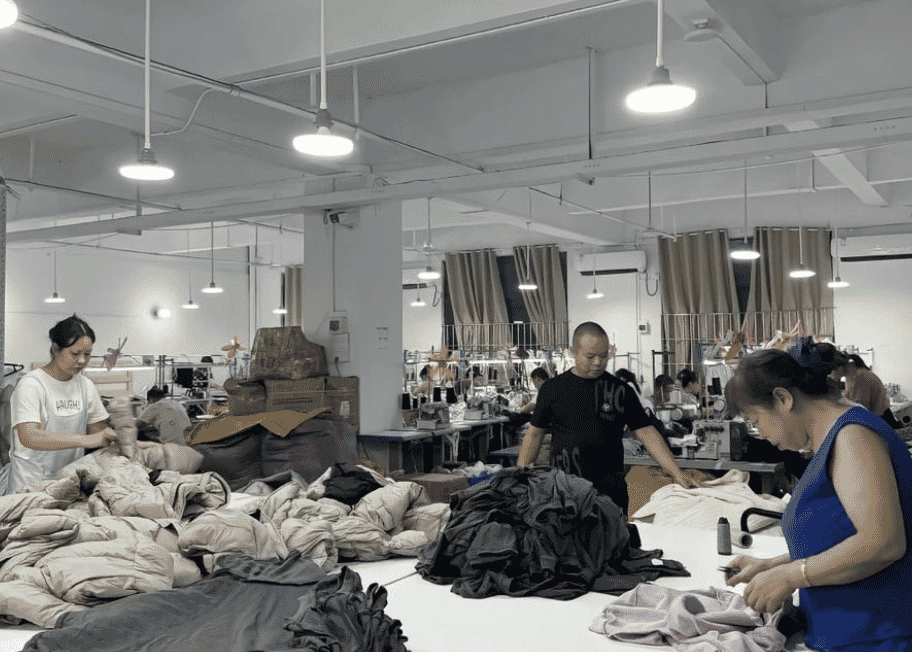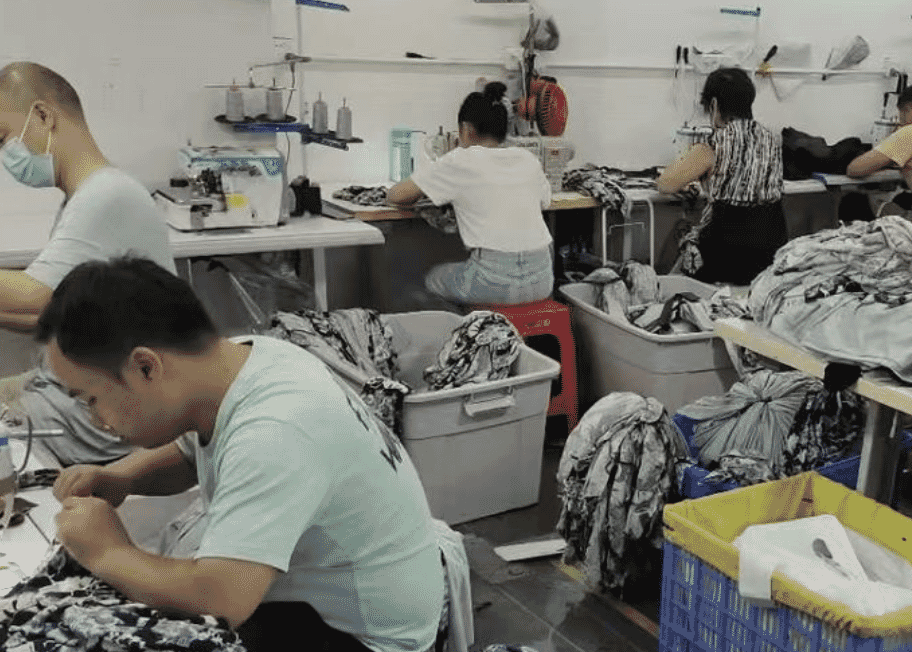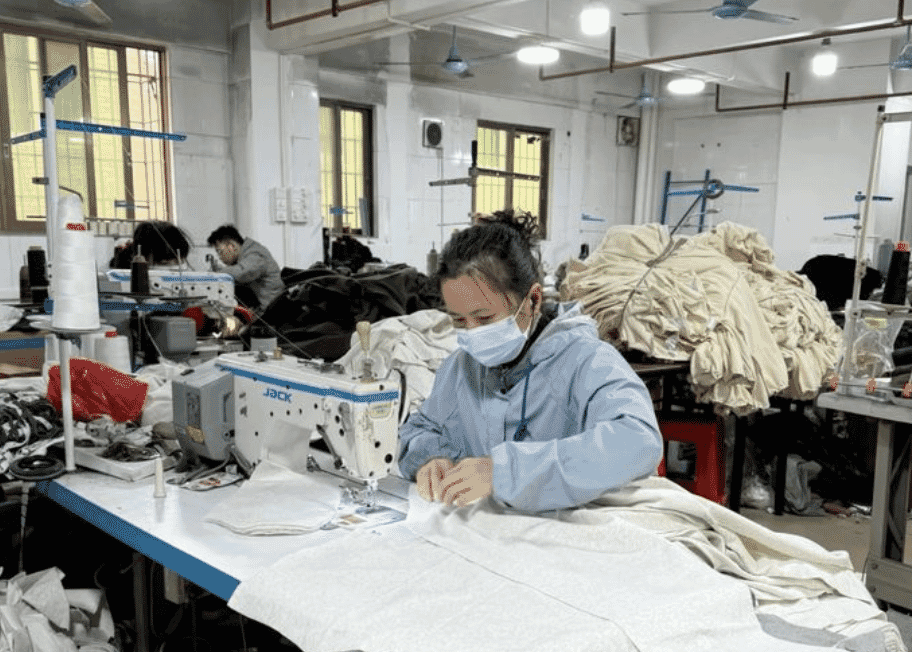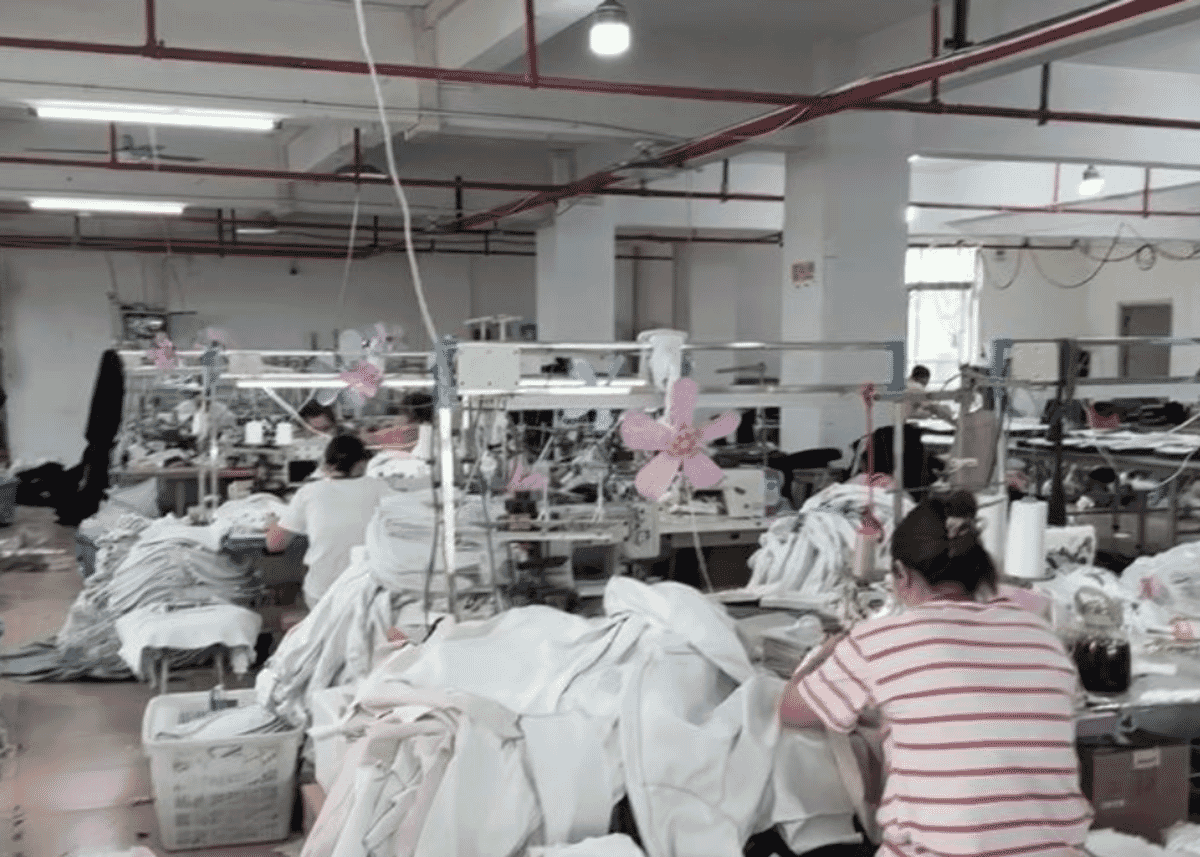
There are real clothing factories on Alibaba. They sit alongside many trading companies, and many traders describe themselves as manufacturers, so the listings can look the same.
This is a different question from whether the platform is safe. It is safe enough. The question here is narrower and more useful: how do you find the companies that actually own sewing machines, when a listing alone does not prove it?
China still supplied 29.6% of the world's clothing exports in 2024, its lowest share since 2010 (Sheng Lu, FASH455, citing WTO data, 2025). Plenty of that capacity sells on the platform. Finding it is a filtering problem, not a luck problem.
Note: China Clothing Manufacturer is a group of documented clothing factories in China, producing for brands from 100 units. What Alibaba's programmes cover is taken from Alibaba.com's own pages, checked in October 2026; terms change, so confirm them on your own order. We confirm exact MOQ and price with the factory when you send a brief.
Key takeaways
- Search by construction, not by product. "Flatlock leggings" filters better than "leggings".
- A listing spanning unrelated categories is a trading company. Factories are constrained by their machines.
- The registered scope on the business licence settles factory versus trader definitively.
- Ask for machine counts by name. Factories answer specifically; traders estimate.
- Sample and bulk from the same facility must be confirmed in writing.
- The lowest quote in a set is usually a different product, not a better deal.
- Move the relationship off-platform only after the licence is verified, never before.
How Should You Actually Search?
Most buyers search for the product and get thousands of results, with paid, sponsored listings among the first they see. Searching for the capability narrows it faster and surfaces different companies, because factories describe their machines while resellers describe their catalogue. The phrasing decides which population of suppliers you ever see.
Search the construction, not the garment. "Flatlock activewear manufacturer" returns companies that describe their machines. "Leggings" returns everyone who has ever sold a pair.
Search the fabric. "Combed ring-spun jersey t-shirt" filters to suppliers who understand the specification, because a trader reselling stock will not have written that.
Search the process. "Cut and sew", "OEM garment", "private label manufacturing" appear in factory copy and rarely in reseller copy.
Filter by region deliberately. Guangdong for general apparel, Fujian for sportswear and footwear-adjacent, Zhejiang for fabric. A supplier listing a location far from any relevant cluster is worth a question.
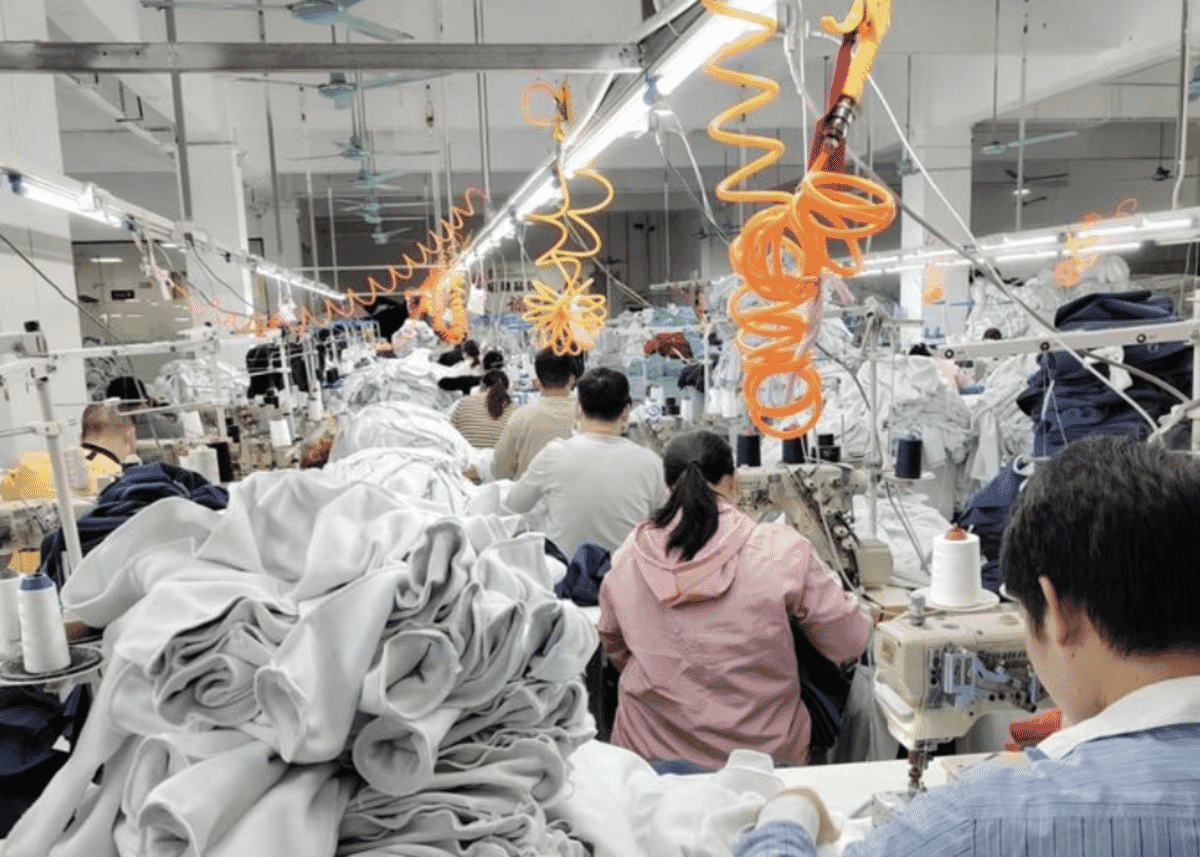
Citation Capsule: Searching Alibaba by manufacturing capability rather than product name filters results more effectively toward genuine factories. Terms describing construction, such as flatlock or coverstitch, fabric specification such as combed ring-spun, or process such as cut and sew, appear in manufacturer listings and rarely in the copy of trading companies reselling finished stock.
Got a shortlist? Send us the company names and we will tell you which own production and which resell, at no cost. Send the list.
What Separates a Factory Listing From a Trader?
Five signals, readable before you contact anyone, and each is visible in a public profile. None requires a message, a sample or a call to interpret, which makes this the cheapest filter available and the one most buyers skip straight past.
Range breadth. One of the clearest tells. A supplier offering t-shirts, jackets, swimwear, bags and caps is not a factory, because those are four different machine sets. Factories are narrow because their equipment makes them narrow.
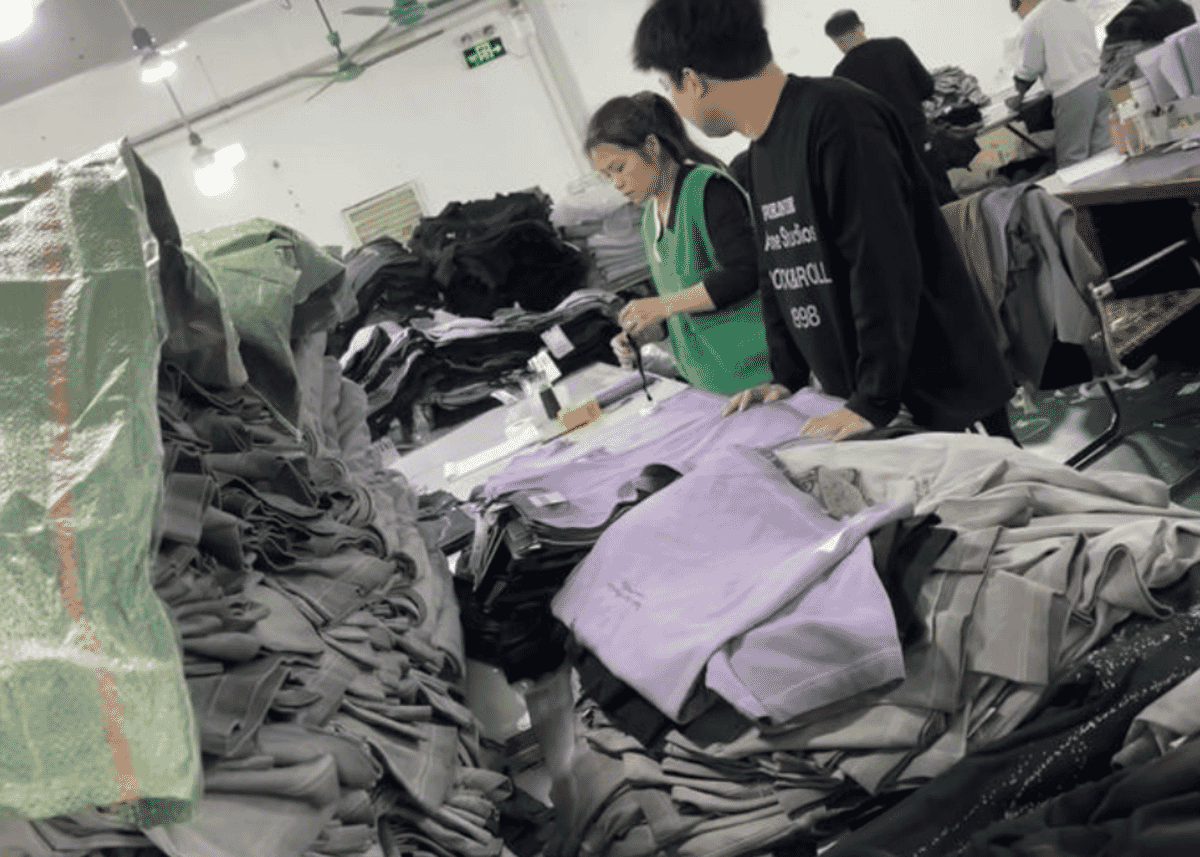
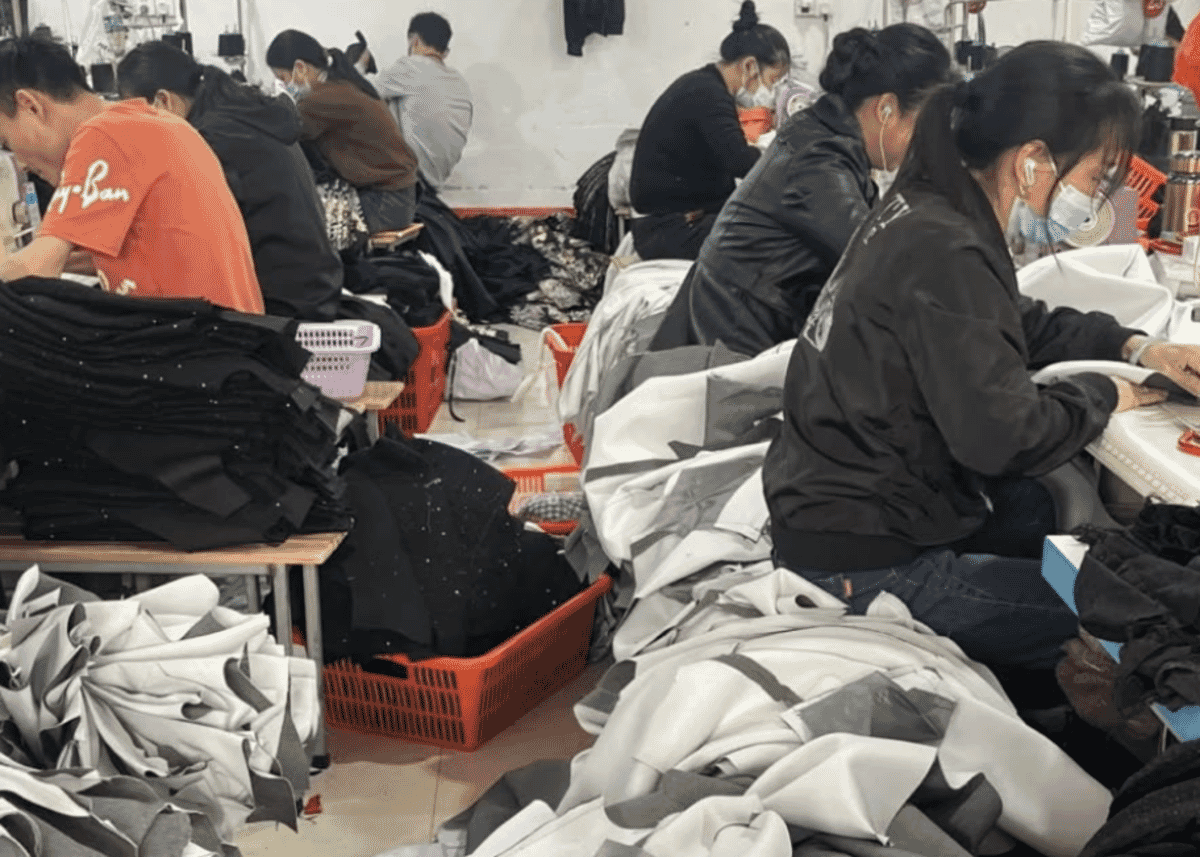
Photography. Factory listings show their own floor: cutting tables, sewing lines, a sample room. Trader listings show product on white backgrounds and sometimes a stock photo of a factory that is not theirs.
Specification language. A factory describes fabric weight, yarn count, machine types. A trader describes the product and the price.
Minimum order pattern. Very low minimums across a broad range signal stock, because production minimums are constrained by dye lots and set-up.
Certification specificity. Factories cite certificate numbers and the scope, which you can check yourself (for OEKO-TEX, with the OEKO-TEX Label Check). Traders display logos.
| Signal | Factory | Trading company |
|---|---|---|
| Product range | Narrow, one machine set | Broad, unrelated categories |
| Photos | Own production floor | Product on white, or stock imagery |
| Language | Weight, yarn count, machines | Product and price |
| Minimums | Constrained by dye lot | Low across everything |
| Certificates | Numbers and scope | Logos |
Structural guidance. Confirm with the business licence and registered scope in every case.
Skip the search: the China factory directory ($39) lists documented factories by category, city and capability, with the verification status of each. One-time payment, instant download.
Citation Capsule: Five supplier signals are readable from a marketplace profile before any contact: the registered business scope, the stated product range breadth, whether machinery is described specifically, response and transaction history, and whether certifications are presented with verifiable numbers rather than logos.
| Profile signal | What it indicates | How to confirm it |
|---|---|---|
| Range breadth | Tees, jackets, swimwear, bags and caps together means a trader; those are different machine sets | Ask which machines they own for your specific garment, by name |
| Photography | Own cutting tables, sewing lines and a sample room suggest a factory; white-background product shots suggest resale | Request an unscheduled video walk of the floor |
| Specification language | Fabric weight, yarn count and machine types indicate production; product and price alone indicate selling | Send a technical question and read whether the reply engages with it |
| Minimum order pattern | A single flat MOQ across every product is a trading heuristic, not a production constraint | Ask what sets the minimum; a factory names fabric or dye lot |
| Registered business scope | Manufacturing and wholesale trade are recorded differently on the licence | Request the business licence and read the scope field |
All five are readable before any contact, and the last one settles it outright.
Which Questions Do Factories Answer Differently?
Five, and the difference in answer quality is immediate. A factory answers all five without hesitation because the answers are simply how its business works; a reseller redirects, generalises or replies to a different question, and that pattern is the finding.
"How many flatlock machines do you run, and what brand?" A factory names a number and a brand without pausing. A trader gives a round number or redirects to capacity in pieces.
"Is your dyeing in-house or subcontracted?" Factories know exactly, because it governs their lead times. Traders often do not know.
"What is your minimum per colourway?" A production answer references the dye lot. A stock answer gives a flat number that does not vary by colour.
"Can I see the business licence?" Immediate for a factory. Delayed, deflected or partially redacted otherwise.
"Will the sample and bulk be made in the same facility?" The most important question on this list, and the one that produces the most evasive answers.
What Should Your Enquiry Actually Say?
The quality of the responses you get is set almost entirely by the quality of the message you send. A vague enquiry produces vague quotes from everyone, and then you cannot compare them, which wastes the entire exercise. The brief is the only variable in this process that costs you nothing and changes every reply.
Lead with the specification, not the introduction. Suppliers read dozens of messages a day. Fabric, weight, construction, quantity and colour count in the first three lines gets you taken seriously.
State the quantity per colourway. This is the number that determines whether they can help, and leaving it ambiguous guarantees a quote that means something different from what you assumed.
Attach a reference garment photo and a tech pack if you have one. A factory can read a tech pack. A trader usually cannot, which makes this a filter as well as a brief.
Ask three specific questions. Machine count, whether dyeing is in-house, and whether sample and bulk run in the same facility. The answers separate the list faster than anything else you can do remotely.
Do not mention your budget. Naming a target price tells every supplier what to engineer the product down to. Specify what you want and let the market tell you what it costs.
Citation Capsule: A supplier enquiry should lead with fabric, weight, construction, quantity per colourway and colour count within the first three lines, and should omit the buyer's target price. Naming a budget converts a specification request into a cost-engineering brief, since suppliers will meet the stated number by substituting fabric weight, yarn quality or construction rather than by reducing margin.
How Should You Read the Quotes You Get Back?
Send the same written specification to six suppliers and the spread will be wide. Understanding why is more useful than picking the middle. A wide spread on an identical specification means the suppliers are quoting different products, and identifying which one matches your brief is the actual work.
The lowest is usually a different product. Somebody has substituted a lighter fabric, a coarser yarn, or open-end for ring-spun. The quote is honest for what they intend to make, which is not what you specified.
The highest may be a trader with layers. Or a genuinely better factory. The price alone does not tell you which.
The informative ones ask questions back. A supplier who queries your fabric weight, asks whether you want side seams, or points out that your colour count will multiply the minimum, is reading the specification. That is the strongest positive signal in the whole process.
Citation Capsule: When one written specification is sent to multiple suppliers, the central cluster of quotes represents the genuine market rate for that specification. Quotes substantially below the cluster typically reflect an undisclosed substitution in fabric weight, yarn type or construction, while suppliers who respond with clarifying questions about weight, seams or colourway count are demonstrably reading the specification.
What silence means
Some suppliers will not reply at all, and that is information rather than rudeness. A factory with full lines does not chase small enquiries, and one whose machines cannot make your product often says nothing rather than saying no.
If a well-specified enquiry to a plausible factory goes unanswered, the usual reasons are that your quantity is below their economic floor, your construction is outside their equipment, or their order book is full for the season. None of those are worth chasing twice.
What Should You Insist On Before Bulk?
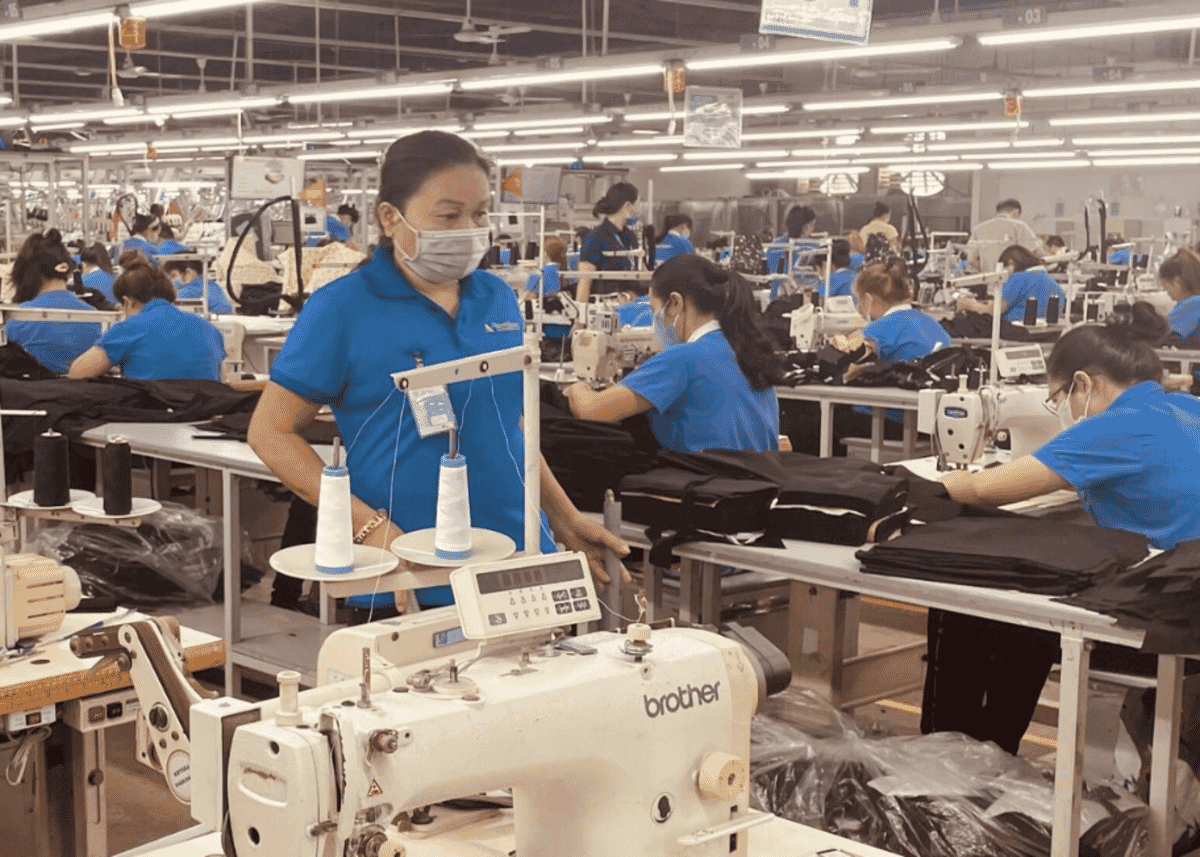
Four things, and the third is the one most often skipped, which is why bulk so often differs from an approved sample. The sample is the piece made to be approved; it proves capability rather than consistency, which is a different claim entirely and a weaker one.
A sample against your written specification, not a showroom piece and not a photograph of a previous order.
The sample made in the facility that will run bulk. Get this in writing. Sample-here, produce-there is a common cause of a disappointing bulk delivery.
A wash test you perform yourself. Wash the sample, measure it before and after, and check colour transfer. Shrinkage and fastness pass factory inspection and fail in a customer's machine.
A colour standard agreed with a tolerance. "Same as the sample" is not a tolerance. Keep the approved swatch.
What Are the Apparel-Specific Risks?
Generic marketplace advice misses the failures that are particular to garments, and those are the ones that cost seasons. Fabric substitution, shade variation and shrinkage rarely appear in advice written for electronics or homeware.
Fabric substitution between sample and bulk. One of the costliest apparel-specific failures. A sample in combed ring-spun and bulk in open-end look similar in a photograph and completely different in the hand. Specify the yarn, not just the fibre.
Grading that does not step evenly. A single sample in one size tells you nothing about the size run. Ask for two sizes and compare the measurements against your grading.
Shade variance across colourways. Each colour is a separate dye lot. If your range depends on colours matching across styles, that is a specification requirement, not an assumption.
Trim minimums arriving late. Labels, zips, drawcords and elastic all carry their own minimums and lead times. A garment waiting on a trim is as late as a garment waiting on fabric.
Care and composition labelling. Once you relabel and sell, the claim is yours to defend. Specify the labelling requirements for your market rather than accepting whatever the factory prints by default.
It is worth being accurate about the platform rather than alarmed by it. The 2025 USTR Notorious Markets List (2026) still names Taobao, Alibaba's consumer platform in China, where right holders continue to report high volumes of counterfeits; it also records that a number of stakeholders have recognised Alibaba for its proactive engagement with right holders and the US Government and its investment in anti-counterfeiting tools across its platforms. Alibaba.com, the business-to-business site this guide is about, is not named on the list. The apparel risks above are real, and they are not the same as the platform being unsafe.
Citation Capsule: Garment-specific marketplace risks differ from general goods: fabric substitution between sample and bulk, shade variation across dye lots, shrinkage discovered after delivery, and composition labelling that cannot be verified. Generic platform advice written for electronics or homeware addresses none of them.
When Should You Move the Relationship Off-Platform?
After the licence is verified, and not before. That sequence matters more than the decision itself, because moving a conversation off-platform before you know who you are dealing with removes both the record and the recourse, which are the two things the platform was providing.
On a first order, staying on-platform preserves the protection: with Trade Assurance, a payment made through Alibaba.com is held in escrow and released after you receive and confirm the product (Alibaba.com, Trade Assurance). A supplier pushing to move payment off-platform before you have verified anything is a classic warning sign.
Once you have verified the business licence, matched the bank account name, taken delivery of a bulk order and had it arrive as specified, a direct relationship is usually better for both sides. Communication gets faster, and terms become negotiable in a way platform transactions are not.
What you give up is the dispute mechanism, which is why the order of operations is: verify, transact once with protection, then move.
Try it free: pressure-test your landed cost with the China production cost calculator. 60 seconds, no email required.
The second order is the real test
A supplier who delivers a good first order has proved they can do it once. A supplier who delivers a second order matching the first has proved something much more valuable, because consistency is where most sourcing relationships quietly fail.
Ask, before the first order ships, what they will keep on file: the approved colour standard, the graded pattern, the fabric lot reference and the trim specifications. A factory that retains those can repeat your product. One that discards them will rebuild it from scratch and deliver something close but not the same.
Where Does Alibaba Stop Being the Right Tool?
Three points, and they arrive sooner than most brands expect. The platform is built for discovery and first orders, and the moment a product starts selling the requirements change to exactly the things it handles least well, which is reproducibility and documentation.
When the product becomes genuinely yours. A pattern you developed and a fabric you specified need a factory relationship, not a listings transaction.
When consistency across repeat orders matters. Same factory, same fabric lot discipline, same people. That is a relationship.
When the category is technical. Seamless knit, bonded seams, complex outerwear: the factories that do this well are often not competing on a listings platform at all, because they do not need to.
None of that makes the platform a bad starting point. It is an excellent map of what exists and what it costs. It is a poor substitute for knowing who makes your goods.
Before you commit to an Alibaba supplier
- Search by construction, fabric or process rather than by product name.
- Discard listings spanning unrelated product categories.
- Ask for the business licence and read the registered scope.
- Ask for machine counts by name and note whether the answer is specific.
- Send one written specification to six suppliers and read the spread.
- Confirm in writing that sample and bulk come from the same facility.
- Wash-test the sample yourself and measure it before and after.
The suppliers who survive these seven are a much shorter list, and it is the list worth talking to.
How we identify a real factory
- Product range assessed against machine capability before anything else.
- Business licence obtained and the registered scope read.
- Machine counts requested by type and brand, and the specificity of the answer noted.
- Dyeing established as in-house or subcontracted, since it governs lead time.
- One written specification sent to several suppliers, and the quote spread read rather than the lowest taken.
The same checks run before any brief reaches a factory in our group.
Conclusion
Real clothing factories are on Alibaba. The platform simply does not sort them for you, and its ranking signals favour whoever invests most in selling rather than whoever makes the best garment. Sorting them is your job, and it is doable.
The filters that work are all about capability. Search the construction, discard the impossibly broad ranges, read the registered scope, and ask machine questions that only a factory can answer specifically.
Then use the quote spread as information rather than a price list. A cluster tells you what your specification costs; an outlier below it is a substitution somebody has not mentioned yet.
And keep the order of operations. Verify the licence, transact once inside the protection, then move the relationship direct once it has earned it. Doing that in the other order is how the platform gets blamed for something it did not do.
We are a group of documented clothing factories in China, producing for brands from 100 units. Send the brief and we place your production with a factory we have already checked: licence, registered scope, certificate numbers and a walk of the floor. You work directly with the factory. Flat fees, no factory commissions.
Get in contact Download the directory ($39)Need a tech pack? Get a factory-ready single-style tech pack for $79. See what's included.
Frequently Asked Questions
Are there real clothing factories on Alibaba?
Yes, but they sit alongside many trading companies that describe themselves the same way. Filtering works: search by construction, fabric specification or process rather than product name, discard listings spanning unrelated categories, and confirm the registered scope on the business licence.
How do I tell a factory from a trading company on Alibaba?
Range breadth is one of the clearest tells, because factories are constrained by their machinery and cannot make garments, bags and electronics. Factory listings show their own production floor, describe fabric weight and machine types, and cite certificate numbers rather than displaying logos.
Why are the quotes so different for the same specification?
Because the lowest quotes usually describe a different product. A supplier has substituted a lighter fabric, a coarser yarn or open-end for ring-spun, and the quote is honest for what they intend to make. The central cluster is the genuine market rate for what you specified.
Should I move an Alibaba supplier relationship off the platform?
Eventually, but only after verifying the business licence, matching the bank account name and completing at least one order inside the escrow protection. A supplier pushing to move payment off-platform before verification is a classic warning sign.
What should I insist on before placing a bulk order?
A sample made against your written specification in the same facility that will run bulk, confirmed in writing. Wash-test that sample yourself, measuring before and after for shrinkage and checking colour transfer. Agree a colour standard with a stated tolerance and keep the approved swatch.
Editorial note: all company names, certification marks and trademarks referenced here are the property of their respective owners. Descriptions of Alibaba.com programmes are taken from Alibaba's own pages listed below, checked in October 2026. Platform terms change, so confirm them on your own order, and confirm terms directly with the factory before committing.
Sources
- Office of the United States Trade Representative (2026): 2025 Review of Notorious Markets for Counterfeiting and Piracy, naming online platforms and physical markets, including Taobao.
- Sheng Lu, FASH455, University of Delaware (2025): WTO-based analysis of global textile and apparel trade, including China's 29.6% share of world clothing exports in 2024.
- OEKO-TEX Label Check: public verification of certificate numbers.
- Alibaba.com, Trade Assurance: how payment is held in escrow and released after the buyer confirms receipt.
Related Reading
- Clothing Suppliers in China: How to Find and Vet a Factory
- China Sourcing Agent vs Working Direct With the Factory
- Is Alibaba Safe? What the Badges and Trade Assurance Cover
No commissions. No markups. The factory bills you directly.