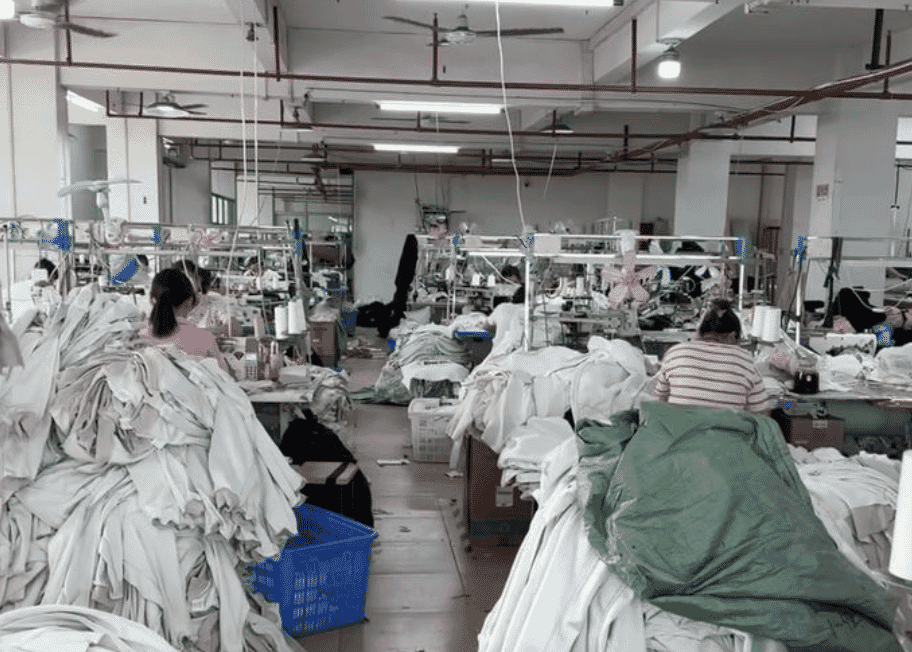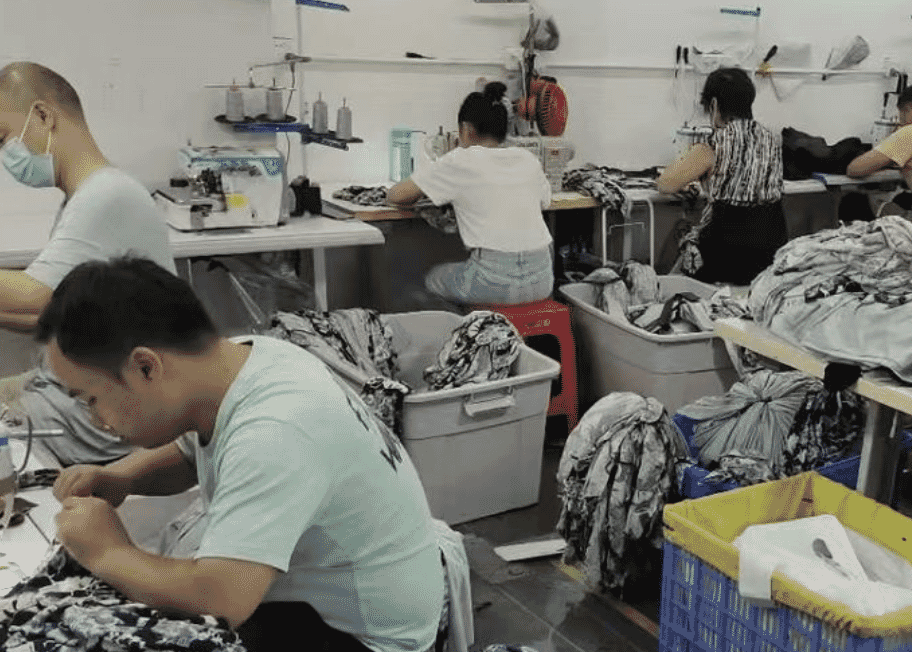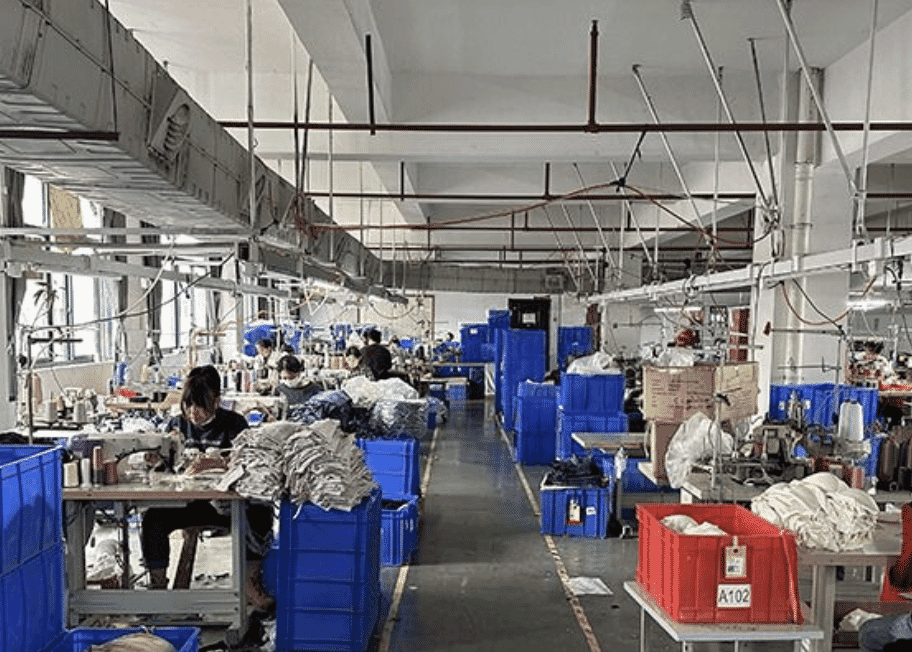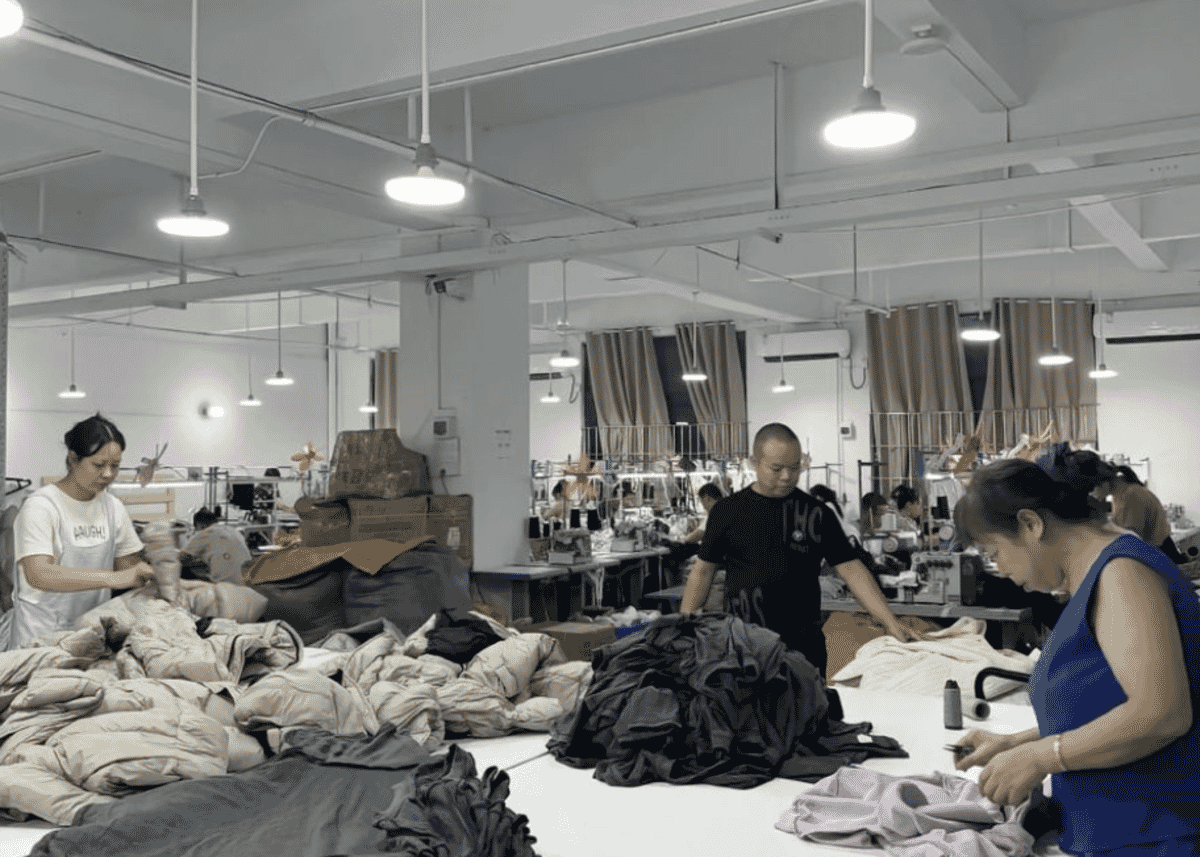
Headwear is not apparel with a smaller pattern. A structured cap has a buckram-backed front panel, a sweatband, a closure and usually embroidery, and the factories that make it well generally make nothing else.
That specialisation is the whole reason to source headwear separately. A garment factory will quote your caps. It will subcontract them, and the margin you did not know about is the least of the problems that follow.
China sits inside a heavily concentrated industry: five provinces produce over 70% of national garment output (China National Garment Association), and headwear concentrates tighter still.
Note: China Clothing Manufacturer is a group of documented clothing factories in China, producing for brands from 100 units. Ranges in this guide come from published industry sources and are given as market ranges, not as quotes from a specific factory. We confirm exact MOQ and price with the factory when you send a brief.
Key takeaways
- Headwear factories are specialists. A general garment factory quoting caps is subcontracting them.
- The first question is structured or unstructured. It changes the pattern, the materials and the price.
- Panel count drives cost: a 6-panel cap has more seams and more machine time than a 5-panel.
- Decoration method matters more than decoration size. Embroidery, patch, 3D puff and rubber all price differently.
- Qingdao in Shandong and Baoding in Hebei are the established headwear clusters.
- Closure type is a spec field, not a detail. Snapback, strapback, buckle and fitted are different builds.
- Ask for the physical sweatband and the buckram, not just a photograph of the finished cap.
Structured or Unstructured: Which Cap Do You Need?
Every headwear brief starts here, and getting it wrong wastes the first sample round. The decision changes the interlining, the crown construction and the machines involved, so it is not an adjustment a factory can make to a sample already produced.
A structured cap holds its shape when you take it off. The front panels are backed with buckram, a stiffened interlining, and the crown stands up on its own. This is the classic baseball cap silhouette and it is what most brands picture without knowing the word.
An unstructured cap collapses. No buckram, a softer crown, and it moulds to the head. Dad caps are unstructured, and the relaxed look is a construction choice rather than a styling one.
The difference is not cosmetic. Buckram changes the pattern, the stitching order and how embroidery behaves, because you are stitching through a stiffened layer. A factory that does one well does not automatically do the other.
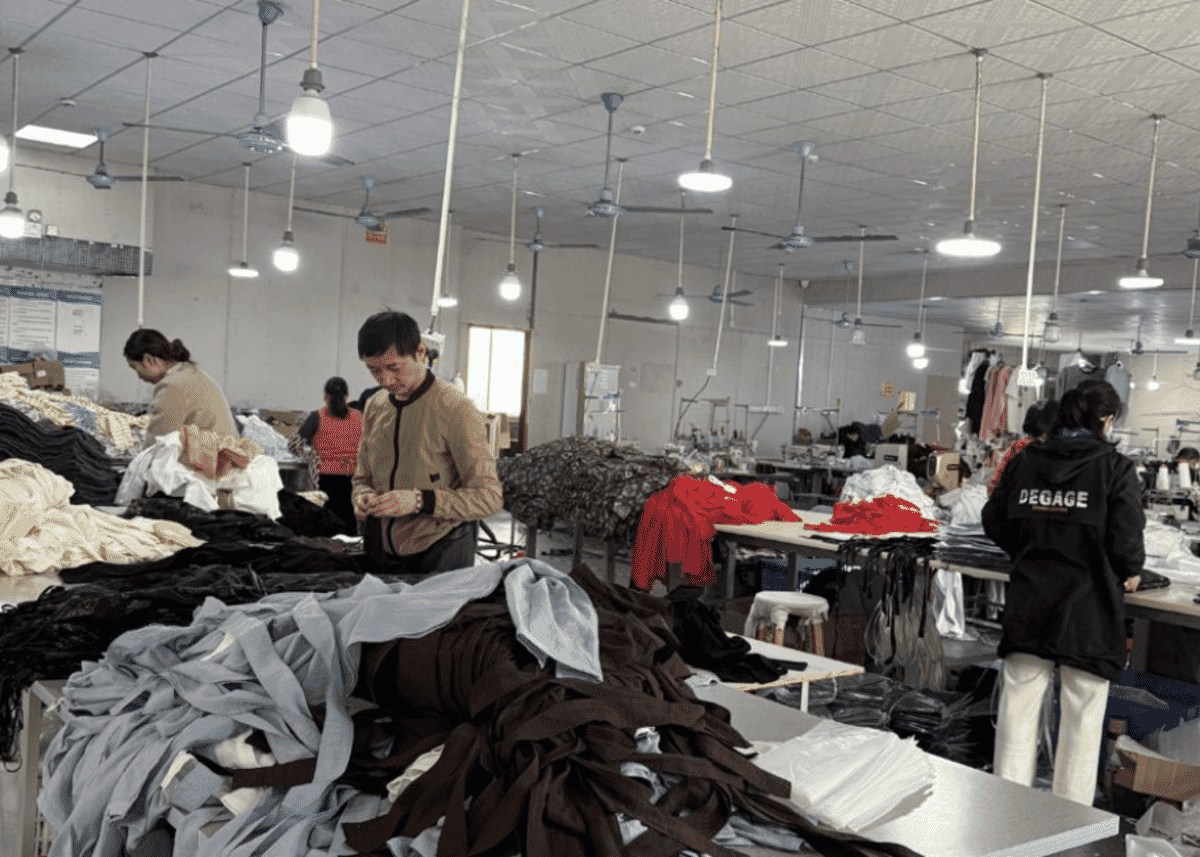
Citation Capsule: Headwear construction divides first into structured and unstructured. Structured caps use buckram, a stiffened interlining behind the front panels, so the crown holds its shape independently. Unstructured caps omit it and mould to the head. The choice changes the pattern, the stitching order and how embroidery behaves, because decoration on a structured cap is stitched through a stiffened layer.
How Does Panel Count Change the Price?
Every seam is machine time, and machine time is most of what you pay for in cut-make-trim. Panel count is the single clearest driver of cap cost, and it is a design decision rather than a negotiating one. Two caps in the same fabric with the same decoration can differ substantially in price purely on how many pieces the crown is built from.
The other cost fields are closure and brim. A snapback plastic closure, a strapback in fabric or leather, a metal buckle and a fitted sized crown are four different builds with four different bills of materials. A flat brim and a pre-curved brim are different components.
Skip the search: the China factory directory ($39) lists documented factories by category, city and capability, with the verification status of each. One-time payment, instant download.
Citation Capsule: Headwear cost is driven first by panel count, since every seam is machine time, then by closure type, as snapback, strapback, buckle and fitted constitute four distinct builds with separate bills of materials. Embroidery is quoted by stitch count rather than logo dimensions, so a small dense multi-colour mark can cost more than a large simple one.
Which Decoration Method Should You Specify?
This is where headwear briefs are least precise and where the sample most often disappoints. The method changes the look far more than the size does, which is why a logo approved as artwork can arrive looking like a different mark entirely. Each method has a minimum legible detail level, and fine type is the first thing that fails.
| Method | What it is | Best for |
|---|---|---|
| Flat embroidery | Stitched directly, flush to the panel | Fine detail, small text, multi-colour |
| 3D puff embroidery | Stitched over foam for a raised effect | Bold block letters and simple shapes |
| Woven or embroidered patch | Made separately, then applied | Detail that embroidery cannot hold, unstructured caps |
| Leather or PU patch | Debossed or printed, then stitched on | Premium positioning |
| Rubber or PVC | Moulded, then applied | Waterproof and technical looks |
| Screen print | Printed on the panel | Large coverage, lower cost, flatter result |
Ranges come from published industry sources. We confirm exact MOQ and price with the factory when you send a brief.
Give a stitch count, or give artwork the factory can count
Embroidery is priced by stitch count, not by logo size. A small, dense, multi-colour logo can cost more than a large simple one. Send vector artwork and ask the factory to digitise it and quote the stitch count back, then approve that before you approve a price.
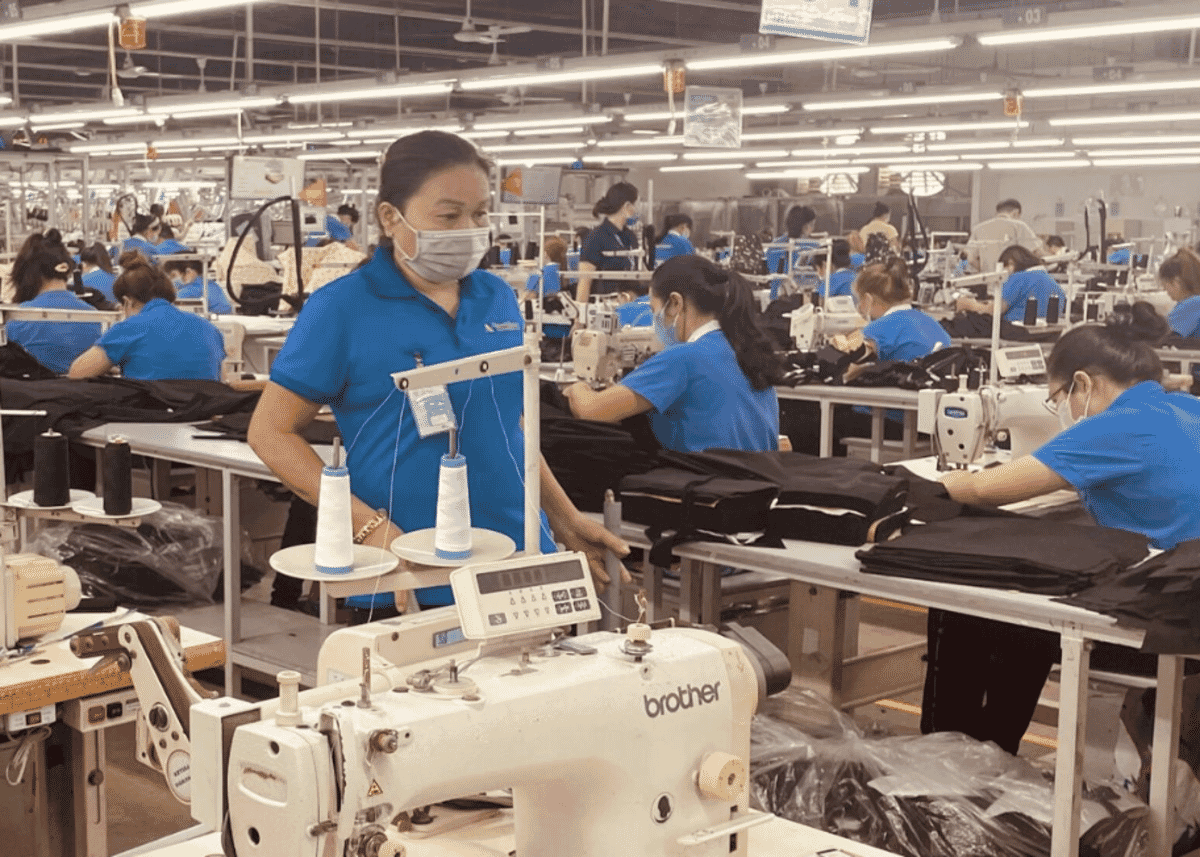
Citation Capsule: Cap decoration method determines legible detail more than decoration size does. Embroidery resolves less fine detail than printing or applied patches, so artwork approved as a flat graphic can arrive as a visibly different mark. Specifying the method alongside the artwork, and approving a physical strike-off, prevents the most common headwear sampling failure.
| Decoration method | Detail it holds | Where it suits |
|---|---|---|
| Flat embroidery | Moderate; fine type blurs | Logos and simple marks on structured crowns |
| 3D puff embroidery | Low; bold shapes only | Front panel statements, sports and streetwear |
| Woven or PVC patch | High; holds small type | Detailed marks, wordmarks, outdoor styles |
| Screen or transfer print | High on flat panels | Unstructured caps and soft fabrics |
| Leather patch, debossed | Moderate | Premium and heritage positioning |
Structural comparison, not a price list.
Which Fabrics Are Caps Actually Made From?
Cap fabric choice is narrower than apparel and the constraints are different, because the cloth has to hold a shape rather than drape. A fabric that hangs beautifully in a garment can be unusable in a crown, which is why apparel references translate poorly here.
Cotton twill is the default for structured caps. It takes embroidery well, holds the crown shape with buckram behind it, and washes acceptably. Weight matters more than in apparel: too light and the crown collapses, too heavy and the seams bulk.
Brushed cotton gives the softer surface associated with unstructured dad caps, at some cost in embroidery crispness.
Polyester and poly blends dominate performance headwear. They hold colour better in sunlight, dry faster and cost less, and they suit sublimation printing that cotton cannot take.
Acrylic and wool blends are the beanie materials. Here the knit gauge, not the weave, decides the look: a fine gauge reads refined, a chunky gauge reads casual, and they are different machines.
Corduroy, canvas, ripstop and mesh all appear as panel or accent materials. Mesh in particular is not optional knowledge, because a trucker cap is two materials in one crown and the join is where inexperienced factories struggle.
Citation Capsule: Cap fabric selection is governed by shape retention rather than drape. Cotton twill is standard for structured caps and takes embroidery well, brushed cotton suits unstructured constructions at some cost in stitch definition, and polyester blends dominate performance headwear because they hold colour in sunlight and accept sublimation printing that cotton cannot.
What MOQ Should You Expect for Custom Caps?
Headwear minimums behave differently from garment minimums, and understanding why tells you which lever to pull. Caps use very little fabric each, so the fabric minimum arrives at a far higher unit count than in apparel, and decoration set-up carries proportionally more weight.
The fabric dye lot still matters, but less, because a cap uses a fraction of a metre. What drives cap minimums instead is set-up: the embroidery digitising, the machine threading for your colours, and for moulded decoration the tooling.
That changes the arithmetic. On garments, cutting colourways reduces cost most. On caps, reducing the number of distinct decorations does, because each new logo is a new digitising and threading set-up whatever the quantity behind it.
Moulded decoration carries tooling
Rubber and PVC patches are moulded, and the mould is a real cost paid once. That pushes the sensible minimum up sharply for a first order and down sharply for a repeat, since the tooling already exists. Ask whether the mould cost is charged separately and who owns it afterwards.
How Does Cap Sizing Actually Work?
Three systems, and brands routinely specify the wrong one. The confusion is not trivial: a size stated in the wrong convention produces caps that fit nobody in the intended market, and it is discovered only once stock has landed. Stating the convention alongside the number costs one word and removes the failure entirely.
Adjustable caps use a closure and cover a range, which is why snapback and strapback dominate. One size, one pattern, one grading problem avoided.
Fitted caps are sized to head circumference and graded across a size run. This is a genuinely harder build: the crown pattern changes at every size, and a factory that grades badly produces a size run that does not step evenly.
Flexfit and elasticated sits between the two, covering a band of sizes with a stretch sweatband rather than a closure.
If you are producing fitted caps, ask to see a graded size run before you commit. Grading is where inexperienced headwear factories fail, and it is invisible in a single sample.
Where Are China's Headwear Factories?
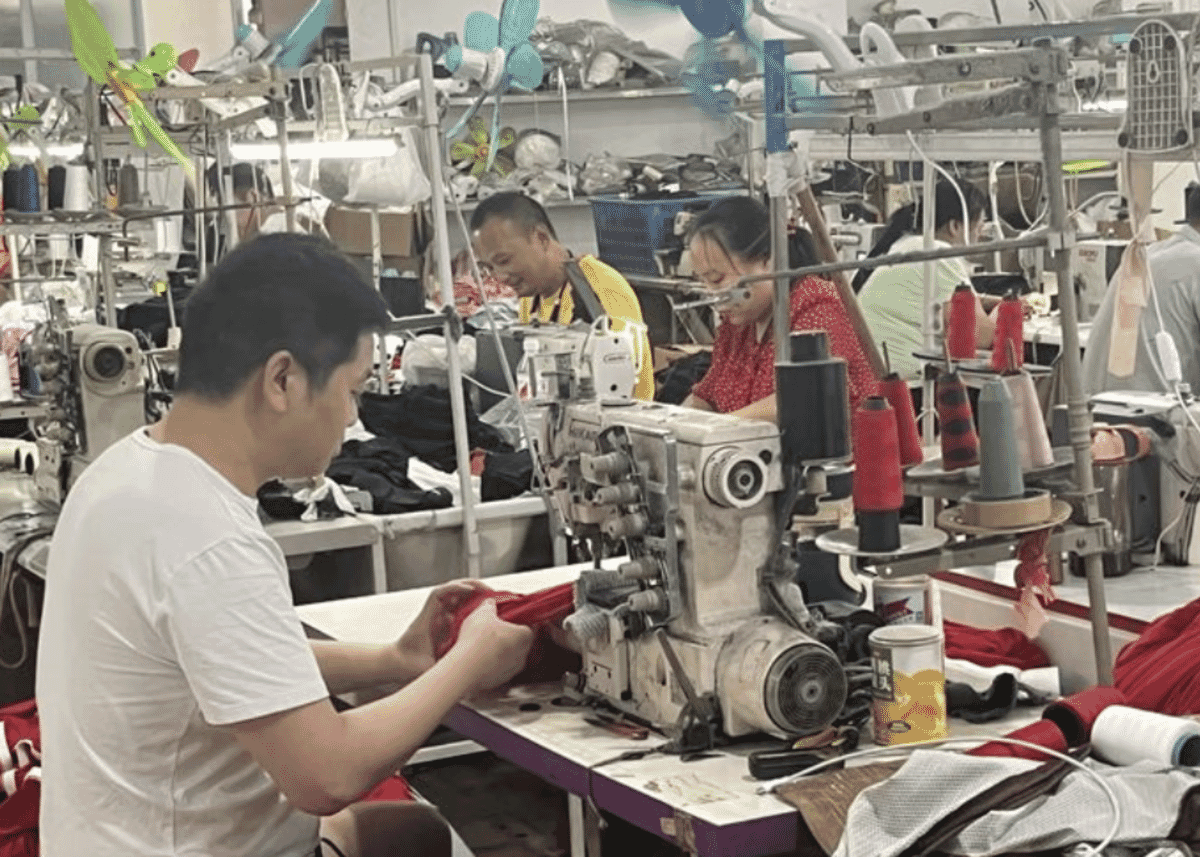
Two clusters carry most of it. Qingdao, in Shandong province, is the established export headwear centre and where much of the structured cap capacity sits. Baoding, in Hebei, is the other long-standing cluster. Both sit well away from the Guangdong apparel belt, which is why a garment supplier offering caps is almost always placing them rather than making them.
Guangzhou and Yiwu also hold headwear capacity, which is useful when caps are one line in a wider apparel programme and you want them produced near everything else. The trade-off is depth of specialisation against convenience.
The practical decision: if headwear is your product, go to the headwear clusters. If caps are an accessory alongside a clothing range, producing near your garment factory is usually worth more than the marginal capability difference.
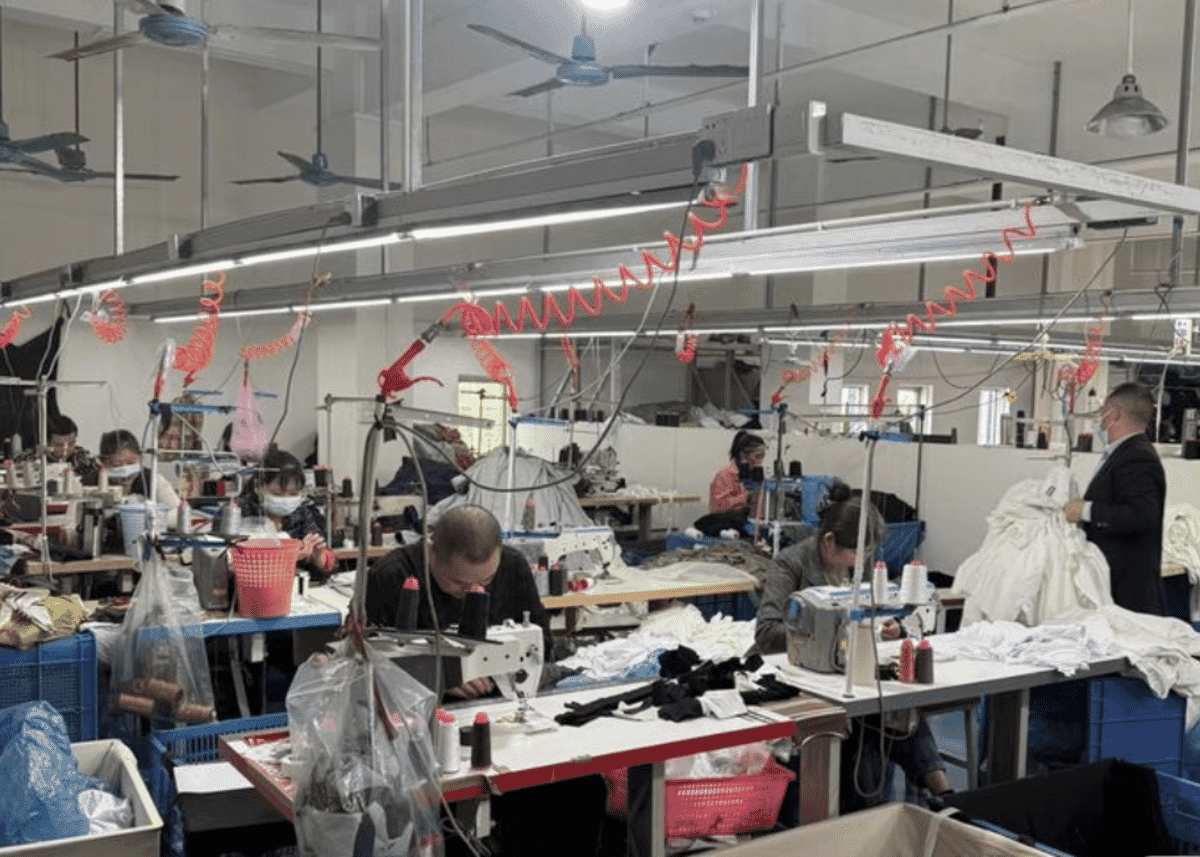
Citation Capsule: Chinese headwear manufacturing concentrates in Qingdao in Shandong province and Baoding in Hebei, both long-established export clusters with structured cap capacity. Guangzhou and Yiwu also hold headwear capability, which suits brands producing caps alongside a wider apparel range where proximity to the garment factory outweighs depth of specialisation.
The brim is a component, not a detail
Brim shape, stiffness and length are all specification fields, and they change the silhouette more than most brands expect. A flat brim and a pre-curved brim use different inserts. The insert itself has a stiffness, and a soft insert on a structured cap reads as a mistake rather than a choice.
Brim length is the field most often left unspecified, and it is the one that most affects how the cap photographs. If you have a reference cap, measure it and put the number in the brief rather than describing it in words.
How Do You Check a Headwear Factory Is Real?
The general checks apply, plus three that are specific to this category. Headwear carries construction and decoration decisions that do not exist in apparel, so a supplier who handles garments well can still be the wrong choice for caps. The equipment question settles it faster than any discussion of capacity or price.
- Business licence and registered scope. Manufacturing or trade. The document settles whether they make caps or resell them.
- Ask for the sweatband and the buckram separately. A factory that makes caps can put the components on a table. One that subcontracts sends photographs of finished hats.
- Ask how many embroidery heads they run. Specific answers come from factories that embroider daily.
- Ask to see a size run. Fitted caps and adjustable caps grade differently, and grading is where inexperienced factories fail.
- Certificate numbers, not logos. OEKO-TEX publishes a label check; amfori BSCI documents its audit system.
Send a reference cap and we will come back with the construction, the panel count, the decoration method and the closure to specify, usually within 24 hours. Send it here.
Whoever makes the cap, the label obligation is yours. US law requires most textile products to carry a label listing fibre content, country of origin and the identity of the manufacturer or the business responsible for marketing it (FTC Textile Rules, 16 CFR 303). A factory will print what you specify, so the specification has to be right before the first carton ships.
When Should You Not Make Caps in China?
Three situations, and a supplier who never mentions them is selling rather than advising. In each the obstacle is structural rather than a matter of finding a better factory, which means more searching will not resolve it. Recognising which situation you are in early saves a development cycle.
Very small quantities with complex decoration. Set-up costs on headwear are front-loaded: digitising, threading and any moulding tooling are paid whether you order 100 caps or 1,000. Below a certain quantity, a domestic embroiderer working on blank caps often lands cheaper all-in, because you are buying decoration rather than manufacturing.
Tight timelines into Europe or the US. Caps ship by sea like everything else, and the calendar does not care that the product is small. If the deadline is measured in weeks, decorating blanks locally is usually the only route that makes it.
Duty-sensitive programmes. Headwear classifications carry their own rates, and Section 301 layers apply as they do to apparel. Run the HTS classification before the unit price and confirm against the live USTR and CBP schedules.
The middle route most brands miss
Buying blank caps and decorating them locally splits the difference. You get short lead times and small quantities on the decoration, while the cap itself is made at scale. What you give up is control of the cap: the crown shape, panel construction and fabric are whatever the blank supplier made, which is fine until your brand outgrows it.
Custom manufacturing earns its place when the cap itself is the product rather than a canvas for a logo. If the silhouette, the fabric or the closure is part of what you are selling, blanks will not get you there.
Before you brief a cap
- Decide structured or unstructured. It changes the pattern and how embroidery sits.
- Specify the panel count, because every seam is machine time.
- Name the closure: snapback, strapback, buckle or fitted are four different builds.
- Choose the decoration method, then send vector artwork for digitising.
- Ask for the stitch count back and approve it before you approve a price.
- If the caps are fitted rather than adjustable, ask to see a graded size run.
Specify those six and a factory can quote accurately the first time. Leave them open and you will get a cheap number, then a sample that is not your product.
How we check a headwear factory
- Sweatband and buckram requested as separate components, not photographs of finished caps.
- Embroidery head count asked by number and brand.
- Graded size run inspected where the product is fitted rather than adjustable.
- Brim insert stiffness and length confirmed against a reference cap with measurements.
- Business licence and registered scope checked before any deposit is discussed.
Component samples requested directly, since a producing factory can supply them and a reseller sends photographs instead.
Conclusion
Headwear rewards precision in the brief more than almost any other category, because so much of the cost sits in decisions brands treat as details. Structured or unstructured. Panel count. Closure. Decoration method and stitch count. Each is one line in a brief and each changes both the cost and the finished object, which makes headwear unusually responsive to a careful specification.
Specify those five and a factory can quote you accurately the first time. Leave them open and you will get a cheap number, then a sample that is not your product, then a revised number.
And check that the factory makes caps rather than buying them. The sweatband and the buckram on a table answer that faster than any certificate.
The decision that sits underneath all of this is whether the cap is your product or your packaging. A logo on a blank is packaging, and it should be bought and decorated like packaging: locally, in small quantities, fast.
A cap with a crown shape you chose, a fabric you specified and a closure that suits the silhouette is a product, and products are worth manufacturing. The cost difference between the two routes is real, but it is smaller than the difference in what you end up owning.
We are a group of documented clothing factories in China, producing for brands from 100 units. Send the reference cap, the panel count and the decoration you want, and we place your production with a factory that actually makes headwear, normally within 24 hours. You work directly with the factory. Flat fees, no factory commissions.
Get in contact Download the directory ($39)Need a tech pack? Get a factory-ready single-style tech pack for $79. See what's included.
Frequently Asked Questions
What is the difference between a structured and unstructured cap?
A structured cap has buckram, a stiffened interlining behind the front panels, so the crown holds its shape when you take it off. An unstructured cap omits it and moulds to the head, which is the dad cap look. The choice changes the pattern, the stitching order and how embroidery sits.
What drives the cost of a custom cap?
Panel count first, because every seam is machine time. Then closure type, since snapback, strapback, buckle and fitted are four different builds. Then decoration: embroidery is priced by stitch count rather than logo size, so a small dense multi-colour logo can cost more than a large simple one.
Where are hats and caps made in China?
Qingdao in Shandong province and Baoding in Hebei are the established headwear clusters, both with structured cap capacity for export. Guangzhou and Yiwu also hold headwear capability, which suits brands producing caps alongside a wider apparel range near their garment factory.
Should I use embroidery or a patch on my cap?
Flat embroidery suits fine detail, small text and multiple colours. 3D puff suits bold block letters and simple shapes. A woven or embroidered patch carries detail embroidery cannot hold and works well on unstructured caps. Leather and rubber patches read as premium and technical respectively.
How do I know a headwear factory actually makes caps?
Ask for the sweatband and the buckram as separate components on a table, not a photograph of a finished hat. Ask how many embroidery heads they run, and ask to see a size run, because fitted and adjustable caps grade differently and grading is where inexperienced factories fail.
Editorial note: all company names, certification marks and trademarks referenced here are the property of their respective owners. MOQ, cost and lead-time figures are market ranges compiled from the published sources listed below, not quotes from any individual factory, and they vary by product, fabric and season. Tariff figures were correct at the date of publication and the 2026 position is still moving. Always verify your own HTS classification and confirm terms directly with the factory before committing.
Sources
- Federal Trade Commission: Threading Your Way Through the Labeling Requirements Under the Textile and Wool Acts: fiber content, country of origin and manufacturer identity.
- China National Garment Association, Industry Overview: provincial concentration of garment output and the national cluster map.
- Sheng Lu, FASH455, University of Delaware (2025): WTO-based analysis of global textile and apparel trade.
- OEKO-TEX Label Check: public verification of certificate numbers.
- amfori BSCI: social audit system documentation.
- Office of the United States Trade Representative: Section 301 tariff actions and exclusion process.
- US Customs and Border Protection: trade remedies and duty administration.
- China Import and Export Fair (Canton Fair): official fair information and phase structure.
Related Reading
- Clothing Suppliers in China: How to Find and Vet a Factory
- Activewear Manufacturers in China: Fabrics, MOQs and Machines
No commissions. No markups. The factory bills you directly.