A dress is the hardest simple garment to manufacture. It has no fastening system to hide behind, no structure to correct a bad fit, and it hangs from the shoulder while fitting at the bust, waist and hip at the same time. Get any one of those wrong and the whole thing reads as cheap.
It is also the category where fabric choice and pattern quality matter more than sewing skill. A dress cut well in an ordinary fabric looks expensive. A dress cut badly in an expensive fabric looks like a mistake, and no amount of stitching quality rescues it.
This guide covers what actually separates dress factories from general cut-and-sew, the fabric decisions that drive everything else, why grading is the hidden cost, and how to brief and check a dress supplier in China.
Note: China Clothing Manufacturer is a group of documented clothing factories in China, producing for brands from 100 pieces per style. The construction, fabric and grading advice here is our editorial view from placing production; the figures come from the sources listed at the end. We confirm exact MOQ and price with the factory when you send a brief.
Key takeaways
- Dresses split into woven and knit, and they are made by different factories.
- Drape is the fabric property that decides how a dress looks, and it cannot be specified by weight alone.
- Lining is one of the most often skipped specifications, and one of the most visible when omitted.
- Grading across a size run is where dress quality is won or lost.
- MOQ is driven by fabric rather than by sewing, so colour count matters more than quantity.
- Sampling takes longer than for simple garments, with two to three fit rounds being normal.
- For dresses, Guangdong and Zhejiang matter most, with different specialisms.
- US base duty on a women's dress runs from 8.4% to 16% by fibre and construction, before any China-specific duties.
Woven or Knit: Which Factory Do You Need?
This is the first question and it decides everything after it. Woven and knit dresses are made by different factories, on different machines, by operators with different skills. A woven dress is cut and sewn from stable cloth. A knit dress is made from stretch fabric that moves under the needle. A factory good at one is rarely good at both.
Woven dresses are cut from fabric that does not stretch. Shirt dresses, wrap dresses, tailored dresses, most occasion wear. They need darts, seams and sometimes zips to create shape, because the fabric will not do it. The pattern carries the burden, and a woven factory lives or dies on pattern quality.
Knit dresses are cut from jersey, rib or ponte, which stretch. Bodycon, t-shirt dresses, slip dresses in jersey. Shape comes partly from the fabric, so the pattern is more forgiving, but the sewing is less so. Knit seams need overlock and coverstitch machines and an operator who knows how much tension to allow.
A factory that does both usually does one of them better. Ask which, and ask to see the samples that prove it rather than accepting the answer.
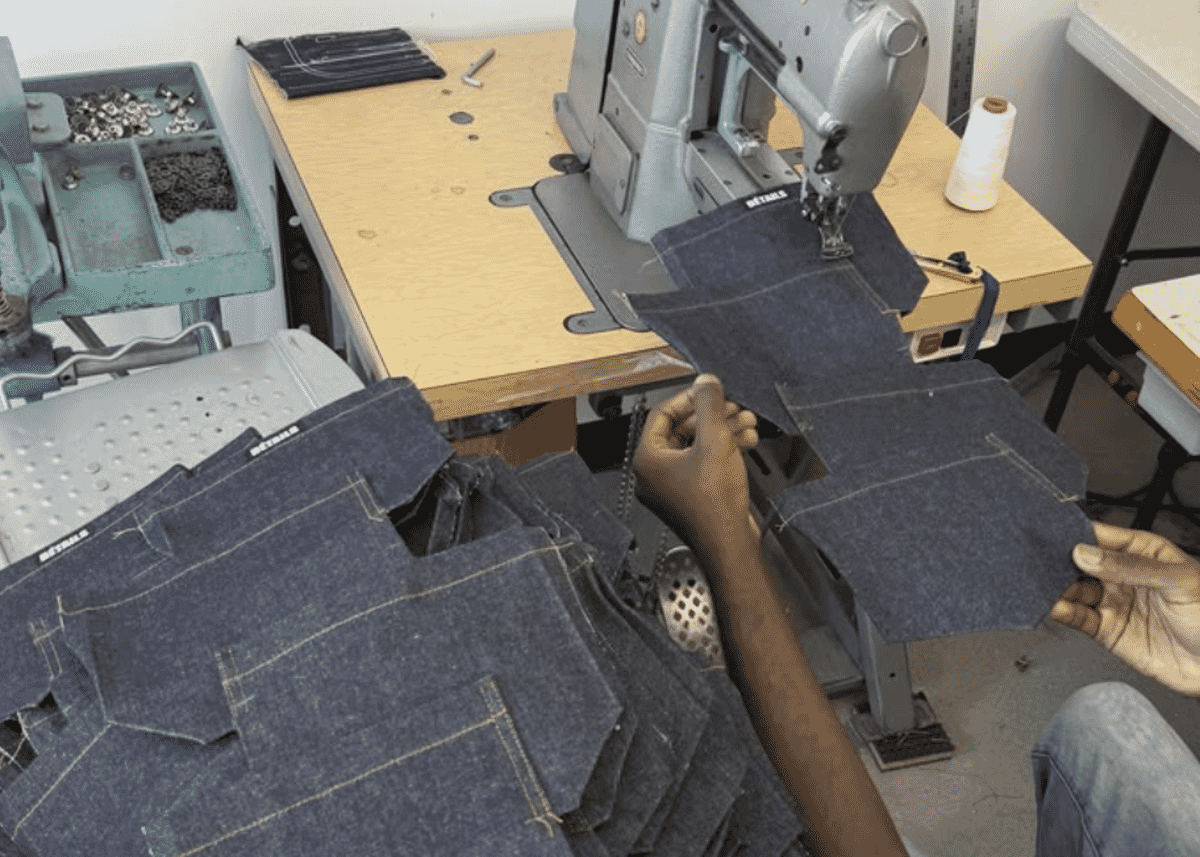
Citation Capsule: Dress manufacturing divides into woven and knit production, which use different machinery and different skill sets. Woven dresses create shape through darts, seams and fastenings because the fabric does not stretch, making pattern quality decisive. Knit dresses derive shape partly from fabric stretch, shifting the difficulty from pattern to seam construction.
Have a dress reference you want made? Send the photo and we will tell you which construction it is and what it needs. No cost. Send it here.
Why Does Drape Matter More Than Weight?
Because two fabrics at exactly the same weight can hang completely differently, and drape is what the customer sees. Drape is set by fibre, yarn and construction rather than by grams per square metre. This is why specifying a dress fabric by weight alone leaves the most important property of the garment unspecified.
Weight tells you how much fibre is in a square metre. Drape tells you how the fabric falls under its own weight, and it is a function of fibre, yarn twist, weave structure and finishing. A 120 g/m² crisp cotton poplin and a 120 g/m² viscose challis are the same weight and behave like different materials entirely.
For a dress this decides almost everything. A gathered skirt in a stiff fabric stands away from the body and adds volume. The same pattern in a fluid fabric falls close and reads slim. Brands routinely approve a fabric on weight and hand-feel from a small swatch, then receive a dress that looks nothing like the reference, because a swatch the size of a postcard cannot show drape.
The fix is to ask for a hanging sample, at least half a metre, held up rather than laid flat. Better still, ask the factory to make the sample dress in a candidate fabric before committing to the bulk order.
Citation Capsule: Two fabrics at identical weight can hang completely differently, which is why weight alone never specifies a dress fabric. Drape is a function of fibre, yarn and construction rather than grams per square metre, and it is the property that decides whether a finished dress resembles the reference garment.
Which Fabrics Are Used for Dresses?
Six families cover most of what gets made, and the choice sets the price, the season and the care label. Viscose and rayon for fluid drape. Polyester crepe and chiffon for durability and print. Cotton poplin and lawn for structure. Linen and linen blends for texture. Jersey and ponte for stretch. Satin for occasion wear. Each carries a different minimum.
Viscose and rayon, including challis and twill. Fluid, matte, takes print beautifully, and the default for fluid summer dresses. It creases and it shrinks, so pre-shrinking matters.
Polyester crepe and chiffon. Stable, cheap, holds pleats, does not crease. It breathes poorly, which is the trade-off customers notice in warm weather.
Cotton poplin and cotton lawn. Crisp, breathable, structured. Shirt dresses and anything that needs to hold a shape.
Linen and linen blends. Distinctive texture, excellent in heat, creases by design rather than by fault. Say so on the hangtag or handle the complaints.
Jersey and ponte. Knit, comfortable, forgiving on fit. Ponte is heavier and more structured, which makes it the workhorse of the work-dress category.
Satin, in polyester or silk. Slip dresses and occasion wear. Unforgiving to sew and unforgiving to wear, since every seam pucker shows.
| Family | What it gives you | What it costs you | Minimum implication |
|---|---|---|---|
| Viscose and rayon challis, twill | Fluid drape, matte surface, takes print beautifully | It creases, and it shrinks unless pre-shrunk | Widely stocked, so stock colours are usually available |
| Polyester crepe and chiffon | Stable, cheap, holds pleats, does not crease | Breathes poorly, which customers notice in warm weather | Cheapest to commission and easiest to find in stock |
| Cotton poplin and lawn | Crisp, breathable, structured, holds a shape | Creases, and needs pressing to look as photographed | Stock availability is good in staple colours |
| Linen and linen blends | Distinctive texture, excellent in heat | Creases by design. Say so on the hangtag or handle the complaints | Higher price per metre, narrower stock range |
| Jersey and ponte | Comfort and forgiving fit. Ponte is heavier and more structured | Needs a knit factory, not a woven one | Knit minimums behave differently: yarn and machine set-up, not mill length |
| Satin polyester or silk | Slip dresses and occasion wear | Unforgiving to sew and to wear, because every seam pucker shows | Silk carries the highest minimum and the highest sampling risk |
The family decides the factory before it decides the look, because knit and woven are made on different machines.
Skip the search: the China factory directory ($49) lists documented factories by category, city and capability, with the verification status of each. One-time payment, instant download.
When Does a Dress Need Lining?
More often than brands specify, and in our experience it is one of the most common gaps between a reference garment and the first sample. Lining changes opacity, drape and comfort at once. Adding it after the sample is approved is not adding a layer, it is changing the pattern, which means another round and another set of measurements.
Lining does four things. It stops the dress being transparent, which matters for any pale or lightweight fabric. It lets the dress slide over the body rather than clinging, which is why lined dresses drape better. It hides construction, so seams and interfacing do not show through. And it adds a small amount of structure.
The specification has three parts: whether it is lined, what the lining fabric is, and whether the lining is full or partial. Bodice-only lining is common and cheaper. Full lining costs more in fabric and labour but is what most reference garments actually have.
Check the reference garment by holding it to a light. If you can see through the shell but not through the garment, it is lined, and if you brief without saying so, your sample comes back transparent and everyone loses two weeks.
Citation Capsule: Dresses require lining more often than brands specify it, and an omitted lining is one of the most common gaps between a reference garment and a first sample. Lining affects opacity, drape and comfort simultaneously, and adding it after the sample stage changes the pattern rather than simply adding a layer.
What Is Grading, and Why Does It Decide Quality?
Grading is scaling one pattern into a full size run, and it is where dresses go wrong at scale. Grade rules are applied linearly while bodies change shape across sizes, so error accumulates toward the range ends. A dress that fits perfectly at the base size can fit badly two sizes either side of it.
The problem is that bodies do not scale uniformly. Going up a size adds more to the bust and hip than to the shoulder, and more to the waist than to the armhole depth. Bad grading applies a uniform percentage, and the result is a sample size that fits beautifully while the largest and smallest sizes fit nobody.
This is why a brand can approve a perfect size M sample and then receive returns concentrated entirely in XS and XL. The sample was fine. The grade was not.
Two practical defences. Ask for the grade rules in writing, as a table of how much is added at each measurement point per size. And where budget allows, fit a second size at the opposite end of the run rather than only the sample size, because a two-point check catches a bad grade that a one-point check cannot.
Citation Capsule: Grading scales a base pattern across a size run, and because human proportions do not scale uniformly, applying a uniform percentage produces garments that fit at the sample size and fail at the extremes. Requesting written grade rules and fitting a second size at the opposite end of the run identifies the fault before bulk production.
What Drives Dress MOQ?
Fabric, not sewing. This is the point most brands have backwards, and understanding it changes how you plan a range. Mills hold minimums per colour and per quality, so four colourways in one cloth reaches a far larger commitment than the piece count suggests. Cutting colours reduces a minimum. Cutting pieces usually does not.
A sewing line can run 100 pieces. It is less efficient than running 1,000, but it is possible. The constraint sits upstream: mills sell fabric by minimum length per colour, and dyehouses run vessels that have a minimum load. Neither will process the quantity a 100-piece dress order needs at a special colour.
Three consequences follow. Colour count costs more than quantity. Three colourways at 100 each is a harder order than 300 in one colour. Stock fabric collapses the problem, because buying an existing mill colour removes the dye minimum entirely. And print has its own minimum, separate from dye, since a custom print needs screens or a digital run length that also has a floor.
If you are starting small, the lever is not negotiating the sewing quantity. It is choosing a fabric the mill already holds in stock.
Try it free: get a directional FOB range per piece with the China production cost calculator. No signup to see the range.
Citation Capsule: Dress minimums are set by fabric rather than by sewing. Mills hold minimums per colour and per quality, so a range of four colourways reaches a far larger commitment than the piece count implies. This is the point most brands have backwards when they negotiate a garment minimum first.
How Long Does Dress Sampling Take?
Longer than for a t-shirt, and the difference is fit rounds rather than sewing time. A dress has more seams that interact, more places where drape decides the outcome, and a fit that has to work standing and moving. Each correction needs a new garment rather than an alteration, which is what extends the calendar.
The sequence runs: pattern from your tech pack or reference, then a first sample, then a fit comment round, then a revised sample, sometimes a second revision, then a pre-production sample in the correct fabric and correct colour. Two to three rounds is normal for a dress. One round happens only when you supply an excellent tech pack or a reference garment the factory can copy directly.
The fastest lever available to you is the quality of the comments you send back. "The waist is too high" costs a round. "Lower the waist seam by 2 cm at centre front, keep the back as is" fixes it in one. Measurements and photographs on the garment, marked, are worth more than paragraphs.
Sending a physical reference garment is the other accelerator. A factory can measure and copy a garment in a way it cannot copy a description, and it removes most of the ambiguity that causes extra rounds.
Where Are Dresses Made in China?
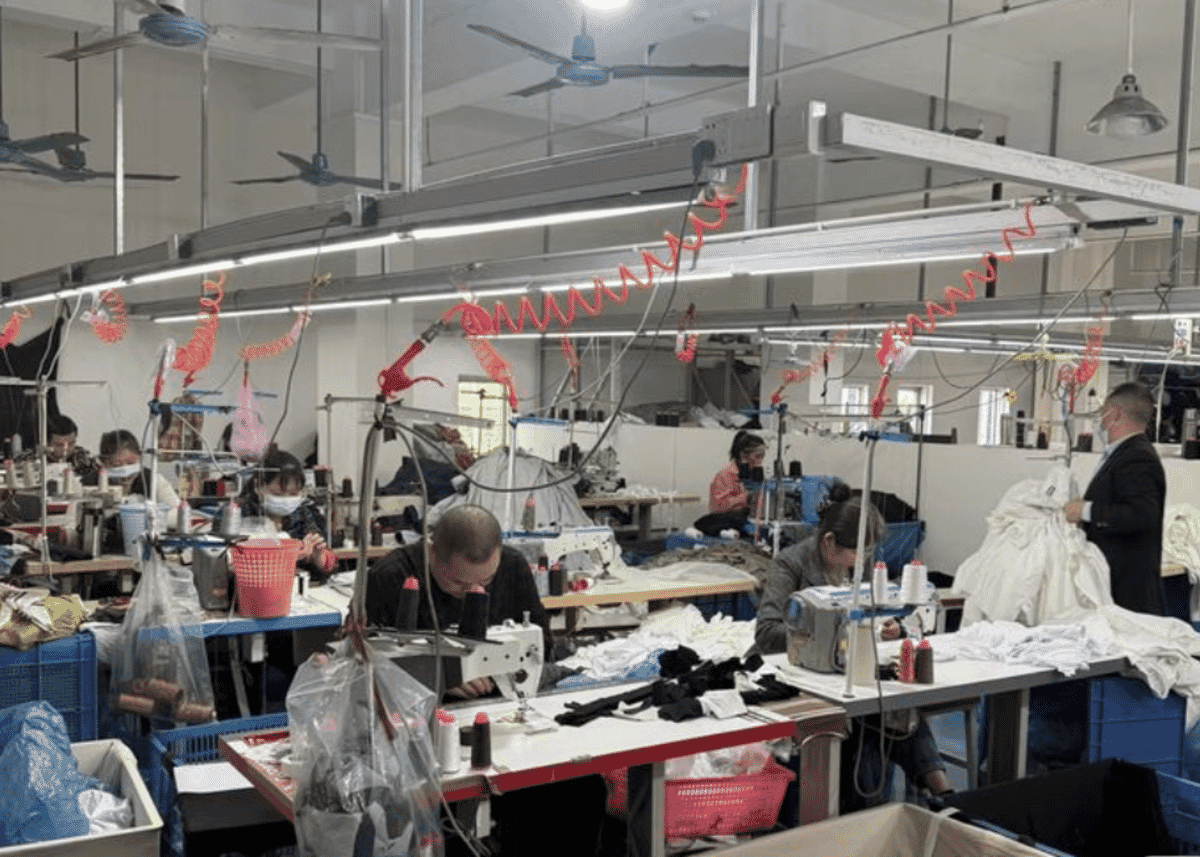
In our view two provinces matter most for dresses, and they specialise differently. Guangdong carries the deepest cut-and-sew capacity and suits woven dresses at small and mid volume. Zhejiang sits closer to the mills and suits fabric-led product where cloth is the constraint. Choosing the region before defining woven or knit is how brands end up in the wrong province.
Guangdong, centred on Guangzhou and the surrounding towns, is the cut-and-sew side and, in our view, the quickest place for trend-led woven dresses. Its advantage is speed and the density of the supply chain, since fabric markets, trims and factories sit within a short drive of each other. This is the cluster for trend-led ranges with short lead times.
Zhejiang, particularly the Shaoxing and Hangzhou area, is the fabric side. In 2025 the province generated 1.12 trillion yuan ($162.21 billion) of textile and garment revenue, 25.5% of the national total, and $95.33 billion of textile exports, 32.4% of China's total, first in the country on both counts. Keqiao district in Shaoxing is home to more than 8,000 textile companies and close to 140,000 workers, and its printed and dyed fabric output is nearly 40% of the national total (China Daily Ningbo, 2026). Factories here often have closer mill relationships, which matters for custom fabric development and for printed dresses, where the print run has its own minimum.
The practical read: Guangdong for speed and trend, Zhejiang for fabric-led product. Both make excellent dresses, and the wrong choice costs time rather than quality.
Where the Money Goes in a Dress
| Element | Effect on cost | What to decide |
|---|---|---|
| Fabric | Usually the largest single share | Stock colour versus custom dye |
| Lining | Adds fabric plus assembly labour | Full, partial, or none |
| Zip or fastening | Invisible zips cost more to insert | Concealed, exposed, or none |
| Pattern and grading | One-time, amortised over the order | Worth paying properly for |
| Print or embellishment | Own minimum, separate from dye | Placement versus all-over |
| Finishing and pressing | Small per unit, visible in the result | Do not let it be cut |
What Duty Does a Dress Pay Into the US?
The same split that decides the factory also decides the tariff line. The US Harmonized Tariff Schedule puts knitted dresses in heading 6104 and woven dresses in heading 6204, then divides each by fibre. On a women's dress the general rate runs from 8.4% for woven cotton to 16% for woven or knitted polyester, before anything specific to Chinese origin is added (USITC).
Three things follow for a dress range. First, fibre is a duty decision as well as a design one: a woven cotton poplin shirt dress enters at 8.4%, and the same silhouette in polyester crepe at 16%. Second, construction moves the rate, and not always in the same direction. Cotton jersey (6104.42) carries 11.5% against 8.4% for woven cotton, while viscose goes the other way, 14.9% knitted against 16% woven. Third, a blend is classified by the fibre that predominates by weight, so a change from 55% to 45% cotton in a cotton and polyester blend can move the dress to a different line. Settle the composition before you settle the price.
These are base rates only. Goods of Chinese origin can carry additional duties on top, including the Section 301 actions, and those layers have changed several times. We do not print a combined figure here because it moves; confirm the full rate for your exact HTS code before you commit to a landed cost.
Fabric origin matters as well as the sewing. Under the Uyghur Forced Labor Prevention Act, CBP applies a rebuttable presumption that goods produced wholly or in part in Xinjiang, or by an entity on the UFLPA Entity List, are prohibited from US importation (CBP). For a cotton poplin, lawn or jersey dress, that means the cotton is traced back through the yarn and the fabric, so ask at quote stage whether the mill can document where its cotton came from.
Citation Capsule: US tariff treatment of a dress depends on construction and fibre. Knitted dresses fall under HTS heading 6104 and woven dresses under 6204; the general rate on a women's dress ranges from 8.4% for woven cotton to 16% for woven or knitted polyester, with additional duties possible on Chinese-origin goods.
Where Dress Orders Fail
In our experience, five failures account for most of it. The fabric is substituted for something close but cheaper. The colour shifts between dye lots. The grade is wrong at the range ends. The lining was omitted because it was never specified. And the hem is uneven on a fluid fabric, which is a hanging and cutting problem rather than a sewing one.
The fabric is substituted. The sample is made in one quality and bulk arrives in something slightly cheaper. Specify the fabric by mill reference and composition, and keep the approved swatch.
The colour shifts between dye lots. Two lots of the same colour do not match exactly, and in a single garment this is visible where a bodice meets a skirt. Ask that one style ships from one lot.
The grade is wrong, as above, and it only shows in returns data months later.
The lining was omitted because it was never specified, and the dress is transparent in daylight.
The hem is uneven on a fluid fabric. Bias and fluid fabrics drop after cutting, and a factory that hems immediately gets an uneven hem. The fix is a hanging period before hemming, and it is a question worth asking.
How Do You Check a Dress Factory?
- Ask which construction they specialise in, woven or knit, and ask for samples of that.
- Ask about the pattern maker. A factory that employs its own is a different proposition from one that outsources patterns.
- Request grade rules in writing before bulk.
- Business licence and registered scope, checked against the company name on the quotation.
- Certification where you need it. OEKO-TEX publishes a label check and amfori BSCI documents its audit framework.
- Fit a second size, not only the sample size.
Before you order dresses
- Decide woven or knit first, then find the factory that specialises in it.
- Ask for a hanging fabric sample, not a swatch, before approving drape.
- Specify lining explicitly: full, partial or none, and in what fabric.
- Get grade rules in writing and fit a second size at the opposite end of the run.
- Ask whether the fabric colour is stock or custom, since that sets your real MOQ.
- Send measurements and marked photos as fit comments, never descriptions alone.
- Ask that one style ships from a single dye lot.
A dress is a pattern problem before it is a sewing problem. Spend your attention upstream.
How we check a dress factory
- Construction confirmed first: woven or knit, placed with a factory that specialises in it.
- Drape assessed from a hanging sample, not a swatch, before bulk fabric is committed.
- Lining specified explicitly on every brief, because omission is a common gap.
- Grade rules requested in writing and a second size fitted before bulk.
- Fabric specified by composition and mill reference, with the approved swatch retained.
- Single dye lot per style requested at order stage, not after a shade mismatch appears.
We would rather spend a week on the pattern than three months on returns concentrated in two sizes.
Conclusion
Dresses reward attention upstream and punish it downstream. The decisions that determine whether a dress looks expensive are made before anyone sews: the fabric's drape, the pattern, the lining, the grade. Stitching quality is real but it is rarely the thing that fails.
The most useful question to ask a prospective factory is not about their machines or their capacity. It is whether they employ their own pattern maker, and whether they will show you the grade rules. A factory that answers both easily is a different proposition from one that treats the pattern as your problem.
On minimums, the lever is fabric rather than sewing. If your quantities are small, buy a colour the mill already holds. That single decision moves a dress order from impossible to straightforward more reliably than any negotiation.
And send a reference garment if you have one. A factory can measure and copy a physical dress in a way it cannot copy a description, and it removes the ambiguity that turns two fit rounds into four.
We are a group of documented clothing factories in China, producing for brands from 100 pieces per style. Send a reference or a sketch: our team replies within 24 hours with the construction, the fabric options and the real minimum, then we place it with a documented factory we have visited in person. You work directly with the factory. Flat fees, no factory commissions.
Get in contact Download the directory ($49)Need a tech pack? Get a factory-ready single-style tech pack for $79. See what's included.
Frequently Asked Questions
Do I need a different factory for woven and knit dresses?
Usually yes. Woven and knit dresses use different machinery and different skills, and a factory that does both normally does one better. Woven dresses depend on pattern quality because the fabric does not stretch, while knit dresses depend on seam construction and operator tension control.
Why does my dress look different from the reference?
Most often drape rather than quality. Two fabrics at the same weight can hang completely differently depending on fibre, yarn twist, weave and finishing, and a postcard-sized swatch cannot show it. Ask for a hanging sample of at least half a metre before approving the fabric.
What is grading and why does it matter?
Grading scales one pattern across a size run. Human proportions do not scale uniformly, so applying a uniform percentage produces a sample size that fits and extremes that do not. Ask for written grade rules and fit a second size at the opposite end of the run.
What is the real minimum order for dresses?
It is set by fabric rather than sewing. A sewing line can run 100 pieces, but mills sell fabric by minimum length per colour and dyehouses have minimum vessel loads. Choosing a colour the mill already holds in stock removes the dye minimum entirely.
How many sampling rounds should I expect?
Two to three fit rounds is normal for a dress. One round happens only with an excellent tech pack or a physical reference garment the factory can measure and copy. Fit comments with measurements and marked photographs reduce rounds more than anything else.
What duty does a dress pay into the US?
The general rate depends on construction and fibre. Knitted dresses fall under HTS heading 6104 and woven dresses under 6204; for a women's dress the rate runs from 8.4% for woven cotton to 16% for woven or knitted polyester. Chinese-origin goods can carry additional duties on top, so confirm the full rate for your exact code.
Editorial note: all company names, certification marks and trademarks referenced here are the property of their respective owners. The production advice in this guide is our editorial view, not measured data. Duty rates are the US general rates shown in the Harmonized Tariff Schedule when we checked on 2 November 2026; additional duties on Chinese-origin goods change, so verify your own HTS classification and confirm terms directly with the factory before committing.
Sources
- China Daily Ningbo (30 March 2026): Zhejiang 2025 textile and garment revenue and textile exports, Keqiao district companies, workers and share of printed and dyed fabric output.
- US International Trade Commission, Harmonized Tariff Schedule: headings 6104 and 6204, general duty rates for women's dresses (checked 2 November 2026).
- Office of the United States Trade Representative: Section 301 tariff actions on goods of Chinese origin.
- US Customs and Border Protection, Uyghur Forced Labor Prevention Act: the rebuttable presumption for goods produced wholly or in part in Xinjiang or by entities on the UFLPA Entity List.
- OEKO-TEX Label Check: public verification of certificate numbers.
- amfori BSCI: social audit system documentation.
Related Reading
- Clothing Suppliers in China: How to Find and Vet a Factory
- Fabric Suppliers in China: Minimums, Dye Lots and How to Buy
- Importing from China in 2027: De Minimis, Duty and Documents
- Dress Manufacturer in China: Wovens From 100 Pieces
No commissions. No markups. The factory bills you directly.