By David Stan, Brands Manager at China Clothing Manufacturer. Published October 2026.
China Plus One means keeping China and adding somewhere else. It is not an exit strategy, and the brands that treat it as one usually discover halfway through that the thing they were trying to leave behind came with them.
The reason is fabric. China's share of world clothing exports fell to 29.6% in 2024, the lowest since 2010, while its share of world textile exports rose to 43.3% (Sheng Lu, FASH455, citing WTO data, 2025). Assembly is moving. The mills are not.
This guide covers what the strategy actually is, why origin does not follow the sewing machine, which countries suit which product, and what it costs to run two supply chains instead of one.
Note: China Clothing Manufacturer is a group of documented clothing factories in China, producing for brands from 100 pieces per style. We place production in China only. Other countries appear in this guide as context for brands weighing a second source; the comparisons are our editorial assessment, not measured rankings. We confirm exact MOQ and price with the factory when you send a brief.
Key takeaways
- China Plus One is diversification, not replacement. The second source reduces concentration risk.
- For US imports, most cut-and-sew garments take the origin of the country where they are wholly assembled (19 CFR 102.21). Knit-to-shape goods and some made-ups follow other rules.
- China's textile export share rose to 43.3% while clothing fell to 29.6%. The fabric stayed.
- Some Chinese manufacturing groups also run lines outside China, so ask your supplier first.
- Running two supply chains costs more in coordination than most brands model.
- Capability does not transfer evenly: simple cut-and-sew moves far more easily than technical construction or specialist finishing.
- Fabric often stays Chinese, which still matters for lead time, forced-labour checks and preference rules.
What Is China Plus One Actually?
A risk strategy borrowed from manufacturing generally. Keep your Chinese capability. Build a second source elsewhere. The aim is that no single country, policy change or disruption can stop your production outright.
The "plus one" is the point. Brands that read it as "China minus one" and move everything usually trade a concentration risk they understood for a new one they do not, in a country where they have no relationships, no track record and no ability to walk a floor.
Three things typically drive it. Tariff exposure, where duty layers on Chinese origin make some classifications uncompetitive. Concentration risk, where a single region holds all your capacity. And cost, though that driver depends heavily on the product and the volume.
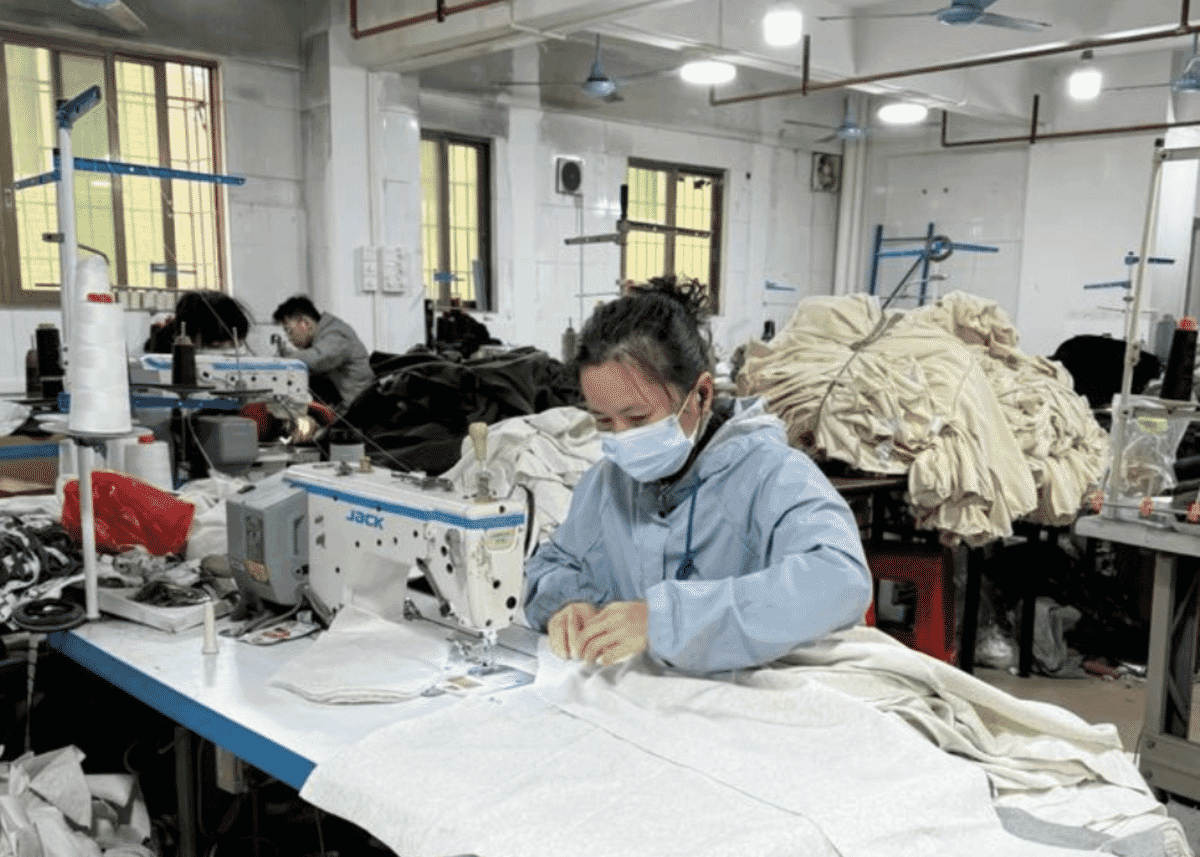
Citation Capsule: China Plus One is a diversification strategy that retains Chinese manufacturing capability while establishing a second source elsewhere, reducing exposure to single-country policy, tariff or disruption risk. It is distinct from relocation, which substitutes an understood concentration risk for an unfamiliar one in a country where the brand has no established relationships or inspection capability.
Keeping production in China? Send us the product, quantity and destination market. Our team replies within 24 hours, then we place it with a documented factory in our group in China. Send the brief.
Does Moving Assembly Move Origin?
For US imports of most clothing, usually yes, but only if the garment is genuinely assembled in the new country. Textile and apparel origin is not decided by the general substantial-transformation test. It follows a specific rule, 19 CFR 102.21. For most cut-and-sew garments that rule ends at the country where the good was wholly assembled, which is why a garment sewn in Vietnam from Chinese fabric is normally Vietnamese origin for US duty purposes.
The exceptions are where brands get caught. A garment that is knit to shape takes the origin of the country where it was knit. Some goods, including scarves, handkerchiefs and many made-up textile articles, are excluded from the assembly rule and follow other steps in the regulation. And a garment cut and sewn partly in one country and partly in another is not "wholly assembled" in either, so check how your classification is treated before you split a process.
Fabric origin still matters even when assembly sets the origin. Under the Uyghur Forced Labor Prevention Act, CBP applies a rebuttable presumption that goods produced wholly or in part in Xinjiang, or by an entity on the UFLPA Entity List, are prohibited from US importation (CBP), so the cotton and the cloth are traced, not just the sewing. Trade-preference programmes can also look at where the yarn and fabric were made.
What is unambiguous is the thing that does not work: moving goods through a third country without real assembly to change their declared origin. That is transshipment, it is not a grey area, and the liability sits with the importer of record.
Skip the search: the China factory directory ($49) lists documented factories by category, city and capability, with the verification status of each. One-time payment, instant download.
Which Countries Suit Which Product?
| Country | Strength | Best for |
|---|---|---|
| Vietnam | Mature apparel base, good infrastructure | Knitwear, activewear, mid-complexity at volume |
| Bangladesh | Very large scale | Basic cut-and-sew at high volume |
| Cambodia | Established garment export sector | Simple garments |
Our editorial summary, not a measured ranking. Capability varies factory by factory, so check your specific product. We place production in China only.
The question that matters is not which country is cheapest but which country can actually make your construction, at your volume, with the inputs it needs. Answer that product by product before comparing prices.
Should You Ask Your Existing Supplier First?
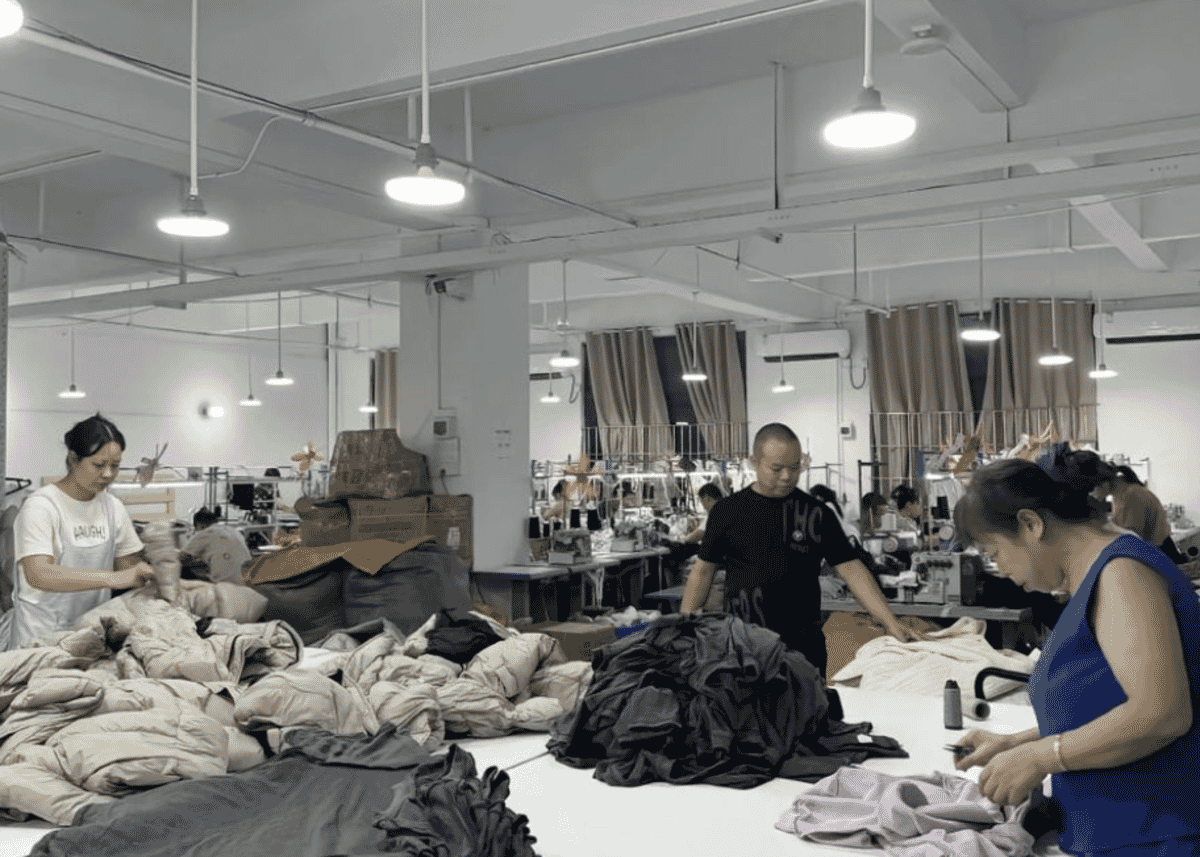
Usually, yes. Some Chinese manufacturing groups also run production lines outside China. If yours is one of them, the move becomes a conversation rather than a supplier search, and your pattern, your colour standards and the people who know your product stay in place.
What that preserves is considerable. Your pattern is already on their system. Your colour standards are already agreed. The people who know your product still know it, and the quality baseline transfers in a way it does not with a new company.
What to ask: whether they have capacity outside China, where, what it runs, and whether your specific construction can be made there. Then ask what changes in price and lead time, and whether the fabric still comes from the same mill.
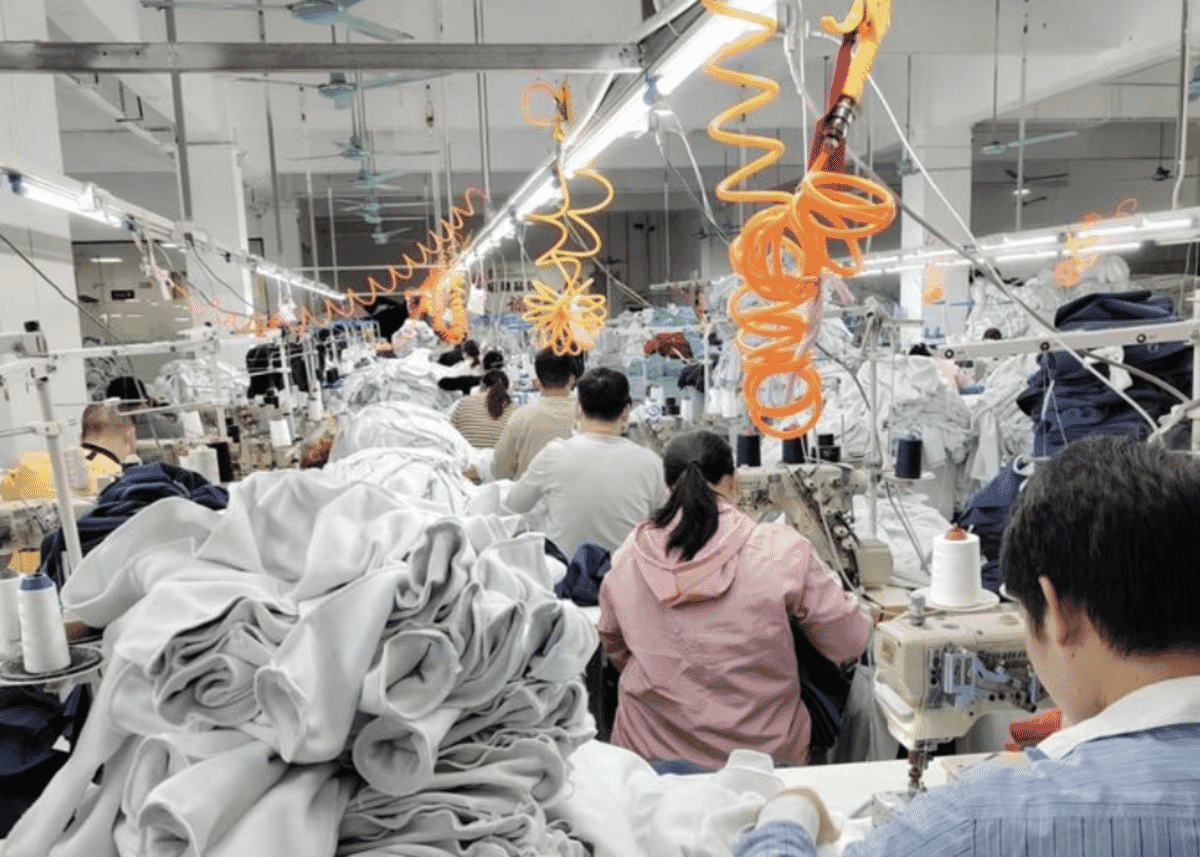
Citation Capsule: Some Chinese manufacturing groups also operate production lines outside China, which can allow existing customers to relocate assembly within the same supplier relationship. This preserves the graded pattern, agreed colour standards and institutional knowledge of the product, transferring a quality baseline that a new supplier relationship cannot.
Does the Capability Even Exist Elsewhere?
The question brands ask last and should ask first. Not every construction can be made outside China, and finding that out after committing is expensive. Simple cut-and-sew transfers well. Technical construction transfers unevenly, because bonded seams and seamless knit need specific equipment and experienced operators. Specialist finishing is thinner again outside China.
Simple cut-and-sew transfers well. Jersey tees, basic wovens, fleece. The machines are common, the skills are widespread, and the quality gap has closed.
Technical construction transfers unevenly. Bonded seams, seamless knit, complex outerwear with taped waterproofing. These need specific equipment and experienced operators, and the depth outside China is much thinner.
Specialist finishing often does not transfer at all. Garment washing at scale, particular denim finishes, certain coatings. The supporting trades concentrate geographically, and a country without them means shipping part-made goods somewhere else and back.
Embellishment depends on the country and the factory. Embroidery, hand work and denim finishing are concentrated in particular places, so check the specific technique rather than the country label.
Citation Capsule: Garment manufacturing capability transfers unevenly outside China. Basic cut-and-sew is widely replicable, technical outerwear construction is thinner, and specialist finishing such as garment washing at scale frequently remains concentrated in China because the supporting trades co-locate with it.
What Does Running Two Supply Chains Cost?
More than the unit price difference, and this is where the strategy most often disappoints. Development is duplicated, because the same style needs two sample rounds and two sign-offs. Minimums are split, so neither factory gives you a volume price. Two relationships need managing across two time zones. And the two sources drift, which is the cost nobody budgets.
Duplicate development. The same style produced in two countries needs two sets of samples, two fit approvals and two pre-production sign-offs. Patterns do not transfer perfectly between factories with different machines and different operators.
Split minimums. Dividing a 2,000-piece order between two factories means meeting two minimums, and neither gets your volume discount.
Two relationships to manage. Coordination, inspection and chasing across two time zones and two languages, with the same number of people doing it.
Inconsistency between sources. The same specification made in two places produces two slightly different garments. Customers notice, and returns data shows it before you do.
The honest version: China Plus One is insurance, and insurance has a premium. Brands that model only the unit price find the premium later, usually in a season where both sources are running and neither is quite right.
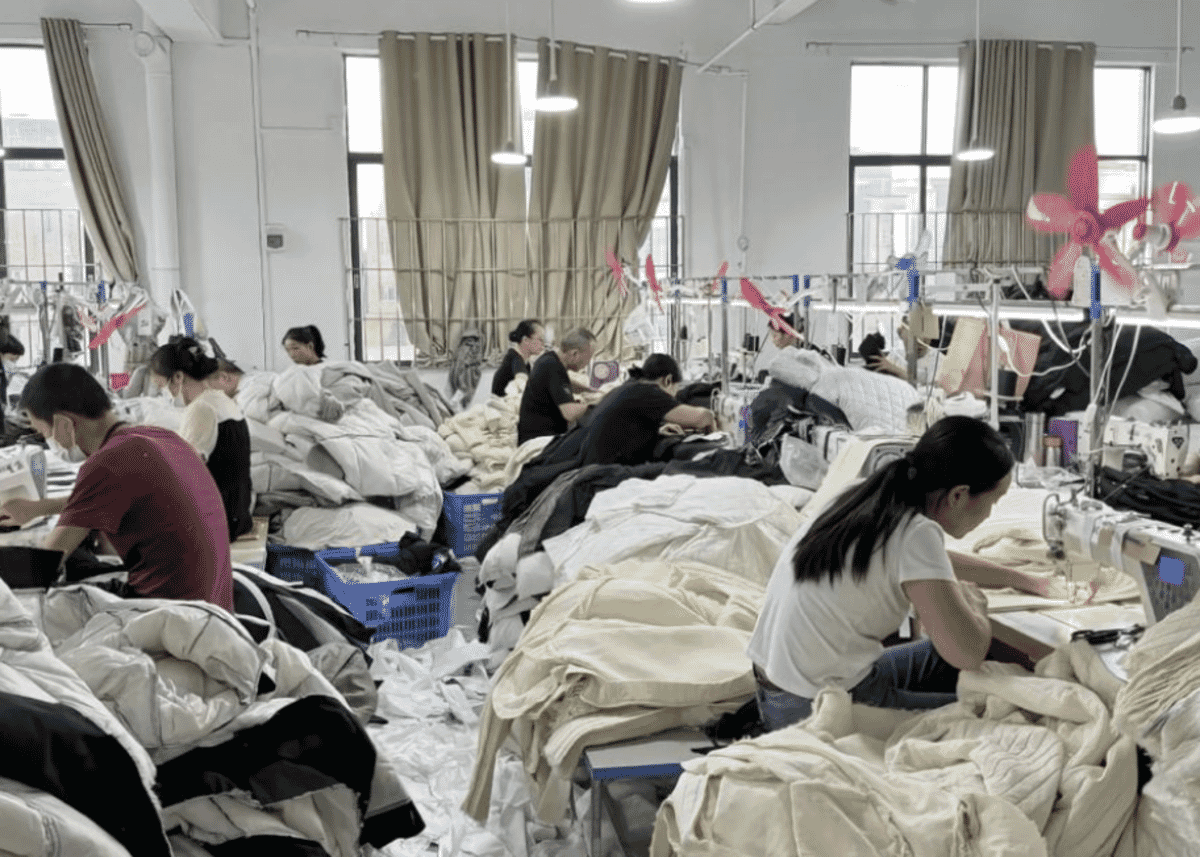
Measure the shift rather than assuming it. The US Census Bureau publishes the official monthly series for US trade in goods with China, month by month and year by year back to 1985. If you are deciding whether a second country is a hedge or a fashion, that series is the primary record, and it is more useful than any consultancy summary of it.
| Question | What it costs | What breaks | Worth it when |
|---|---|---|---|
| Development | Two sample rounds, two fit approvals, two pre-production sign-offs | Patterns do not transfer cleanly between different machines and operators | The style is simple and well understood |
| Minimums | Two minimums met instead of one, and no volume discount on either | The second source stays below scale and never leaves the learning curve | Volume is high enough to split without losing both discounts |
| Management | Coordination, inspection and chasing across two time zones | The two sources drift, and customers receive noticeably different garments | You can hold one physical standard against both |
| Materials | A longer fabric chain, because the cloth is often still Chinese | Fabric still faces forced-labour tracing, and knit-to-shape goods keep the country where they were knit | The fabric question was settled before committing |
The decision is rarely about the unit price. It is about whether the category is portable, whether the volume supports two sources, and whether moving assembly actually moves origin for your classification under 19 CFR 102.21.
Citation Capsule: A second country costs more than the unit price difference. Development is duplicated, minimums are split across two sources rather than consolidated in one, two relationships need managing, and output differs between the sources. These are the costs that most often make a China Plus One programme disappoint its business case.
What Goes Wrong With a Second Source?
Four failures, and three of them are predictable enough to plan around. The two sources drift apart. The second source never reaches enough volume to leave the learning curve. The fabric supply chain gets longer rather than shorter, because the cloth is still Chinese. And the duty position turns out not to have moved as expected, which is the one that undoes the business case entirely.
The two sources drift apart. Same specification, two factories, two fabric lots, two sets of operators. Six months in, customers receiving from one source get a noticeably different garment from those receiving from the other. The fix is a single physical standard held by both, not a written specification alone.
The second source never reaches scale. Kept as a token, it stays on the learning curve permanently, and each order is effectively a first order. A second source needs enough volume to become competent.
The fabric supply chain gets longer, not shorter. Chinese cloth shipped to Vietnam adds a leg, adds cost and adds a failure point. If the point of moving was resilience, check whether you have added a dependency rather than removed one.
The duty position did not change as planned. The most expensive one. If the garment is knit to shape in China, or only finished and packed in the new country, origin can stay Chinese, and a move made for tariff reasons leaves you with all the cost of diversification and none of the benefit.
When Does It Actually Make Sense?
Four situations where the premium is worth paying. When tariff exposure is existential and duty makes the product unviable. When a large customer requires an answer on single-country concentration. When volume is high enough to meet two minimums without losing the discount on both. And when your category is genuinely portable, which simple cut-and-sew is and technical construction is not.
When tariff exposure is existential. If duty on your classification makes the product unviable, a second origin is not optional.
When one customer requires it. Some large retail buyers ask about single-country concentration, and the answer can affect whether you get the order.
When volume justifies two sources. Below a certain scale you cannot meet two minimums efficiently, and the split costs more than the risk it removes.
When your category is genuinely portable. Simple cut-and-sew transfers reasonably. Technical construction, specialist finishing and complex embellishment do not transfer cleanly, and the capability may not exist elsewhere at all.
Try it free: pressure-test your landed cost with the China production cost calculator. 60 seconds, no email required.
When the customer is asking
Some retail buyers ask where production sits and whether it is concentrated in one country. When the answer affects whether you win the order, which makes a second source a commercial requirement rather than a risk decision, and changes how you should budget for it.
How Should You Actually Do It?
Five steps, and the order matters more than the speed. Pick one style rather than the range, and choose something simple rather than your most important product. Keep the Chinese source running, because shutting it converts diversification into relocation. Confirm the fabric question before committing. Budget a full sampling cycle. And run the tariff classification again for the new origin, because that is the number the whole business case rests on.
Pick one style, not the range. Choose something simple and well understood rather than your most complex or most important product. Move a single simple product first and learn what breaks. Moving a season is how brands discover problems at maximum cost.
Keep the Chinese source running. The whole point is a second source. Shutting the first one converts diversification into relocation.
Confirm the fabric question early. If the new factory buys Chinese cloth, establish what that means for origin before you commit, not after the first shipment.
Budget a full sampling cycle. Proto, fit rounds, pre-production sample. A proven product does not transfer as a proven product.
Run the classification again. New origin under 19 CFR 102.21, potentially a new HTS position, certainly a new duty calculation. Confirm with a broker rather than assuming the move achieved what it was meant to.
Before you add a second country
- Ask your existing supplier whether they have capacity outside China, and where.
- Establish where the fabric will come from after the move, and what that means for origin.
- Check origin under 19 CFR 102.21 (where the garment is wholly assembled, or knit to shape), then the duty on the live USTR and CBP schedules.
- Model the duplicate development cost: two sample cycles, two fit approvals, two sign-offs.
- Check whether your volume can meet two minimums without losing the discount on both.
- Move one simple style first, and keep the Chinese source running while you do.
- Re-run the classification after the move rather than assuming the duty position changed.
The first question is the cheapest and the one most often skipped. Your current supplier may already have the answer.
How we work
- Our group places production in China only. For a second country you will need a separate supplier.
- Our team reads the brief and replies within 24 hours.
- Production is placed with a documented factory we have visited in person.
- You pay 30% to start bulk and the 70% balance only after a third-party inspection.
- The factory quotes you directly and bills you directly.
If you keep part of your range in China while you test a second country, that part is what we can help with.
Citation Capsule: Moving production to a second country follows five steps where order matters more than speed: pick one style rather than the range, keep the Chinese source running, confirm the fabric question early, and budget a full sampling cycle. Brands that compress the sequence usually repeat it.
Conclusion
China Plus One is a diversification strategy and it works as one. Treated as an exit, it usually costs more than it saves, because the capability, the relationships and often the fabric stay where they were. The distinction is not semantic. Keeping the Chinese source is what makes the second one safe to build slowly, and slowly is the only way it works.
The trade data makes the point better than any argument. China's clothing export share is falling and its textile share is rising, which means some assembly is leaving while fabric supply concentrates. A garment sewn in Vietnam can be cut from Chinese fabric.
So check origin under the textile rules rather than assuming, trace the fabric as well as the sewing, and ask your existing supplier before you start a new search. A Chinese group with a line elsewhere can preserve your pattern, your standards and your quality baseline in a way a new relationship cannot.
And model the premium honestly. Two supply chains cost more than one in samples, minimums, coordination and consistency. That is what insurance costs, and it is worth paying when the risk is real and wasteful when it is not.
We are a group of documented clothing factories in China, producing for brands from 100 pieces per style. Send the brief: our team replies within 24 hours, then we place it with a documented factory we have visited in person. You work directly with the factory. Flat fees, no factory commissions.
Get in contact Download the directory ($49)Need a tech pack? Get a factory-ready single-style tech pack for $79. See what's included.
Frequently Asked Questions
What does China Plus One mean?
Keeping Chinese manufacturing capability while adding a second source elsewhere, so no single country, policy change or disruption can halt production. It is diversification rather than relocation. Brands that move everything trade an understood concentration risk for an unfamiliar one.
Does moving assembly to Vietnam change my tariff position?
Usually, if the garment is wholly assembled there. For US imports, textile and apparel origin follows 19 CFR 102.21: most cut-and-sew garments take the origin of the country where they are wholly assembled, while knit-to-shape goods take the country where they were knit. Fabric still matters: China's textile export share rose to 43.3% in 2024, and CBP traces inputs under the forced-labour rules. Check your classification and the live USTR and CBP schedules.
Which country should I add as a second source?
It depends on the product. Check whether the country can make your specific construction at your volume, and where its fabric comes from, before comparing prices. Our group places production in China only.
What does China Plus One actually cost?
More than the unit price difference. Duplicate development means two sample cycles and two pre-production approvals. Split volumes mean meeting two minimums without either discount. Two relationships across two time zones need managing, and the same specification made in two places produces two slightly different garments.
Should I ask my current Chinese supplier about moving?
Yes, first. Some Chinese manufacturing groups also run lines outside China. If yours has one, relocating assembly preserves your graded pattern, your agreed colour standards and the people who know your product, which a new supplier relationship cannot transfer.
Editorial note: all company names, certification marks and trademarks referenced here are the property of their respective owners. This guide gives no MOQ, price, lead-time or tariff-rate figures for other countries; country comparisons are our editorial assessment. Origin and forced-labour rules are described as 19 CFR 102.21 and CBP state them (checked October 2026). Always verify your own HTS classification and confirm terms directly with the factory before committing.
Sources
- US Census Bureau: Trade in Goods with China: official monthly US import and export series.
- Sheng Lu, FASH455, University of Delaware (2025): WTO-based analysis of global textile and apparel trade, source of China's 29.6% clothing and 43.3% textile export shares in 2024.
- Office of the United States Trade Representative: Section 301 tariff actions and exclusion process.
- 19 CFR 102.21, Textile and apparel products (eCFR): US rules of origin for textiles and apparel, including the wholly assembled and knit-to-shape rules (checked October 2026).
- US Customs and Border Protection, Uyghur Forced Labor Prevention Act: the rebuttable presumption for goods produced wholly or in part in Xinjiang or by entities on the UFLPA Entity List (checked October 2026).
Related Reading
- Clothing Suppliers in China: How to Find and Vet a Factory
- China Clothing Market: The Hubs and What They Make
- Importing from China: De Minimis, Duty and Documents
No commissions. No markups. The factory bills you directly.