Underwear is a small garment with a long list of ways to go wrong. It sits against skin all day, it is washed more often than almost anything else in a wardrobe, and the parts that decide whether a customer buys again, the waistband and the gusset, are the parts a product photograph never shows.
China is the largest exporter of knitted briefs and panties by a wide margin, so the capacity is not in question. What decides the order is what you write down: the fabric and its elastane, the seam construction, the elastic, the gusset, and the inspection you run before the balance leaves your account.
This guide covers where underwear is made in China and what the trade data show, then works through fabric, seams, waistbands and gussets as specification items, the certification and labelling questions that come with skin contact, US duty, and an inspection checklist built for underwear.
Before you read: China Clothing Manufacturer places and manages production for brands from 100 pieces per style with documented factories in China. Cluster, trade and duty figures in this guide come from the published sources listed at the end. Exact MOQ and price are confirmed with the factory once you send a brief.
What matters most
- Shantou is the intimate apparel base. China Daily reports that Shantou in eastern Guangdong has become the largest production base for underwear and home wear in China.
- China leads every underwear line. WITS data show about $4.94 billion of knitted briefs and panties exported in 2024, roughly 6.17 billion pieces.
- Fabric is judged on recovery. Spandex makes up a small percentage of the fabric; it is what brings the garment back after a day of wear.
- The seam route picks the factory. Cut-and-sew, bonded and laser-cut, and seamless knitting use different machines.
- Name the elastic. Braided elastic narrows when stretched and loses recovery when pierced; knitted and woven elastic do not.
- Write the gusset as its own line: fabric, layers and how it is enclosed.
- Inspect before the balance. At ISO 2859-1 level II a lot of 3,201 to 10,000 pieces is sampled at 200 and accepted at AQL 2.5 with 10 defects or fewer.
Where Is Underwear Made in China?
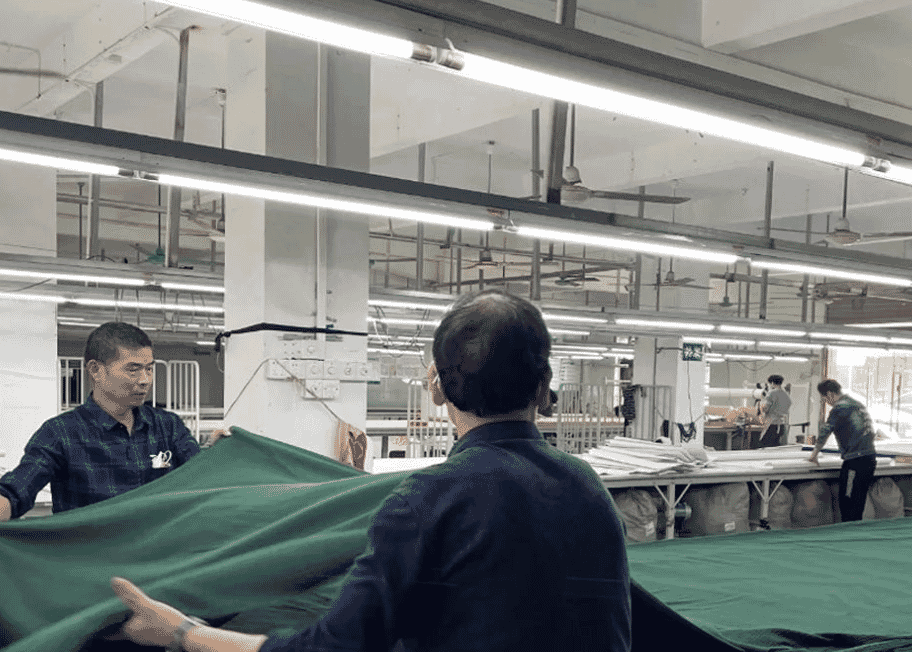
Mostly in Guangdong and Zhejiang, with one city standing out. China Daily reported in March 2026 that Shantou, in the eastern part of Guangdong, has become the largest production base for underwear and home wear in China, with a comprehensive industrial chain (China Daily, 2026). Two years earlier the paper quoted the China National Textile and Apparel Council: Shantou produces approximately 45 percent of the country's lingerie and home wear (China Daily, 2024).
Inside Shantou the industry is spread across districts and townships. According to official statistics reported by China Daily in 2022, Chaonan makes about 40 percent of China's female underwear and 80 percent of its house dresses, one billion pieces a year, with more than 70 billion yuan of industrial output in 2021 (China Daily, 2022). Textile and clothing enterprises have long been dispersed across townships such as Gurao, Waisha, Xiashan, Shenyang and Chendian (China Daily, 2023). For a buyer, that density matters because the fabric knitters, elastic and lace makers, and sewing floors are often in the same district, which shortens sampling.
Seamless knitting has its own centre in Zhejiang. In a 2024 China Daily report on a seamless knitting conference held in Yiwu, an industry executive described Yiwu as one of the world's largest seamless knitting production bases, leading the nation in industrial scale, supported by its complete industrial chain and large number of enterprises (China Daily, 2024). An older trade press report, from 2012 and citing show organizers, put the region's seamless knitting companies at more than 150, producing approximately 150 million pairs of seamless underwear a year (Textile World Asia, 2012). Treat that figure as historical; it shows how long the cluster has existed rather than its size today.
Zhejiang also supplies much of the fine knit fabric the category uses. The province's textile and garment industry generated 1.12 trillion yuan in revenue in 2025, 25.5 percent of the national total and first in China (China Daily, 2026). For other categories made there, see our page on clothing manufacturers in Zhejiang, and for Guangdong, clothing manufacturers in Guangdong.
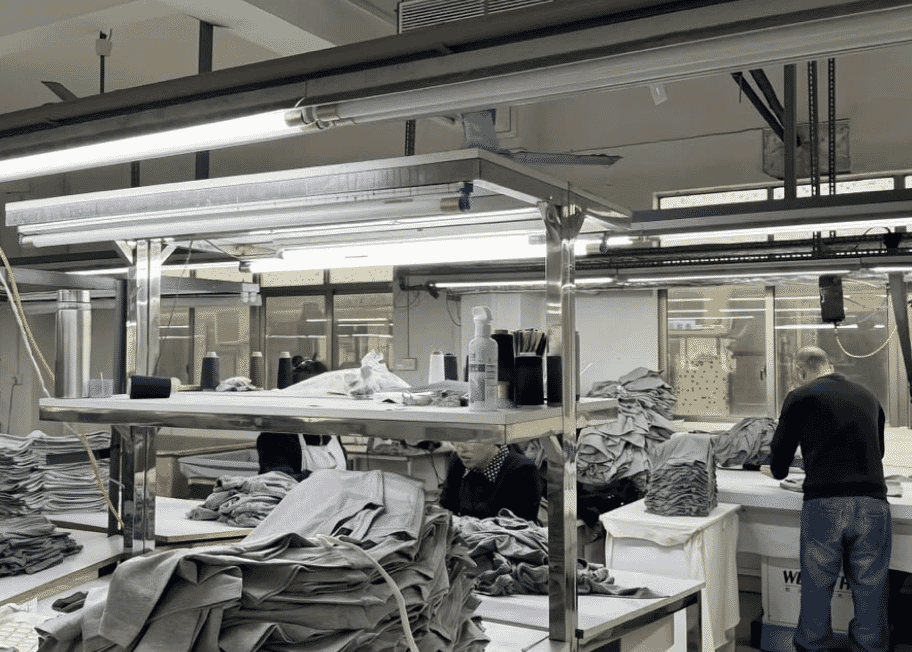
A practical point follows from the geography. An underwear factory is not simply a jersey factory: it needs narrow elastic application, flat seaming and, for invisible styles, bonding or seamless knitting machines. A general apparel supplier quoting underwear may be placing it with a specialist elsewhere, which is worth asking about directly.
Quick read: Shantou in eastern Guangdong is China's largest production base for underwear and home wear, according to China Daily, and the China National Textile and Apparel Council says the city produces approximately 45 percent of the country's lingerie and home wear. Seamless knitting is concentrated in Yiwu, Zhejiang, described in China Daily as one of the world's largest seamless knitting production bases.
How Big Is China's Underwear Export Trade?
Knitted underwear sits in HS chapter 61. World Bank WITS reports trade under the 1992 code list, where men's and boys' underpants and briefs are 6107.11 (cotton) and 6107.12 (man-made fibres), and women's and girls' briefs and panties are 6108.21 (cotton) and 6108.22 (man-made fibres).
According to WITS, China exported $1.36 billion of women's cotton briefs and panties in 2024 and $1.27 billion of women's briefs in man-made fibres (WITS, cotton, WITS, man-made). Men's cotton underpants and briefs added $1.29 billion and men's in man-made fibres $1.01 billion (WITS, WITS). Together that is about $4.94 billion across the four lines.
The trend has been upward rather than flat. Women's cotton briefs grew from $0.92 billion in 2019 to $1.36 billion in 2024, and both women's lines dipped in 2020 before recovering. The man-made fibre line peaked at $1.36 billion in 2022, fell to $1.19 billion in 2023 and recovered to $1.27 billion in 2024.
WITS also reports quantity in pieces, which gives a rough sense of price level. Divide value by count and women's briefs left China at about $0.70 a piece in 2024 in cotton and $0.69 in man-made fibres, and men's briefs at about $1.00 and $0.95. These are averages across every grade, from multipack basics to branded lines, not prices any factory will quote.
No other country comes close. In the 2024 WITS table of exporters of women's cotton briefs, China's $1.36 billion compares with $201.3 million for Sri Lanka, $128.7 million for India, $125.4 million for Germany and $113.7 million for Thailand (WITS). In men's briefs of man-made fibres the gap is wider: Sri Lanka was second with $83.8 million against China's $1.01 billion (WITS).
The US import records add a useful twist. China supplied $299.9 million of the $852 million of women's synthetic briefs the United States imported in 2024, ahead of Vietnam at $221.5 million (WITS), and about 34% of men's synthetic briefs (WITS). In cotton the picture changes: China was fifth for women's cotton briefs, at about 10% of US imports, behind Bangladesh, Thailand, Sri Lanka and Vietnam (WITS).
For a brand, the reading is that China's lead in the US market is clearest in synthetic briefs, while basic cotton briefs are made competitively in several countries. A China quote for plain cotton multipacks deserves a comparison; a microfibre, seamless or bonded style is where the depth of the Chinese supply base counts most.
Quick read: According to World Bank WITS data, China exported about $4.94 billion of knitted briefs and panties in 2024 across four HS lines, and was the largest exporter in each. China supplied about 35% of US imports of women's man-made fibre briefs in 2024 but only about 10% of women's cotton briefs.
Which Fabric Should Underwear Be Made From?
Five families cover most underwear, and the differences matter more than in outerwear because the fabric touches skin continuously and is washed constantly. Each needs a small share of elastane for recovery, and each behaves differently after repeated washing, which is the test that counts.
Cotton jersey. Breathable, familiar and easy to wash. It absorbs moisture and holds it, which is comfortable in ordinary wear and less so in heat or sport. It is the default for basics and the usual choice for the gusset.
Modal. A high wet modulus rayon. Wikipedia describes the high wet modulus rayons sold under the trade name Modal as dimensionally stable fibres that do not shrink or get pulled out of shape when wet like many rayons, and notes that Modal is used alone or with other fibres, often cotton or spandex, in clothing such as underwear (Wikipedia, Rayon). It feels smoother and cooler than cotton, which is why it is common in premium briefs.
Viscose, including viscose from bamboo. Rayon fabrics are soft, smooth, cool and highly absorbent, but the durability and appearance retention of regular viscose are low, especially when wet (Wikipedia). Labelling is the trap here. Wikipedia notes that in the United States the Federal Trade Commission has ruled that unless a yarn is made directly with bamboo fibre, it must be called rayon or rayon made from bamboo (Wikipedia, Bamboo textile). A brief that says bamboo fabric should say what the fibre actually is.
Microfibre polyester and nylon. Smooth, thin and fast drying, moving moisture rather than absorbing it. They are standard for performance underwear and for bonded and seamless styles, and they need attention to odour and to how the fabric handles heat in finishing.
Cotton-modal blends. The practical compromise for a first range: some of modal's hand-feel with cotton's familiarity.
Whatever the base, elastane does the recovery. Wikipedia describes spandex, also called Lycra or elastane, as a synthetic fibre known for its exceptional elasticity, which in clothing is usually mixed with cotton or polyester and accounts for a small percentage of the final fabric (Wikipedia, Spandex). On a US label the generic name is spandex, defined in the textile rules as a fibre of at least 85 percent segmented polyurethane (16 CFR Part 303).
| Fabric | What it gives you | What to watch | Where it suits |
|---|---|---|---|
| Cotton jersey | Breathable, familiar, absorbs moisture | Holds moisture; shrinkage if not pre-treated | Basics and gussets |
| Modal | Smooth, cool hand; stable when wet | Pilling and hand-feel after washing | Premium briefs and boxers |
| Viscose (incl. from bamboo) | Soft and absorbent | Weaker when wet; label as rayon or viscose | Comfort-led ranges |
| Microfibre polyester or nylon | Thin, smooth, fast drying | Odour; less breathable in daily wear | Sport, bonded and seamless styles |
| Cotton-modal blend | Softer than cotton, familiar care | Blend ratio drifting in bulk | First ranges |
Every option above needs elastane for recovery; the share is your decision, so write it down.
Quick read: Underwear fabrics fall into cotton jersey, modal, viscose, microfibre synthetics and blends. Modal is a high wet modulus rayon that does not shrink or pull out of shape when wet like many rayons, regular viscose is weaker when wet, and fabric sold as bamboo is usually viscose and in the United States must be labelled rayon or rayon made from bamboo. Spandex, a small percentage of the fabric, provides recovery.
What Should the Fabric Specification Say?
A fabric name is not a specification. Two mills can both sell cotton-spandex jersey that looks the same on the roll and behaves differently after the first wash. The fabric section of an underwear tech pack should give the factory numbers it can test against:
- Composition by fibre, including the elastane share, with the tolerance you accept.
- Construction and weight: single jersey, rib or interlock, and the finished fabric weight in GSM, measured after finishing rather than on the greige roll.
- Dimensional change: the shrinkage you accept in length and width after a stated wash and dry cycle, tested on the bulk fabric, not only the sample.
- Recovery: how much the fabric returns after stretching. Ask the mill for its stretch and recovery test result and keep the approved figure on file.
- Colour fastness to washing and to perspiration, which matters on a garment worn against skin all day, and to rubbing for dark colours.
- Pilling for modal and blends, where surface fibres can ball after washing.
- Colour standard: an approved lab dip or swatch, with the light source used to judge it.
Then ask how the mill and the garment factory will prove it. A sensible pattern is a test report on the first bulk fabric lot before cutting, from the mill or an independent laboratory, and a short wash test on finished garments from the line. If the factory buys fabric from a market rather than a known mill, the bulk can differ from the sample even when nobody intends it to, which is a reason to test the bulk roll and not just the swatch.
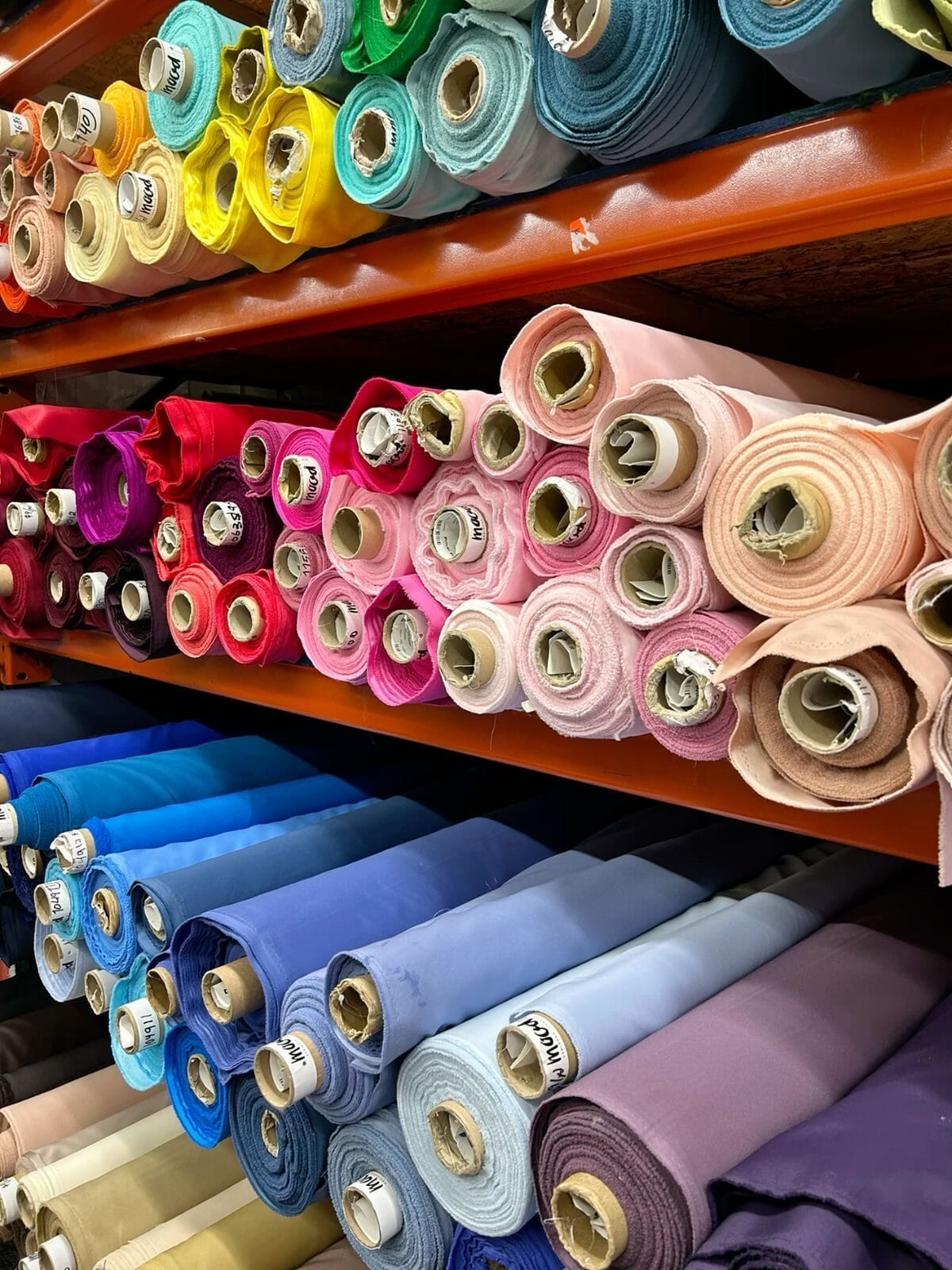
Stock colours help small orders. Underwear uses little fabric per piece, so a custom dye lot covers a very large number of garments, while knitted jersey in a stock colour can usually be bought in smaller quantities. A first run in stock colours and one or two custom shades is often the cheapest way to start.
For more on choosing and checking a mill, see our guide to fabric suppliers in China.
Seamless, Bonded or Cut-and-Sew?
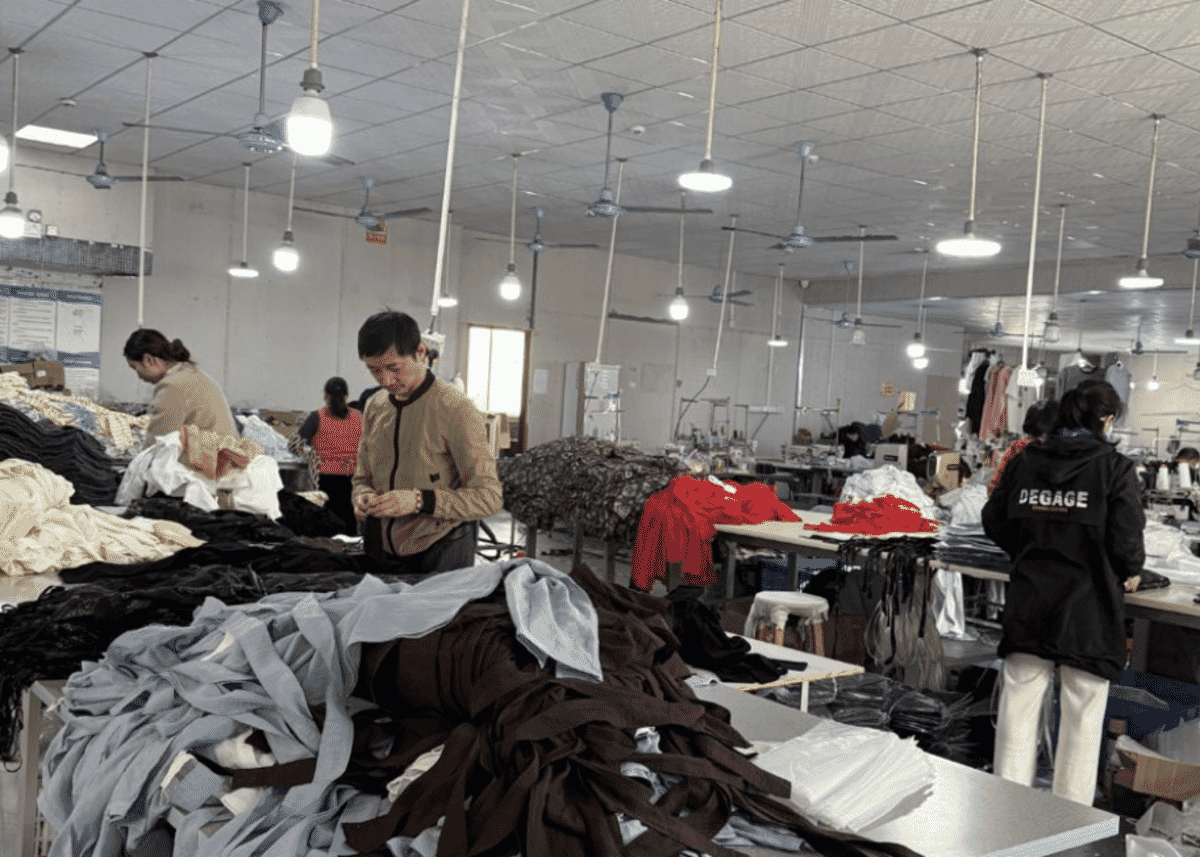
Three production routes, three kinds of machine, and often three different factories. The route follows the product promise: if your marketing says no visible line under clothing, you have chosen bonding or seamless knitting and the narrower supplier base that comes with it.
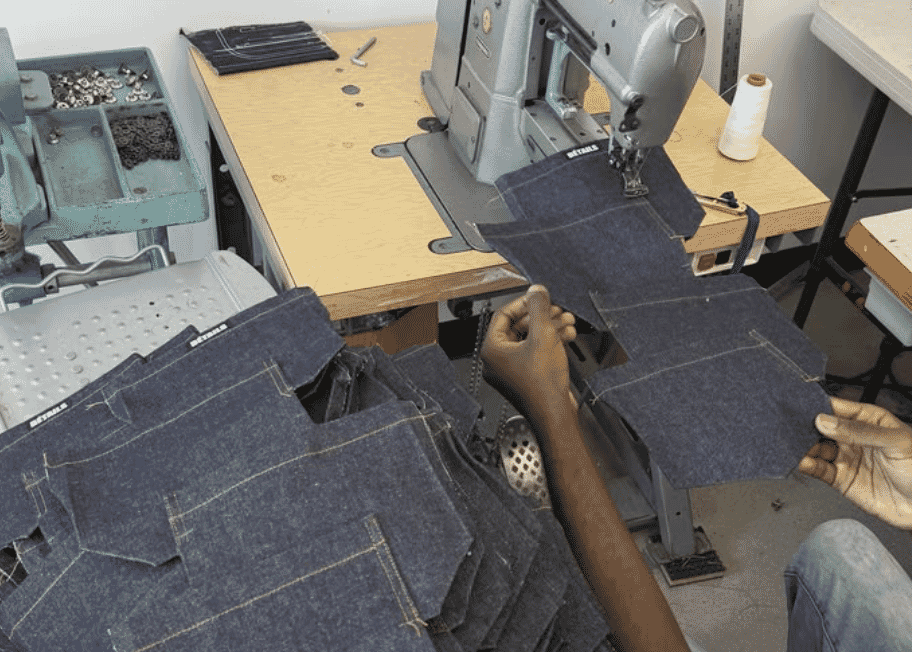
Cut-and-sew. Panels are cut from knitted fabric and joined with overlock seams, with coverstitch or flatlock used where a flatter, softer seam is wanted. It is flexible, widely available and has low tooling cost, and it is how most underwear is made. The seam is visible and can be felt, so the choice between a raised overlock and a flat seam is a comfort decision that belongs in the spec.
Bonded and laser-cut. Adhesive film replaces stitching at the edges and a laser or ultrasonic cutter seals the edge so it does not fray. The result shows no edge under clothing. It needs bonding presses, cutting equipment and process control, because bond strength depends on temperature, pressure and dwell time, and a bond that was not set correctly can lift in the wash.
Seamless knitting. Circular knitting produces a tube of fabric, the same principle used for socks (Wikipedia, Circular knitting). China Daily describes garments from specialised seamless knitting machines as having no seams in places such as the side, shoulder and underarm, where seams could have affected comfort (China Daily, 2024). The body comes off the machine nearly finished, with the waistband and leg areas knitted in, and is completed with a few joining and finishing operations. Design is limited by what the machine can knit, so the size range and pattern need to be agreed with the factory early.
What to put in the brief for each route:
- Cut-and-sew: seam type at each position (side, crotch, leg, waist), stitch density, and thread type; a soft textured thread at seams against skin.
- Bonded: which edges are bonded and which are sewn, the adhesive type, and a wash test on bulk pieces with the bond checked afterwards.
- Seamless: the machine diameter the factory will use for each size, the yarn composition, and the knitted structure in each zone.
For a brand selling on comfort and fabric rather than invisibility, a good flat-seamed cut-and-sew garment keeps every factory in play. Bonding and seamless knitting are right when invisibility is the promise, and they should be a deliberate trade, not a default.
Quick read: Underwear is made by three routes with different machines: cut-and-sew with overlock, coverstitch or flatlock seams; bonded and laser-cut construction, where adhesive replaces stitching; and seamless circular knitting, which China Daily describes as leaving no seams at the side, shoulder or underarm. The route selects the factory, so decide it before asking for quotes.
Why Does the Waistband Fail First?
Because it takes every pull, every stretch and every wash, and it is where an order is most easily cheapened without anyone noticing at delivery. Slack elastic is invisible on day one and obvious after a season of washing, which makes the waistband the component most worth naming by type and testing on bulk.
Elastic itself comes in distinct constructions. Wikipedia describes four: braided, knitted, woven and transparent (Wikipedia, Elastic). Braided elastic is the most common, becomes narrower as it stretches, and quickly loses its ability to recover when it is stitched through or pierced. Knitted elastic is soft and light, does not narrow when stretched, and keeps its recovery when pierced by a needle; it is also used to make fold-over elastic for finishing edges. Woven elastic, also called non-roll elastic, is firmer and thicker and its structure keeps it from rolling or folding under stress.
Two lines from the same article matter for underwear. Elastics made with nylon have a soft lustre and are used for lingerie, but they do not tolerate high heat and should not be exposed to high temperatures in a dryer. Elastics made with cotton tend to shrink slightly after being worn and washed (Wikipedia). Both are reasons to wash-test the waistband, not only the fabric.
Three waistband constructions are common in finished underwear:
- Exposed jacquard elastic, with the brand name woven into the band, is the visible standard in men's briefs. It needs its own loom set-up, so it carries a minimum length and a lead time of its own.
- Covered elastic, enclosed in the shell fabric, is softer against the skin and less branded.
- Fold-over or turned elastic, where fabric or a fold-over band wraps the edge, is the simplest and is common on women's briefs and leg openings.
Write four things into the spec: the elastic type and width, the composition of its core and covering, how it is attached (stitch type and stitch density, and whether it is sewn under tension), and the recovery you expect after a stated number of washes. A waistband attached with too few stitches can roll and twist even when the elastic is good.
The branded jacquard band is often what holds a first order, not the garment. Because the band is woven to order, its minimum can exceed what a small first run needs. Three ways round it: a plain or printed band for the first run, a covered elastic with a printed or woven label instead, or accepting the overage, since the same band is used across every style in a range.
Quick read: Elastic is braided, knitted, woven or transparent. Braided elastic narrows when stretched and loses recovery when stitched through, while knitted and woven elastic do not, and woven non-roll elastic resists rolling under stress. Nylon elastics do not tolerate high dryer heat, so an underwear spec names the elastic type, width, attachment and recovery after washing.
What Should the Gusset Be?
A functional component, specified like one. Wikipedia describes the typical panty as having an elastic waistband, a crotch panel usually lined with absorbent material such as cotton, and leg openings that, like the waistband, are often made of elastomer (Wikipedia, Panties). Its article on gussets adds that in synthetic underwear and hosiery the gusset is often made of breathable fabric such as cotton, to keep the area dry and ventilated (Wikipedia, Gusset).
Three things to specify:
- The fabric. A gusset in the same synthetic as the body defeats its purpose. Name it, usually cotton jersey.
- Single or double layer, and the size of the panel.
- Enclosure. Fully enclosed, with both seam allowances hidden between the layers, or open at one end, which is quicker to sew and less comfortable.
This is the line most often missing from a brief, and the one most easily changed in bulk, because it cannot be seen in a product photo and changing it saves fabric and an operation. If your reference sample has a cotton, fully enclosed gusset and the brief does not say so, the bulk may arrive different and still be arguably made to specification. Put it in writing and check it at inspection.
Which Certifications and Labels Apply?
Skin contact raises the stakes on chemistry. OEKO-TEX says its STANDARD 100 label is for textiles tested for harmful substances, with every thread, button and accessory tested against a list of over 1,000 harmful substances, and that the more intensive the skin contact, the stricter the requirements (OEKO-TEX). It sorts articles into four product classes: class 1 for babies and children up to 3 years, class 2 for products with direct skin contact, class 3 for products without direct skin contact and class 4 for home textiles. Adult underwear belongs in class 2, so ask for a certificate that covers the finished article in that class.
Scope is where importers get caught. A certificate covers the products and the company named on it, for the period stated. A mill's certificate covers the fabric; it does not cover your finished garment with its elastic, thread and labels. Check any certificate number in the OEKO-TEX Label Check rather than relying on a PDF.
For organic cotton claims, GOTS describes itself as a certification for textiles made with organic fibres covering every step from fibre processing and spinning to manufacturing and trading, and to label a product GOTS-certified, all companies involved in its production must be certified (GOTS). So a garment sewn in a factory outside the GOTS system cannot carry the GOTS label, even when its fabric qualifies.
US labelling follows the Textile Fiber Products Identification Act rules. The fibre content label gives the generic names and percentages by weight of the fibres present in amounts of 5 percent or more, and each imported textile product must be labelled with the country where it was processed or manufactured (16 CFR Part 303). In practice that means a care and content label stating, for example, cotton and spandex by percentage, the country of origin, and the brand or registered identification number. Agree the label artwork with the factory before bulk, not after.
What Is the US Import Duty on Underwear?
The general rates in the US Harmonized Tariff Schedule are 7.4% for men's and boys' cotton underpants and briefs (6107.11) and 14.9% for the same in man-made fibres (6107.12) (USITC, USITC). Women's and girls' cotton briefs and panties carry 7.6% (6108.21), and in man-made fibres 15.6%, or 8.3% for disposable briefs designed for one-time use (USITC, USITC).
Two points follow. Fibre content moves the rate: a microfibre brief pays roughly double the general rate of a cotton one, so the composition on the spec sheet is also a duty decision. And goods from China can carry additional duties on top of the general rate, which change over time; confirm the current position with your customs broker before you price the range. Our production cost calculator helps you test a landed cost.
How Should You Inspect an Underwear Order?
Before the balance, with a written checklist. QIMA, an inspection company, describes its pre-shipment inspection as an examination conducted when 80% of your production order is complete (QIMA), which leaves time to fix problems while the factory still holds the goods and you still hold the balance.
The sample size comes from ISO 2859-1, the sampling standard behind AQL tables. At general inspection level II, a lot of 3,201 to 10,000 pieces is sampled at 200; if you set AQL 2.5 for major defects, the lot is accepted with 10 defects or fewer and rejected at 11. For a smaller lot of 1,201 to 3,200 pieces the sample is 125, accepted at 7 and rejected at 8 (ISO 2859-1 tables, QC Advisor). Many buyers set a tighter AQL for critical defects and a looser one for minor defects; whatever you choose, write it into the inspection brief.
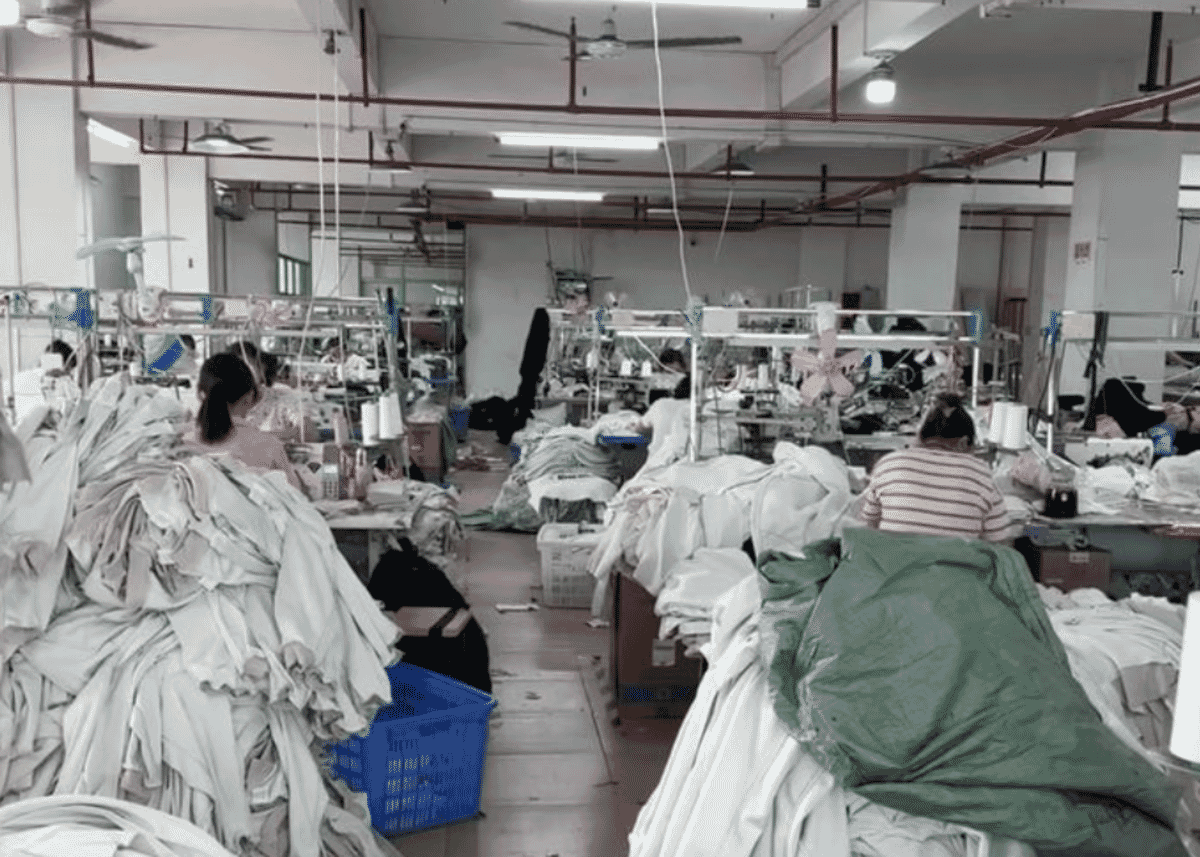
A general garment checklist misses what matters in underwear. Add these checks:
| Check | How | Why it matters |
|---|---|---|
| Waistband recovery | Stretch the band to the spec extension, release, measure | Slack elastic is the most common complaint |
| Waistband attachment | Count stitches, look for rolling and twisting | Low stitch density makes bands roll |
| Gusset | Check fabric, layers and enclosure against the spec | The quiet downgrade |
| Seams | Seam type at each position; stretch the seam and look for cracked stitches | Cracked seams open in wear |
| Bonded edges | Peel test on edges; wash a few pieces and recheck | Bonds that lift fail after washing |
| Measurements | Waist relaxed and extended, rise, leg opening, against the size chart and tolerance | No ease in underwear; small errors change the fit |
| Fabric and colour | Compare with approved swatch; check shade between pieces in a pack | Shade variation shows in multipacks |
| Labels | Fibre content, origin, care, size and brand on every piece | Labelling errors stop goods at import |
| Packing | Pack counts, size and colour assortment, carton marks | Wrong assortments cost more to fix than defects |
Add a short wash test on a few bulk pieces from the inspection sample, measured before and after against the size chart, with waistband recovery and seams checked afterwards. If the factory will not allow it, ask why. For a wider view of inspections, see our guide to finding and vetting a clothing supplier in China.
Quick read: Underwear inspections run before the balance, typically when about 80% of an order is complete, with the sample size taken from ISO 2859-1: 200 pieces for a lot of 3,201 to 10,000 at general inspection level II, accepted at AQL 2.5 with 10 defects or fewer. Beyond measurements and workmanship, the checklist covers waistband recovery and attachment, the gusset, seam stretch, bonded edges and labels.
Where Do Underwear Orders Go Wrong?
The waistband goes slack. Cheaper elastic, or braided elastic stitched through. Invisible at delivery, obvious after washing. Name the elastic and test recovery on bulk.
The gusset changed. Cotton in the sample, shell fabric in bulk. Specify it and check it.
The garment stretches out during the day. Too little elastane, or poor recovery in the fabric. Write the composition and test the bulk roll.
The bonded edge lifts. Bonding is sensitive to temperature, pressure and time, and a factory learning it on your order produces edges that separate in the wash.
The waistband rolls. Usually attachment and stitch density, or a band too narrow for the garment, not the elastic itself.
The label is wrong. Bamboo on the label of a viscose garment, missing fibre percentages or no country of origin. Approve the label artwork before bulk.
Packaging holds the order. Printed multipack sleeves or boxes with longer lead times than the garments. Order packaging early; our guide to packaging suppliers in China covers it.
Before you order underwear in China
- Decide cut-and-sew, bonded or seamless, since it decides which factories can quote.
- Write the fabric spec: composition with elastane share, construction, finished GSM, shrinkage and colour fastness.
- Name the elastic type, width, attachment and recovery after washing.
- Specify the gusset: fabric, layers and enclosure.
- Get the minimum and lead time for a custom jacquard band before approving the design.
- Use stock fabric colours on a first run where you can.
- Agree fibre, origin and care labels before bulk.
- Book an inspection at about 80% complete, with waistband, gusset and seam checks, before the balance.
How Do You Check an Underwear Supplier?
Ask questions that only an underwear specialist answers easily:
- Machines. Which seam machines it runs for underwear (overlock, coverstitch, flatlock, elastic attaching), and whether it owns bonding or seamless knitting machines if you need them.
- Elastic and trims. Which elastic suppliers it uses, whether it can show the elastic composition, and the minimum and lead time for a custom jacquard band.
- Fabric. Which mills supply its jersey and modal, and whether it can provide a test report on bulk fabric before cutting.
- Testing. Whether it wash-tests samples and checks waistband recovery, and how it records approved references.
- Certificates. Certificate numbers, not logos, for any OEKO-TEX or GOTS claims, checked in the issuing body's own database, with the scope covering the finished garment.
A factory that answers these quickly and with documents is usually one that makes underwear every day. One that answers in general terms may be a general apparel supplier placing the work elsewhere, which can still work, but is something to know before you rely on it. For related categories, see our guides to bras, swimwear and socks made in China.
Conclusion
China exports more knitted briefs and panties than any other country in every major line, and Shantou and Yiwu hold deep, specialised capacity. The capacity is there. What arrives in your warehouse still depends on what you write down and what you check.
Choose the construction first, because it chooses the factory. Then write the fabric as numbers, name the elastic and how it is attached, and give the gusset its own line. Get the custom waistband minimum before you approve the design. Approve the labels before bulk, and book an inspection before the balance with waistband, gusset and seam checks on the list.
We are a group of documented clothing factories in China. Send a reference garment or a design with your fabric, size range and market, and we place production with the factory in our group built for the product. Our team replies within 24 hours. Samples, invoices and shipping run straight between you and the factory; our fee is flat and we take nothing from the factory side.
Send your brief China factory list, $49No spec sheet yet? We draw one style as a factory-ready tech pack for $79. What the $79 covers.
Frequently Asked Questions
Where is most underwear made in China?
Much of it is made in Shantou in eastern Guangdong, which China Daily describes as the largest production base for underwear and home wear in China. Seamless underwear is concentrated in Yiwu, Zhejiang, one of the world's largest seamless knitting production bases.
How much underwear does China export?
According to World Bank WITS data, China exported about $4.94 billion of knitted men's and women's briefs and panties in 2024, in cotton and man-made fibres, roughly 6.17 billion pieces.
What is the difference between seamless and cut-and-sew underwear?
Cut-and-sew joins cut panels with overlock, coverstitch or flatlock seams. Bonded underwear replaces stitching at the edges with adhesive. Seamless underwear is knitted as a tube on circular machines, with no seams at the sides. Each route uses different machines, so it decides which factory can make it.
Why does my waistband go slack?
Usually the elastic. Braided elastic narrows when stretched and loses recovery when it is stitched through, and nylon elastics do not tolerate high dryer heat. Specify the elastic type, width and attachment, and check recovery on bulk pieces after washing.
What should the gusset be made of?
Usually cotton, even when the body is synthetic, because a breathable gusset keeps the area dry and ventilated. Specify the fabric, single or double layer, and whether it is fully enclosed, then check it at inspection.
What is the US import duty on underwear?
General rates are 7.4% for men's cotton briefs, 14.9% in man-made fibres, 7.6% for women's cotton briefs and 15.6% for women's briefs in man-made fibres. Goods from China can carry additional duties.
What AQL should I use for underwear?
There is no single required AQL. If you choose AQL 2.5 at general inspection level II, ISO 2859-1 samples a lot of 3,201 to 10,000 pieces at 200 and accepts it with 10 defects or fewer.
Sourcing notes: all company names, certification marks and trademarks referenced here are the property of their owners. Cluster figures come from local government and media sources reported in different years. Duty rates are general rates and do not include additional duties. Reviewed and updated 14 November 2026 by David Stan.
Where the figures come from
- China Daily via chinaservicesinfo.com: Guangdong city to host global underwear market, March 2026.
- China Daily: International textile and garment exhibition kicks off in Shantou, March 2024.
- China Daily: Chaonan and Chaoyang underwear and house dress bases, June 2022.
- China Daily: Shantou wears textile success with pride, August 2023.
- China Daily: Yiwu teams up with Yinglin to expand apparel biz, October 2024.
- Textile World Asia: Yiwu City prepares for hosiery, knitting and sewing shows, September 2012.
- China Daily Ningbo: Zhejiang textile industry embraces smart manufacturing, March 2026.
- World Bank WITS: China exports of HS 610821, 2024, by partner.
- World Bank WITS: China exports of HS 610822, 2024, by partner.
- World Bank WITS: China exports of HS 610711, 2024, by partner.
- World Bank WITS: China exports of HS 610712, 2024, by partner.
- World Bank WITS: China exports of HS 610821, 2023.
- World Bank WITS: China exports of HS 610822, 2023.
- World Bank WITS: China exports of HS 610821, 2022.
- World Bank WITS: China exports of HS 610822, 2022.
- World Bank WITS: China exports of HS 610821, 2021.
- World Bank WITS: China exports of HS 610822, 2021.
- World Bank WITS: China exports of HS 610821, 2020.
- World Bank WITS: China exports of HS 610822, 2020.
- World Bank WITS: China exports of HS 610821, 2019.
- World Bank WITS: China exports of HS 610822, 2019.
- World Bank WITS: Top exporters of HS 610821, 2024.
- World Bank WITS: Top exporters of HS 610712, 2024.
- World Bank WITS: United States imports of HS 610822 by partner, 2024.
- World Bank WITS: United States imports of HS 610712 by partner, 2024.
- World Bank WITS: United States imports of HS 610821 by partner, 2024.
- Wikipedia: Rayon. Viscose, high wet modulus rayon and Modal.
- Wikipedia: Spandex.
- Wikipedia: Bamboo textile. Labelling of rayon made from bamboo.
- Wikipedia: Panties.
- Wikipedia: Gusset.
- Wikipedia: Elastic (notion). Braided, knitted, woven and transparent elastic.
- Wikipedia: Circular knitting.
- OEKO-TEX: STANDARD 100 and its product classes.
- OEKO-TEX: Label check.
- Global Organic Textile Standard: How the GOTS system works.
- eCFR: 16 CFR Part 303, Rules and Regulations under the Textile Fiber Products Identification Act.
- US International Trade Commission: Harmonized Tariff Schedule, subheading 6107.11.
- US International Trade Commission: Harmonized Tariff Schedule, subheading 6107.12.
- US International Trade Commission: Harmonized Tariff Schedule, subheading 6108.21.
- US International Trade Commission: Harmonized Tariff Schedule, subheading 6108.22.
- QIMA: Pre-shipment inspection.
- QC Advisor: ISO 2859-1 sample size table and single sampling plan for normal inspection (PDF).
Related Reading
- Bras Made in China
- Swimwear Manufacturers in China
- Datang, China's Sock Town
- Fabric Suppliers in China
- Clothing Manufacturers in Guangdong
- Clothing Suppliers in China: How to Find and Vet a Factory
No commission and no mark-up on the factory price: the factory invoices you itself.