By David Stan, Founder at China Clothing Manufacturer. Published October 2026.
Packaging suppliers in China can make almost anything a clothing brand ships in: poly and compostable mailers, garment bags, tissue, mailer boxes, rigid gift boxes, hang tags and labels. The hard part isn't finding a maker. It's buying packaging that still complies when it lands, because the rules changed in 2025 and 2026.
The EU's new packaging regulation has applied since 12 August 2026 (European Commission). The UK charges £228.82 per tonne on plastic packaging with under 30% recycled content (HMRC). And seven US states now have packaging EPR laws (Earth911, 2025).
Note: China Clothing Manufacturer is a group of documented clothing factories in China, producing for brands from 100 units. Ranges in this guide come from published industry sources and are given as market ranges, not as quotes from a specific factory. We confirm exact MOQ and price with the factory when you send a brief.
Key takeaways
- Most clothing brands need four things: a mailer, a garment bag, tissue or a box, and tags and labels.
- "Compostable" usually means industrial composting (EN 13432, ASTM D6400). Home compostable is a separate certificate.
- The EU PPWR applies from 12 August 2026 and caps empty space in e-commerce packaging at 50%.
- UK Plastic Packaging Tax is £228.82 per tonne from April 2026, for packaging under 30% recycled plastic.
- Published MOQs: mailer boxes 500 to 1,000, custom poly mailers 1,000 to 25,000.
- Most packaging problems are colour, size and claims, and all three are fixed at sampling.
What Packaging Does a Clothing Brand Actually Need?
Less than most suppliers will try to sell you. A typical direct-to-consumer apparel order uses a garment bag to protect the item, a mailer or box to ship it, and a hang tag and labels on the garment itself. Tissue, stickers and inserts are optional extras. Start with the minimum and add only what the customer will notice.
Poly mailers. Light, waterproof and cheap to ship. The workhorse for t-shirts, hoodies and soft goods. Specify thickness, size, print colours and whether there's a returns strip.
Compostable mailers. Usually a PBAT and PLA blend, sometimes with starch. They look and feel like poly mailers, but they're weaker, more sensitive to heat and humidity, and have a shelf life.
Garment bags. The inner poly bag each garment ships in from the factory. Specify material, thickness, size, suffocation warning text where needed, and whether it's self-seal.
Tissue paper. Printed with a logo or plain. Specify paper weight, size, print colours and whether the paper is FSC certified.
Boxes. Corrugated mailer boxes for e-commerce, folding cartons for retail, and rigid boxes for premium and gift. Each is a different supplier type with different minimums.
Hang tags and labels. Usually made by trim suppliers rather than packaging plants. Woven and printed labels, care labels and hang tags have their own specialists, often near the garment factory.
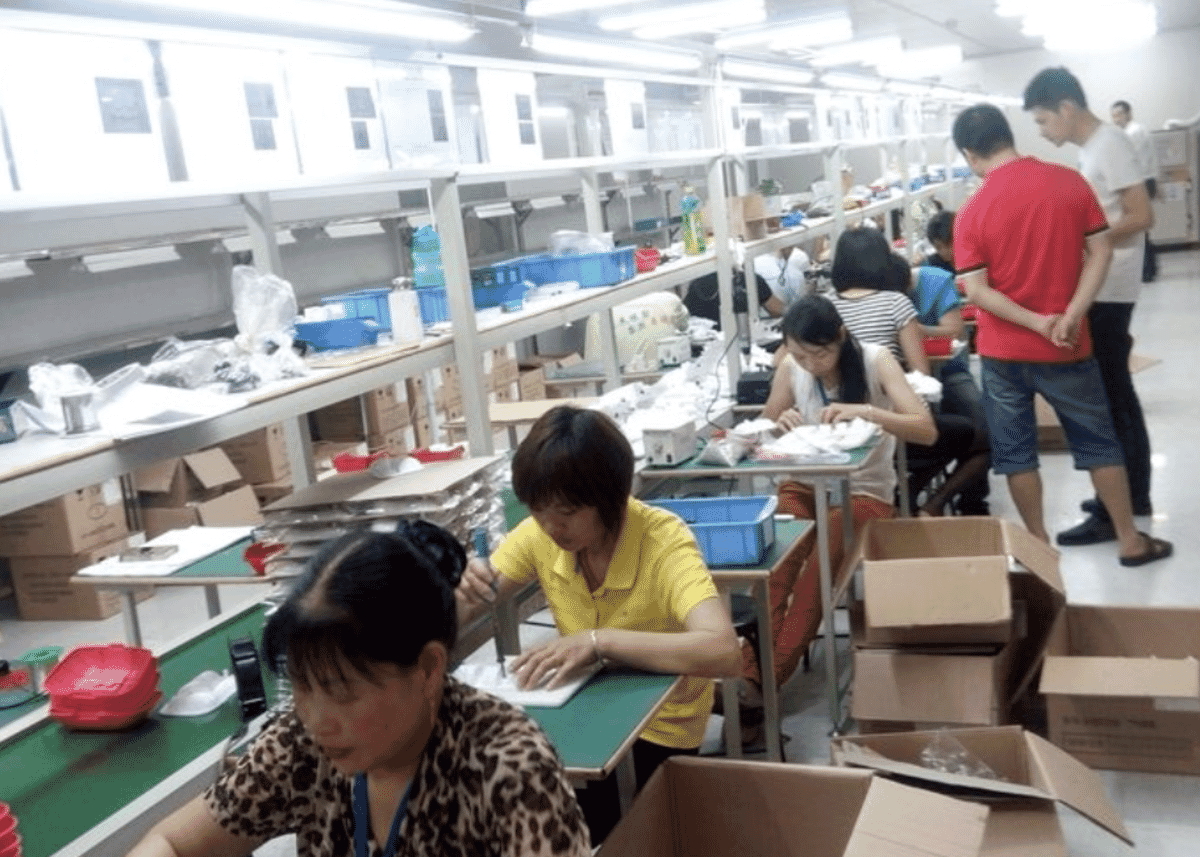
One practical question decides a lot: who packs? If your clothing factory packs garments into branded mailers before shipping, the packaging has to arrive at the factory on time and in the right sizes. If a 3PL packs at destination, the packaging ships separately. Decide this before you order, because it sets the delivery address and the deadline.
Which Materials and Certifications Mean Something?
Three claims come up on almost every packaging quote: FSC, compostable and recycled content. Each is backed by a specific certificate that you can check, and each is often stated loosely. Ask for the certificate number and verify it with the scheme, not with the supplier's PDF.
FSC for paper and board
The Forest Stewardship Council runs three product labels. FSC 100% means all material comes from FSC-certified forests. FSC Recycled means 100% recycled material. FSC Mix combines certified forest material, recycled material and/or controlled wood (FSC). Tissue, boxes and hang tags can all carry it.
Your supplier needs its own chain-of-custody certificate for the claim to carry through to your product. Check the certificate holder and its scope in the public FSC certificate search. If the printer isn't certified, the paper mill's certificate doesn't let you print the logo.
Compostable: EN 13432, ASTM D6400 and home
EN 13432 is the European standard for industrial compostability. Material must disintegrate within 12 weeks, with no more than 10% of fragments larger than 2 mm, and reach 90% biodegradation against a reference within six months at around 58 °C (British Plastics Federation).
ASTM D6400 is the US standard for compostable plastics, and ASTM D6868 covers coated paper and fibre. The Biodegradable Products Institute certifies against them (Good Start Packaging). BPI also requires test results showing no more than 100 ppm total organic fluorine, which screens out PFAS (BPI).
Home compostable is a separate claim. There's no single international standard for it; schemes such as OK compost HOME test at ambient temperature and allow up to 365 days for 90% biodegradation (BPF). Without that certificate, "compostable" means industrial only, and most customers don't have access to an industrial facility.
Citation Capsule: EN 13432 requires packaging to disintegrate within 12 weeks and reach 90% biodegradation within six months under industrial composting conditions at around 58 °C. Home compostability is a separate certification, tested at ambient temperature over up to 365 days. BPI certification in the US adds a limit of 100 ppm total organic fluorine.
Recycled content: GRS and documentation
Recycled poly mailers and garment bags are common, and the claim needs paperwork. The Global Recycled Standard covers products with at least 20% recycled material, and a product needs at least 50% to carry product-specific GRS labelling (SCS Global Services). Ask for the scope certificate and a transaction certificate for your order.
Recycled content also changes your tax position in the UK, where the 30% line decides whether Plastic Packaging Tax applies. A supplier's "30% PCR" needs to be evidenced well enough to stand up to HMRC.
| Claim | Backed by | Check it with | Common gap |
|---|---|---|---|
| FSC | Chain-of-custody certificate | FSC public certificate search | Printer not certified, only the mill |
| Industrial compostable | EN 13432 or ASTM D6400 certificate | Certifier's database (e.g. BPI, TÜV) | Certificate covers a different film or thickness |
| Home compostable | OK compost HOME or similar | Certifier's database | Claimed with only an industrial certificate |
| Recycled content | GRS scope and transaction certificates | Textile Exchange database | No transaction certificate for your order |
Structural guidance. A claim printed on packaging is your claim, not the supplier's.
Which Packaging Rules Apply in 2027?
It depends where you sell, and all three big markets moved in 2025 and 2026. The EU has a new regulation, the UK has a tax and a producer-pays scheme, and US states are adding EPR laws one by one. Brand owners and importers are usually the ones obligated. Checked on 9 October 2026.
EU: the Packaging and Packaging Waste Regulation
Regulation (EU) 2025/40 entered into force on 11 February 2025 and applies from 12 August 2026. It aims to make all packaging on the EU market recyclable in an economically viable way by 2030 (European Commission).
Two points hit clothing brands directly. Grouped, transport and e-commerce packaging may have an empty space ratio of no more than 50%, and very lightweight plastic carrier bags under 15 microns are banned from 1 January 2030 (European Parliament). Oversized boxes stuffed with filler are the obvious casualty.
UK: Plastic Packaging Tax and EPR
Plastic Packaging Tax applies to plastic packaging with less than 30% recycled plastic. You may need to register if you made or imported 10 tonnes or more of finished plastic packaging components over the past 12 months, or expect to in the next 30 days. The rate is £228.82 per tonne from 1 April 2026 (HMRC).
Separately, UK packaging EPR obliges organisations with turnover of £1 million or more that supplied or imported more than 25 tonnes of packaging in the previous year. Importing goods in packaging counts as a packaging activity, and large producers pay waste fees (GOV.UK).
US: state EPR laws and toxics in packaging
Seven states have comprehensive packaging EPR laws: Maine, Oregon, Colorado, California, Minnesota, Maryland and Washington (Earth911, 2025). Maryland and Washington joined in 2025, and in Colorado unregistered producers have been barred from selling covered products since 1 July 2025 (Bergeson & Campbell).
Older rules still apply too. Under the Toxics in Packaging model law, adopted by nineteen states, the combined incidental level of lead, cadmium, mercury and hexavalent chromium can't exceed 100 ppm in any package or component (TPCH). Inks and pigments are where this usually shows up.
Citation Capsule: The EU Packaging and Packaging Waste Regulation (EU) 2025/40 applies from 12 August 2026 and caps the empty space ratio of e-commerce packaging at 50%. UK Plastic Packaging Tax is £228.82 per tonne from April 2026 on packaging under 30% recycled plastic. Seven US states have packaging EPR laws.
Where Is Packaging Made in China?
Mostly in Guangdong and Zhejiang, split by packaging type. Published sourcing guides place rigid box and luxury packaging in Dongguan and Shenzhen, flexible packaging, labels and cartons in Wenzhou, and smaller packaging accessories in Yiwu (Epic Sourcing, 2026). Guangzhou and Shanghai also appear for high-end rigid boxes.
Yiwu's International Trade City lists plastic bags and shopping bags in District 2 (UCLG ASPAC). It's a fast way to compare stock mailers and bags, but the stall is usually a showroom. For a printed custom run, you'll want the plant itself.
Location matters for one more reason: delivery to your garment factory. If your clothing is made in Guangdong, a Dongguan box maker can deliver by truck in a day. Our Guangdong and Zhejiang cluster pages cover where the garment side sits.
What MOQs and Lead Times Should You Expect?
Lower than most brands assume for boxes and tags, higher for printed poly mailers. The figures below are published ranges from sourcing guides, not quotes, and they move with print colours, size and material. We confirm exact MOQ and price with the factory when you send a brief.
| Item | Published MOQ | Published production time |
|---|---|---|
| Custom poly mailers | 1,000 to 25,000 units | 4 to 8 weeks |
| Mailer boxes | 500 to 1,000 units | 2 to 4 weeks after sample approval* |
| Folding cartons | 1,000 to 5,000 units | 30 to 45 days, order to warehouse |
| Rigid boxes | 500 to 2,000 units | 40 to 60 days, order to warehouse |
| Flexible packaging | 1,000 to 3,000 units | 35 to 50 days, order to warehouse |
| Labels and hang tags | 500 to 1,000 units | Varies by method |
Sources: Epic Sourcing (boxes, cartons, flexible, labels), Epic Sourcing UK (*production time given for custom packaging in general) and Climb the Ladder (poly mailers).
Door to door takes longer. One published guide puts custom packaging from China at 6 to 9 weeks from first contact to UK delivery by sea, including 4 to 5 weeks of sea freight. Plate or cylinder fees of USD 50 to 200 per colour are typically charged once as setup (Epic Sourcing).
Try it free: pressure-test your landed cost with the China production cost calculator. 60 seconds, no email required.
Which Printing Method Fits Which Item?
The item mostly decides the method. Film is printed by flexo or gravure, boxes by offset or flexo, tissue by flexo or screen, and small runs digitally. Each method has setup costs and colour limits, so pick the method before you design, not after.
Flexographic printing uses flexible plates and is the usual method for poly mailers, garment bags and corrugated boxes. It's economical at volume and best with one to three spot colours.
Gravure engraves the image into a metal cylinder. It gives sharp, consistent print on film at long run lengths, but the cylinders cost more, so it rarely suits a first order.
Offset lithography is the standard for printed folding cartons, rigid box wraps and hang tags. It handles full-colour images well and supports Pantone references for brand colours.
Digital printing skips plates entirely. It's the answer for short runs and multiple designs, at a higher unit price.
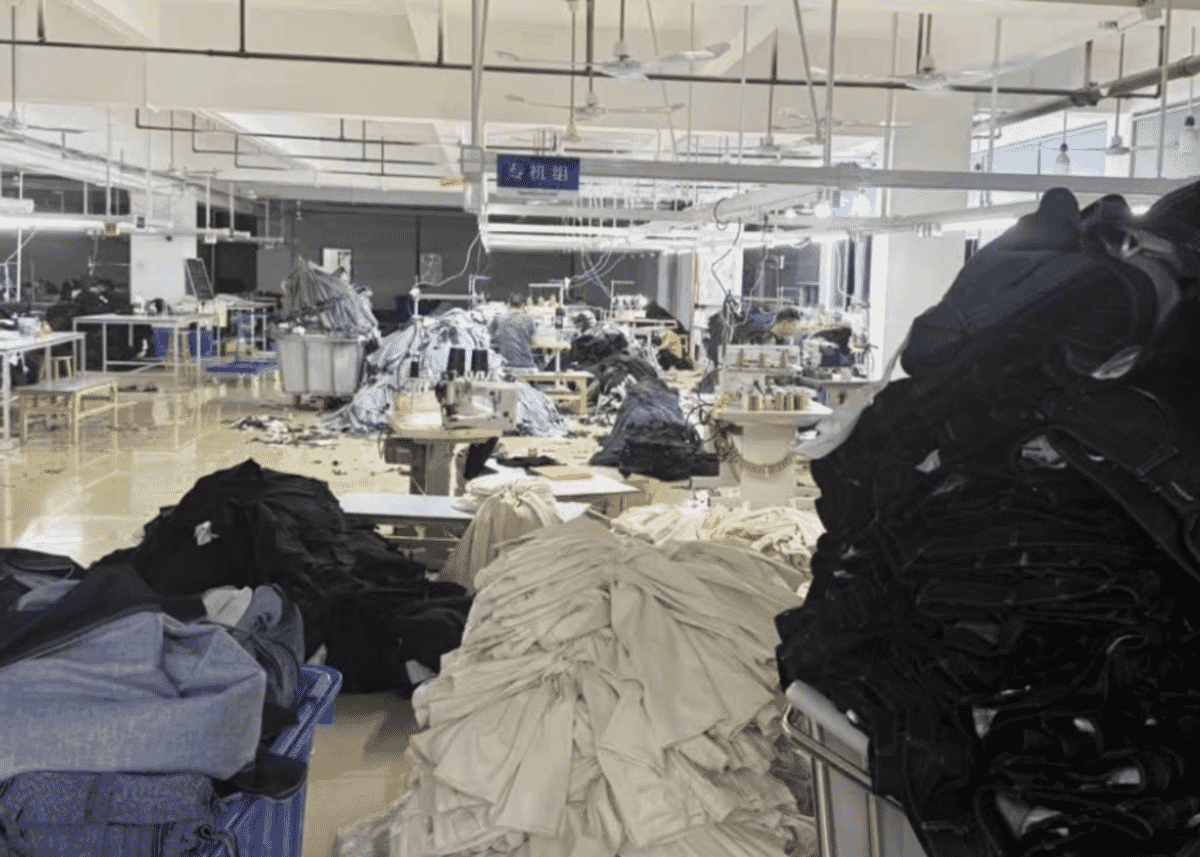
Finishes come on top: matte or gloss lamination, soft-touch, spot UV, hot-foil stamping and embossing or debossing are all standard on boxes and tags (Epic Sourcing UK). Each adds cost and a step. Lamination also makes paper packaging harder to recycle, which matters under the PPWR.
How Should Packaging Sampling Work?
In two steps: a blank structural sample for size and function, then a printed sample for colour and finish. Published guides say most factories can produce a physical proto within 5 to 10 working days (Epic Sourcing). That's quick enough that skipping it never makes sense.
Structural sample. Pack your real garments, folded the way the factory or 3PL will fold them. Check the mailer closes without strain, the box doesn't leave empty space you'll need to fill, and the garment bag fits the folded size. This is also when you check the empty space ratio for the EU.
Printed sample. Check colour against a physical Pantone reference under daylight, not on screen. Check print registration, logo size and position, and that any legal text such as suffocation warnings, recycling marks or certification logos is correct and legible.
Get a dieline from the supplier for boxes and printed bags, and put your artwork on that, not on a mock-up. Most printing errors start with artwork placed on the wrong template. If your packaging brief sits alongside a garment tech pack, keep the fold dimensions in one place; our tech pack service includes them.
What Should You Check Before Packaging Ships?
Size, strength, print and paperwork. Packaging defects are cheap per unit and expensive in total, because a bad batch sits in front of every customer. Check against the approved printed sample before the balance is paid, the same way you'd inspect garments.
- Dimensions and thickness. Measure several units from different cartons. Thinner film is the easiest substitution to miss.
- Seals and adhesive. Close a sample of mailers and try to open them without tearing. Check the returns strip if there is one.
- Box strength. Load a filled box and stack it. Corners should hold and the lid should close square.
- Print. Colour against the signed sample, registration, smudging, and spelling on every line of text.
- Odour. Some films and inks smell. If a mailer smells in the factory, it'll smell in the customer's hands.
- Certificates. FSC, compostable or GRS claims checked against the scheme database, with a transaction certificate where needed.
- Counts and packing. Units per carton and carton count against the packing list.
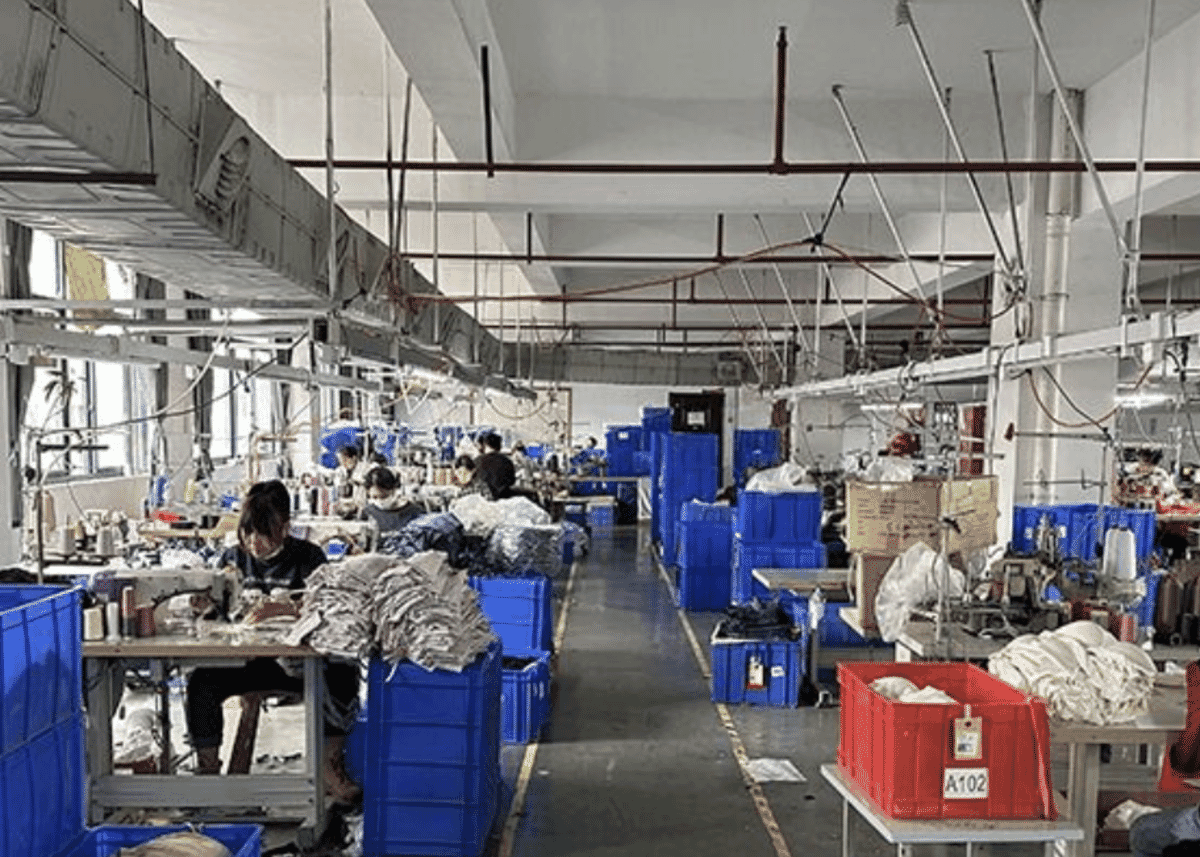
Compostable mailers need storage rules
Compostable film degrades with heat, humidity and time, which is the point. Ask for the recommended shelf life, order what you'll use within it, and keep stock out of hot warehouses.
Where Do Packaging Orders Go Wrong?
Five failures cover most of it, and none of them is about price. Each comes from something not written down at the brief stage.
Ordering before the garment is final. The fold size changes and the garment bag or box no longer fits.
Unverifiable green claims. "Eco-friendly" or "biodegradable" printed with no certificate behind it. In the EU and UK that's a consumer-protection risk, and it's your name on the pack.
Thinner film in bulk. The sample was right; bulk was thinner. Measure it.
Packaging arrives after the garments. If the factory packs, packaging is on the critical path. Give it the same deadline as fabric.
Too much empty space. One box size for every order. Under the PPWR that's now a compliance question as well as a freight cost.
Before you order packaging
- Decide who packs: the garment factory or your 3PL.
- Size every item to the folded garment, and test with real product.
- Pick materials by market: PPWR for the EU, PPT and EPR for the UK, state EPR for the US.
- Verify every certificate number with the scheme, not the supplier.
- Choose the print method before finishing the artwork.
- Inspect against the signed printed sample before paying the balance.
Doing these before the order costs a week. Doing them after costs a reprint.
Conclusion
Packaging is the part of a clothing order customers see first, and since 2025 it's also the part regulators look at most. China's packaging suppliers can make all of it, quickly and at low minimums. The work is in the brief.
Keep the list short, size everything to the folded garment, and only print claims you can prove with a certificate number. Then choose the material for the market you sell in. Get those right and the rest is a printing job.
We are a group of documented clothing factories in China, producing for brands from 100 units. Tell us the garments, the packaging and where you sell, and we come back with what to specify, which certificates to ask for and the real minimum, normally within 24 hours. You work directly with the factory. Flat fees, no factory commissions.
Get in contact Download the directory ($39)Need a tech pack? Get a factory-ready single-style tech pack for $79. See what's included.
Frequently Asked Questions
What is the MOQ for custom packaging from China?
Published guides give mailer boxes at about 500 to 1,000 units, folding cartons at 1,000 to 5,000, rigid boxes at 500 to 2,000 and labels and hang tags at 500 to 1,000. Custom printed poly mailers range more widely, from 1,000 to 25,000 units. These are published ranges, not quotes.
Are compostable mailers really compostable?
Only under the conditions they're certified for. EN 13432 and ASTM D6400 cover industrial composting, where EN 13432 requires 90% biodegradation within six months at around 58 °C. Home composting needs a separate certification such as OK compost HOME. Ask for the certificate number and check it with the certifier.
Does the UK Plastic Packaging Tax apply to my mailers?
It applies to businesses that make or import 10 tonnes or more of finished plastic packaging components over 12 months, on packaging with less than 30% recycled plastic. The rate is £228.82 per tonne from 1 April 2026. Most small brands sit under the threshold but should still check.
What does the EU PPWR mean for clothing packaging?
Regulation (EU) 2025/40 entered into force on 11 February 2025 and applies from 12 August 2026. It aims for all packaging to be recyclable by 2030, caps the empty space ratio of grouped, transport and e-commerce packaging at 50%, and bans very lightweight plastic carrier bags under 15 microns from 2030.
Which US states have packaging EPR laws?
Seven as of late 2025: Maine, Oregon, Colorado, California, Minnesota, Maryland and Washington. Rules, thresholds and fee dates differ by state, and brand owners or importers are usually the obligated producer. Check each state's programme before you sell there.
Editorial note: all company names, certification marks and trademarks referenced here are the property of their respective owners. MOQ, cost and lead-time figures are market ranges compiled from the published sources listed below, not quotes from any individual factory, and they vary by item, material and season. Rules, tax rates and thresholds were checked on 9 October 2026 and can change. Always confirm your obligations with the relevant authority and terms directly with the supplier before committing.
Sources
- European Commission: Regulation (EU) 2025/40, in force 11 February 2025, applying from 12 August 2026; recyclability aim for 2030.
- European Parliament (2024): 50% maximum empty space ratio and the ban on carrier bags under 15 microns from 2030.
- HMRC, GOV.UK: Plastic Packaging Tax threshold, 30% recycled-content line and rates 2022 to 2026.
- GOV.UK: UK packaging EPR thresholds and importer obligations.
- Earth911 (2025): the seven US states with packaging EPR laws.
- Bergeson & Campbell (2025): Maryland and Washington laws, Colorado registration rule.
- Toxics in Packaging Clearinghouse: 100 ppm heavy-metals limit and nineteen adopting states.
- Forest Stewardship Council: FSC 100%, Mix and Recycled label definitions.
- British Plastics Federation: EN 13432 and home-compost test criteria.
- Good Start Packaging: ASTM D6400 and D6868 scope and BPI's role.
- Biodegradable Products Institute: 100 ppm total organic fluorine requirement.
- SCS Global Services: Global Recycled Standard 20% and 50% thresholds.
- Epic Sourcing: published packaging MOQs, lead times, sample times and plate fees.
- Epic Sourcing UK (2026): packaging clusters, door-to-door timing and finishes.
- Climb the Ladder: published poly mailer MOQ and production ranges.
- UCLG ASPAC: Yiwu International Trade City District 2 categories.
Related Reading
No commissions. No markups. The factory bills you directly.