- Water resistant or waterproof
- What hydrostatic head measures
- Specifying seam taping
- Breathability
- DWR and PFAS rules
- Down fill: what to specify
- Down labels by market
- Down filling on the floor
- Zips and hardware
- Where jackets are made
- Inspecting before the balance
- Where jacket orders fail
- Where the money goes
- Conclusion
- FAQ
- Where the figures come from
- Keep reading
A jacket made in China succeeds or fails on three things you can write down: which seams are taped and how that is tested, what goes into the down fill and how it is labelled, and what an inspector checks before you release the balance. Get those three into the spec and most of the failures buyers complain about, leaking shoulders, feathers working through the shell, a fill label that does not survive a lab test, become visible before the goods ship rather than after.
Outerwear is also the category with the widest cost spread, because the same silhouette can be built from a coated polyester with no taping at one price, or from a laminated membrane with fully taped seams and a down fill at several times that. The spec decides which jacket you are buying, so the spec has to be specific.
This guide covers waterproofing and hydrostatic head, how to specify seam taping, the PFAS rules that now shape water-repellent finishes, down fill and the labelling rules in the USA, Europe and China, and how to inspect a jacket order before the balance is paid.
Before you read: China Clothing Manufacturer is a group of documented clothing factories in China, producing for brands from 100 pieces per style; outerwear minimums are set per product on our outerwear page. Standards and label rules in this guide come from the published sources listed at the end. Exact MOQ and price are confirmed with the factory once you send a brief.
What matters most
- Waterproof means membrane or coating, taped seams and sealed closures together. Without taping, a high fabric figure buys you a water-resistant jacket.
- Hydrostatic head is measured by a test method that sets no pass mark. The pass mark comes from your spec or from a product standard such as EN 343, which also tests the seams.
- Seam taping needs its own line in the spec: which seams, which tape, and a seam test after washing.
- Down labels differ by market: 75% down clusters in the USA, 60% under EN 12934 in Europe, 50% under China's GB/T 14272-2021, as summarised by IDFL.
- PFAS rules now apply to water-repellent finishes in the EU and California, so the chemistry belongs in the spec.
- Inspection sample sizes come from ISO 2859-1. For a lot of 1,201 to 3,200 jackets at level II, the inspector opens 125.
Water Resistant or Waterproof?
These are two different products, and the difference is construction rather than marketing. A water-resistant jacket sheds light rain for a while. A waterproof jacket keeps water out because three things are present together: a fabric with a membrane or coating, seams that are sealed, and closures that do not let water in. Leave out any one of the three and the jacket is water resistant, whatever the fabric can do on its own.
Water resistant usually means a tightly woven shell with a durable water repellent finish, no membrane and untaped seams. It is fine in a shower and wets through in sustained rain, and it is what a lot of fashion outerwear actually is.
Waterproof needs the seams closed. Every needle penetration in a waterproof shell is a hole, and a sewn jacket has thousands of them. A heat-applied tape over the seam allowance is what closes them. A jacket cut from a highly rated fabric with untaped seams leaks at the seams first, which in practice means the shoulders, the hood and wherever a strap presses.
Be clear in your own product copy about which one you are selling. A customer who bought a "waterproof" jacket finds out in the worst possible weather, and the complaint lands on your brand rather than on the factory.
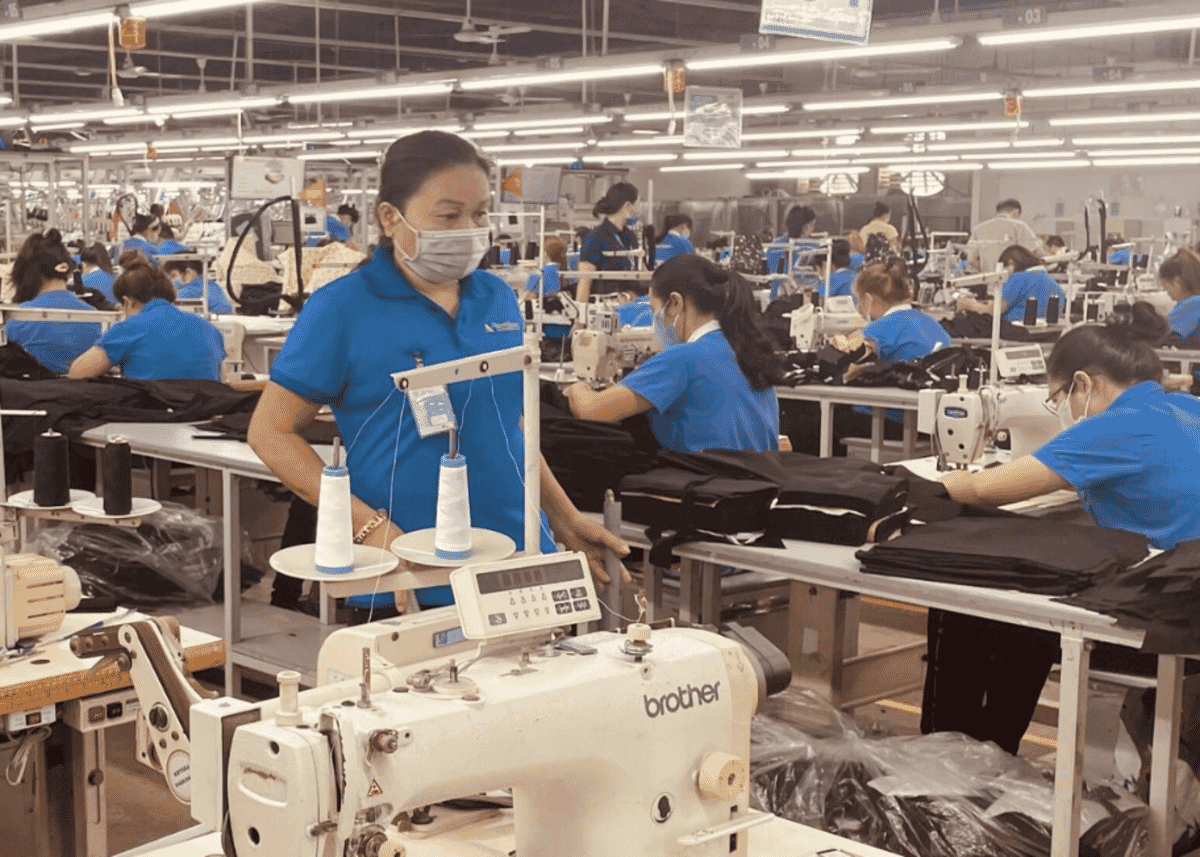
Quick read: A waterproof jacket needs a membrane or coating, sealed seams and closures that keep water out, all at once. Because sewing creates thousands of needle holes, untaped seams leak regardless of the fabric's rating, so a jacket in highly rated fabric with untaped seams performs as a water-resistant garment.
Developing outerwear and unsure what to specify? Send the use case and the target market, and our team comes back with the questions the spec needs to answer. Send it here.
What Does Hydrostatic Head Actually Measure?
Hydrostatic head is the pressure a fabric withstands before water comes through, reported in millimetres of water column or in pascals. SATRA, the UK testing body, gives the conversion as 1,000 Pa is approximately 102 mm of water. The test pushes water against the face of the fabric at a rising pressure and records the point at which drops appear on the other side.
What the test method does not do is tell you what a waterproof jacket needs. ISO 811, the textile hydrostatic pressure test, is a method: it describes how to measure, not what result passes. The pass mark comes from two places, your own spec or a product standard written for a type of garment.
The clearest public example of a product standard is EN 343, the European standard for protective clothing against rain. As SATRA sets it out, EN 343 grades water penetration resistance in four classes, and it tests the seams as well as the fabric. Class 1 asks for at least 8,000 Pa on the fabric as new; Class 3 asks for 13,000 Pa after pre-treatments such as abrasion, flexing and laundering; Class 4 asks for 20,000 Pa after pre-treatment, with the seams also tested after cleaning to 20,000 Pa. Workwear supplier bp-online notes that the newer EN ISO 24232 replaces EN 343 with the same class figures.
Those figures look low next to retail labels, and that is the point worth understanding. The same bp-online page notes that it is not unusual for a 10,000 mm or 20,000 mm water column to be advertised, well above the standard's minimum. A high retail figure is a fabric claim. EN 343 is a garment claim, because it tests the seams after the jacket has been worn and washed in simulation.
So ask for two things. First, the hydrostatic head figure for the fabric, with a test report rather than a mill datasheet. Second, a seam test on a taped seam from your actual construction, ideally after a wash, because a seam that passes as new and lifts after laundering is the most common way a waterproof jacket stops being one.
EN 343 also has an optional rain tower test, EN 14360, which SATRA describes as a simulated cloudburst using high-energy rain drops. It exists because materials and seams can perform well while the design still lets water in at the cuffs or the hood. If you sell technical rainwear, that is the kind of test that finds a design fault the fabric figures hide.
How Do You Specify Seam Taping?
Seam taping is the line brands leave out, because it is invisible on a sample photo and it costs machine time and tape. Put it in the spec as its own section, with four answers.
Which seams. Full taping means every seam that crosses the waterproof layer, including the hood, pockets and any seams behind the zip. Critical-seam taping covers only the shoulders, hood and upper body. Both are legitimate choices, but they are different products and they cost differently, so name the one you want and mark it on the flats. A brief that says "taped" without saying which seams leaves the decision to the factory.
Which tape. The tape has to suit the fabric. A three-layer laminate, a two-and-a-half-layer fabric and a coated fabric each take a different tape construction, and the tape supplier sets the temperature, speed and pressure the machine must run at. Ask the factory which tape it uses on your fabric and whether the combination has been tested together.
Which width and finish. Narrow tape looks cleaner inside the jacket and leaves less margin for error on curved seams. Wider tape is more forgiving. Ask for the tape width on the spec, and check on the sample that the seam allowance has been trimmed so the tape sits flat.
How it is tested. Ask for a seam hydrostatic test on a taped seam from your construction and repeat it after a wash. Then spray-test the finished sample, concentrating on the shoulders, the hood and the zip ends. A seam that lifts at the edges after one wash is a bonding problem, usually temperature, speed or tape choice, and it is cheaper to find on the sample than on the bulk.
Taping also tells you a lot about the factory. Taping needs hot-air or hot-wedge machines that a general cut-and-sew factory does not own. Ask how many taping machines are on the floor and whether taping is done in house. A factory that sends taping out to another workshop is coordinating that step, which may be fine, and which you should know before the order is placed.
Quick read: A seam taping specification needs four answers: which seams are taped (full or critical), which tape suits the fabric construction, the tape width, and how taped seams are tested, ideally with a seam hydrostatic test repeated after washing. Taping requires hot-air or hot-wedge machines that general apparel factories do not own.
What About Breathability?
A fully waterproof shell that does not let water vapour out traps sweat, and the wearer gets wet from the inside. Breathability is quoted as a separate figure, and a spec that names only the waterproof figure has described half the fabric.
The test methods for breathability are not directly comparable with each other, so compare suppliers on the same method or not at all. The structural difference matters more than the number. Coated fabrics have a polyurethane layer applied to the back of the face fabric, which is cheaper and generally less breathable. Laminated fabrics bond a membrane between layers, which costs more and breathes better. Two-layer, two-and-a-half-layer and three-layer constructions differ in how the membrane is protected and in how the inside feels against the skin.
Choose for the use. A city raincoat worn while walking does not need mountaineering breathability. A jacket worn for hard work in the cold does, and putting a cheap coated fabric into it produces a jacket the wearer blames on quality.
What Is DWR, and Why Do PFAS Rules Matter?
Durable water repellent is a finish on the outer face of the fabric that makes water bead and roll off. It does not waterproof the jacket; the membrane or coating does that. DWR keeps the face fabric from soaking through, which keeps the jacket breathing.
That explains the most common complaint. A jacket that "stopped being waterproof" usually has not failed at the membrane. The DWR has worn off, the face fabric wets out, and the jacket feels cold and clammy even though no water has come through. DWR can be renewed by the wearer with a wash-in or spray-on product, and saying so on the care label or product page saves returns.
The chemistry is now a compliance question rather than a preference. Older water repellents relied on fluorinated chemistry, and several markets restrict PFAS in clothing:
- European Union, PFOA. PFOA, its salts and PFOA-related compounds are listed in Annex I to the EU Persistent Organic Pollutants Regulation (Commission Delegated Regulation (EU) 2020/784).
- European Union, PFHxA. According to SGS, Regulation (EU) 2024/2462 restricts PFHxA in textiles in clothing and related accessories for the general public placed on the market from October 10, 2026, at below 25 ppb for PFHxA and its salts and below 1,000 ppb for PFHxA-related substances.
- California, AB 1817. SGS summarises the law as prohibiting the sale of items with PFAS at 100 ppm or more, measured as total organic fluorine, from 2025, a threshold that drops to 50 ppm from 2027. Outdoor apparel made for severe wet conditions has an extension until 2028, but from January 1, 2025 it must carry the statement "Made with PFAS chemicals".
In practice, put the DWR chemistry on the spec by name, state whether it must be fluorine free, and say which markets the jacket will be sold in. Ask the factory or the mill for test results that cover those markets. A supplier that cannot answer has usually not been asked before, and the exposure sits with the importer.
Quick read: Durable water repellent is a surface finish that makes water bead on the face fabric; it does not waterproof the jacket. PFAS restrictions now cover water-repellent chemistry in clothing, including the EU's PFHxA restriction from October 10, 2026 and California's AB 1817, so the finish chemistry belongs in the jacket specification.
Down Fill: What Goes in the Spec?
Down and synthetic insulation are a trade-off, not a quality ladder. Down gives more warmth for its weight and packs smaller, but it collapses and stops insulating when wet and dries slowly. Synthetic fill keeps insulating when damp and dries faster, at more weight and bulk for the same warmth. The use case and the climate should decide, not the price point.
If you choose down, five fields belong in the spec.
Down cluster percentage. A down fill is a mix of down clusters, small feathers and fibre, and the claimed down share is the figure your label will make. Each market has its own rules for what that label must say, covered in the next section.
Fill power. Fill power measures loft, the insulating volume a given weight of down fills. The testing lab IDFL describes the method: the down is conditioned, placed in a measuring cylinder, a piston is lowered onto it, and the reading is taken where the piston stops. IDFL notes that each international standard has its own cylinder size, piston weight, sample amount and units, so a fill power figure only means something with its method beside it, and that under the US standard extremely high quality down reaches a fill power of 700+ in3. Steam conditioning is the official international IDFB method. In the USA, IDFL says fill power is not required on the law label, but if it is used in advertising the accepted tolerance is plus or minus 5%.
Net fill weight. The grams of down in each size, and ideally per chamber, written on the spec. GB/T 14272-2021 allows the net fill weight of a finished product to be no less than 5.0% below the claimed value, according to IDFL. Weighing the fill is how a lab checks it, by opening a finished jacket and removing the plumage.
Species and colour. Duck or goose, white or grey. If a Chinese-market product is labelled white, IDFL's summary of GB/T 14272-2021 says coloured down and feather must be 1.0% or less.
Welfare certification. Under the Responsible Down Standard, developed by Textile Exchange with industry and animal welfare experts, material from birds subjected to live plucking or force feeding cannot qualify, as the certification body IDFL explains. Certified operations can be checked in the Textile Exchange certified company finder, so ask for the certificate and look it up rather than taking a logo on trust.
How Much Down Does a "Down" Label Need?
There is no single rule. The same fill can be labelled one way in Shanghai and need a different label in Seattle, so the target market belongs at the top of a down jacket brief. IDFL, a testing lab that publishes comparisons of the national rules, summarises them like this.
- USA. A product labelled "down" needs at least 75% down clusters (down, nestling down and plumules). IDFL's question-and-answer page adds that no tolerance is allowed for blended products.
- Europe, EN 12934. A product can be sold as "down" with a minimum of 60% down, but the actual down content must be sub-labelled.
- China, GB/T 14272-2021. The lowest usable down label for a down garment is 50%. UL Solutions notes that the 2021 edition, implemented on April 1, 2022, moved the assessment from "down content" to "down" itself.
The Chinese garment standard is worth reading even if you never sell in China, because Chinese factories and the labs around them work to it every day. Beyond the down share, IDFL lists cleanliness requirements for the filling under GB/T 14272-2021: an oxygen number of 5.6 mg/100g or less and a turbidity of 500 mm or more. For comparison, IDFL's explanation of down tests says the USA and EN standards require an oxygen number of less than 20 and a turbidity of at least 300 mm.
| Filling test | What it shows | GB/T 14272-2021 (IDFL) | USA and EN (IDFL) |
|---|---|---|---|
| Oxygen number | Organic material left on the plumage | 5.6 mg/100g or less | Less than 20 |
| Turbidity | Dirt and dust in the plumage | 500 mm or more | At least 300 mm |
Source: IDFL, Chinese apparel standards (down garment) and explanation of down and feather tests.
UL Solutions also notes two method changes in GB/T 14272-2021 that matter on the factory floor. The down-proof test for fabric is now a tube test on the finished garment, which tests the jacket as a whole rather than a fabric bag, and the fill power test moved from an oven method to a steam method. If your factory quotes "passes GB/T 14272", ask which edition and ask for the report.
Quick read: Down label rules differ by market. As summarised by the testing lab IDFL, the USA expects at least 75% down clusters for a product labelled down, Europe's EN 12934 allows a down label from 60% down with the actual content sub-labelled, and China's GB/T 14272-2021 sets 50% as the lowest usable down label for down garments.
What Happens in the Down Filling Room?
A down jacket is usually built as a shell with empty chambers, then filled. The chambers are either sewn through, where the outer and lining are stitched together along each quilting line, or built as boxes with a fabric wall between outer and lining. Sewn-through is lighter and cheaper and leaves a cold line at each stitch row. Box construction keeps loft across the whole panel and costs more to sew.
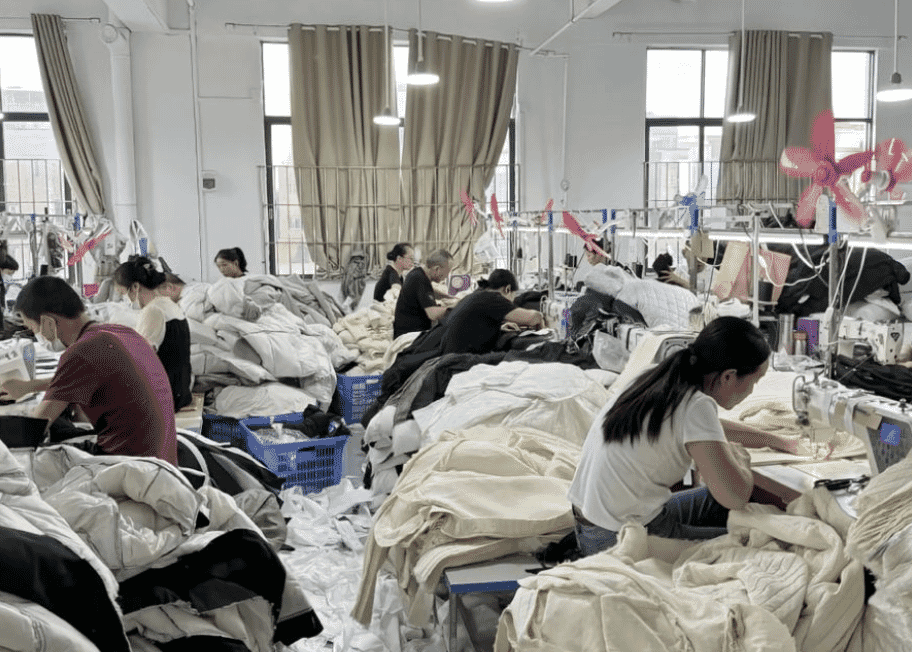
Filling needs a separate room with blowing equipment, scales and dust control, because loose down gets everywhere. The fill for each chamber is weighed and blown in, then the chamber is closed. That is why the spec should give a fill weight per panel or per chamber and not only a total: a jacket with the right total and most of it in the hood is still wrong.
Three things to agree with the factory before bulk:
- Fill weights by size and chamber, signed off on the approved sample, with a tolerance.
- Down-proof shell and lining, because down works through a fabric that is not tightly enough constructed. IDFL describes an air permeability check under ASTM D 737 as another indication of down-proofness, with a reading of 10 and under as a passing result in its method.
- Needle and stitch choices on the quilting lines, because large needle holes in a sewn-through jacket let clusters escape along every row.
Why Do Zips and Hardware Fail First?
Zips carry mechanical stress every time the jacket is worn, and they are the easiest place to save money invisibly. A zip spec has several fields brands rarely fill in: size, usually a number for the tooth width; type, coil, moulded plastic or metal; water resistance, since a coated water-resistant zip is a different component from a standard zip behind a storm flap; and the slider and puller, which is where a cheap zip feels cheap.
The same goes for snaps, cord locks, toggles and elastic. Name the brand or grade of each on the bill of materials. A substituted zip is the cost-down a buyer is least likely to notice at approval and most likely to hear about from customers in the first season.
Free tool: pressure-test your landed cost with the China production cost calculator. About a minute, and no email asked.
Where Are Jackets Made in China?
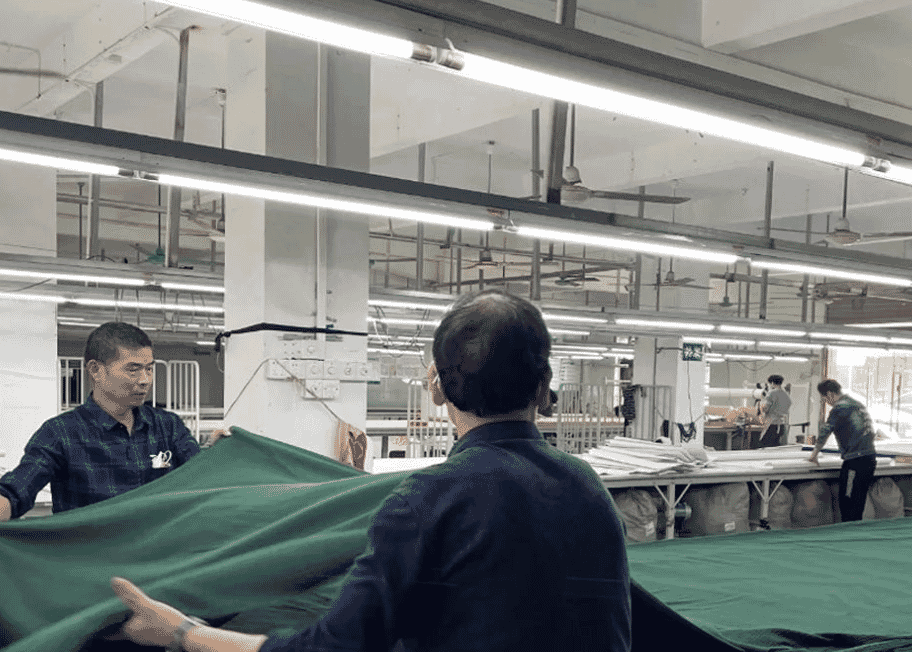
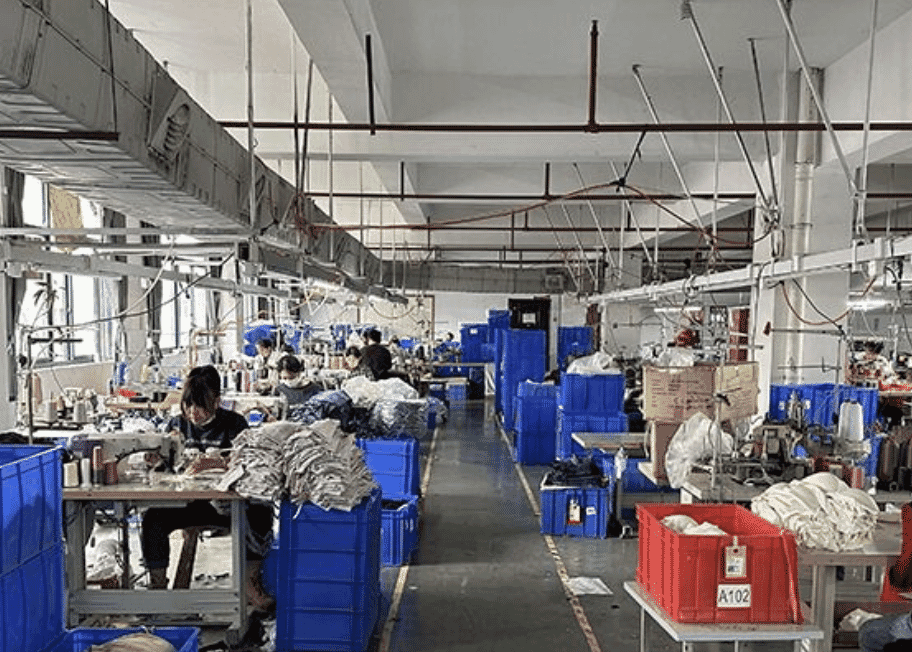
Technical outerwear capacity sits where factories have invested in the equipment: taping machines, filling rooms and people who know how to handle membrane fabrics. That makes the question "which factory owns the kit" more useful than "which city".
Zhejiang is the largest textile and garment province by revenue. China Daily reported that its textile and garment industry generated 1.12 trillion yuan ($162.21 billion) in revenue in 2025, 25.5 percent of the national total and first in China. Our group's factories are in Guangdong, Zhejiang and Fujian, and outerwear briefs go to the lines that already build that kind of jacket.
Whatever the province, the test when assessing a supplier is the same and it is specific. Ask whether they own taping machines and how many, whether there is a filling room on site, and which recent jackets they have built in a comparable construction. Then ask to see a taped seam and a filled panel from their own line.
How Do You Inspect a Jacket Order Before the Balance?
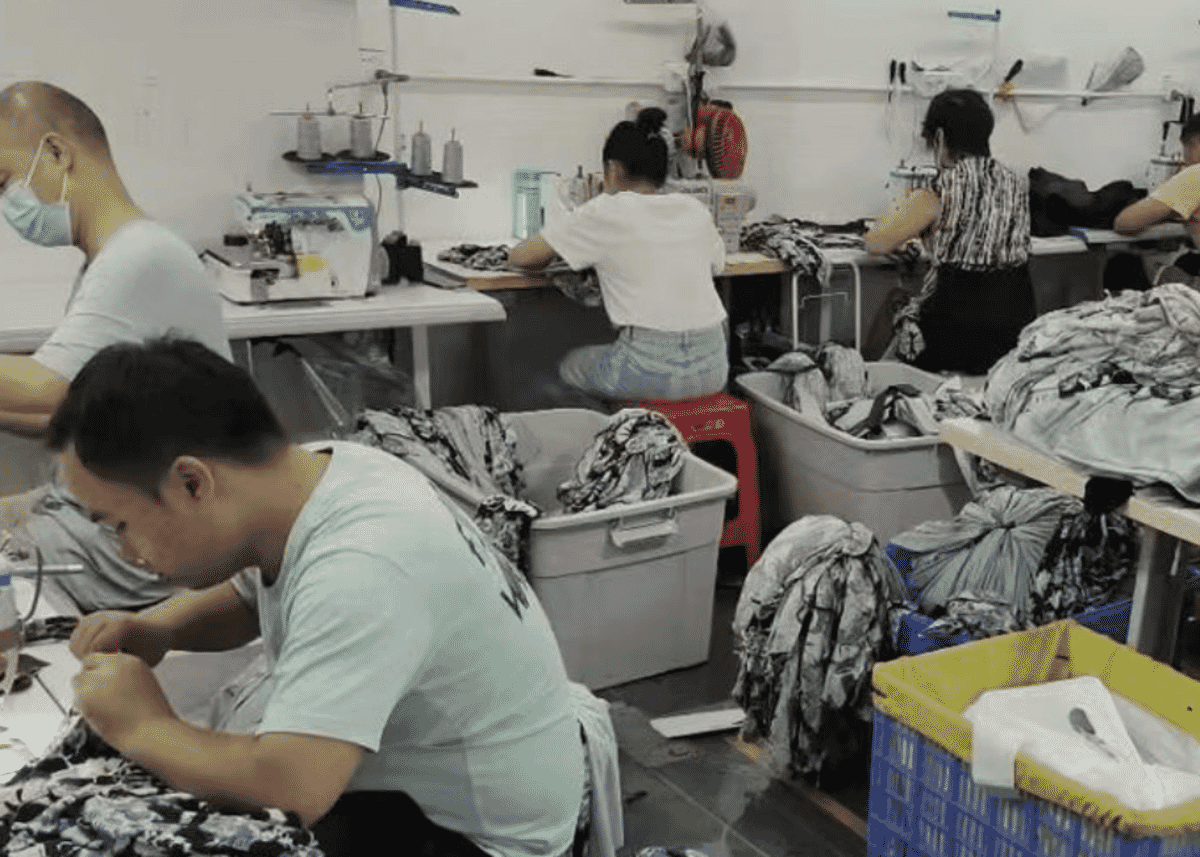
Our standard terms put a third-party inspection before the balance is paid, and for outerwear the inspection is where the spec earns its keep. An inspector checks finished, packed goods against your tech pack and the approved sample, opens a sample drawn from the lot, and reports defects by severity.
The sample size comes from ISO 2859-1, the sampling standard that AQL inspection tables are drawn from. At general inspection level II, the usual level, the table gives the sample size by lot size. You choose the acceptable quality limit (AQL) for each defect class, and the table gives an accept and reject number for it: for a sample of 125 at AQL 2.5, the order is accepted with 7 defects or fewer and rejected at 8.
Beyond the usual measurement, workmanship, colour and packing checks, a jacket inspection should include:
- Seam tape: edges lifting, bubbles or gaps, especially on curved seams, the hood and the zip ends.
- Spray test on finished jackets at the seams and under the hood, on a few pieces from the sample.
- Down leakage: clusters or feather tips working through the shell, the lining or the quilting lines.
- Fill distribution: chambers evenly filled, no empty or overfilled baffles, the same loft left and right.
- Labels against the lab report: species, down cluster percentage and fill weight on the label agreeing with the filling report for the bulk lot, not only the sample.
- Zips and hardware: the specified brand or grade, running smoothly, pullers fixed, snaps holding.
- Water repellent and PFAS paperwork: test results that cover the markets you sell in, on file before the goods leave.
The filling lab test and the inspection are different jobs. The inspector checks what can be seen and measured on the finished goods; the lab checks what is inside the fill. For down jackets, plan both, and make the balance depend on both reports.
Quick read: Jacket inspections draw their sample size from ISO 2859-1. At general inspection level II, a lot of 1,201 to 3,200 pieces is sampled at 125, and at AQL 2.5 that sample is accepted with 7 defects or fewer. For down jackets, a filling lab report should sit beside the inspection report before the balance is paid.
Where Jacket Orders Fail
Five failures cover most outerwear complaints, and each one is invisible at approval and obvious in use, which is what makes outerwear unforgiving of a vague brief.
It leaks at the seams. Untaped, or taped only on critical seams when the brief implied full taping, or taped with a bond that lifts after washing. Specify which seams and test after a wash.
It wets out and feels clammy. The DWR has worn off or was never properly applied. It is not a membrane failure, and it can be renewed.
Down works through the shell. The shell or lining is not down-proof, or the quilting needle is too large, and clusters escape along the seams.
The fill label fails a lab test. The down share or fill weight on the label is higher than the bulk filling supports. Ask for a lab report on the bulk filling, not only on the sample.
The zip fails in the first season. It was never specified, so the cheapest available was used.
Where the Money Goes
| Element | Effect on cost | What to decide |
|---|---|---|
| Shell fabric | Laminate costs more than coating | Choose breathability for the use |
| Seam taping | Machine time plus tape | Full, critical seams, or none |
| Down fill | Down share, fill power and fill weight | Down for weight, synthetic for wet |
| Testing | Lab reports on fill and fabric | Which markets the reports must cover |
| Zips and hardware | Small each, very visible | Name the brand or grade |
| DWR chemistry | Fluorine-free options vary | Now a compliance question |
| Lining and pockets | Operations add up quickly | Where complexity hides |
Before you order jackets
- Decide water resistant or waterproof, and say which in your own product copy.
- Give the hydrostatic head with a test report, and ask for a seam test after washing.
- Mark the taped seams on the flats: all, critical only, or none, with the tape width.
- Name the DWR chemistry, say whether it must be fluorine free, and list the target markets.
- For down: down cluster percentage, fill power with its method, fill weight per size and chamber, species, colour and welfare certificate.
- Name zips and hardware by brand or grade on the bill of materials.
- Book a third-party inspection and a filling lab test before the balance.
Outerwear is the category where an incomplete brief produces a jacket that looks right and fails in use.
Conclusion
Outerwear punishes a vague brief because its failures are invisible at approval and total in use. A jacket can pass every visual check and leak at the shoulders the first time it rains hard, or lose its fill label in the first lab test a retailer runs.
The defence is a short list of things written down. For waterproofing: the fabric figure with a report, the seams that are taped, the tape, and a seam test after a wash. For down: the down share your market's label rules allow, fill power with its method, fill weight per chamber, and a welfare certificate you have looked up. For finishes: the water-repellent chemistry, checked against the EU and California rules where you sell.
Then make the balance depend on evidence. A third-party inspection sized by ISO 2859-1, and for down jackets a lab report on the bulk filling, tell you before shipment what customers would otherwise tell you after it.
And ask the taping and filling-room questions first. Whether a factory owns taping machines and a filling room is a yes or no that tells you more about whether it can build your jacket than any amount of talk about capacity.
Our team places and manages production with the documented factories in our China group, from 100 pieces per style. Send the use case, the target market and your spec, and we place the jacket with a line that already builds that construction. Our team replies within 24 hours. Samples, invoices and shipping run straight between you and the factory; our fee is flat and we take nothing from the factory side.
Send your brief China factory list, $49No spec sheet yet? We draw one style as a factory-ready tech pack for $79. What the $79 covers.
Frequently Asked Questions
What is the difference between a water-resistant and a waterproof jacket?
A water-resistant jacket is a tightly woven shell with a repellent finish and untaped seams, so it sheds light rain for a while. A waterproof jacket needs a membrane or coating, sealed seams and closures that keep water out, all together. Leave out the seam taping and the jacket behaves as water resistant, whatever the fabric figure says.
What hydrostatic head should I put in a jacket spec?
ISO 811 is a test method and sets no pass mark, so the figure comes from your spec or from a product standard. For protective rainwear, EN 343 asks for at least 8,000 Pa (about 816 mm) at Class 1 and 20,000 Pa (about 2,040 mm) at Class 4, with seams tested too. Fashion and outdoor brands often advertise far higher figures, such as 10,000 mm or 20,000 mm. Whatever you choose, ask for a test report on the fabric and on taped seams.
How much down does a jacket need to be sold as a down jacket?
It depends on the market. As summarised by the testing lab IDFL, the USA expects at least 75% down clusters for a product labelled "down", the European EN 12934 system allows "down" from 60% down, and the Chinese down garment standard GB/T 14272-2021 sets 50% as the lowest usable down label. Put the claimed down cluster percentage and the fill power in the spec, and ask for a lab report on the filling.
What should I check on a down jacket before paying the balance?
Check the label against the lab report (species, down cluster percentage, fill weight), look for down working through the shell and seams, check that the fill is spread evenly across the chambers, and run the usual measurement, workmanship and zip checks. The inspector draws the sample size from ISO 2859-1: for a lot of 1,201 to 3,200 jackets at general inspection level II, that is 125 pieces.
Do PFAS rules affect jackets made in China?
Yes, if you sell into markets that restrict them. The EU restricts PFHxA in clothing for the general public placed on the market from October 10, 2026, and California's AB 1817 limits PFAS in textile articles, with an extension to 2028 for outdoor apparel for severe wet conditions that must carry a disclosure meanwhile. Name the water-repellent chemistry in the spec and ask the factory for test results.
How do I know a factory can really make technical jackets?
Ask whether it owns seam taping machines and how many, whether it has its own down filling room, and whether taping is done in house or sent out. Then ask for a seam test on a taped sample after washing. A factory that sends taping out is coordinating that step rather than doing it, which you should know before you place the order.
Sourcing notes: brand names and certification marks mentioned here belong to their owners. Standards, label rules and regulatory dates are summarised from the published sources listed below and were checked on 9 November 2026; they can change, and summaries by testing labs are not the standard text. Confirm the current rules for your market and agree test methods and terms directly with the factory before committing.
Where the figures come from
- SATRA: The EN 343 protective clothing standard (water penetration classes, seam testing, EN 14360 rain tower).
- Planam: EN 343 classes with approximate millimetre conversions.
- bp-online: EN ISO 24232 (replaces EN 343) and advertised water column figures.
- IDFL: comparison of down cluster labelling standards (USA, Europe EN 12934).
- IDFL: USA labelling questions and answers (75% down clusters, fill power tolerance).
- IDFL: Chinese apparel standards, down garment (GB/T 14272-2021).
- IDFL: explanation of down and feather tests (fill power, oxygen number, turbidity, air permeability).
- UL Solutions: New standard GB/T 14272-2021, down clothing.
- IDFL: Responsible Down Standard (no live plucking, no force feeding).
- Textile Exchange: certified company finder.
- European Union: Commission Delegated Regulation (EU) 2020/784 (PFOA under the POPs Regulation).
- SGS: EU regulates PFHxA and PFHxA-related substances under REACH.
- SGS: California law AB 1817 banning PFAS on apparel and textile products.
- ISO: ISO 811:2018, Textiles, determination of resistance to water penetration, hydrostatic pressure test.
- QC Advisor: ISO 2859-1 sample size table and single sampling plan.
- China Daily Ningbo (2026): Zhejiang textile and garment revenue.
Related Reading
- Outerwear Manufacturer in China
- Activewear Manufacturers in China: Fabric, Seams and Testing
- Sweater Manufacturers in China
- Clothing Suppliers in China: How to Find and Vet a Factory
No commission and no mark-up on the factory price: the factory invoices you itself.