- Where bras are made
- China's bra exports
- What goes into a bra
- Moulded or cut-and-sew cups
- Why the band matters
- Which elastics and where
- Underwire
- The size grid
- How sampling works
- Minimums and lead time
- Labelling and duty
- Where the money goes
- What goes wrong
- Checking a bra supplier
- Conclusion
- FAQ
- Where the figures come from
- Keep reading
China is the world's largest bra exporter by a wide margin, and a large share of the country's intimate apparel comes from one city in eastern Guangdong. Shantou, according to the China National Textile and Apparel Council, produces approximately 45 percent of China's lingerie and home wear.
That matters for a brand briefing its first bra, because a bra is not one product from one supplier. It is a band, cups, wires, elastics, hooks, rings, sliders and labels, each with its own maker, its own minimum and its own lead time. A cluster where those component suppliers sit next to the sewing floors develops faster, and a brief that names every component gets what it asked for.
This guide covers where bras are made in China, what the latest trade figures say, and the cup, band, elastic, wire, sizing, labelling and testing points to write into a bra brief.
Before you read: China Clothing Manufacturer places and manages production for brands from 100 pieces per style with documented factories in China. Bra components such as moulded cups, custom elastics and dyed lace can carry their own minimums. Standards and trade figures in this guide come from the published sources listed at the end. Exact MOQ and price are confirmed with the factory once you send a brief.
What matters most
- Shantou is the cluster. The city produces approximately 45 percent of China's lingerie and home wear, with production spread across townships such as Gurao and Chendian.
- China leads exports. China exported $4.35 billion of bras in 2024 (WITS), about eight times the next exporter, Sri Lanka.
- A bra has between 20 and 48 parts, and every component has its own supplier, minimum and lead time.
- The band carries the support, together with the cups, not the straps. Specify band length under tension.
- Cups are moulded or cut-and-sew, and moulded cups need tooling for each cup shape and size.
- Sizes multiply. Most bras are offered in 36 sizes, so a single style in three colours can run past a hundred SKUs.
- US duty on most bras is 16.9% before any extra duties on Chinese goods, and elastic sections are labelled separately under the US fibre labelling rules.
Where Are Bras Made in China?
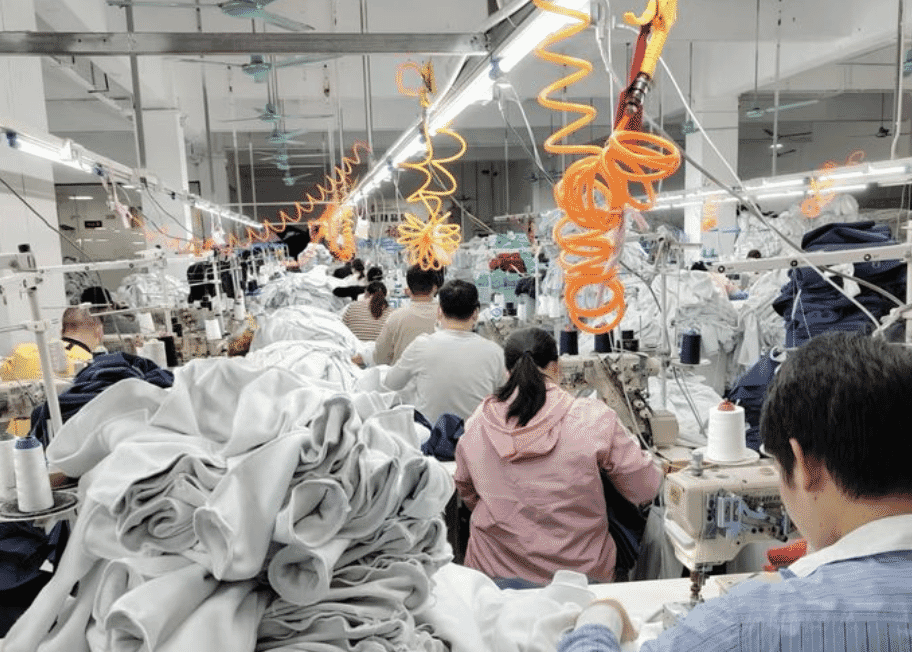
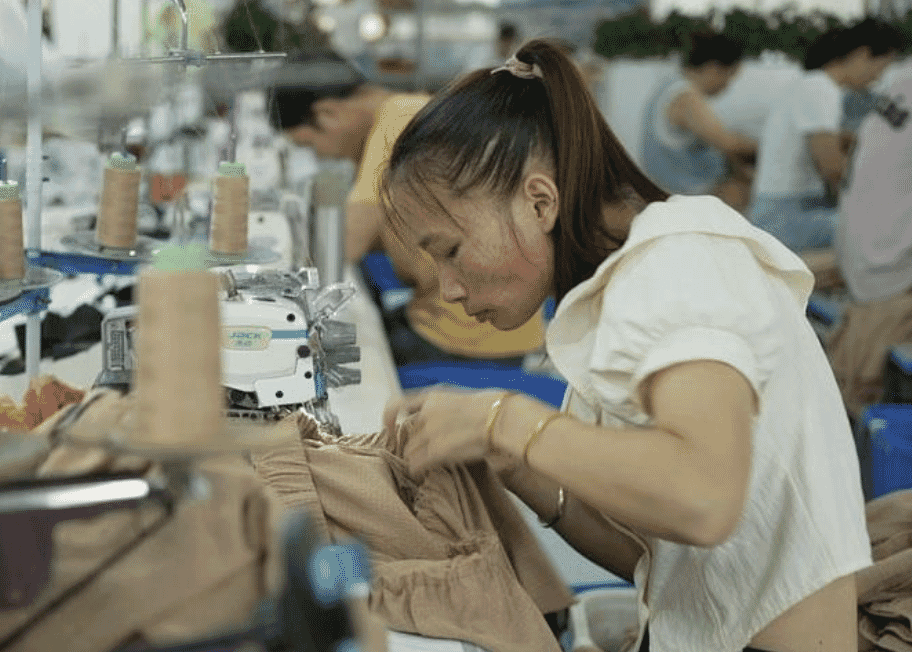
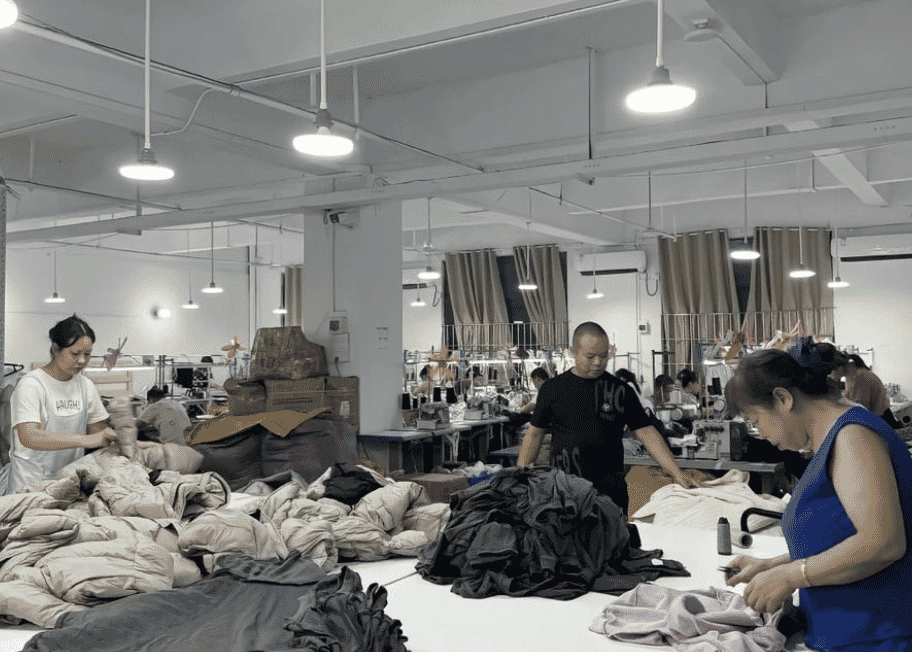
Mostly in Guangdong, and above all in Shantou, a coastal city in the east of the province. In March 2024 China Daily, citing the China National Textile and Apparel Council, reported that Shantou produces approximately 45 percent of the country's lingerie and home wear, and the trade exhibition it was covering listed bras, underwear, home wear, shapewear and sports underwear among its product groups (China Daily, 2024). In March 2026 the same paper described Shantou as the largest production base for underwear and home wear in China, with a comprehensive industrial chain (China Daily, 2026).
The industry is not one factory district. According to the local textile and clothing industrial association, enterprises in Shantou have long been dispersed across townships including Gurao, Waisha, Xiashan, Shenyang and Chendian (China Daily, 2023). Two of them come up again and again. Gurao, in Chaoyang district, is where the city is building its international textile and clothing centre, and Wikipedia's article on the brassiere records that residents of Gurao made more than 200 million bras in 2009 (Wikipedia, Brassiere). Chendian, in Chaonan district, opened an intimate apparel museum in May 2025 covering more than 40 years of the town's underwear industry, starting from the family workshops of the 1980s (Shantou government).
District figures show the weight of Chaonan in particular. A 2022 China Daily report said Chaonan and Chaoyang are home to the city's key underwear and house dress bases, and that, according to official statistics, Chaonan makes about 80 percent of China's house dresses and 40 percent of its female underwear, around one billion pieces a year, with more than 70 billion yuan of industrial output in 2021 (China Daily, 2022).
At city level, China Daily reported in 2023 that Shantou had more than 7,000 textile and clothing companies shipping more than 1.85 billion pieces overseas a year (China Daily, 2023), and in 2024 that it was home to more than 10,000 textile and clothing companies, with the sector's larger companies producing 111.8 billion yuan of output in 2023 (China Daily, 2024).
Read these numbers for what they are: local government and industry association figures, reported in different years and counting different things, not a census of bra factories. They point the same way. If a Chinese supplier quotes you a bra, there is a fair chance the cups, the elastics or the sewing came from eastern Guangdong. For other product categories in the province, see our page on clothing manufacturers in Guangdong.
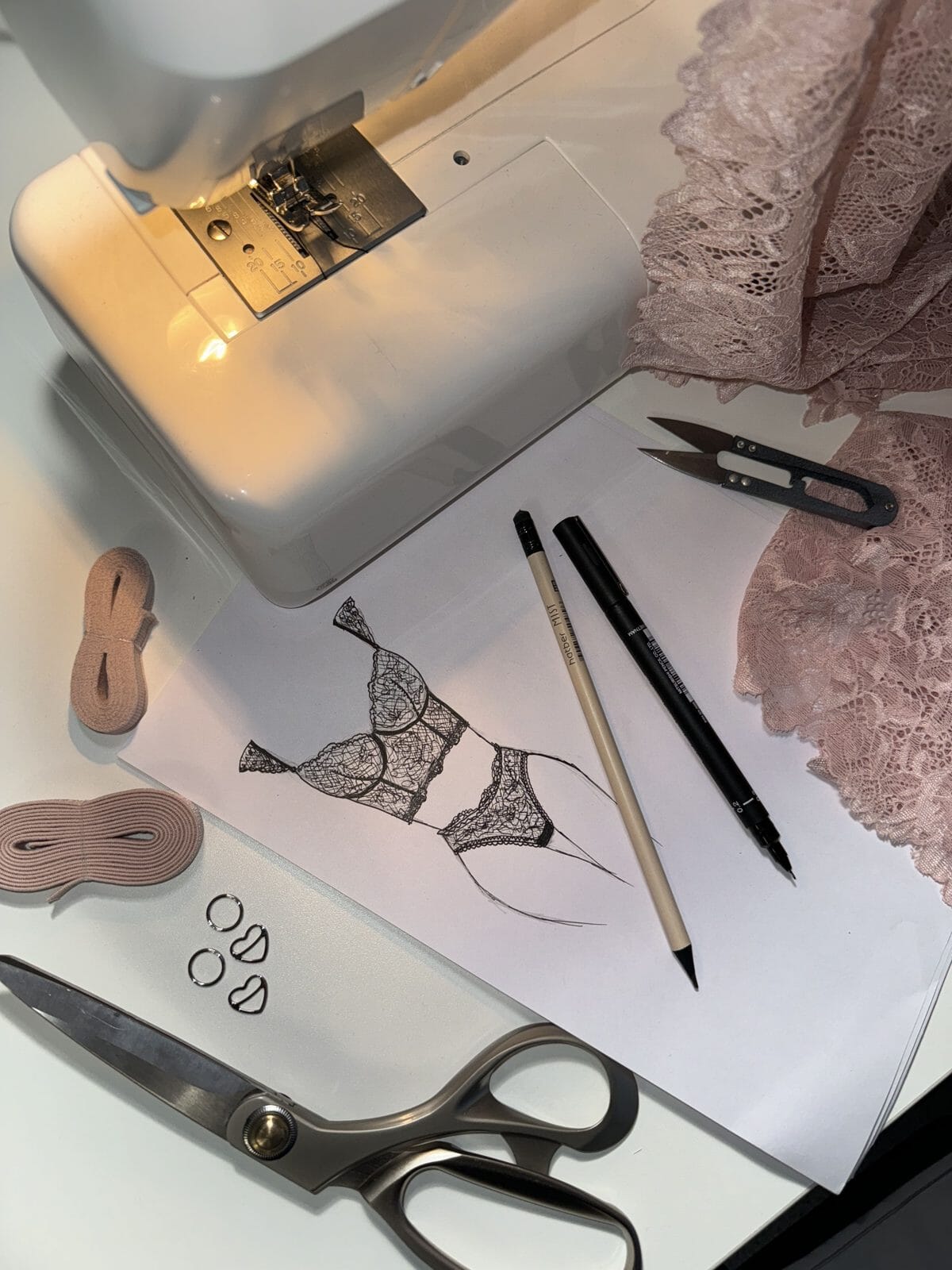
Quick read: Shantou, in eastern Guangdong, is China's main base for underwear and lingerie. China Daily, citing the China National Textile and Apparel Council, reported in 2024 that the city produces approximately 45 percent of China's lingerie and home wear. Production is spread across townships such as Gurao in Chaoyang and Chendian in Chaonan, and Chaonan alone makes about 40 percent of China's female underwear according to official statistics.
How Big Is China's Bra Export Trade?
Bras have their own customs line, HS 6212.10. According to World Bank WITS data, China exported $4.35 billion of bras in 2024, up from $4.24 billion in 2023, on a reported weight of 213,153,000 kg (WITS). Since 2019 the value has ranged from $3.23 billion in 2020 to $4.53 billion in 2022, with a jump in 2021.
No other country comes close. In the 2024 WITS table of exporters, China's $4.35 billion compares with $544.2 million for Sri Lanka, the second largest exporter, $447.7 million for Germany and $405.1 million for Indonesia (WITS). Divide value by weight and China's bras left the country at about $20.41 per kg in 2024, an average across every style and grade, not a price any factory will quote.
The United States was the largest buyer. It took $697.2 million in 2024, about 16% of the total, followed by the Kyrgyz Republic at $381.1 million and Kazakhstan at $273.3 million, then Japan, Vietnam and Korea (WITS).
Seen from the importing side, the US records a smaller figure for China and a more competitive market. In 2024 the United States imported $2.12 billion of bras, of which $579.5 million came from China, $529.6 million from Vietnam, $271.6 million from Indonesia, $251.0 million from Sri Lanka and $108.6 million from Bangladesh (WITS). China is still the largest supplier, with about 27% of the total, but Vietnam is close behind.
Two cautions. Exporter and importer statistics rarely agree, because they value goods at different points and record transit and timing differently, so use each side's figure for its own question. And these are China totals, not Shantou figures: customs data records the country a bra was exported from, not the town that sewed it.
Have a reference bra you want to reproduce? Send photos of the front, the back, the inside of the cup and the label, and our team comes back with the component questions a lingerie factory will ask. Send it here.
Quick read: According to World Bank WITS data, China exported $4.35 billion of bras (HS 6212.10) in 2024, roughly eight times Sri Lanka, the next largest exporter. The United States was the largest buyer at $697.2 million. US records show $2.12 billion of bra imports in 2024, with China the largest supplier at $579.5 million and Vietnam second at $529.6 million.
What Goes Into a Bra?
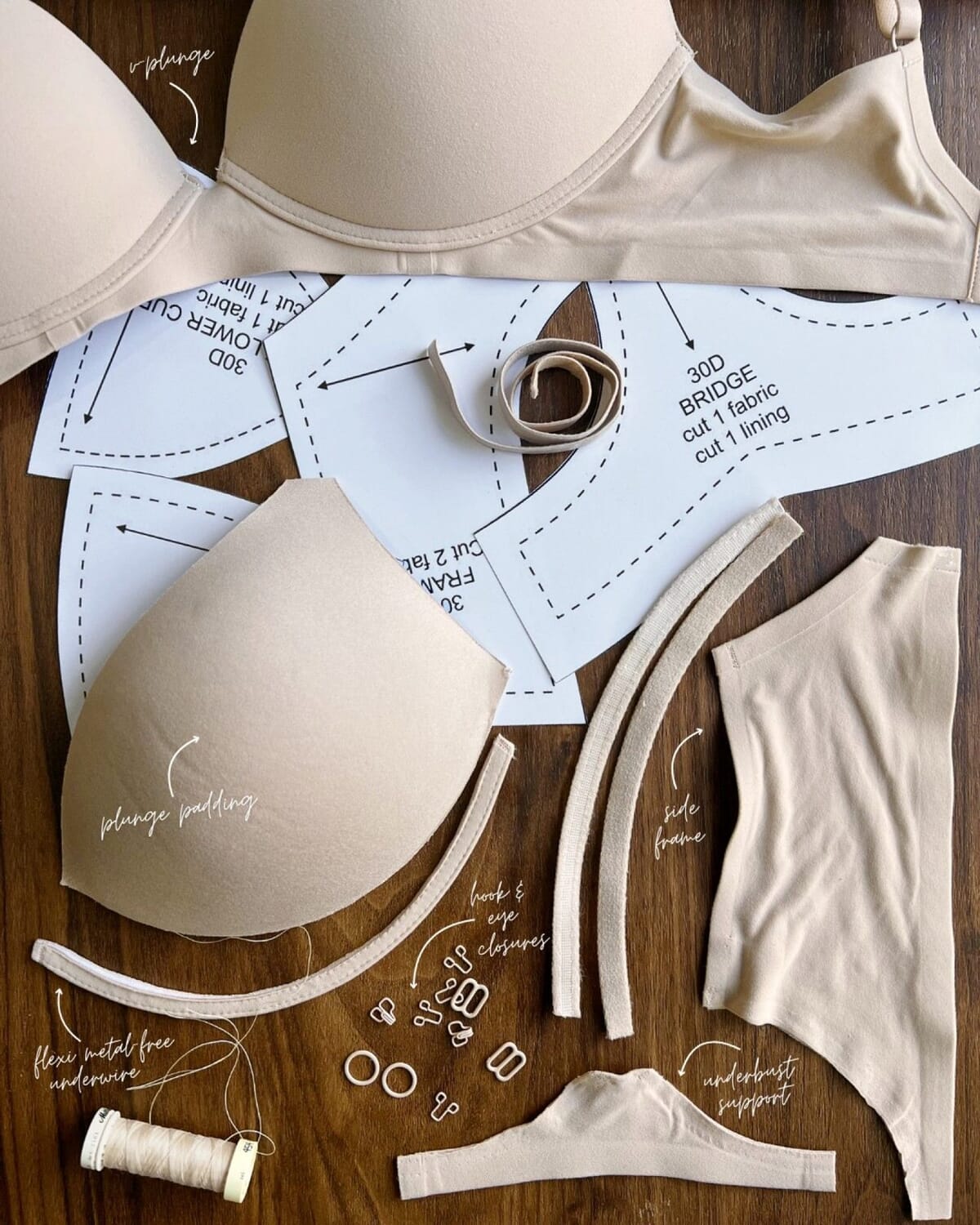
More parts than most garments. Wikipedia's article on the brassiere describes a typical design as having between 20 and 48 parts, including the band, gore, side panel, cup, apex, neckline, underwire, strap, ring, slider, strap join and closure (Wikipedia, Brassiere). The same article notes that cup and panel pieces are cut to the manufacturer's specification, often many layers at a time, and that hooks and eyes are sewn in by machine and heat processed or ironed into the back ends of the band.
For a brief, it helps to group the parts by who makes them, because each group is a separate supply decision:
- Shell fabrics: lace, tricot, mesh, microfibre or cotton jersey for the cups and wings, each with its own mill minimum and dye lot.
- Power net: the firm stretch fabric in the band and wings, specified by weight and stretch.
- Cups: moulded foam or spacer cups from a cup maker, or cut-and-sew cups built from the shell fabric and a lining.
- Narrow fabrics: band elastic, strap elastic, picot, plush-back and fold-over elastics, and the wire casing.
- Hardware: underwires, rings, sliders, and the hook-and-eye tape.
- Labels and packaging: care and content labels, size labels, hangers or boxes.
This is where a cluster earns its reputation. China Daily reported that until 2021 Shantou's textile businesses still relied on buying nylon from provinces such as Fujian and Zhejiang; local nylon capacity was expected to reach 310,000 metric tons in 2024 from 17,000 tons in 2022, still short of local demand of 1.3 million tons (China Daily, 2024). Nylon is a common base for lace, tricot and elastic, so the closer that supply sits to the sewing floor, the shorter the development loop.
For a buyer the consequence is practical. Ask a bra supplier which components it makes, which it buys locally and which come from further away. The answer tells you where your lead time will be decided.
Quick read: A typical bra has between 20 and 48 parts, from the band, gore and cups to the underwire, rings, sliders and hook-and-eye closure. Each group of parts, shell fabric, power net, cups, narrow elastics and hardware, comes from its own supplier with its own minimum. Shantou's nylon capacity was expected to rise from 17,000 tons in 2022 to 310,000 tons in 2024, bringing more of that supply into the cluster.
Moulded or Cut-and-Sew Cups?
Two different processes, and you can usually tell which one a reference bra uses at a glance. Moulded cups are formed over a heated tool and have no seam. Cut-and-sew cups are built from shaped panels stitched together. They need different equipment, and a factory set up for one does not automatically make the other.
Moulded cups are made by pressing foam or fabric over a heated mould into a smooth, seamless shape. They give a consistent silhouette, they disappear under close-fitting clothing, and they hold their shape on their own. The mould is tooling, so each cup shape and size needs its own, which is a fixed cost before any production. Some bra factories mould cups in-house and others buy them from a cup maker, so ask which.
Cut-and-sew cups are assembled from two, three or more shaped panels. They can produce shapes a mould cannot, they shape to the wearer rather than imposing a shape, and they are common in fuller-bust and structured lingerie. The seams can show under thin clothing, which is a styling consequence rather than a fault.
The commercial difference for a new brand: moulded cups put cost into tooling for each size, so the entry cost grows with the size range. Cut-and-sew puts cost into pattern work and grading for each size, which is labour rather than tooling. If your reference bra is seamless, budget for tooling at the development stage rather than discovering it in a quotation.
Quick read: Bra cups are made either by moulding, where foam or fabric is pressed over a heated mould into a seamless shape that needs tooling for each cup size, or by cut-and-sew assembly from shaped panels, which allows shapes a mould cannot achieve and moves the cost from tooling to pattern and grading work.
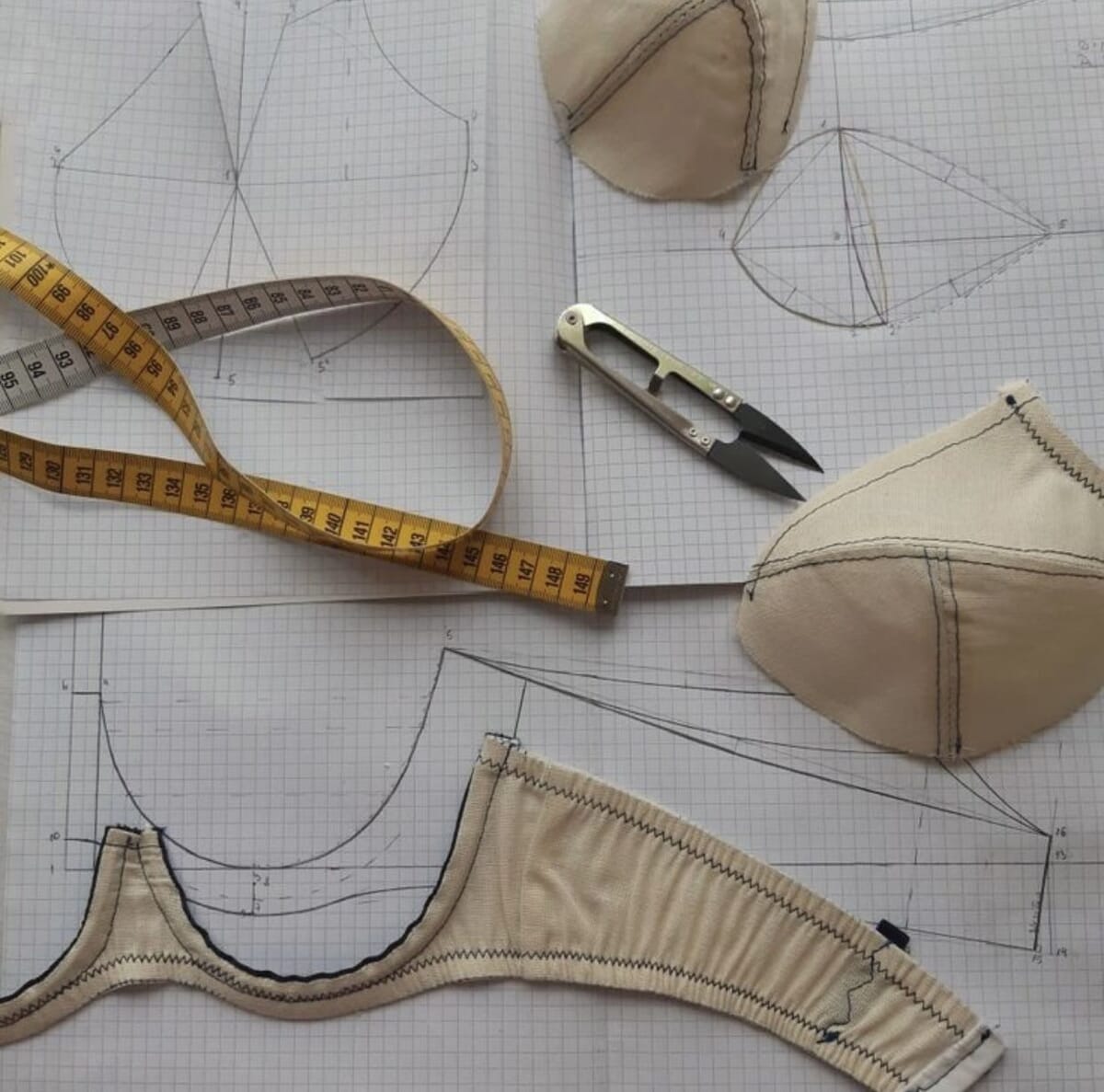
Why Does the Band Matter More Than the Straps?
Because the band does the structural work. As Wikipedia's brassiere article puts it, the chest band and cups, not the shoulder straps, are designed to support the weight of the breasts (Wikipedia, Brassiere). The straps position the cups and take a minority of the load.
That is why fit problems so often start at the band. A band that rides up the back is a sign that the band is too big, according to Wikipedia's bra size article (Wikipedia, Bra size); the wearer then tightens the straps to compensate, and the result is sore shoulders and little support anywhere.
For the specification, three things belong in the tech pack:
- Band length under tension, not only relaxed, with the tension stated, so the factory measures the same thing you do.
- Band elastic by type, width and stretch, and the tension it is applied at during sewing.
- Hook-and-eye rows and columns, which set adjustability and how the band sits.
Power net in the band and wings is specified by weight and stretch percentage. A softer power net feels more comfortable in a fitting room and holds less over a day of wear, so approve it on a wear test, not on a hand feel.
Which Elastics, and Where?
Lingerie uses several elastics, each in a specific position, and a brief that just says "elastic" leaves all of them to the factory. Each has a width, a stretch percentage and a recovery, and each is applied at a set tension during sewing. The applied tension matters as much as the elastic: the same tape sewn at different tensions gives an edge that grips or one that gapes.
| Elastic | What it does | Where it goes | What to specify |
|---|---|---|---|
| Plush-back | Soft brushed face against the skin | Band and underband | Width, stretch and applied tension |
| Picot | Small decorative loop edge on one side | Neckline, band and leg edges that show | Width, loop style, colour |
| Fold-over | Wraps and finishes a raw edge in one operation | Soft bras and bralettes | Width and whether the fold is even or offset |
| Strap elastic | Carries load, adjusts with rings and sliders | Straps | Width, recovery, and hardware sized to the same width |
| Wire casing | Channel that holds the underwire | Under and around each cup | Width, padding and abrasion resistance |
A specification checklist for the brief, not a grading standard. Ask the factory to state the supplier reference for each tape on the approved sample.
Two more points. Colour: every elastic is dyed separately from the shell fabric, so a custom colour means a dye lot for each tape, and that is often the longest lead time in the order. Substitution: a cheaper elastic swapped in after sampling loses recovery quickly and is invisible on delivery, so name the approved tape in the purchase order.
Quick read: Lingerie uses several distinct elastics: plush-back at the band, picot on visible edges, fold-over on soft bras and strap elastic with rings and sliders. Each has a width, stretch and recovery, and each is sewn at a set tension. A brief that says only "elastic" leaves every one of those decisions to the factory.
What Should a Brief Say About Underwire?
Whether there is one, what it is made of, and what holds it in. Underwires are common: Wikipedia's brassiere article says sixty to seventy per cent of bras sold in the UK and US have underwired cups, and that the wire is made of metal, plastic or resin (Wikipedia, Brassiere).
The wire sits in a wire channel that circles the bottom and sides of each cup, with one end near the centre front and the other near the armhole; most wires are metallic, and plastic wires have a very small share (Wikipedia, Underwire bra). Each cup size needs its own wire size, so the wire is graded along with the cup.
Wire poke-through is a returns problem rather than a complaint problem, so the brief should name the casing and the end finish, and the sample should go through washing before approval:
- Wire material and size per cup size, with the supplier reference.
- Wire end caps or tipping, so the ends cannot cut through.
- Casing width and padding, and bar tacks at the channel ends.
- A wash test on the sample, then a check that the wire has not moved or broken through.
Wire-free bras swap the wire for extra seaming and internal reinforcement, which moves the complexity into pattern work rather than hardware.
Why Is the Size Grid a Business Problem?
Because band and cup are two independent dimensions, so sizes multiply rather than add. A bra size is a band number plus a cup letter, such as 34C, and Wikipedia's brassiere article notes that most bras are offered in 36 sizes (Wikipedia, Brassiere).
Run the arithmetic for one style. Six bands across six cups is 36 sizes; three colours makes that 108 stock keeping units before a second style exists. A T-shirt in five sizes and three colours is 15. Every one of those bra SKUs has to be graded, sampled at enough points to trust the grading, forecast and stocked.
The grid is not even the same everywhere. Cup sizes step up by 2 cm in some systems and 1 inch in others, and countries using the European EN 13402 standard measure the torso in centimetres rounded to the nearest 5 cm (Wikipedia, Bra size). Write the sizing system and the grade rules into the tech pack, with the body measurements each size is built for, rather than leaving the factory to apply its house chart.
The practical approach for a first order is a narrower grid around the sizes you expect to sell most, then extending from your own sales data. Moulded cups make this sharper still, because each extra cup size is extra tooling.
Quick read: Bra sizes combine a band number and a cup letter, so sizes multiply. Most bras are offered in 36 sizes; six bands across six cups is 36 sizes, and three colours makes 108 SKUs from a single style. Cup steps differ by system, 2 cm or 1 inch, so the sizing system and grade rules belong in the tech pack.
How Does Bra Sampling Work?
Slower than most categories, with more rounds, and with one requirement other garments do not share: the graded sizes have to be fitted, not only the base size. A bra that fits in the middle of the range and fails at both ends is what happens when only one sample is fitted.
Fit has to be checked on people, not only on forms. A form shows whether the garment was made correctly; it cannot show whether the band rides up after a few hours, whether a strap slips, or whether a wire digs in when the wearer sits down. A typical sequence is a first sample in the base size, a fit correction, a second sample, then fittings at several points across the grid and a pre-production sample.
Wear testing earns its time. An elastic that feels fine for ten minutes can feel very different after a working day, and only a full day of wear shows it. Plan the calendar for several rounds; compressing it is how a bra ends up being corrected after launch.
Try it free: pressure-test your landed cost with the China production cost calculator. About a minute, and no email asked.
What Sets the Minimum and the Lead Time?
The components. Each lace, each elastic, the power net, the cups, the wires, the hook-and-eye tape and the labels carries its own minimum from its own supplier. The garment minimum a factory quotes is often the point at which it can clear those component minimums, not the point at which its sewing line becomes efficient.
Two levers follow:
- Standardise components across the range. The same band elastic, hardware and power net across every style consolidates minimums instead of multiplying them.
- Use the factory's stocked components where you can. Materials a supplier already holds in stock carry no new minimum, and stock colours avoid a dye lot.
Lead time works the same way. The component with the longest lead time sets the delivery date, and a custom-dyed lace or elastic can hold an order while the sewing line waits. Ask for the lead time of every custom component before you approve the design, not after.
What Labels and Duties Apply When Bras Ship to the US?
Bras need careful fibre labelling because they combine fabric and elastic. Under the Textile Fiber Products Identification Act rules, the label must give the generic names and percentages by weight of the fibres present in amounts of 5 percent or more (16 CFR Part 303). Where a product is made in part of elastic material and in part of other fabric, the rule in section 303.10 says the fabric's fibre content is set out sectionally by percentages, and the elastic may be disclosed by describing it as elastic followed by its fibres in order of predominance.
In practice that means a bra label often lists the cup or body fabric with percentages and then the elastic separately. Agree the wording with the factory from the bill of materials before bulk, and remember that each imported textile product must also be labelled with the country where it was processed or manufactured (16 CFR Part 303).
For duty, the US tariff schedule splits brassieres into those containing lace, net or embroidery and others. In both groups, bras containing 70 percent or more by weight of silk carry 4.8% and 2.7% respectively, and all other bras carry a general rate of 16.9% (USITC Harmonized Tariff Schedule). These are the general rates; goods from China can carry additional duties, so check the current schedule before you price.
| HTS line | What it covers | General US duty |
|---|---|---|
| 6212.10.30.00 | Brassieres containing lace, net or embroidery, 70% or more silk by weight | 4.8% |
| 6212.10.50 | Brassieres containing lace, net or embroidery, other fibres (cotton, man-made, other) | 16.9% |
| 6212.10.70.00 | Other brassieres, 70% or more silk by weight | 2.7% |
| 6212.10.90 | Other brassieres, other fibres (cotton, man-made, other) | 16.9% |
Source: US International Trade Commission, Harmonized Tariff Schedule, checked November 2026. Additional duties on Chinese goods are not included.
Chemical safety matters for a garment worn against the skin all day. If a supplier claims an OEKO-TEX STANDARD 100 certificate for its fabric, elastic or finished bras, confirm it by number on the OEKO-TEX label check and check that the scope covers the articles you are buying. Our guide to label manufacturers in China covers care and content labels in more detail.
Where the Money Goes in a Bra
| Element | Effect on cost | What to decide |
|---|---|---|
| Cup construction | Moulding needs tooling per cup size; cut-and-sew needs pattern work per size | Seamless or panelled |
| Component count | Each component carries a minimum and a lead time | Standardise across the range |
| Lace and shell fabric | Own mill minimums and dye lots | Stock lace or custom |
| Elastics | Better recovery costs more; custom colours need dye lots | Type, width, stretch, colour |
| Underwire | Wire, casing and end finish per cup size | Wired or wire-free |
| Size grid depth | Multiplies patterns, samples and stock | Launch narrow, extend on data |
| Duty into the US | 16.9% on most bras, before extra duties | Fibre content and HTS line |
Where Bra Orders Fail
The band rides up. Band elastic too soft or applied at too little tension, or band length specified relaxed. Specify length under tension and the elastic by name.
The wire pokes through. Casing too light or no end finish. Wash-test the sample and name the casing.
The fit works at the base size only. Graded without fitting across the grid. Fit at several grid points.
The elastic loses recovery. A cheaper tape substituted after sampling. Put the approved supplier reference in the purchase order.
A trim holds the whole order. A custom lace or dyed elastic with a long lead time nobody checked. Ask for component lead times before approving the design.
The label is wrong. Fibre content not set out by section for fabric and elastic. Agree it from the bill of materials before bulk.
Before you order bras in China
- Decide moulded or cut-and-sew cups, and budget tooling per size if moulded.
- Specify band length under tension, and every elastic by type, width, stretch and applied tension.
- Name the wire, the casing and the end finish, and wash-test the sample.
- Write the sizing system and grade rules, and launch a narrow grid.
- Standardise components across styles and use stocked materials where you can.
- Ask for the lead time of every custom component before approving the design.
- Fit on people at several grid points, and wear-test for a full day.
- Agree the fibre label by section, check the HTS line, and verify any OEKO-TEX certificate by number.
How Do You Check a Bra Supplier?
Ask questions that only a lingerie specialist answers easily:
- Machinery. Which machines it runs for elastic application, wire casing and, where relevant, cup moulding, and whether moulded cups are made in-house or bought in.
- Components. Which components it stocks, which it buys locally, and the lead time for custom lace and elastic.
- Grading. How it grades band and cup, and how many grid points it fits before production.
- Testing. Whether it wash-tests wired samples and keeps approved component references on file.
- Certificates. Certificate numbers, not logos, for any chemical or social compliance claims, checked with the issuing body.
A general apparel factory that offers bras without the machinery or a component supply behind it is likely to be placing the order elsewhere, which adds a step between you and the people sewing it. For swimwear, which shares many of the same components, see our guide to swimwear manufacturers in China, and for sports bras and leggings, our activewear guide.
Conclusion
China's bra trade runs at more than $4 billion a year in exports, and much of the country's intimate apparel comes from one city's townships in eastern Guangdong. The capacity, and the component suppliers behind it, are there. What a supplier builds still depends on what you write down.
For the product, start with the band: specify it under tension, name the elastic and its tension, then the cups, the wire and the casing. For the range, keep the size grid narrow and the component palette tight, because band and cup multiply and every component carries a minimum. For the US market, agree the fibre label by section and price with the right duty line. Then fit on people, across the grid, and wear-test before bulk.
Our team places and manages production with the documented factories in our China group, from 100 pieces per style. Send a reference bra or a sketch with your cup type, size range and market, and we place production with the factory in our group built for the product. Our team replies within 24 hours. Samples, invoices and shipping run straight between you and the factory; our fee is flat and we take nothing from the factory side.
Send your brief China factory list, $49No spec sheet yet? We draw one style as a factory-ready tech pack for $79. What the $79 covers.
Frequently Asked Questions
Where are most bras made in China?
Much of China's intimate apparel comes from Shantou in eastern Guangdong. China Daily, citing the China National Textile and Apparel Council, reported in 2024 that Shantou produces approximately 45 percent of China's lingerie and home wear, with production spread across townships such as Gurao and Chendian.
How much does China export in bras?
According to World Bank WITS data, China exported $4.35 billion of bras (HS 6212.10) in 2024. The United States was the largest buyer at $697.2 million, followed by the Kyrgyz Republic and Kazakhstan.
What is the difference between moulded and cut-and-sew cups?
Moulded cups are pressed over a heated mould into a seamless shape and need tooling for each cup size. Cut-and-sew cups are assembled from shaped panels, allow shapes a mould cannot make, and move the cost from tooling to pattern work.
Why does a bra band ride up?
A band that rides up at the back is usually too big or too loose, so the straps end up carrying load the band should carry. Specify band length under tension and the band elastic by type, width and applied tension.
What is the US import duty on bras?
Most bras carry a general rate of 16.9% (HTS 6212.10.50 and 6212.10.90). Bras with 70 percent or more silk by weight carry 4.8% or 2.7%. Goods from China can carry additional duties.
Why are bra minimums high?
A typical bra has between 20 and 48 parts, and each component carries its own supplier minimum. Standardising elastics, hardware and power net across a range, and using stocked materials, consolidates those minimums.
Sourcing notes: all company names, certification marks and trademarks referenced here are the property of their owners. Cluster figures come from local government and industry sources reported in different years. Reviewed and updated 12 November 2026 by David Stan.
Where the figures come from
- China Daily: International textile and garment exhibition kicks off in Shantou, March 2024. Shantou approximately 45 percent of China's lingerie and home wear (China National Textile and Apparel Council).
- China Daily via chinaservicesinfo.com: Guangdong city to host global underwear market, March 2026. Largest production base for underwear and home wear in China.
- China Daily: Shantou wears textile success with pride, August 2023. Townships, company count, export pieces.
- China Daily: Take a look at your underwear, is it from Shantou?, August 2024. Company count, 2023 output, nylon capacity.
- China Daily Guangdong: June 2022. Chaonan and Chaoyang underwear bases; Chaonan share of female underwear and house dresses.
- Shantou government: Shantou Chendian Intimate Apparel Museum Is Opened, May 2025.
- World Bank WITS: China exports of HS 621210 (brassieres), 2024, by partner.
- World Bank WITS: China exports of HS 621210, 2023.
- World Bank WITS: China exports of HS 621210, 2022.
- World Bank WITS: China exports of HS 621210, 2021.
- World Bank WITS: China exports of HS 621210, 2020.
- World Bank WITS: China exports of HS 621210, 2019.
- World Bank WITS: Top exporters of HS 621210, 2024.
- World Bank WITS: United States imports of HS 621210 by partner, 2024.
- Wikipedia: Brassiere. Parts count, construction, support, underwire share, sizes, Gurao 2009.
- Wikipedia: Bra size. Cup steps, EN 13402, band fit.
- Wikipedia: Underwire bra. Wire channel and wire materials.
- US International Trade Commission: Harmonized Tariff Schedule, subheading 6212.10, general duty rates.
- eCFR: 16 CFR Part 303, Rules and Regulations under the Textile Fiber Products Identification Act (sections 303.10, 303.16 and 303.33).
- OEKO-TEX: Label check.
Related Reading
- China Swimwear Manufacturers
- Activewear Manufacturers in China
- Clothing Manufacturers in Guangdong
- Label Manufacturers in China
- Clothing Suppliers in China: How to Find and Vet a Factory
No commission and no mark-up on the factory price: the factory invoices you itself.