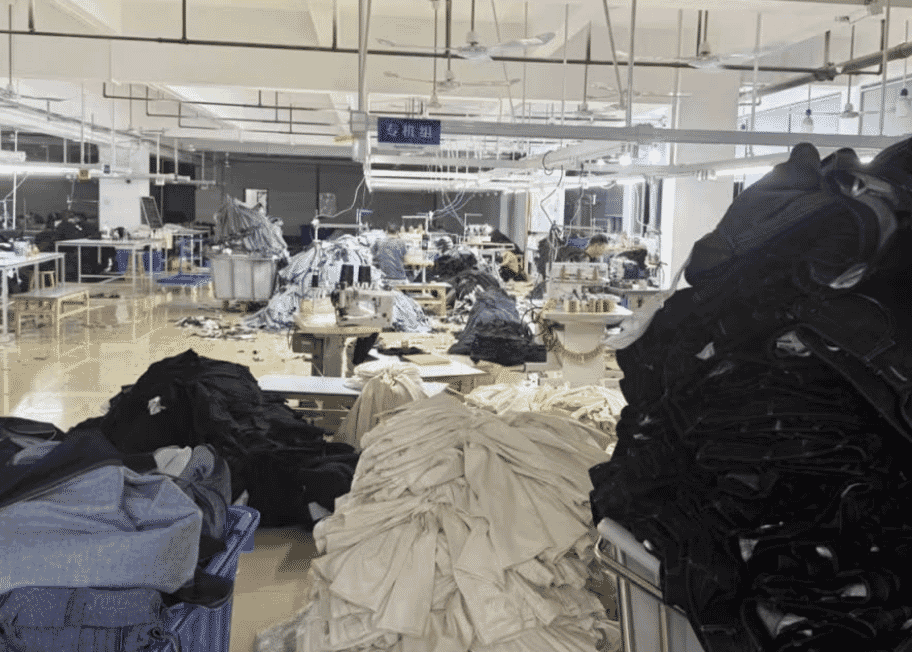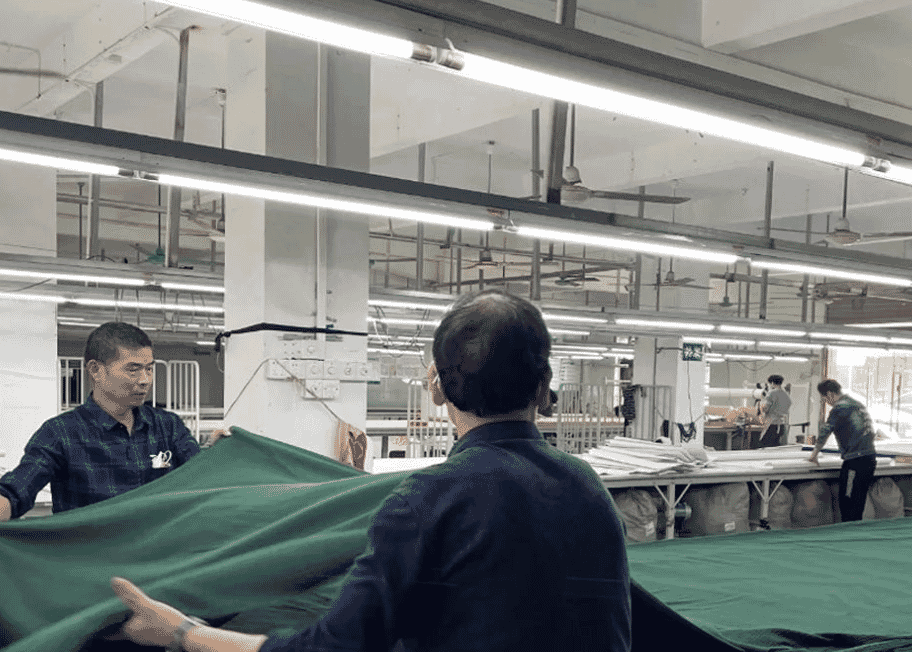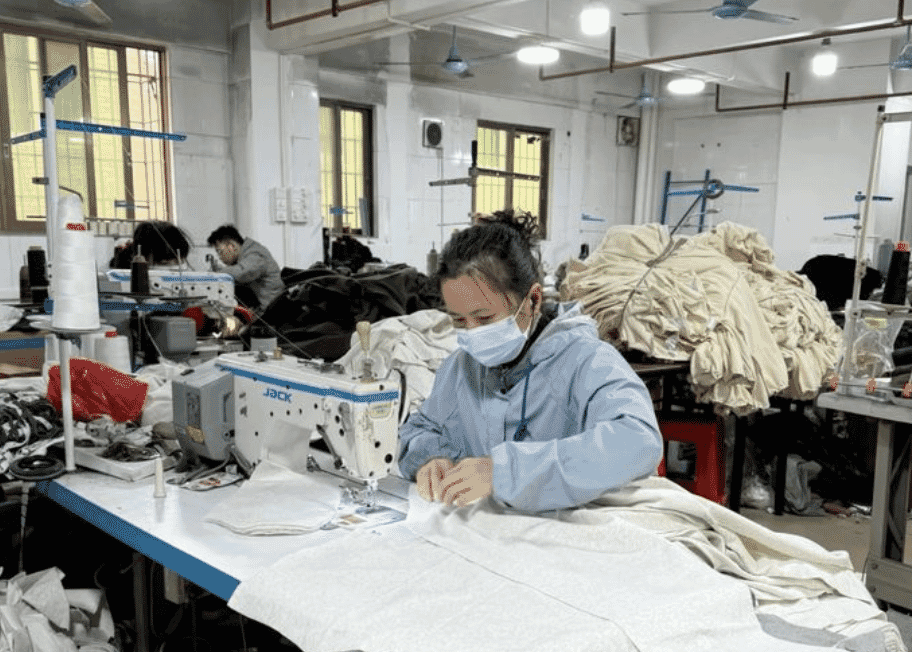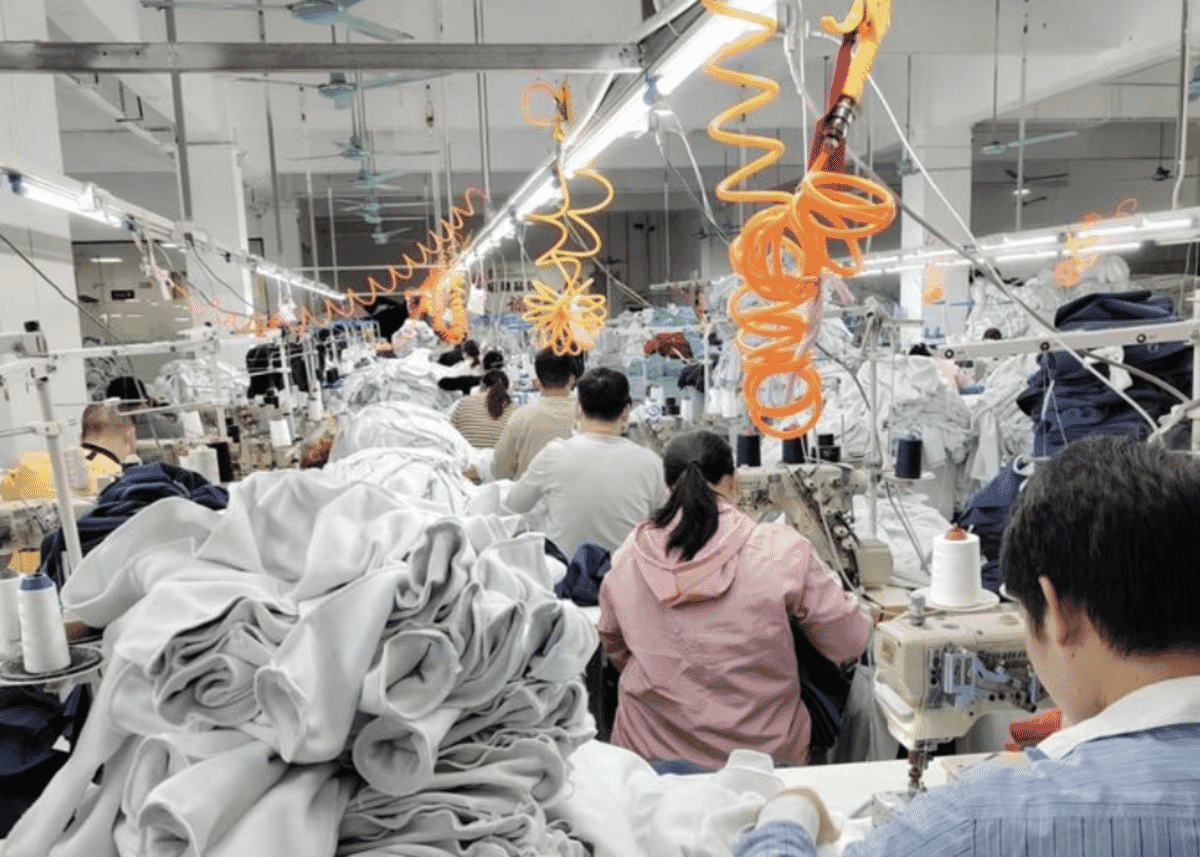
A suit jacket is the most technically demanding garment in mass production. It contains three layers that must behave as one, a shoulder that has to hold a shape without looking like it is trying, and far more sewing and pressing operations than a t-shirt or a shirt needs.
It is also the category where the single most important quality decision is invisible from the outside. Whether a jacket is fused, half-canvassed or fully canvassed determines how it drapes, how it ages and what it costs, and no photograph will tell you which you are looking at.
This guide covers canvas construction, what Super numbers actually mean, the components inside a jacket, why suit factories are a separate specialism, minimums, what China actually exports, US duty, and how to check a supplier.
Note: China Clothing Manufacturer is a group of documented clothing factories in China, producing for brands from 100 pieces per style. This guide quotes no suit prices or factory minimums: the fibre, trade and duty figures come from the public sources listed at the end, and we confirm the exact minimum and price with the factory when you send a brief.
Key takeaways
- Three constructions: fused, half-canvas and full canvas, and the difference is structural.
- Super numbers describe fibre fineness, not quality: US law caps Super 120s at 17.75 microns on average, and finer is not better for durability.
- A jacket contains interlining, canvas, shoulder padding and sleevehead, all specified separately.
- Pressing is a manufacturing stage, not a finishing touch, and it shapes the garment.
- Suit factories are a separate specialism from general cut-and-sew.
- MOQ is usually driven by cloth, and suiting cloth minimums are high.
- Plan for three fit rounds, because balance faults show up away from where they start.
- China exported $286.2m of men's wool suits in 2024 at an average declared $103 a piece, and $384.2m of synthetic suits at $17.
- In the US, fibre content sets the duty: a men's wool suit pays a 17.5% general rate and a synthetic one 27.3%, before extra duties on Chinese goods.
Fused, Half-Canvas or Full Canvas?
This is the decision that defines the garment, and it concerns what sits between the outer cloth and the lining. Three constructions exist. Fused bonds the interlining with adhesive and is standard at most price points. Half-canvas floats a canvas through the chest and lapel. Full canvas runs it the length of the jacket. The choice sets cost, drape and how the garment ages.
Fused. An interlining is glued to the back of the cloth with heat and adhesive. Fast, cheap and consistent. It works perfectly well when done properly with good materials, and it is the usual construction at mass-market prices. The weaknesses are that the chest is stiffer and flatter, the jacket does not mould to the wearer over time, and poor fusing can bubble after dry cleaning, which is irreversible.
Half-canvas. A floating canvas layer runs through the chest and lapel, with fusing below. The lapel rolls properly rather than lying flat, the chest has some life, and the cost premium is moderate. For most brands this is the sensible middle.
Full canvas. The canvas runs the full length of the front and is stitched rather than glued, so the cloth and canvas move independently. The jacket drapes better, moulds to the wearer over years, and cannot bubble. It costs substantially more in both materials and labour, and it requires a factory that genuinely knows how to do it.
A quick physical check: pinch the front of the jacket between the outer cloth and the lining, near the middle of the chest. If you can feel a separate floating layer between them, there is canvas. If the layers move as one solid piece, it is fused.
| Construction | How it is made | How it ages | What it costs |
|---|---|---|---|
| Fused | Interlining glued to the back of the cloth with heat and adhesive | Stays as made. Does not mould to the wearer, and poor fusing can bubble after dry cleaning, which is irreversible | Cheapest, fastest, most consistent. The usual choice at mass-market prices |
| Half-canvas | A floating canvas through the chest and lapel, fused below | The lapel rolls rather than lying flat, and the chest keeps some life | A moderate premium. The sensible middle for most brands |
| Full canvas | Canvas the full length of the front, stitched rather than glued, so cloth and canvas move independently | Drapes better and moulds to the wearer over years. Cannot bubble | Substantially more in materials and labour, and it needs a factory that genuinely knows how |
A physical check settles which you are holding: pinch the front between outer cloth and lining near the middle of the chest. A separate floating layer means canvas. Layers moving as one solid piece mean fused.
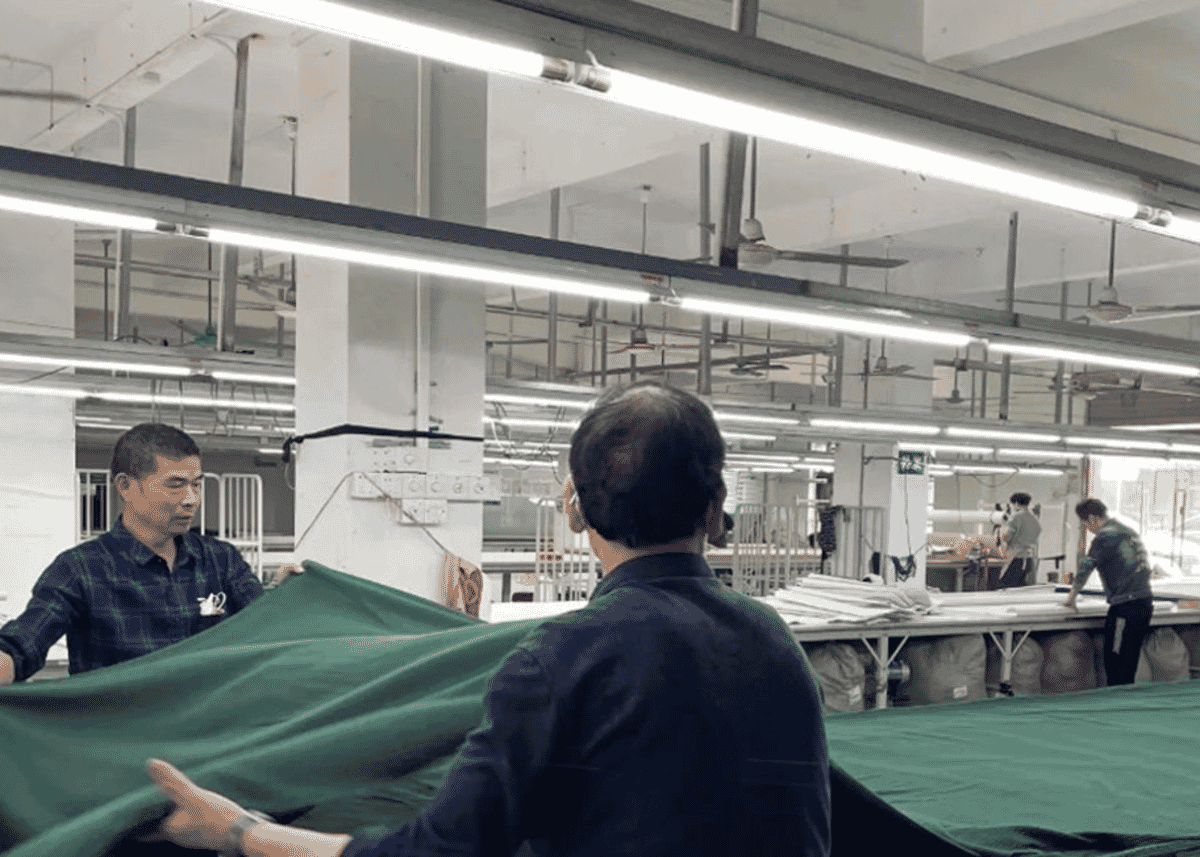
Citation Capsule: Suit jackets use three internal constructions. Fused jackets glue an interlining to the cloth, producing a stiffer chest that cannot mould to the wearer and may bubble after dry cleaning. Half-canvas floats a stitched canvas through the chest and lapel. Full canvas runs stitched canvas the length of the front, allowing cloth and canvas to move independently.
Developing tailoring and unsure which construction you need? Send the reference and we will tell you what it is. No cost. Send it here.
What Do Super Numbers Actually Mean?
Super 100s, Super 120s, Super 150s. The number describes the fineness of the wool fibre used in the yarn, and it is the most misread specification in menswear. A higher number means finer fibre, a softer hand and a more delicate cloth. It does not mean better for every use, because finer wool generally creases more and wears faster.
It is also a defined measure rather than a marketing word. US law sets a maximum average fibre diameter for each label: 18.75 microns for Super 100s, 17.75 for Super 120s and 16.25 for Super 150s, narrowing by half a micron for every ten points (15 U.S.C. 68b). A Super number on a cloth sold into the US is a claim someone can be held to, which makes it worth asking the mill for the test or certificate behind it.
Finer fibre produces a smoother, lighter cloth with more sheen and a softer hand. It also tends to produce a cloth that is weaker, creases more readily and holds its shape less well.
So higher is not better. It is different. In our view a Super 150s suit is a poor choice for someone who wears it four days a week and sits on trains, and a Super 110s or 120s in a decent weight is the practical choice for a suit that gets used.
Weight matters more than most brands allow for, and it is less standard than it looks. Published guides draw the bands in different places, and mills do not all use the same unit, so the figure on a bunch needs reading with care.
| Who says it | Weight | What for |
|---|---|---|
| Moss, retail guide | Below 270 g/m² | Lightweight, summer |
| Moss, retail guide | 290 to 360 g/m² | Midweight, all-season |
| Moss, retail guide | 400 g/m² and above | Heavyweight, winter |
| Fox Brothers, mill | 290 to 320 g per linear metre | Fox City, three-season tailoring |
| Fox Brothers, mill | 530 to 560 g per linear metre | Authentic flannel, winter suits and trousers |
Sources: Moss, a guide to cloth weights; Fox Brothers, cloth weight explained. A weight per linear metre and a weight per square metre are different numbers for the same cloth, because the first depends on the width of the piece.
The specification worth writing down is fibre composition, weight with its unit, and weave, with the Super number as a secondary note. Those details tell a factory what to buy. A Super number alone does not.
Skip the search: the China factory directory ($49) lists documented factories by category, city and capability, with the verification status of each. One-time payment, instant download.
What Is Actually Inside a Jacket?
Six components that most briefs never mention, and each one changes the result. Canvas or interlining, chest piece, shoulder pad, sleevehead roll, the lining and sleeve lining, and the pocketing and taping. A specification naming only the outer cloth has left the structure of the jacket for the factory to decide.
Canvas or interlining, as above. The structural layer.
Chest piece. A shaped layer over the chest that gives the front its curve. Its stiffness and shape set how military or how soft the jacket reads.
Shoulder pad. Thickness and shape determine the silhouette entirely. A structured English shoulder and an unpadded Neapolitan shoulder are the same garment with different pads.
Sleevehead roll. A strip of wadding at the top of the sleeve that supports the sleeve cap and stops it collapsing. Small, cheap, and the difference between a clean sleeve and a wrinkled one.
Lining and sleeve lining. Viscose linings breathe better than polyester and cost more. Sleeve lining is usually a different, slipperier fabric so the arm slides in.
Pocketing and taping. Unglamorous, and where a factory cuts cost invisibly.
If your brief does not specify these, the factory chooses, and it chooses what it has. That is not deception, it is the natural consequence of an incomplete specification.
| Component | What it controls | If you do not specify it |
|---|---|---|
| Canvas or interlining | The structural layer, and how the jacket ages | You get fused, because it is the default at most price points |
| Chest piece | The curve of the front, and whether the jacket reads military or soft | The factory's house shape, which may not be your brand's |
| Shoulder pad | The silhouette, entirely. English structure and Neapolitan softness are the same garment with different pads | Whatever thickness is on the shelf |
| Sleevehead roll | Whether the sleeve cap stands cleanly or collapses into wrinkles | Can be left out altogether. Small and cheap, and visible in every photograph |
| Lining and sleeve lining | Breathability and how easily the arm slides in | Polyester throughout, because viscose costs more |
| Pocketing and taping | Durability at the points that take load | The cheapest available. This is where cost is removed invisibly |
Where a brief is silent the factory chooses, and it chooses what it has. That is not deception. It is the natural consequence of an incomplete specification.
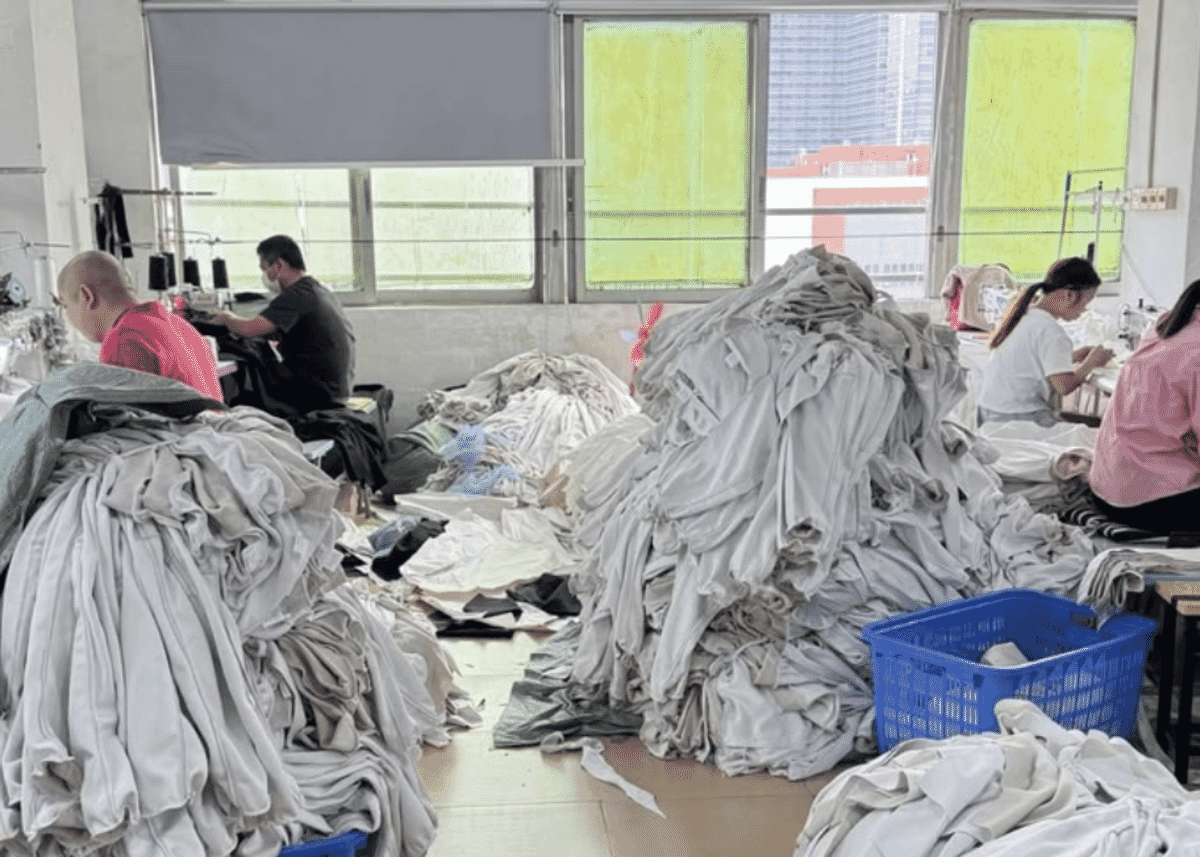
Citation Capsule: A suit contains six components most briefs never mention: canvas or interlining, chest piece, shoulder pad and sleevehead roll among them. Each changes how the finished garment hangs. A specification that describes only the outer cloth has left the structure of the jacket to the factory to decide.
Why Is Pressing a Manufacturing Stage?
Because in tailoring, pressing does not tidy the garment. It shapes it. Shape is built into flat cloth with heat, moisture and pressure at each stage of assembly, and it is what gives a jacket its roll and its chest. A factory that presses only at the end produces a flat garment whatever the pattern said.
Wool is mouldable under heat and steam. A tailored jacket is pressed at multiple points during assembly to create three-dimensional shape that no flat pattern can produce: the curve over the chest, the roll of the lapel, the set of the collar, the shaping at the waist. This is why the same pattern in the same cloth produces different results in different factories.
The equipment matters. Proper tailoring requires specific pressing machinery for lapels, shoulders and sleeves, not a general steam iron. A factory without it can assemble a jacket but cannot shape one, and the difference shows most clearly at the lapel roll and the collar.
This is the clearest single reason suit production is a separate specialism. A competent cut-and-sew factory can make a shirt to a high standard. It cannot press a jacket into shape without the machines and the operators who know the sequence.
Citation Capsule: In tailoring, pressing is a shaping operation rather than a finishing one. Wool moulds under heat and steam, so a jacket is pressed at multiple assembly points to create three-dimensional form a flat pattern cannot produce. This requires dedicated lapel, shoulder and sleeve pressing equipment, which is why suit production is a distinct specialism.
What Drives Suit MOQ?
Cloth, and suiting cloth carries higher minimums than most apparel fabric. Mills hold minimums per colour and per quality, so a small range across several cloths commits to far more metreage than the unit count suggests. Cutting cloths rather than cutting units is what reduces a suit minimum.
Wool suiting is woven in relatively short runs by mills that are not set up for small custom quantities, and a custom colour or pattern means a full weaving run rather than a dye lot. This is why suit minimums are typically higher than for jersey or woven cotton garments at equivalent volumes.
The lever is the same as elsewhere and even more effective here: buy cloth the mill already has. Many suiting mills carry stock ranges because many of their customers cannot commit to weaving runs, and our guide to fabric suppliers in China covers how to buy from them. A stock cloth removes the entire upstream minimum and leaves only the sewing quantity, which is far more flexible.
The second consideration is the size run. A suit range needs more sizes than a t-shirt range, and jackets are often sold in multiple fits and lengths. Twelve sizes across two fits is twenty-four variants before you have chosen a single colour, and that multiplication drives the real quantity more than any factory minimum does.
Try it free: get a directional FOB range per piece with the China production cost calculator. No signup to see the range.
Citation Capsule: Suit minimums are driven by cloth rather than by units, and suiting cloth carries higher minimums than most apparel fabric. Mill minimums apply per colour and per quality, so a small range across several cloths reaches a larger commitment than the piece count suggests.
How Long Does Suit Sampling Take?
Longer than most categories, and the reason is the number of things that have to be right simultaneously. Cloth, canvas, balance, shoulder and lapel roll each have to resolve, and a correction often needs a new garment rather than an alteration. With several rounds to get through, plan suit development in months rather than weeks.
Expect three fit rounds rather than two. The first sample establishes the block. The second corrects balance, which is how the jacket hangs from the shoulders, and balance problems are the hardest to diagnose from photographs. The third confirms. A pre-production sample in the final cloth follows, because cloth weight changes how a jacket hangs and a sample in a substitute cloth proves less than it seems to.
Balance deserves a note of its own. If a jacket pulls at the back of the neck, gapes at the lapel, or the front hem swings forward, those are balance faults originating at the shoulder and back, not at the place where the symptom appears. Photographing the jacket on a person from front, back and both sides, standing naturally, is worth more to a pattern maker than any written description.
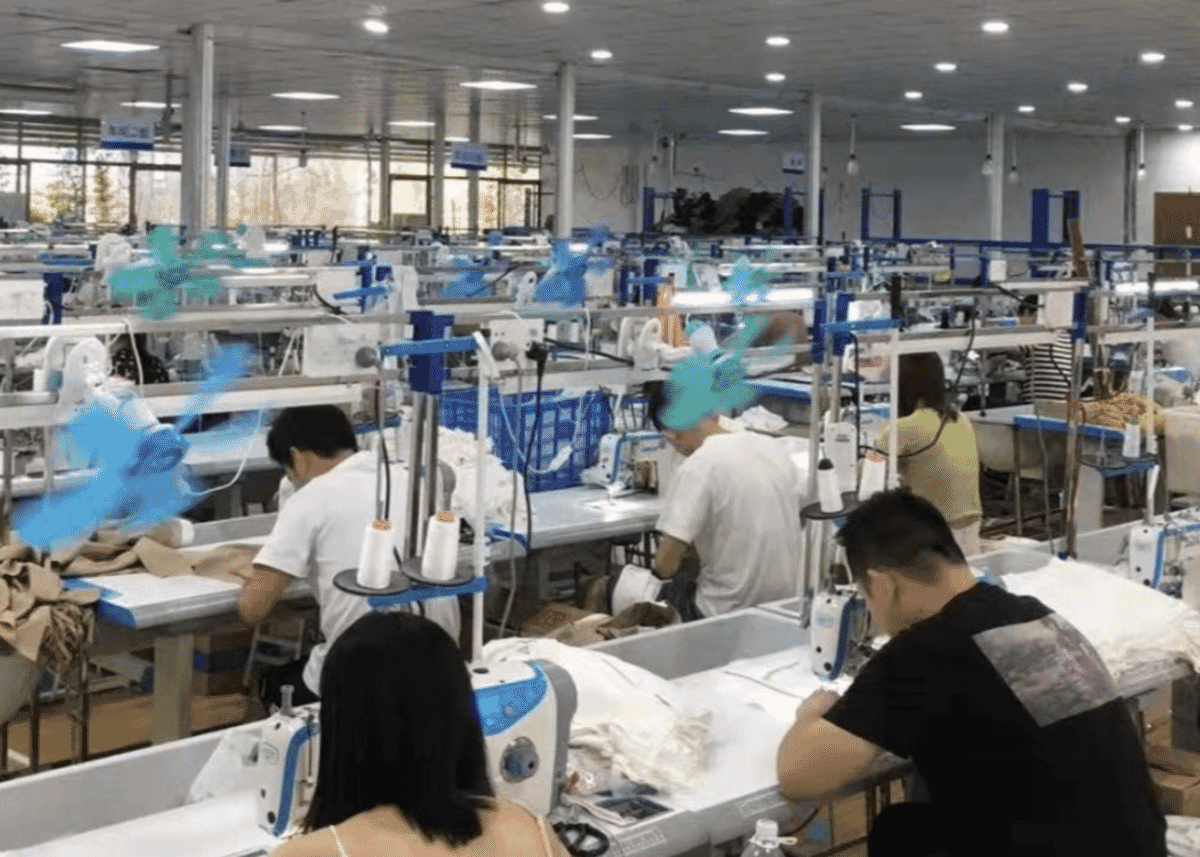
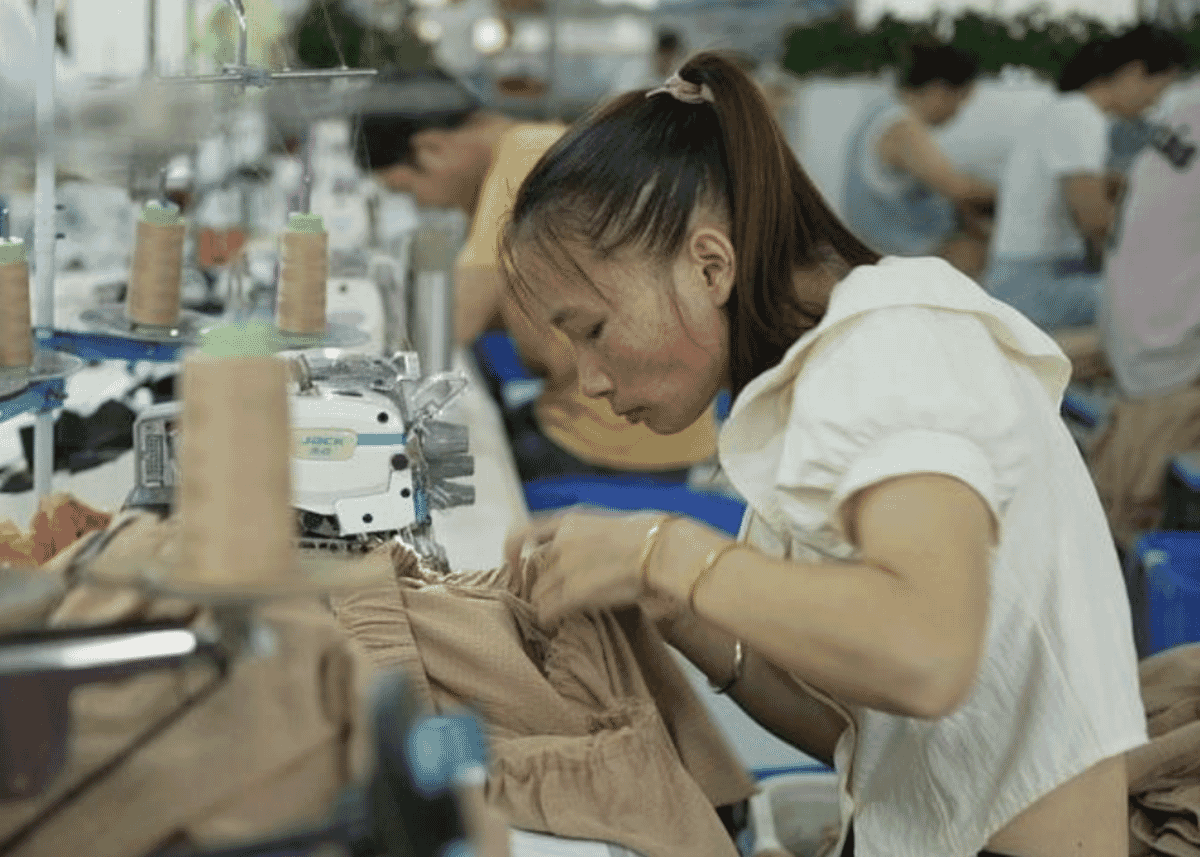
Citation Capsule: Suit sampling runs longer than most apparel categories because more elements have to be resolved in sequence: cloth, canvas construction, balance, shoulder and lapel roll. A correction often requires a new garment rather than an alteration, so suit development is best planned in months rather than weeks.
Where Are Suits Made in China?
Tailoring clusters separately from fashion apparel, because it needs different machinery and a deeper skill base. Pressing equipment, canvas handling and experienced tailoring operators are not present on a general apparel floor. A factory that makes excellent shirts is not therefore a factory that can make a jacket.
Zhejiang is the place to start. The province generated 1.12 trillion yuan of textile and garment revenue in 2025, 25.5% of the national total and first in China, with Hangzhou, Ningbo, Shaoxing and Jiaxing named as its key textile belts (China Daily Ningbo, 2026). That places cloth and garment making close together, which matters in a category where cloth drives the minimum. Our guide to the China clothing market covers the other provinces.
Within Zhejiang, Ningbo is the city most often tied to suits. The city had more than 800 garment companies above designated size, and nine of them made the China National Garment Association's top 100 by revenue for 2021 (China Daily Ningbo, 2022). A 2019 China Daily essay links the local suit makers to the hongbang tailors, a tradition it says has lasted more than a century (China Daily Ningbo, 2019).
One example shows what scale looks like there. Romon, based in Fenghua in Ningbo, says on its own site that it designs, makes and sells mid to high-end men's and women's suits, shirts and workwear, with dedicated suit lines and annual output above 6 million garments. We have no relationship with Romon, and we name it only to show the kind of company the cluster holds. In our view a maker at that scale, built around its own brand, is rarely where a first run belongs.
The practical implication is the same as with towels. A Guangzhou fashion factory that offers to make suits may be placing the order elsewhere and coordinating it. That can be a perfectly reasonable arrangement, and it is worth knowing rather than discovering, because it changes who you talk to when a fit problem needs solving.
What Does China's Suit Export Data Show?
China is the largest single-country exporter of men's wool suits by value, and by far the largest by pieces. It shipped about 2.77 million of them worth $286.2 million in 2024, just ahead of Italy at $266.5 million, according to UN Comtrade data published by the World Bank's WITS database. Italy shipped about 611,000 pieces for that money, so the two countries are selling very different things at very similar totals.
The larger volume is in synthetics. China exported 22.4 million men's synthetic suits worth $384.2 million, and 111.8 million synthetic jackets and blazers worth $1.11 billion. Wool jackets and blazers came to 3.9 million pieces and $213.4 million.
Value per piece tells the story the totals hide. Dividing declared value by quantity gives an average of about $103 for a Chinese wool suit and $17 for a synthetic one, against about $436 for an Italian wool suit. A synthetic jacket averages about $10, which in our view means that customs line holds many simple, unconstructed jackets as well as tailored blazers.
Women's tailoring looks different again. China exported about 37,700 women's wool suits worth $4.6 million in 2024, against about 240,000 worth $25.9 million from Italy. Women's wool jackets were a far bigger line for China, at 5.0 million pieces and $108.7 million, an average near $22 a piece, while Italy shipped about 491,000 at an average near $527.
The buyers are concentrated too. The United States took $101.0 million of China's men's wool suits in 2024 and Japan $87.0 million, together about two thirds of the total, followed by the Netherlands at $27.1 million (WITS, China exports by partner).
Two things follow for a brand. A factory with a big jacket or blazer line is not automatically a canvas factory, because at those average values much of the volume is unlikely to be canvassed, in our view. And two thirds of China's wool suit exports go to the US and Japan, so the capability exists, but you have to ask which floor it is on and see a jacket it made.
Citation Capsule: China exported about 2.77 million men's wool suits worth $286.2 million in 2024, the most of any single country by value, and 22.4 million men's synthetic suits worth $384.2 million, according to UN Comtrade data via World Bank WITS. Declared value averaged about $103 per wool suit and $17 per synthetic suit.
What Duty Do Suits Pay in the US?
It depends on the fibre and on whether the goods count as a suit. A men's wool suit under HTS 6203.11 has a general rate of 17.5%, a men's synthetic suit under 6203.12.20 pays 27.3%, and a synthetic suit containing 36% or more wool drops back to 17.5% under 6203.12.10, on the USITC Harmonized Tariff Schedule checked on 5 November 2026. Goods of Chinese origin can carry additional duties on top of those rates, and they change.
| Women's garment | HTS | General rate |
|---|---|---|
| Wool suit | 6204.11.00 | 14% |
| Synthetic suit | 6204.13.20 | 35.3¢/kg + 25.9% |
| Synthetic suit, 36%+ wool | 6204.13.10 | 17% |
| Wool jacket | 6204.31.20 | 17.5% |
| Synthetic jacket | 6204.33.50 | 27.3% |
Source: USITC Harmonized Tariff Schedule, checked on 5 November 2026. Silk-rich and other special cases sit on separate lines.
The word suit has a legal meaning here. Under Note 3(a) to Chapter 62 of the tariff schedule, a suit is a two or three-piece set whose outer surfaces are in identical fabric, with a jacket whose shell, excluding sleeves, has four or more panels. All the components must share the same fabric construction, colour and composition, the same style, and corresponding or compatible sizes. A jacket and trousers that do not meet that test are not entered as a suit.
This is why fibre content belongs in the first specification rather than on the commercial invoice. Moving a men's synthetic suit from a low-wool blend to 36% wool changes its general rate by almost ten points, and a blend chosen for hand-feel can land on the wrong side of that line by accident. The men's wool lines also separate worsted fabric made from yarn with an average fibre diameter of 18.5 microns or less. The general rate is the same on both today, but it is one more reason to hold the mill's fibre data. Our guide to importing clothing from China covers how duties stack.
Where the Money Goes
| Element | Effect on cost | What to decide |
|---|---|---|
| Cloth | Usually the largest single share | Stock range versus custom weave |
| Construction | Fused to full canvas is a large step | Half-canvas is the usual answer |
| Internal components | Small each, significant together | Specify them or the factory will |
| Lining | Viscose costs more than polyester | Breathability versus price |
| Labour operations | Far more than a shirt needs | Where canvassing cost really sits |
| Pressing | Equipment and skill dependent | Never the place to economise |
Where Suit Orders Fail
The fusing bubbles. Poor adhesive or poor pressing, showing after dry cleaning as rippling across the chest. Irreversible, and the defect most associated with fused jackets (Mond describes the same separation of layers). Four more failures are worth planning for, and most trace back to a specification that named the cloth and left the construction open.
The lapel lies flat instead of rolling. A construction consequence. If you specified a soft roll and received a flat lapel, the jacket was fused where it needed canvas.
The shoulder is wrong. Pad thickness and sleevehead were never specified, so the factory used its house standard and the silhouette is not yours.
Balance is off. Collar gaps at the neck or the front hem swings. A pattern fault at the shoulder, and it needs a pattern maker rather than an alteration.
Cloth substitution between sample and bulk. Among the most damaging in this category, because cloth is usually the largest cost and a substitution saves the supplier money. Specify the mill reference and keep the approved swatch.
How Do You Check a Suit Factory?
- Ask what construction they do by default, and ask to hold a half-canvas sample of their own making.
- Ask what pressing equipment they have for lapels, shoulders and sleeves.
- Ask whether they employ a pattern maker who works in tailoring specifically.
- Specify internal components in writing: canvas, chest piece, pad, sleevehead, lining.
- Business licence and registered scope, checked against the quoting entity.
- Certification where relevant. OEKO-TEX label check for the product and amfori BSCI for the site.
Before you order suits
- Decide construction first: fused, half-canvas or full canvas.
- Specify cloth by composition, weight and weave, with the Super number as a note.
- Write down every internal component, or the factory will choose them for you.
- Ask what pressing equipment the factory has, and for a jacket it made itself.
- Budget three fit rounds and a pre-production sample in the final cloth.
- Photograph fit samples on a person, front, back and both sides, standing naturally.
- Buy stock cloth if quantities are small, since custom weaving sets the real minimum.
A jacket is the one garment where the most important quality decision cannot be seen. Specify it or inherit it.
How we work
- Our team reads the brief and replies within 24 hours. If China, or our group, is wrong for it, we say so.
- Production is placed with a documented factory we have visited in person, from 100 pieces per style.
- The factory quotes you, samples with you and bills you directly.
- You pay 30% to start bulk and the 70% balance only after a third-party inspection.
- No tech pack yet? We draw one for $79 per style.
For tailoring, send a reference jacket and say which construction, cloth and fit you want. See how we work.
Conclusion
Suits reward specification more than any other category, because so much of what determines quality sits inside the garment where nobody looks. Canvas construction, chest piece, shoulder pad, sleevehead and lining are all decisions, and a brief that omits them is a brief that delegates them.
For most brands half-canvas is the right answer. It delivers the lapel roll and the chest life that customers actually perceive, at a cost step that is real but manageable, and it avoids the bubbling risk that makes cheap fusing a liability.
On cloth, resist the Super number. Higher means finer, and finer means more delicate. Specify weight with its unit, composition and weave, and choose a midweight if the suit is meant to be worn rather than admired.
Then settle the fibre early, because in the US it also sets the duty line, and a wool-rich blend and a synthetic one can sit about ten points apart.
And treat tailoring as a specialism when you choose the factory. Pressing equipment and a tailoring pattern maker are not optional extras in this category, they are the category. A factory without them can assemble a jacket, and that is a different thing from making one.
We are a group of documented clothing factories in China, producing for brands from 100 pieces per style. Send a reference jacket or a specification: our team replies within 24 hours with the construction, the cloth options and the real minimum. You work directly with the factory. Flat fees, no factory commissions.
Get in contact Download the directory ($49)Need a tech pack? Get a factory-ready single-style tech pack for $79. See what's included.
Frequently Asked Questions
What is the difference between fused and canvassed suits?
A fused jacket has interlining glued to the cloth, which is cheaper and stiffer and can bubble after dry cleaning. A canvassed jacket has a stitched floating canvas, so cloth and canvas move independently, producing better drape and a proper lapel roll. Half-canvas runs canvas through the chest only.
Does a higher Super number mean a better suit?
No. Super numbers describe wool fibre fineness, so higher generally means smoother and lighter but also weaker, more crease-prone and less durable. US law caps Super 120s at an average of 17.75 microns and Super 150s at 16.25. In our view Super 110s to 120s in a midweight cloth is the practical range for a suit worn regularly, and Super 150s suits occasional wear.
Why does my jacket collar gape at the neck?
That is a balance fault, meaning the jacket is not hanging correctly from the shoulders. It originates at the shoulder and back even though the symptom appears at the collar, and it needs a pattern correction rather than an alteration.
Why are suit minimums higher than for other garments?
Because suiting cloth is woven in short runs by mills not set up for small custom quantities, and a custom colour means a full weaving run rather than a dye lot. Buying from a mill's stock range removes that upstream minimum entirely.
Can a normal clothing factory make suits?
Not to a tailoring standard. Jackets need dedicated lapel, shoulder and sleeve pressing equipment, because pressing is a shaping operation rather than finishing, and they need a pattern maker who works in tailoring. A fashion factory quoting suits may be subcontracting them, so ask to see a jacket it made itself.
How much duty do suits pay when imported into the US?
A men's wool suit under HTS 6203.11 has a general rate of 17.5% and a men's synthetic suit under 6203.12.20 pays 27.3%. A synthetic suit with 36% or more wool pays 17.5%. Goods made in China can carry additional duties on top of those rates, and they change, so confirm the current figure for your exact classification with US Customs before pricing an order.
Editorial note: all company names, certification marks and trademarks referenced here are the property of their respective owners, and naming a company does not imply any relationship with it. Trade figures are UN Comtrade data for 2024 as published by the World Bank WITS database, and per-piece values are simple averages of declared export value and quantity, not prices from any factory. Duty rates are the USITC general rates checked on 5 November 2026 and exclude any additional duties on goods of Chinese origin, which change. Construction, cloth and fit guidance is our editorial view of tailoring practice. Always verify your own HTS classification and confirm terms directly with the factory before committing.
Sources
- World Bank WITS, UN Comtrade data (2024): exporters of HS 620311, men's or boys' suits of wool, by value and quantity. The same tables for HS 620312, 620331, 620333, 620411 and 620431 give the other figures.
- World Bank WITS, China exports of HS 620311 by partner (2024): destination values and quantities.
- USITC Harmonized Tariff Schedule: general duty rates in headings 6203 and 6204, and Note 3(a) to Chapter 62.
- 15 U.S.C. 68b, Wool Products Labeling Act: maximum average fibre diameter for each Super label.
- Fox Brothers, cloth weight explained: mill weights in grams per linear metre.
- Moss, a guide to cloth weights: retail weight bands in g/m².
- Mond, suit construction guide: fused, half-canvas and full-canvas construction, and separation of fused layers.
- China Daily Ningbo (2026): Zhejiang textile and garment revenue figures.
- China Daily Ningbo (2022): Ningbo garment companies and the national top 100.
- China Daily Ningbo (2019): Ningbo suit makers and the hongbang tailors.
- Romon: the company's own description of its products and output.
- OEKO-TEX Label Check: public verification of certificate numbers.
- amfori BSCI: social audit system documentation.
- Office of the United States Trade Representative: Section 301 tariff actions and exclusion process.
- US Customs and Border Protection: trade remedies and duty administration.
Related Reading
- Clothing Suppliers in China: How to Find and Vet a Factory
- Fabric Suppliers in China
- Textile Factories in China
- Dress Manufacturers in China
- Importing Clothing from China
No commissions. No markups. The factory bills you directly.