- PPE or ordinary clothing
- Antimicrobial and fluid claims
- Why laundering decides the spec
- Tests to name in the order
- Scrub fabrics
- Keeping reorders consistent
- How customs classifies scrubs
- China in the trade data
- Inspecting before the balance
- Where orders go wrong
- Checklist
- Conclusion
- FAQ
- Where the figures come from
- Keep reading
A retail shirt is judged the day it is bought. A scrub top is judged after months of wear and a long run of wash cycles, often in a laundry the brand never sees, and then judged again when the reorder arrives and has to stand next to the first delivery on the same ward.
That is why the two things that decide a scrubs order are not on the first sample. One is how the garment survives the way it will actually be washed. The other is whether the next order, and the one after it, comes out the same colour, size and hand as the one that was approved.
This guide covers what a buyer should settle before ordering medical scrubs from China: when scrubs count as protective equipment and when they are ordinary work clothes, why antimicrobial and fluid claims are a regulatory question rather than a marketing one, which published laundering and colour tests to write into the order, how to keep reorders consistent, how customs has classified scrubs, and how to inspect before the balance is paid.
Before you read: China Clothing Manufacturer places and manages clothing production with documented factories in Guangdong, Zhejiang and Fujian. Regulatory, standards, customs and trade facts in this guide come from the published sources listed at the end. This is a buying guide, not legal or regulatory advice; if you plan to sell a garment with a protective or medical claim, check the rules of the market you sell into.
What matters most
- Ordinary scrubs are work clothes. The OSHA bloodborne pathogens standard says general work clothes not intended to function as protection against a hazard are not considered personal protective equipment.
- Gowns are different. The FDA regulates surgical gowns as Class II medical devices that require a 510(k) premarket notification.
- Be careful with germ claims. The EPA says pesticide-treated products that are not registered must not make public health claims such as "fights germs".
- Name the laundering. ISO 15797 is the test method for workwear intended to be industrially laundered; ISO 6330 covers domestic washing.
- Test after laundering. Dimensional change (ISO 5077 or AATCC TM135) and colour change (ISO 105-C06 or AATCC TM61) should be measured on the laundered garment.
- Write the shade tolerance down. ISO 105-J03 lets you set a numerical colour-difference tolerance for reorders.
- Inspect before the balance. At general inspection level II a lot of 1,201 to 3,200 pieces means opening 125 of them.
Quick read: Decide whether the scrubs will be washed at home or in an industrial laundry, test them to that procedure, keep a signed reference garment and a written shade tolerance, make no protective or antimicrobial claim you cannot document, and tie the 70% balance to an AQL inspection of finished goods.
Are Medical Scrubs Protective Equipment or Ordinary Clothing?
In most cases they are ordinary clothing, and the wording of the rules explains why. The US bloodborne pathogens standard, OSHA 29 CFR 1910.1030, defines personal protective equipment as specialized clothing or equipment worn by an employee for protection against a hazard, and then adds: general work clothes (e.g., uniforms, pants, shirts or blouses) not intended to function as protection against a hazard are not considered to be personal protective equipment.
A plain scrub top and trousers fall into that second group as long as nothing about how they are made or sold says otherwise. The test is the intended function, and intended function is set by the specification and by the words on the label, the hangtag, the website and the catalogue.
Gowns show where the line sits. The FDA regulates a surgical gown as a Class II medical device that requires a 510(k) premarket notification, describing it as a personal protective garment intended to be worn by health care personnel during surgical procedures to protect both the patient and health care personnel from the transfer of microorganisms, body fluids, and particulate matter. Non-surgical isolation gowns are Class I devices (exempt from premarket review). The FDA also recognizes the consensus standard ANSI/AAMI PB70, which classifies protective apparel and drapes used in healthcare facilities by their liquid barrier performance.
In Europe the equivalent document for surgical gowns is EN 13795-1, which gives information on the characteristics of single-use and reusable surgical gowns and surgical drapes used as medical devices, intended to prevent the transmission of infective agents between clinical staff and patients during surgical and other invasive procedures.
For a scrubs buyer the practical conclusion is simple. If you want to sell scrubs as everyday work clothes, describe them as work clothes and keep barrier, fluid-protection and infection-control language out of the product copy. If you want a garment that protects against fluids, you are no longer buying scrubs; you are buying a regulated product, with its own standard, testing and paperwork, and the supplier has to be chosen for that.
Quick read: OSHA's bloodborne pathogens standard says general work clothes such as uniforms, pants, shirts or blouses not intended to function as protection against a hazard are not personal protective equipment. Surgical gowns are different: the FDA regulates them as Class II medical devices requiring a 510(k), and EN 13795-1 covers them in Europe.
Can Scrubs Be Sold as Antimicrobial or Fluid Resistant?
Only with care, and the care is about wording as much as chemistry. Many scrub fabrics are offered with a finish, and a supplier may describe it in strong terms. What you can say about the finished garment is a separate question, decided by the rules of the market you sell into.
In the United States the EPA allows an exemption from pesticide registration for an article treated with or containing a pesticide to protect the article itself, if the pesticide is registered for such use. The same page is direct about the limit: any pesticide-treated product that is not registered by EPA must not make public health claims, such as "fights germs, provides antibacterial protection, or controls fungus." The EPA adds that its policy is predicated on the fact that no scientific evidence exists that these products prevent the spread of germs and harmful microorganisms in humans.
Even the European surgical gown standard stays out of this area. EN 13795-1 states that it does not cover requirements for antimicrobial treatments for surgical gowns and drapes, and notes that antimicrobial treatment can cause environmental risks such as resistance and pollution.
Fluid claims run into the gown rules above. A phrase like fluid resistant or barrier protection on a healthcare garment invites the question of which standard it meets and at what level, which is exactly the classification system ANSI/AAMI PB70 provides for gowns.
What this means when you brief a factory in China:
- Ask for the fabric's composition, weight and finish in writing, with the mill's name for the finish, and keep it on file with the approved sample.
- If a finish is used, ask what it is for and what documents the mill holds for it. Do not copy the mill's marketing claims onto your own label or website.
- Keep product copy to what you have tested: composition, fit, pockets, stretch, how it should be washed and how it held up in your laundering tests.
- If you want a protective claim, decide that before sampling and get advice for your market. It changes the product, the testing and possibly the supplier.
Quick read: The EPA says pesticide-treated products that are not registered must not make public health claims such as fights germs or provides antibacterial protection, and EN 13795-1 does not cover antimicrobial treatments for surgical gowns. Describe scrubs by what you have tested, not by a finish supplier's claims.
Why Does the Laundering Method Decide the Specification?
Because scrubs are washed far more often than most clothing, and two very different kinds of washing exist. Some scrubs are taken home and washed by the wearer. Others are collected and processed by an industrial laundry, often under a rental or hospital laundry contract. A fabric, a trim and a size chart that suit one can fail in the other.
The standards follow the same split. ISO 6330 specifies domestic washing and drying procedures for textile testing. It provides 16 washing procedures for a front-loading reference machine (Type A), 12 for a top-loading agitator machine (Type B) and 7 for a top-loading pulsator machine (Type C), plus six drying procedures: line dry, line drip dry, flat dry, flat drip dry, flat press and tumble dry.
ISO 15797 is the industrial counterpart. Its published scope says it specifies test procedures and equipment which can be used in the evaluation of workwear (including, where appropriate, for some PPE garments) intended to be industrially laundered, and serves as a basis for testing relevant properties such as dimensional stability, colour characteristics, creasing, seam puckering, pilling and visual aspects in general.
Three details in that scope matter to a buyer. First, ISO 15797 is a laboratory simulation: it does not provide instructions for the procedures and equipment used by industrial launderers. Second, because it reflects a simulation, testing the workwear in the actual industrial laundering equipment and processes intended to be used is advisable in some cases when finally determining product and process compatibility. Third, it is not necessary to test using all eight washing procedures nor both drying procedures; a selection is made of the procedure that best suits the fabric and the intended use.
So the first line of a scrubs specification is not the fabric. It is a sentence that says who washes the garment and how. If the customer is a hospital or a laundry contractor, ask them which process they run and, where possible, which ISO 15797 procedure is closest to it. If the scrubs are sold to individuals, choose the ISO 6330 or AATCC home laundering procedure that matches the care label you intend to sew in.
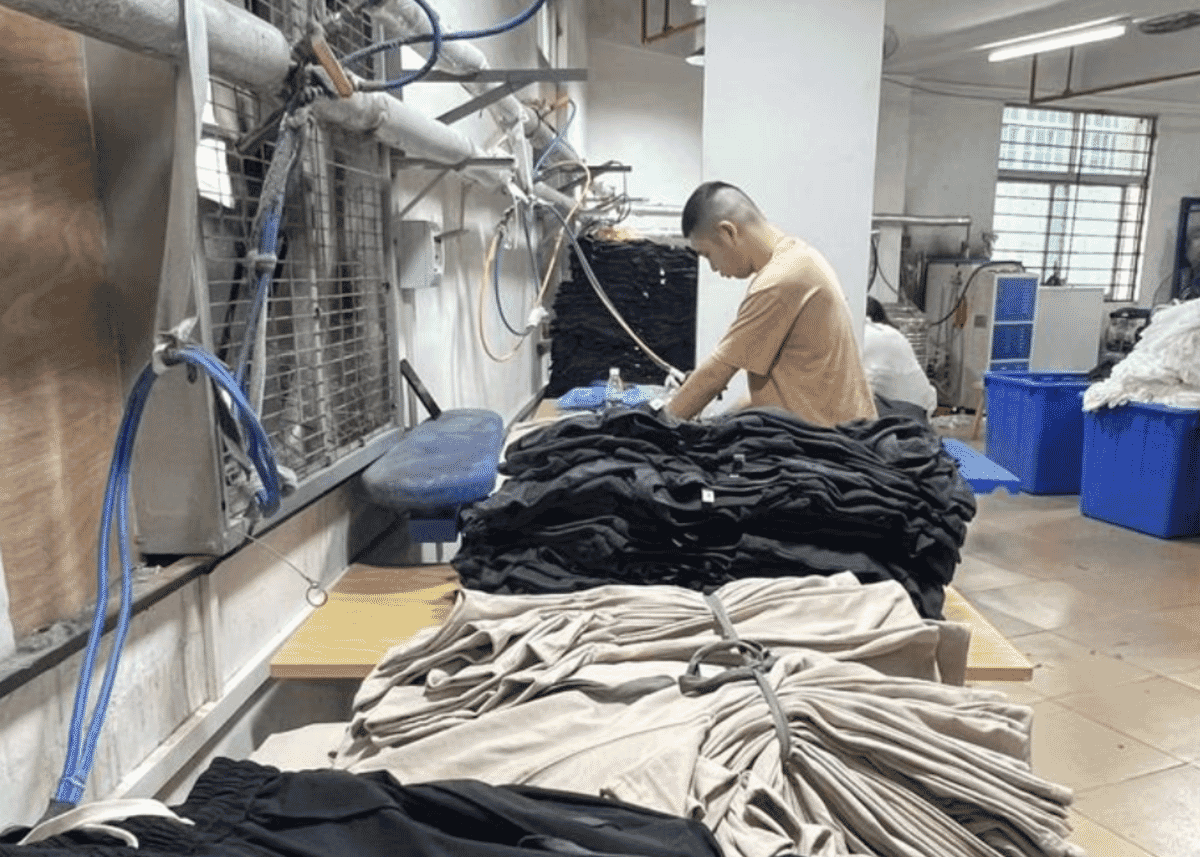
The care label ties this together legally in the United States. The FTC Care Labeling Rule (16 CFR Part 423) requires manufacturers and importers of textile wearing apparel to provide regular care instructions at the time the products are sold, and makes it an unfair or deceptive practice to fail to possess, prior to sale, a reasonable basis for all regular care information disclosed. It also defines machine wash: when no temperature is given, hot water up to 145 degrees F (63 degrees C) can be regularly used. A scrub top labelled machine wash with no temperature is therefore a promise that it tolerates that water.
The rule's reasonable basis can be reliable evidence that the product was not harmed when cleaned reasonably often according to the label. A laundering test report on the bulk fabric and the finished garment is the most direct way to hold that evidence.
Quick read: ISO 6330 covers domestic washing and drying for textile testing; ISO 15797 covers workwear intended to be industrially laundered and tests dimensional stability, colour, creasing, seam puckering and pilling. The FTC Care Labeling Rule requires a reasonable basis for care instructions, and machine wash without a temperature means hot water up to 63 degrees C.
Which Laundering Tests Should a Scrubs Order Name?
The ones that measure what the wearer and the laundry will notice: the size after washing, the colour after washing and whether colour comes off on other things. Each has a published method, and the order should name the method, the procedure and the number of cycles.
| What you are checking | Method to name | What the method covers |
|---|---|---|
| Shrinkage or growth after washing | ISO 5077 (with ISO 6330 or ISO 15797), or AATCC TM135 | Dimensional change of fabrics, garments or other textile articles after washing and drying |
| Marking and measuring for that test | ISO 3759 | Preparation, marking and measuring of fabrics and garments for dimensional change tests |
| Colour loss in repeated laundering | ISO 105-C06, or AATCC TM61 | Resistance of colour to domestic or commercial laundering |
| Grading colour change and staining | ISO 105-A02 and ISO 105-A03 grey scales | Grey scales for change in colour and for staining of adjacent fabrics |
| Colour rubbing off | ISO 105-X12, or AATCC TM8 | Colour transfer by rubbing, dry and wet |
| Industrial laundering effects | ISO 15797 procedure, then the checks above | Dimensional stability, colour, creasing, seam puckering, pilling, appearance |
Dimensional change. ISO 5077 specifies a method for the determination of the dimensional change of fabrics, garments or other textile articles after a combination of specified washing and drying procedures, and ISO 3759 covers how the specimens are prepared, marked and measured. In the US the usual reference is AATCC TM135, intended for the determination of dimensional (length and width) changes of fabrics when subjected to home laundering procedures, with four washing temperatures, three agitation cycles and four drying procedures. For scrubs washed industrially, run the dimensional measurement after the chosen ISO 15797 procedure instead.
Colour change in laundering. ISO 105-C06 specifies methods for the resistance of the colour of textiles to domestic or commercial laundering procedures. Its single test closely approximates one laundering, and its multiple test may in some cases approximate up to five launderings at temperatures not exceeding 70 °C. The AATCC equivalent, AATCC TM61, is written for textiles which are expected to withstand frequent laundering: the colour loss and surface changes from five typical hand or home launderings are roughly approximated by one 45 min test.
Grading. The results of colour tests are read on grey scales: ISO 105-A02 is the grey scale for determining changes in colour of textiles in colour fastness tests, and ISO 105-A03 is the grey scale for determining staining of adjacent fabrics. A pass level is a grade on one of these scales, agreed in writing.
Rubbing. ISO 105-X12 determines the resistance of colour to rubbing off and staining other materials, with one test using a dry rubbing cloth and one a wet rubbing cloth. AATCC TM8 does the same job in the US system and notes that washing, shrinkage, ironing and finishing may affect colour transfer, so the test may be made before, after, or before and after such treatment. For dark scrub colours, test after laundering.
None of these methods sets a pass mark on its own; the buyer and supplier agree it. If you have no levels yet, ask the testing laboratory what it commonly sees requested for healthcare workwear, decide your own numbers, and write them into the purchase order before bulk fabric is dyed. Test the bulk fabric before cutting and the finished garment from the bulk, because the first tells you about the fabric and only the second tells you about your product.
Quick read: Name the method, procedure and number of cycles: ISO 5077 with ISO 6330 or ISO 15797 (or AATCC TM135) for dimensional change, ISO 105-C06 or AATCC TM61 for colour in laundering, graded on the ISO 105-A02 and A03 grey scales, and ISO 105-X12 or AATCC TM8 for rubbing. AATCC TM61 approximates five home launderings in one 45 min test.
What Fabrics Are Scrubs Usually Made From?
US customs rulings give a factual view of what is actually imported, because they describe the samples submitted. In ruling NY E87462 from October 1999, the samples included a unisex scrub shirt of woven 65% polyester/35% cotton fabric and a woman's scrub shirt of woven 50% polyester/50% cotton fabric. In ruling NY N361224 from May 2026, the scrub top and trousers were made of 79% polyester, 18% rayon and 3% spandex woven fabric.
Those two rulings, more than twenty years apart, show the two families a buyer will be offered: polyester and cotton blends, and polyester blends with rayon and elastane for more stretch and a softer hand. Neither is right in general. The right choice is the one that passes your laundering tests at your procedure and still feels acceptable after them.
A few points belong in every fabric discussion with a supplier:
- Test the fabric you will get. A swatch from a showroom and bulk fabric from a production dye lot are not the same thing. Approve on bulk, or on a sample cut from the lot you will use.
- Include stretch in the laundering test if the fabric contains elastane: measure how the garment looks and fits after the chosen number of cycles, not only when new.
- Check pilling and appearance after laundering for blends with a soft face; ISO 15797 lists pilling and visual aspects among the properties it is a basis for testing.
- Ask about the trims together with the fabric. Drawcords, elastic waistbands, snaps and printed or embroidered logos go through the same laundry. Include them on the garment you test.
- Fix the fabric source for reorders. Write down the mill, the fabric reference and the composition on the approved sample's label; a substitution later is the most common reason a reorder feels different.
Quick read: US customs rulings show scrub tops of woven 65% polyester/35% cotton and 50% polyester/50% cotton (NY E87462, 1999) and of 79% polyester, 18% rayon and 3% spandex (NY N361224, 2026). Choose the fabric that passes your laundering procedure, test it from the bulk lot, and include trims in the test.
How Do You Keep Reorders the Same Colour and Fit?
By measuring every reorder against the original reference, never against the last delivery. Scrubs are often worn by many people side by side and replaced a few pieces at a time, so a small drift in shade or size between orders shows up on a ward in a way it never would on a shop rail.
Colour is the hardest part, and it can be written down as a number. ISO 105-J03 provides a method of calculating the colour difference between two specimens of the same material, so that the numerical value for the total colour difference quantifies the extent to which the two specimens do not match. It permits the specification of a maximum value (tolerance) which depends only on the closeness of match required for a given end-use and not on the colour involved. In plain terms: you and the supplier can agree a maximum colour difference from the approved standard, and a laboratory or a mill's spectrophotometer can check it on every dye lot.
The working routine for a reorder looks like this:
- One master standard. Keep a signed, sealed reference garment and fabric swatch for each colour. The factory and the mill hold matching ones. Every reorder is approved against the master, not against the previous bulk.
- Lab dips and dye lot approval. For each new dye lot, ask for a lab dip or lot swatch with its measured colour difference from the master, read under the light source you agreed.
- A written tolerance. State the maximum colour difference allowed and the light source in the purchase order, so shade is a measurement and not a discussion.
- Shade bands where needed. If a large order needs more than one dye lot, ask for lot swatches labelled by lot and pack by lot, so different shades do not end up in one carton or one department.
- The same size chart, measured after laundering. Keep a graded size chart with tolerances for the laundered garment, and measure reorder samples after the same laundering procedure as the first order.
- Same fabric, trims and recipe. Any change of mill, fabric reference, thread colour, elastic or print method needs your approval and a new sample.
- Repeat the key tests. Run the dimensional change and colour tests again on each reorder's bulk fabric. A recipe that passed last year can drift with a new lot of dye or fibre.
Reorders also go faster when the paperwork from the first order is complete. A tech pack that names the fabric, the test methods, the laundered measurements and the tolerances can be sent again unchanged; a first order agreed over chat messages and photographs has to be renegotiated each time.
Quick read: Measure every reorder against one sealed master standard, never against the previous delivery. ISO 105-J03 lets buyer and supplier set a numerical colour-difference tolerance that depends only on the closeness of match required, so dye lots can be approved by measurement. Repeat laundering tests on each reorder's bulk fabric.
How Has US Customs Classified Scrubs?
Rulings show scrub tops in heading 6211, which covers other garments, and scrub trousers in the trouser headings. In NY E87462 (1999) CBP classified woven polyester and cotton scrub shirts under subheading 6211.43.0060, a provision for upper body garments of man-made fibres excluded from heading 6206.
In NY N361224 (May 2026) CBP classified a woven polyester, rayon and spandex scrub top under 6211.43.1059, a statistical line for upper body garments designed for use in hospitals, clinics, laboratories or contaminated areas, with a general rate of duty of 16 percent ad valorem. The matching scrub trousers went under 6204.63.9009, also a line for garments designed for use in hospitals, clinics, laboratories or contaminated areas, with a general rate of duty of 28.6 percent ad valorem. The request had suggested heading 6210, but CBP found the coating was not visible as that term is defined in the tariff, so heading 6210 did not apply.
Two cautions apply. The ruling itself says the duties cited are current as of its issuance and subject to change, and that it does not address any additional duties, taxes or fees that may apply. And a ruling applies to the goods described in it: a different fibre content, a knit instead of a woven, or a men's instead of a unisex cut can change the classification. Ask your customs broker to classify your own style before you price it.
How Big Is China in This Part of the Trade?
Customs data do not separate scrubs at the six-digit level that every country reports, so the closest view uses the women's or girls' code the rulings above use, HS 6211.43 (other garments of man-made fibres), and its men's or boys' counterpart, HS 6211.33. Both codes include scrubs, and both include many other garments.
In 2024 China exported $1,443.6 million under HS 6211.33 and $2,251.1 million under HS 6211.43, according to World Bank WITS data. In 2019 the figures were $1,062.0 million and $2,117.2 million. The United States was the largest single market for both codes in 2024, taking $188.9 million of the men's and $621.9 million of the women's; for the women's code that was down from $748.4 million in 2019.
China was also by far the largest exporter of HS 6211.43 in 2024. The next single countries were India at $270.9 million, France at $195.0 million and Germany at $194.3 million (WITS). For HS 6211.33 the next single countries were Morocco at $214.3 million, Tunisia at $105.0 million and Mexico at $95.4 million (WITS).
For a buyer the figures say one useful thing: there is a large base of Chinese production in exactly the garment types scrubs are classified with, so the question is rarely whether a factory can sew them. It is whether the factory, its fabric mill and its testing routine can hold a laundering standard and a shade from one order to the next.
When and How Should Scrubs Be Inspected?
Before the balance is paid, on finished goods, with the laundering-related checks added to a standard garment list. One of the most common payment structures in China manufacturing is 30/70: 30% down when the order is placed and the remaining 70% due before shipment, which, as the law firm Harris Sliwoski puts it, means the buyer pays in full before ever receiving or inspecting the goods. The firm's advice is to negotiate terms so that the 70% balance is due only after a quality inspection has been conducted and approved.
Most inspection companies and importers agree to start a final inspection after 100% of the quantity is finished and 80% of the order quantity is fully packed (QualityInspection.org). QIMA describes pre-shipment inspection as carried out when production is at least 80% complete, with sampling that follows ISO 2859-1 or ANSI/ASQ Z1.4.
The sample size comes from a table. At general inspection level II, which Apparel Search calls the usual starting point (level III is stricter and level I less strict), a lot of 1,201 to 3,200 pieces means inspecting 125; at AQL 2.5 for major defects the lot passes with up to 7 defective pieces and fails at 8, and at AQL 4.0 for minor defects it passes with up to 10 and fails at 11 (Apparel Search AQL 2.5, AQL 4.0).
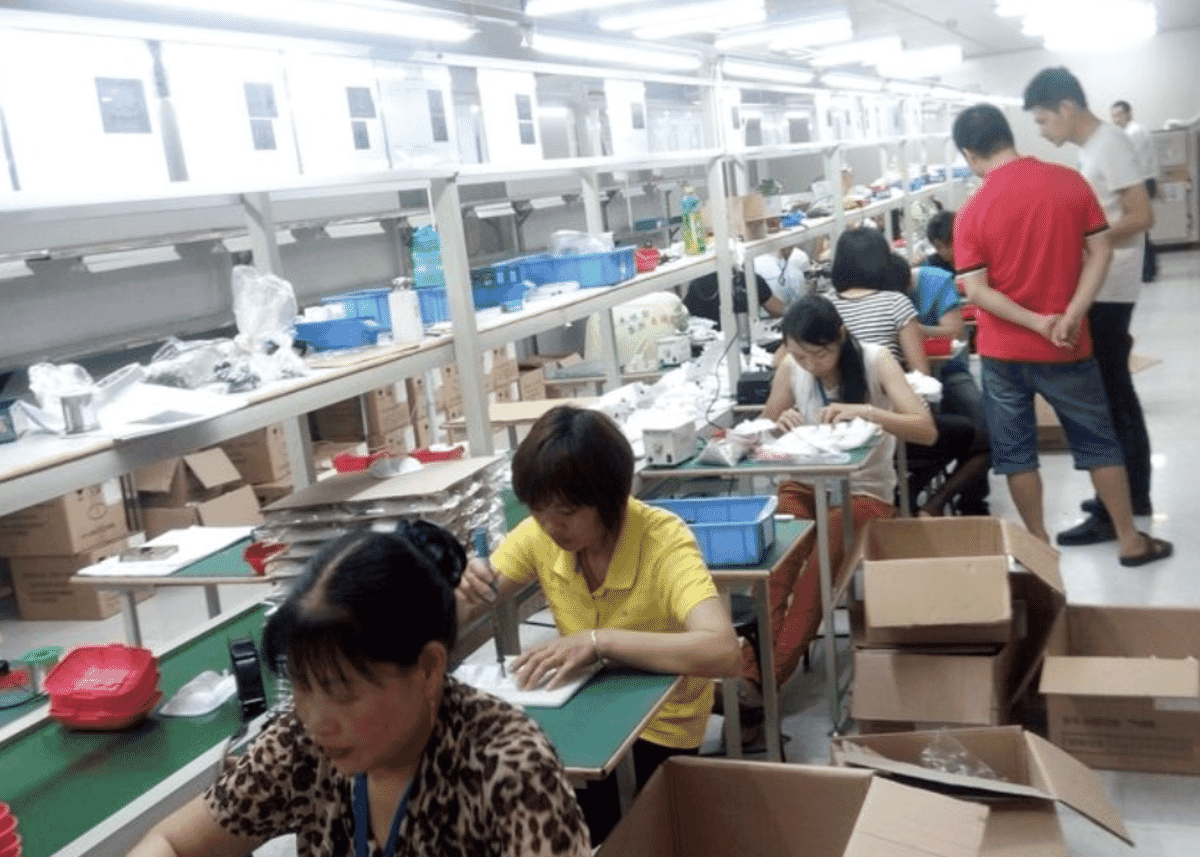
What the inspector checks on a scrubs order:
- Shade against the master standard, in the agreed light, across the sample and between cartons, and between tops and trousers meant to be worn together.
- Measurements at the points named in the size chart, against the tolerances, across the full size range, including the largest and smallest sizes.
- Labels: fibre content, care instructions matching the tested procedure, size, and country of origin, sewn where the specification says.
- Seams and stress points: pocket corners, side vents, crotch and waistband, which take the most strain in wear and in the laundry.
- Trims: snaps set firmly, drawcords secured, elastic even, logos placed and sized as approved.
- Packing: sizes and colours as on the packing list, cartons packed by lot, no damp or crushed cartons.
- Test reports for the bulk lot in hand, matching the methods in the purchase order, before the inspection report is signed off.
Quick read: Under the common 30/70 structure the balance is due before shipment, so make it payable only after an approved inspection (Harris Sliwoski). At general inspection level II a lot of 1,201 to 3,200 pieces means opening 125; at AQL 2.5 the lot fails at 8 major defectives. Check shade against the master, laundered measurements and care labels.
Where Do Scrubs Orders Go Wrong?
Most problems trace back to the laundry or to the reorder, and to something that was not written down.
- The garments shrink a size in the hospital laundry. They were tested, if at all, to a home procedure. Fix: name the laundering procedure and measure after it.
- The reorder is a different blue. It was matched to the last delivery, or a new dye lot was approved by eye. Fix: one master standard and a written colour-difference tolerance.
- Colour fades unevenly after a few months. The colour test was run on the fabric, once, before production. Fix: repeated laundering tests on bulk fabric and finished garments.
- The fabric was substituted. A similar fabric from a different mill was used because the original was short. Fix: a written rule that any fabric change needs approval and a new test.
- The product copy promised too much. Barrier or germ-fighting language was copied from a mill's brochure. Fix: describe only what you have tested, and check the rules before making any protective claim.
- Mixed shades in one carton. Pieces from different dye lots were packed together. Fix: pack by lot and check shade between cartons at inspection.
None of these is unusual for a competent workwear factory to control. Each becomes a dispute only when the standard it should be measured against was never agreed.
Checklist Before You Order Scrubs From China
Before the balance on a scrubs order
- You know who washes the garments, and the laundering procedure is named in the order.
- Dimensional change and colour tests are named, with methods, procedures, cycles and pass levels.
- A signed master standard exists for each colour, held by you, the factory and the mill.
- A maximum colour difference from the master and the light source are written down.
- The size chart is for the laundered garment, with tolerances, for every size you sell.
- Fabric mill, fabric reference and trims are fixed, and changes need your approval.
- Product copy and labels make no protective or antimicrobial claim you cannot document.
- The pre-shipment inspection is booked on finished goods, sized from the AQL table, and the 70% balance is payable only after the report is approved.
Written down, this list turns the two things that decide a scrubs order, the laundry and the reorder, into items that are checked before money moves rather than discovered after the garments are on a ward.
We are a group of documented clothing factories in China. Send your specification or a reference garment, and we place production with the factory in our group built for the product. Our team replies within 24 hours. Samples, invoices and shipping run straight between you and the factory; our fee is flat and we take nothing from the factory side.
Send your brief Get a tech pack ($79)No tech pack yet? Get a factory-ready single-style tech pack for $79, with your laundering procedure, laundered measurements and test requirements written in. See what's included.
Conclusion
Ordinary scrubs are not a regulated product, and that is exactly why the buyer has to write the standard. Nothing outside the purchase order says how they must be washed, how much they may shrink, or how close the next delivery's colour must be to the first.
The published methods exist for all of it. Name the laundering procedure, test dimensional change and colour after laundering, keep one master standard with a numerical shade tolerance, make no claim you cannot document, and inspect finished goods before the balance is paid. Do that on the first order and every reorder becomes a repeat of a known result.
Frequently Asked Questions
Are medical scrubs considered PPE?
Usually not. OSHA's bloodborne pathogens standard says general work clothes, such as uniforms, pants, shirts or blouses, not intended to function as protection against a hazard are not personal protective equipment. A garment sold with a protective function is a different matter.
Are scrubs medical devices?
Ordinary scrubs are sold as clothing. The FDA regulates surgical gowns as Class II medical devices requiring a 510(k), and non-surgical isolation gowns as Class I devices. Barrier or infection-control claims move a garment towards those rules.
Can I sell scrubs as antimicrobial?
Be careful. The EPA says pesticide-treated products that are not registered must not make public health claims such as fights germs or provides antibacterial protection. Get advice for your market before using such words.
Which test is used for industrial laundering of workwear?
ISO 15797 specifies industrial washing and finishing procedures for testing workwear intended to be industrially laundered. Dimensional change, colour, creasing, seam puckering and pilling are then assessed after the chosen procedure.
Which test should I use for scrubs shrinkage?
ISO 5077 with ISO 6330 for home washing or an ISO 15797 procedure for industrial laundering, or AATCC TM135 in the US system. Name the procedure and the number of cycles, and measure the finished garment.
How do I keep reorders the same colour?
Approve every dye lot against one sealed master standard, not the last delivery, and write a maximum colour difference into the order. ISO 105-J03 provides the calculation for that tolerance.
How many scrubs are checked in a pre-shipment inspection?
It depends on the lot size and inspection level. At general inspection level II, a lot of 501 to 1,200 pieces means inspecting 80, and a lot of 1,201 to 3,200 pieces means 125.
Sourcing notes: all company names, certification marks and trademarks referenced here are the property of their owners. Regulatory statements are quoted or summarised from the agencies' own pages and are not legal advice. Customs rulings apply to the goods described in them. Trade figures are customs declarations reported to UN Comtrade and cover broad product codes, not scrubs alone. Test methods are named from the standards bodies' published scopes; pass levels are for buyer and supplier to agree. Reviewed and updated 19 November 2026 by David Stan.
Where the figures come from
- OSHA: 29 CFR 1910.1030, Bloodborne pathogens.
- US Food and Drug Administration: Medical gowns.
- US Environmental Protection Agency: Consumer products treated with pesticides.
- Estonian Centre for Standardisation (EVS): EN 13795-1:2025, surgical gowns and drapes.
- eCFR: 16 CFR Part 423, Care labeling of textile wearing apparel and certain piece goods.
- Estonian Centre for Standardisation (EVS): EN ISO 15797:2018, industrial washing and finishing procedures for testing of workwear.
- Estonian Centre for Standardisation (EVS): EN ISO 6330:2021, domestic washing and drying procedures for textile testing.
- Estonian Centre for Standardisation (EVS): EN ISO 5077:2008, determination of dimensional change in washing and drying.
- Estonian Centre for Standardisation (EVS): EN ISO 3759:2011, preparation, marking and measuring for dimensional change tests.
- Estonian Centre for Standardisation (EVS): EN ISO 105-C06:2010, colour fastness to domestic and commercial laundering.
- Estonian Centre for Standardisation (EVS): EN 20105-A02, grey scale for assessing change in colour.
- Estonian Centre for Standardisation (EVS): EN ISO 105-A03:2019, grey scale for assessing staining.
- Estonian Centre for Standardisation (EVS): EN ISO 105-J03:2009, calculation of colour differences.
- Estonian Centre for Standardisation (EVS): EN ISO 105-X12:2016, colour fastness to rubbing.
- AATCC: TM135, dimensional changes of fabrics after home laundering.
- AATCC: TM61, colorfastness to laundering: accelerated.
- AATCC: TM8, colorfastness to crocking: crockmeter.
- US Customs and Border Protection: Ruling NY E87462, 13 October 1999.
- US Customs and Border Protection: Ruling NY N361224, 21 May 2026.
- Harris Sliwoski: China manufacturing payment terms: the real risk behind 30/70 TT.
- QualityInspection.org: Final product inspections: should the whole order be ready?
- QIMA: Pre-shipment inspection procedure.
- Apparel Search: 2.5 AQL chart for the fashion industry.
- Apparel Search: 4.0 AQL chart for the fashion industry.
- World Bank WITS: China exports of HS 621133 (men's or boys' garments of man-made fibres), 2024.
- World Bank WITS: China exports of HS 621133, 2019.
- World Bank WITS: China exports of HS 621143 (women's or girls' garments of man-made fibres), 2024.
- World Bank WITS: China exports of HS 621143, 2019.
- World Bank WITS: Top exporters of HS 621133, 2024.
- World Bank WITS: Top exporters of HS 621143, 2024.
Related Reading
- Label Manufacturers in China
- Fabric Suppliers in China
- Shirts from China
- Textile Factories in China
- Jeans from Xintang, China
- Clothing Suppliers in China: How to Find and Vet a Factory
No commission and no mark-up on the factory price: the factory invoices you itself.