Gloves split into two businesses that share a name and almost nothing else. Fashion and winter gloves are an apparel product. Work gloves are personal protective equipment, which means they are regulated, tested and certified, and importing them without that paperwork is a compliance problem rather than a quality problem.
Brands routinely get this wrong. They brief a work glove as if it were a knitted accessory, receive a perfectly good-looking product, and then discover at the border or at a customer's procurement department that it needs certification nobody arranged.
This guide covers the categories, the certification question in Europe and the US, the materials, coatings, sizing, where glove production sits in China, what the 2024 export data shows, and how to check a glove supplier in China.
Before you read: China Clothing Manufacturer places and manages production for brands from 100 pieces per style with documented factories in China. This guide quotes no glove prices or factory minimums: the standards, trade and cluster figures come from the public sources listed at the end, and we confirm the exact minimum and price with the factory when you send a brief.
What matters most
- Work gloves are PPE and carry testing and certification obligations that fashion gloves do not.
- EN 388 is the European standard covering mechanical risks, and it produces a rated pictogram. The US market reads cut resistance on the separate ANSI/ISEA 105 scale.
- Coating type decides grip, dexterity and oil resistance more than the liner does.
- Gauge applies to knitted gloves as it does to knitwear, and it sets dexterity.
- Touchscreen function requires conductive yarn knitted into the fingertip.
- Leather gloves are a separate trade again, with their own tanneries and minimums.
- Sizing is unusually unforgiving because hands vary in ways garments do not.
- China declared about US$4.5 billion of glove exports in 2024, and coated knitted gloves were the largest single line.
Which Glove Category Are You Actually Buying?
Four, and the answer determines everything about the supplier, the specification and the paperwork. Fashion and winter gloves, work and safety gloves, sports gloves, and disposable or medical gloves. They share a word and almost nothing else, because each is made on different equipment and carries a different regulatory burden. For the European market the distinction is statutory: protective gloves fall under Regulation (EU) 2016/425, which classifies PPE into risk categories that determine the conformity assessment required (Regulation (EU) 2016/425).
Fashion and winter gloves. Knitted or leather, sold on appearance and warmth. An apparel product with apparel rules.
Work and safety gloves. Coated knits, leather rigger gloves, cut-resistant liners. These are personal protective equipment, and in the European market they fall under the PPE Regulation with CE marking and a technical file behind it.
Sports gloves. Cycling, gym, ski, goalkeeping. Usually not PPE, heavily engineered, and closer to footwear than to apparel in construction.
Disposable and medical gloves. A completely separate industry, with medical device regulation in most markets. Do not treat this as adjacent to the others.
The reason this matters commercially: a factory that excels at knitted winter gloves may have no testing relationships, no certification experience and no idea what a technical file is. That is not a shortcoming for the product they make. It becomes one the moment you ask them for a work glove.
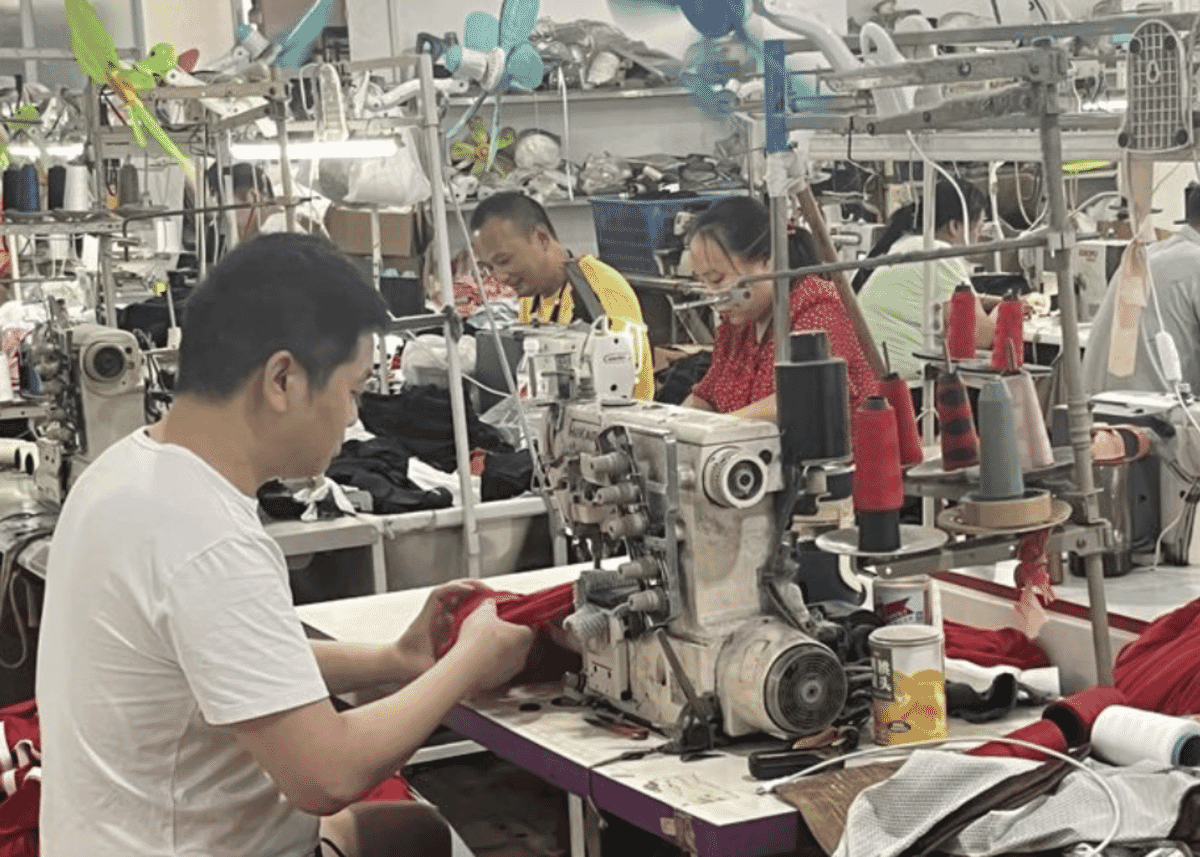
Quick read: Work and safety gloves are classified as personal protective equipment, carrying testing, certification and technical documentation obligations that fashion and winter gloves do not. A factory experienced in knitted winter gloves may have no testing relationships or certification experience, which becomes a compliance problem the moment the same supplier is asked for a work glove.
Not sure whether your glove is PPE? Send the use case and we will tell you what it needs. No cost. Send it here.
What Certification Do Work Gloves Need?
For the European market, protective gloves fall under the PPE Regulation, and that regime sorts products into risk categories which determine how much third-party involvement is required. A pictogram printed on a glove is a claim. The evidence is a test report against the relevant standard, issued for that specific liner and coating.
Article 18 of the Regulation (EU) 2016/425 classifies PPE into the risk categories of Annex I, and Article 19 sets the procedure for each. Category I allows internal production control alone. Category II requires EU type-examination by a notified body, followed by conformity to type based on internal production control. Category III adds either supervised product checks at random intervals or quality assurance of the production process. Which category your glove falls into decides how much evidence must exist before it can be sold.
Annex I is narrow at both ends. Category I covers only minimal risks, and for gloves the relevant ones are superficial mechanical injury, contact with weak cleaning materials or prolonged contact with water, hot surfaces up to 50 °C and ordinary weather. Category III covers risks that can cause death or irreversible damage to health, including substances hazardous to health, harmful biological agents, heat comparable to an air temperature of at least 100 °C, cold of minus 50 °C or below, electric shock and cuts by hand-held chainsaws. Everything in between is Category II, which is why a glove sold for real cut, abrasion or puncture protection usually needs a notified body, and a chemical-protection glove sits in Category III.
Alongside that sit the performance standards. EN ISO 21420 covers general requirements such as innocuousness, sizing and dexterity. EN 388 covers mechanical risks and produces the familiar pictogram with rated values for abrasion, cut, tear and puncture. Other standards cover thermal risks, chemical protection and specific applications.
How to read an EN 388 marking
The code under the EN 388 shield is a row of four digits and up to two letters, and each position is a separate test on the palm material (SATRA).
| Position | Test | Scale | What the levels mean |
|---|---|---|---|
| 1 | Abrasion | 0 to 4 | Cycles against abrasive paper before a hole appears: level 1 is more than 100 cycles, level 4 more than 8,000 |
| 2 | Blade cut (circular coup test) | 0 to 5, or X | A cut index against a reference fabric, from above 1.2 at level 1 to above 20 at level 5 |
| 3 | Tear | 0 to 4 | Force to tear the sample, from above 10 N at level 1 to above 75 N at level 4 |
| 4 | Puncture | 0 to 4 | Force for a stylus to penetrate, from above 20 N at level 1 to above 150 N at level 4 |
| 5 | Straight-blade cut (ISO 13997, the TDM test) | A to F, or X | Contact force needed to cut, from 2 N at A to 30 N at F |
| 6 | Impact | P, if claimed | Added only for gloves that pass the impact test of EN 13594 |
The straight-blade letter exists because cut-resistant yarns, especially those with glass or steel, blunt the rotating blade of the coup test. Under the 2016 revision the TDM test applies when the reference material shows that blunting, and an X replaces a cut result that was not tested (SATRA). So a high-cut glove should carry a letter, and a code reading 4X43C tells you the coup result was not used and the TDM letter is the cut rating to read.
What US buyers look for instead
The US has no equivalent of the CE regime for work gloves. The duty sits with the employer: OSHA requires employers to select and require appropriate hand protection where hands are exposed to hazards such as cuts, lacerations, abrasions, punctures, chemicals and harmful temperatures (29 CFR 1910.138). In practice, US procurement teams ask for cut performance on the ANSI/ISEA 105 scale, which since 2016 runs from A1 at 200 grams to A9 at 6,000 grams on the ASTM F2992 TDM method (PK Safety).
The two scales use similar machines but report in different units, grams for ANSI and newtons for EN 388, so a glove tested to one cannot simply be relabelled for the other. A glove sold into both markets needs both results on file, which is worth deciding before the first test is booked rather than after.
Two things brands consistently underestimate. Testing costs money and takes time, and it is per product rather than per order, so it belongs in the development budget rather than the unit price. And the certification attaches to a specific product made a specific way, which means changing the coating or the liner can invalidate it.
Ask any prospective supplier which standards their product has been tested to, by which laboratory, and ask to see the report rather than the pictogram. A printed pictogram is a claim. A test report is evidence.
Shortlist faster: our China factory list ($49) sorts documented factories by city, product and capability and shows where each one stands on verification. Pay once and download it straight away.
Quick read: For the European market, protective gloves fall under the PPE Regulation, and that changes what a supplier must be able to produce. A pictogram printed on a glove is a claim, not evidence. The evidence is a test report against the relevant standard, issued for that specific glove construction and coating.
What Are Gloves Made From?
The liner and the coating are separate decisions, and most glove specifications should name both. Knitted liners, cut-resistant yarns, leather, synthetic leather and insulation set the base glove. The coating sits on top of it and determines grip and feel. Naming only one of the two leaves half the specification open.
Knitted liners in nylon, polyester, cotton or blends. The base of most coated work gloves, and the gauge governs how thin and dexterous the glove can be.
Cut-resistant yarns using high-performance fibres, sometimes with glass or steel filaments blended in. These raise the cut rating and change the hand-feel, and they cost more than a plain nylon or polyester liner. They are also the yarns that blunt the coup-test blade, which is why their cut rating is read from the TDM letter.
Leather. Cowhide, goatskin and pigskin, each with different thickness, suppleness and abrasion behaviour. Leather gloves are a different supply chain with tanneries and hide grading, and their minimums work differently.
Synthetic leather for sports and mechanics gloves, offering consistency and lower cost with less breathability.
Insulation for winter and cold-store gloves, either loose fill, a fleece liner or a laminated layer.
The liner decision that catches brands out is gauge. A 13-gauge knitted liner is thin and dexterous, suited to handling small components. A 7-gauge liner is thick, warm and clumsy. Both are correct for different jobs, and specifying the wrong one produces a glove nobody can work in.
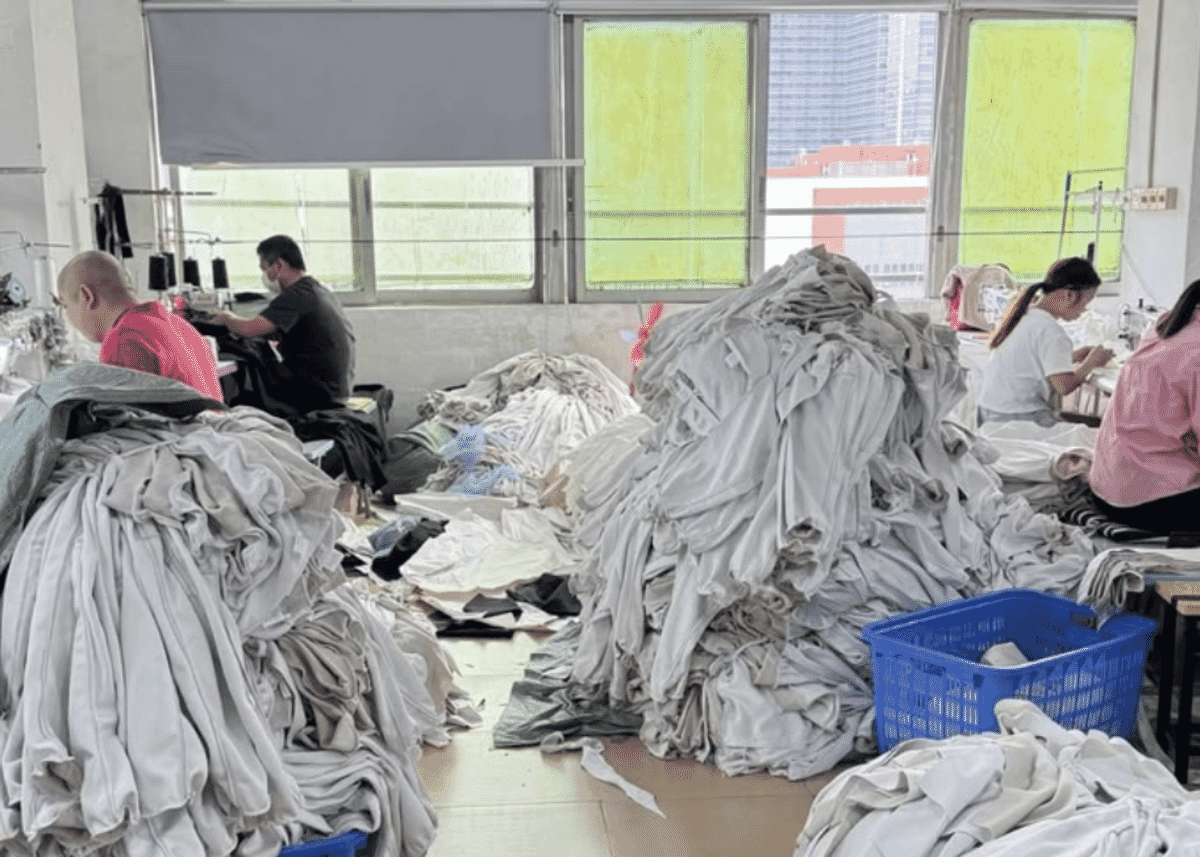
Quick read: Glove liner and coating are separate decisions, and most specifications describe only one of them. Knitted liners, cut-resistant yarns, leather and synthetic leather each set the base glove, while the coating determines grip and feel. A brief naming only the material has left half the specification open.
Which Coating, and How Far Up the Hand?
The coating is what the hand touches, and it is the single most consequential specification on a work glove. Polyurethane gives dexterity on fine work. Smooth nitrile resists oil. Foam nitrile grips in wet conditions. Latex grips well and carries an allergy consideration. The coating decides the use case more than the liner does.
Polyurethane. Thin, light, excellent dexterity, good dry grip. The default for electronics assembly and precision handling. Poor with oils.
Nitrile, smooth. Good oil resistance, durable, less breathable. General mechanical and automotive work.
Nitrile, foam. The foam structure channels away light oils and improves grip on slightly wet surfaces. The most common general-purpose choice.
Latex. Excellent grip, especially on rough dry surfaces, and it degrades with oil exposure. Also a natural rubber protein allergy consideration, which is a reason many industrial buyers avoid it entirely.
Coverage is the second half of the specification. Palm coated leaves the back of the hand as bare knit, so the glove breathes. Three-quarter coated adds protection up the sides. Fully coated encloses the hand and is used for liquid contact, at the cost of all breathability.
Write both down. A brief saying "nitrile coated glove" leaves the factory to choose smooth or foam and to choose coverage, and both change the product substantially.
| Coating | Grip and dexterity | What it resists | Where it suits |
|---|---|---|---|
| Polyurethane | Best dexterity. Thin, light, good dry grip | Poor with oils | Electronics assembly and precision handling |
| Nitrile, smooth | Solid grip, durable, less breathable | Good oil resistance | General mechanical and automotive work |
| Nitrile, foam | Best wet grip. The foam channels away light oils | Oils, in light contact | The most common general-purpose choice |
| Latex | Excellent grip, especially on rough dry surfaces | Degrades with oil exposure | Dry handling. Carries a natural rubber protein allergy consideration that leads many industrial buyers to avoid it |
Coverage is a second, separate specification: palm coated leaves the back as bare knit and breathes, three-quarter adds protection up the sides, fully coated encloses the hand for liquid contact at the cost of all breathability. A brief saying "nitrile coated glove" has chosen neither the coating type nor the coverage.
Quick read: Glove coating determines grip, dexterity and chemical resistance more than the liner does. Polyurethane offers the best dexterity and poor oil resistance; nitrile resists oils and breathes less; foam nitrile channels light oils to improve wet grip. Coverage is a separate specification, ranging from palm-coated to fully enclosed.
Why Is Glove Sizing So Difficult?
Because hands vary in proportion in a way that torsos do not, and there is no ease to absorb error. Finger length, palm width and overall length grade independently of one another, so a glove correct in the palm can be wrong in the fingers. That is why fingers that are too long is a frequent complaint in the category.
A glove has to fit the palm circumference, the hand length and the individual finger lengths simultaneously. Two people with identical palm measurements can need different sizes because their fingers differ, and a glove that is right at the palm and long at the fingers is worse than useless for precision work because the empty fingertip catches on everything.
Sizing conventions also differ by market and by category, so a size 9 in one system is not necessarily a size L in another. Specify by measurement rather than by letter, and state which convention you are using.
For protective gloves, EN ISO 21420 gives the reference: each size number is tied to a hand circumference and a hand length (Wenaas).
| Size | Letter | Hand circumference | Hand length |
|---|---|---|---|
| 6 | XS | 152 mm | 160 mm |
| 7 | S | 178 mm | 171 mm |
| 8 | M | 203 mm | 182 mm |
| 9 | L | 229 mm | 192 mm |
| 10 | XL | 254 mm | 204 mm |
| 11 | XXL | 279 mm | 215 mm |
Each step adds about 25 mm of circumference but only 10 to 12 mm of length, so a wearer with a broad palm and short fingers falls between two rows. Put the table in the brief, name which column decides the size, and ask the factory for finished glove measurements per size rather than a size label.
Test by task, not by feel. A glove that feels comfortable standing still may be unusable when picking up a small screw, and the way to find that out is to have someone do the actual job in it for an hour rather than try it on for ten seconds.
Free tool: get a directional FOB range per piece with the China production cost calculator. No signup to see the range.
Quick read: Glove sizing is less forgiving than apparel sizing because hands vary in proportion in a way that torsos do not, and there is no ease to absorb error. Finger length, palm width and overall length grade independently, which is why fingers that are too long is a frequent complaint.
How Do Touchscreen Gloves Work?
Conductive yarn knitted into the fingertip, carrying the electrical connection from the wearer's skin to the screen surface. Capacitive touchscreens respond to conductance rather than to pressure, so an ordinary glove blocks the signal and a conductive one completes it.
Three things to specify. Which fingers, since thumb and index is standard and adding more raises cost. The yarn, because cheaper conductive yarns lose function as they wear and the plating degrades. And whether the coating covers the conductive area, since a coating over the fingertip insulates exactly the part that needs to conduct.
That last point causes most touchscreen failures on coated work gloves. The glove conducts perfectly on the knit liner and not at all once coated, and nobody tested it after coating. Test the finished, coated production sample on an actual device.
Where Are Gloves Made in China?
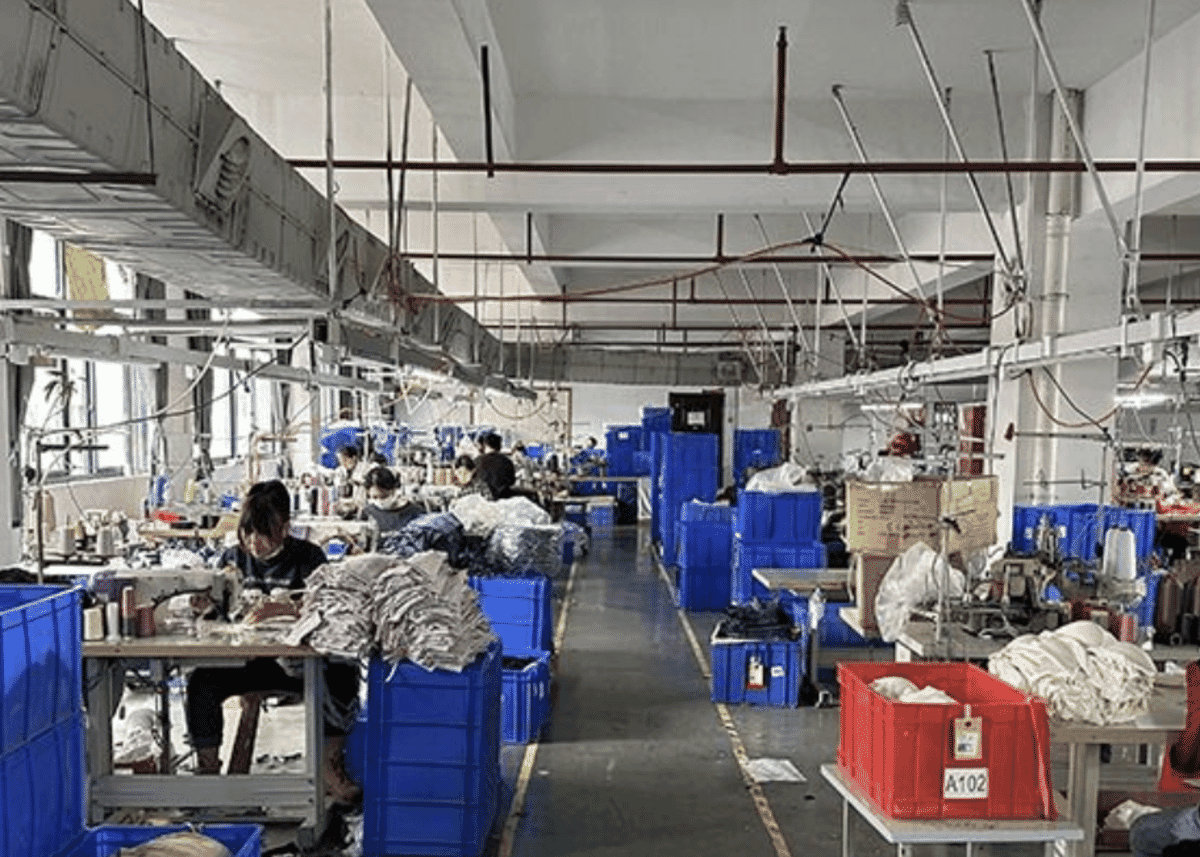
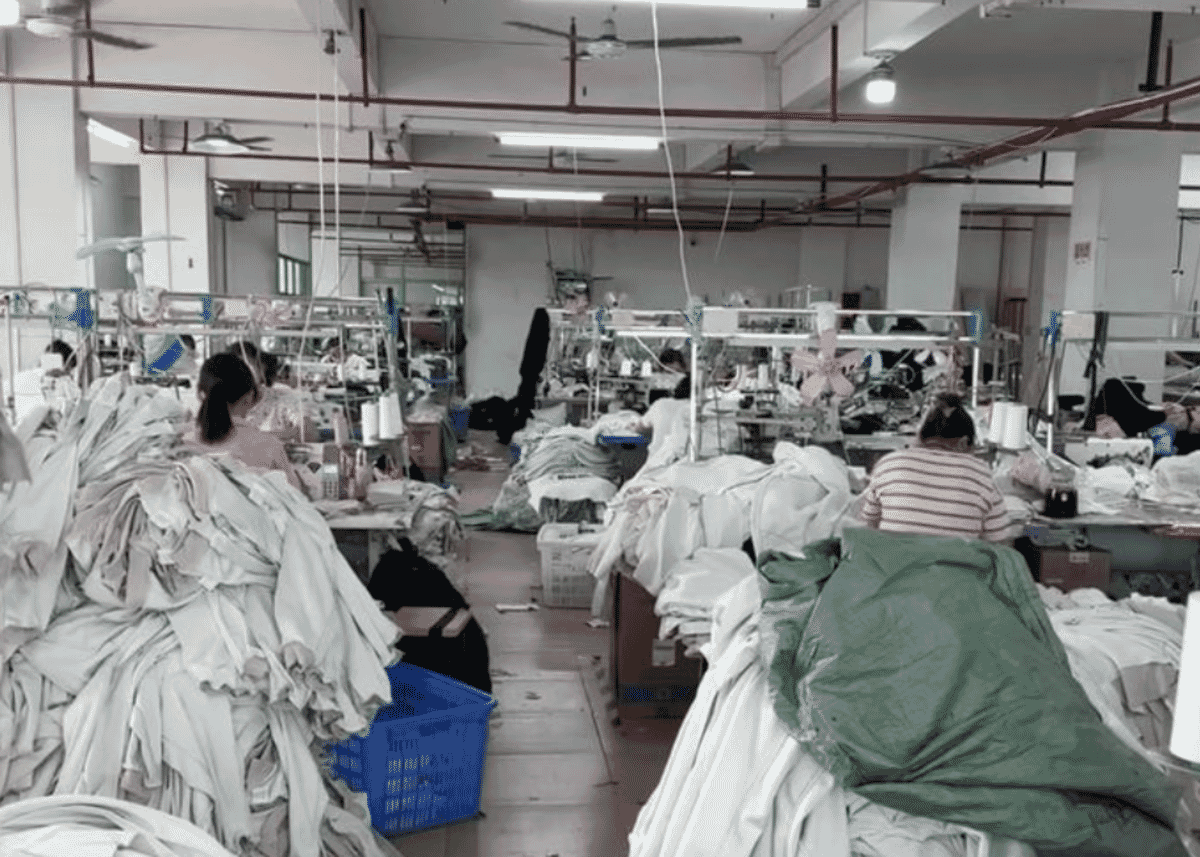
Glove production is clustered and specialised, with knitted and coated gloves made on dedicated glove-knitting machines rather than on apparel equipment. Coating is a separate wet process again, frequently at a separate facility. A supplier who does not control the coating line does not control the part of the glove that decides its performance.
Shandong province is the centre most often named for work gloves, and three of its places appear in recent reporting. Zhongcun in Pingyi county, Linyi, is reported to have more than 660 related businesses producing about 6 billion pairs a year, which the report puts at 60 percent of China's output, with one operator now overseeing about 50 glove-knitting machines that each make about 300 pairs a day (China Daily, 2026). Gaomi, in Weifang, is reported to have over 2,000 enterprises in protective gear, producing four billion pairs of protective gloves a year alongside safety shoes (China Daily, 2025). Jiaxiang county, in Jining, is a centre for ski and sports gloves, where the glove industrial parks report a total output value of 2.5 billion yuan (China Daily, 2024).
These are figures as published, and we have not verified them independently. What they show is useful anyway: the cotton and coated work glove trade runs at very high volume on automated knitting machines, while ski and sports gloves are a sewn, more engineered product made in different towns by different factories.
Jiangsu and Zhejiang carry knitted and fashion glove capacity alongside their broader textile industries, with Zhejiang generating 1.12 trillion yuan of textile and garment revenue in 2025 (China Daily Ningbo, 2026).
Leather gloves sit apart again, clustered near tanning capacity, and that is a different supply chain with hide grading, its own minimums and its own environmental compliance questions.
The practical consequence: a single supplier covering fashion knits, coated work gloves and leather is almost certainly a trading company. That can work well, and you should know it so you understand who is actually responsible when a test report is needed.
What the Export Data Shows
China declared about US$4.5 billion of glove exports across the nine HS lines that cover knitted, woven, leather and non-medical rubber gloves in 2024, according to UN Comtrade data. The largest line by a distance is HS 611610, knitted gloves impregnated, coated or covered with plastics or rubber, at US$1.87 billion. That line is the coated work glove: a knitted liner dipped in nitrile, latex or polyurethane.
Comtrade records these lines by net weight in kilograms, and flags the weights as estimated, rather than counting pairs. That is why this guide gives no average price per pair: a per-kilogram figure mixes thin 13-gauge liners with heavy winter gloves and says little about any single product.
On the coated line, China is the dominant exporter. Its US$1,867 million was about 54 percent of the US$3.49 billion reported by the 111 economies with 2024 data. Vietnam and Bangladesh had not reported 2024 figures, so the real share is somewhat lower, but the order of size is clear. Sri Lanka and Pakistan follow at a distance.
The destination data explains why both certification regimes in this guide matter. The United States took US$485 million, about 26 percent of China's coated knitted glove exports, and European Union members such as Germany, Poland and France follow, alongside Japan and the United Kingdom. A glove supplier selling into those markets should already know EN 388 and ANSI/ISEA 105, and asking which of them its current buyers require is a quick way to find out.
Quick read: China declared about US$4.5 billion of glove exports in 2024 across knitted, woven, leather and non-medical rubber lines, according to UN Comtrade. Coated knitted gloves under HS 611610 were the largest line at about US$1.87 billion, roughly half of the exports reported for that line worldwide, and the United States was the largest destination.
Where the Money Goes
| Element | Effect on cost | What to decide |
|---|---|---|
| Liner yarn | Cut-resistant fibre costs more than plain nylon or polyester | Only where the rating is needed |
| Gauge | Finer gauge means more machine time | Dexterity against durability |
| Coating | Material plus dipping process | Type and coverage, both |
| Conductive fingertips | Per finger, plus test time | Thumb and index usually enough |
| Testing and certification | Per product, not per order, and per market if both EN 388 and ANSI results are needed | Budget at development stage |
| Packaging | Pairs, bands, hangers, cartons | Retail versus industrial |
Where Glove Orders Fail
No test report exists. The supplier prints the pictogram because competitors do. The glove may even perform, but there is no evidence, and evidence is what the regulation requires. Five failures cover most of the category, and this one sits first because it is the only one that is a compliance problem rather than a quality problem. In the US the parallel duty sits with the employer, who must assess the workplace and provide PPE that protects against the hazards found (OSHA 29 CFR 1910.132).
The coating changed between sample and bulk. Foam nitrile becomes smooth nitrile, which is cheaper and performs differently, and it also invalidates any testing done on the sample.
Touchscreen stops working after coating. As above, and it is caught by testing the finished glove rather than the liner.
The fingers are too long. Sized on palm circumference alone. Specify hand length and finger length separately.
The cut rating does not hold. Cut resistance depends on the specific yarn construction, and a substituted yarn at the same nominal composition can test differently.
The wrong cut scale. A glove marketed to a US buyer with only an EN 388 code, or to a European buyer with only an ANSI level, has the right performance and the wrong evidence. The scales do not convert.
How Do You Check a Glove Supplier?
- Ask for the test report, not the pictogram, naming the laboratory and the date, and for the EU type-examination certificate if the glove is Category II or III.
- Establish whether they are a glove factory or a trading company covering several glove types.
- Specify liner, gauge, coating type and coverage as four separate fields.
- Test touchscreen function on the coated production sample, on a real device.
- Have someone do the actual job in the glove for an hour before approving the size run.
- Verify chemical safety. OEKO-TEX label check covers the textile component by certificate number.
Before you order gloves
- Decide whether this is PPE, because that answer changes the supplier and the paperwork.
- Ask which standards the product has been tested to, and read the report.
- Specify liner yarn, gauge, coating type and coating coverage separately.
- Budget testing as a development cost, per product, not as a unit price item.
- Test touchscreen function on the finished coated sample, not on the liner.
- Size by measurement, stating the convention, and include finger length.
- Have the glove used for the real task before approving the size run.
A work glove is regulated equipment. The difference between a good product and a compliant one is a test report.
How we check a glove supplier
- PPE status established before anything else, because it determines the supplier and the documentation.
- Test reports requested with laboratory and date, never a printed pictogram alone.
- Liner, gauge, coating type and coverage written as four separate specification fields.
- Touchscreen function verified on the coated production sample on a real device.
- Factory or trading company established, since one supplier covering every glove type is rarely a factory.
- Coating specification locked between sample and bulk, since a substitution invalidates the testing.
We would rather tell you a glove needs certification at brief stage than have you find out at a customs desk.
Conclusion
The first question in this category is not about materials or price. It is whether the glove is protective equipment, because that single answer changes the supplier you need, the documentation you must hold and the budget the project requires.
If it is PPE, testing is a development cost that arrives before the first order, and certification attaches to a specific product built a specific way. A coating substitution that saves a few cents per pair can invalidate the report you paid for, which is why locking the specification between sample and bulk matters more here than almost anywhere else.
Decide the market early too. Europe reads the EN 388 code and the CE category, US buyers read the ANSI/ISEA 105 cut level, and a glove sold into both needs both results on file.
On the product itself, the coating carries more weight than the liner. Polyurethane for dexterity, nitrile for oils, foam nitrile as the general compromise, and coverage specified explicitly rather than left to the factory.
And test by task. Gloves are the one category where the wearer is doing something specific, and the only reliable assessment is somebody doing that thing in the glove for long enough to find out whether it works.
Our team places and manages production with the documented factories in our China group, from 100 pieces per style. Tell us the use case: our team replies within 24 hours with the liner, coating, testing requirement and the real minimum. Samples, invoices and shipping run straight between you and the factory; our fee is flat and we take nothing from the factory side.
Send your brief China factory list, $49No spec sheet yet? We draw one style as a factory-ready tech pack for $79. What the $79 covers.
Frequently Asked Questions
Do work gloves need certification?
For the European market, protective gloves fall under the PPE Regulation, which sorts products into risk categories determining how much third-party involvement is required. Gloves sold for real cut, abrasion or puncture protection are usually Category II, which needs EU type-examination by a notified body, and chemical-protection gloves are Category III. Ask for the test report naming the laboratory, not a printed pictogram.
What does EN 388 cover?
EN 388 is the European standard for gloves protecting against mechanical risks, producing a pictogram with rated values for abrasion, cut, tear and puncture. EN ISO 21420 covers general requirements including innocuousness, sizing and dexterity. Other standards cover thermal and chemical risks separately.
Which glove coating should I choose?
Polyurethane for dexterity and precision handling, though it performs poorly with oils. Nitrile for oil resistance and durability. Foam nitrile is the general-purpose compromise, channelling light oils to improve grip. Latex grips best on dry surfaces but degrades with oil and raises allergy questions.
Why did my touchscreen gloves stop working?
Most often the coating covers the conductive fingertip, insulating the exact area that has to conduct. The liner tests fine and the finished glove does not. Test touchscreen function on the coated production sample on a real device, not on the liner.
How should glove sizing be specified?
By measurement rather than by letter, stating which convention you are using, and including hand length and finger length alongside palm circumference. Two people with identical palm measurements can need different sizes, and an over-long fingertip makes precision work impossible.
Are EN 388 and ANSI cut levels the same?
No. EN 388 reports cut on the coup scale from 1 to 5 and on the ISO 13997 straight-blade scale from A to F in newtons. ANSI/ISEA 105 reports cut from A1 to A9 in grams on the ASTM F2992 method. The units differ, so a glove needs its own test result for each market.
Where are work gloves made in China?
Shandong is the centre most often named. Recent reporting puts about 6 billion pairs a year in Zhongcun, Pingyi county, and four billion pairs of protective gloves in Gaomi, Weifang, while Jiaxiang county in Jining is known for ski and sports gloves. These are published figures, not independently verified.
Sourcing notes: all company names, certification marks and trademarks referenced here are the property of their respective owners, and naming a source does not imply any relationship with it. Trade figures are UN Comtrade data for 2024 as declared by the reporting economies, not prices from any factory. Cluster figures are as published by the outlets named, and we have not verified them independently. Standards summaries are for orientation: the standard itself and the laboratory report decide what a glove may claim. Check your own HTS code and agree terms with the factory in writing before you pay a deposit.
Where the figures come from
- European Union: Regulation (EU) 2016/425 on personal protective equipment, Articles 18 and 19 and the Annex I risk categories.
- SATRA: EN 388:2016+A1:2018 tests and performance levels.
- SATRA Spotlight: the ISO 13997 straight-blade cut test, the impact test and the X and P markings in EN 388.
- Wenaas: EN ISO 21420 hand size table and general requirements.
- US Occupational Safety and Health Administration: 29 CFR 1910.132, general requirements for personal protective equipment.
- US Occupational Safety and Health Administration: 29 CFR 1910.138, hand protection.
- PK Safety: ANSI/ISEA 105-2016 cut levels A1 to A9.
- UN Comtrade (2024): China's exports of HS 611610, 611691, 611692, 611693, 611699, 621600, 420321, 420329 and 401519, world exporters of HS 611610, and China's HS 611610 exports by partner.
- China Daily (2026): Zhongcun, Pingyi county glove output and automation.
- China Daily (2025): Gaomi protective gloves and safety shoes.
- China Daily (2024): Jiaxiang county glove industrial parks.
- China Daily Ningbo (2026): Zhejiang textile and garment revenue figures.
- OEKO-TEX Label Check: public verification of certificate numbers.
Related Reading
- Clothing Suppliers in China: How to Find and Vet a Factory
- Hat and Cap Manufacturers in China
- Sweater Manufacturers in China
- Textile Factories in China
- Importing Clothing from China
No commission and no mark-up on the factory price: the factory invoices you itself.