By David Stan, Brands Manager at China Clothing Manufacturer. Published October 2026.
Wholesale suppliers from China fall into four groups: factories selling direct, trading companies, market wholesalers and sellers on B2B platforms. Which one you buy from decides your minimum order, your price, your payment risk and how much you can check before the goods leave China.
This guide is for retailers and resellers buying finished stock. Clothing is the main example, but the same mechanics apply to most general goods. Facts were checked on 24 October 2026, and sources are linked inline and listed at the end.
Note: China Clothing Manufacturer is a group of documented clothing factories in China, producing for brands from 100 units. Figures in this guide come from the platforms, market operators and official bodies cited, checked on 24 October 2026. This is general guidance, not legal or tax advice.
Key takeaways
- There are four kinds of wholesale supplier: factory-direct, trading company, market wholesaler and platform seller. A listing that says "factory" may still be a trader.
- Yiwu has 75,000 operating shops and over 2.1 million SKUs, according to its operator's 2024 annual report.
- Check any company on China's official registry, gsxt.gov.cn, using its 18-character Unified Social Credit Code.
- Business email compromise complaints to the FBI reported losses of over $3bn in 2025. Confirm any change of bank details by phone.
- China and Hong Kong made up about 90% of counterfeit and IP-infringing goods seized by US customs in FY2024, by quantity.
What Counts as a Wholesale Supplier in China?
A wholesale supplier sells goods that already exist, in bulk, at trade prices. You choose from their range. You don't write a specification, and you usually can't change the fabric, the fit or the construction. At most you'll get a choice of colours, your own swing tag, or a printed logo on a blank.
That's the line between buying wholesale and placing a production order. Wholesale is fast: the stock often exists already, minimums can be a carton, and lead time is days. What you give up is control. The next batch of a bestseller may be similar rather than identical, and anyone can buy the same item.
For a reseller whose value is curation, speed or price, that trade-off is fine. For a brand whose product is the point, it isn't, and our guide to finding and vetting clothing suppliers in China covers the production side instead.
Citation Capsule: A wholesale supplier in China sells finished goods that already exist, in bulk and at trade prices, from a fixed range. Buyers trade control over specification, repeatability and exclusivity for low minimums and short lead times, which suits resale and range-filling better than a brand's core product.
Which Types of Wholesale Supplier Are There?
Four, and they often describe themselves in the same words. A trading company will call itself a manufacturer, a market stall will say it owns a factory, and a platform listing will say both. What matters is who holds the stock, who made it and who you can hold responsible when it goes wrong.
| Supplier type | What they are | Strength | Watch for |
|---|---|---|---|
| Factory-direct | The producer, selling its own stock lines or overruns | Lowest price, real knowledge of the product | Narrow range; higher minimums; may prefer production orders |
| Trading company | Buys from several factories and sells under one roof | Wide range, English-speaking sales, export paperwork handled | A margin on top; may not know which factory made a batch |
| Market wholesaler | A showroom or stall in a physical market such as Yiwu or Guangzhou | You can handle the goods before paying; low minimums | Mostly traders; stock changes weekly; little documentation |
| Platform seller | Any of the above, selling through 1688, Alibaba.com, Made-in-China.com, DHgate or Global Sources | Easy comparison; some buyer-protection schemes | Photos aren't the goods; "factory" labels are often marketing |
Structural guidance based on how each channel works. Confirm the supplier type before you compare prices.
How to tell a factory from a trader
Ask three things. Does the licence's business scope include manufacturing? Can they show the floor live on video? Can they price a change of fabric weight on the spot? A factory can usually answer on the call; a trader has to go and ask.
Neither is wrong. A good trading company is often better for a mixed order, because it consolidates many producers into one shipment. The problem is a trader pretending to be a factory. Our comparison of sourcing agents versus working direct with the factory covers the same question from the agent side.
Which B2B Platforms Should You Use?
Five platforms are the usual starting points, and they are built for different buyers. 1688 is China's domestic market and assumes you're inside China. Alibaba.com, Made-in-China.com and Global Sources face export buyers. DHgate sits nearer to retail.
| Platform | Who it's for | What the platform says it offers |
|---|---|---|
| 1688.com | Domestic Chinese buyers; overseas buyers via an agent or forwarder | Alibaba's domestic wholesale site, entirely in Mandarin; most suppliers set up for domestic buyers only |
| Alibaba.com | International trade buyers | Trade Assurance escrow; Verified Supplier checks carried out by SGS and TÜV |
| Made-in-China.com | International trade buyers | Run by Focus Technology since 1998; Audited Supplier reports produced by SGS |
| DHgate | Small and medium retailers | Cross-border marketplace founded in 2004, mainly selling from Chinese SMEs |
| Global Sources | International trade buyers | Hong Kong-based B2B marketplace and trade-show organiser, owned by Clarion Events |
Sources: platform pages and reference entries listed under Sources, checked 24 October 2026.
1688: cheapest, hardest to use
WorldFirst describes 1688 as one of China's largest domestic B2B wholesale marketplaces, entirely in Mandarin, and notes that most of its suppliers are set up for domestic buyers only (WorldFirst). So you'll need a forwarder or agent with a Chinese address to receive and export the goods. The listed price is the start of your cost, not the end.
Alibaba.com: what Trade Assurance actually covers
Alibaba says Trade Assurance holds your payment in escrow and releases it to the supplier after you receive and confirm the goods, with refunds if an order isn't shipped, goes missing or arrives with defects (Alibaba.com Trade Assurance). That protection only applies when you pay through the platform. A seller who asks you to pay a personal account or an unrelated company to "save fees" is taking you outside it. Our guide on whether Alibaba is safe covers what the badges and Trade Assurance do and don't settle.
Alibaba's Verified Supplier tier is checked by SGS and TÜV, according to Alibaba's own seller page (Alibaba.com). That checks the company and its site. It doesn't confirm the specific batch you're buying is any good.
Made-in-China.com, DHgate and Global Sources
Made-in-China.com is operated by Focus Technology and has run since 1998 (Made-in-China.com help centre). Its help centre says Audited Suppliers are authenticated by inspection, verification, testing and certification companies, and the audit reports are produced by SGS (Made-in-China.com). DHgate and Global Sources are covered in the table above.
Skip the search: the China factory directory ($39) lists documented factories by category, city and capability, with the verification status of each. One-time payment, instant download.
Where Are China's Main Wholesale Markets?
For general goods, Yiwu in Zhejiang. For clothing, Guangzhou, where several large garment markets sit within a short taxi ride of each other. Visiting lets you handle the goods before you pay, which no listing photo can replace. The cost is travel time, and nearly everyone you'll meet in a market stall is a trader rather than the producer.
Yiwu International Trade City
Yiwu's market operator, Zhejiang China Commodities City Group, reported 75,000 operating shops, more than 200,000 market practitioners and over 2.1 million SKUs in its 2024 annual report (Zhejiang China Commodities City Group). The same group runs Chinagoods, a B2B platform built on those physical shops. Its nine major markets opened at 8:00 a.m. on 28 February 2026, after the Lunar New Year break (PR Newswire APAC).
Yiwu is strongest for small goods: accessories, toys, stationery, homeware and seasonal items. It's weaker for clothing where fit matters, because a showroom shows a sample, not your batch.
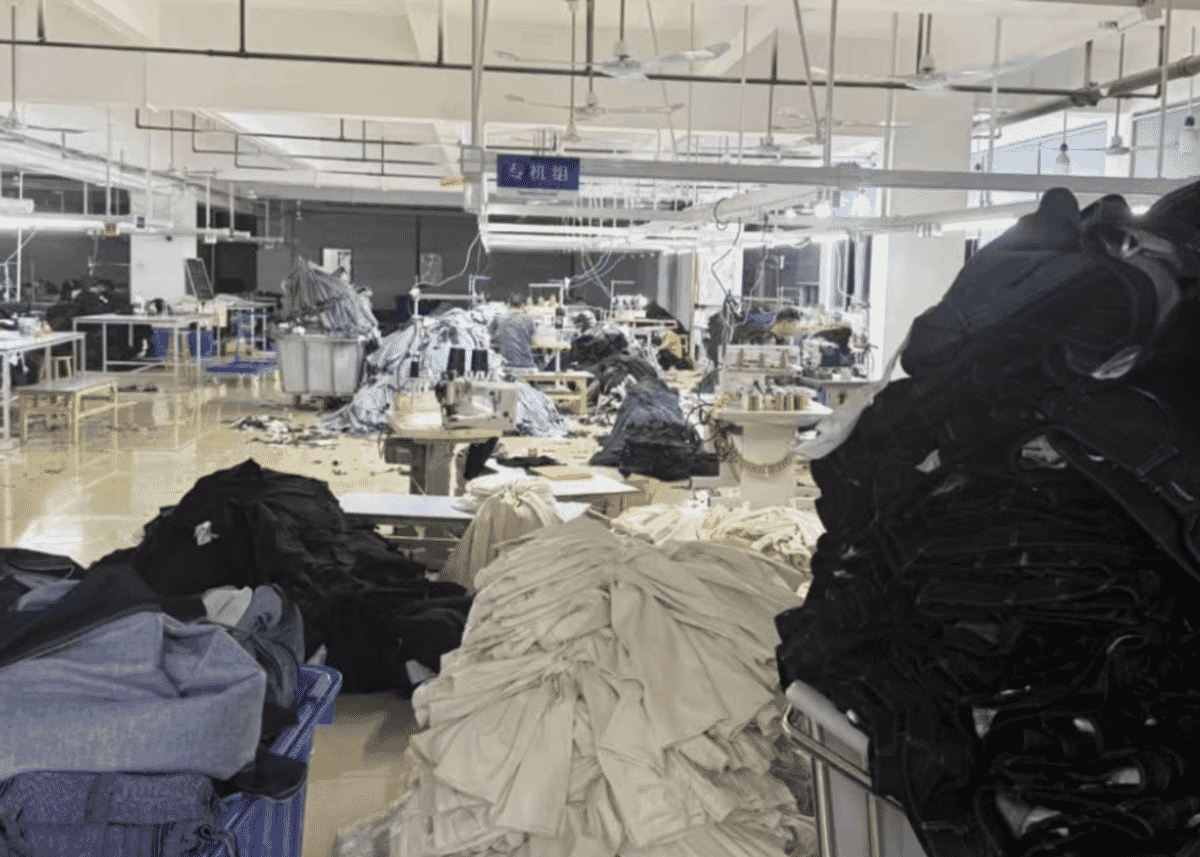
Guangzhou: Shahe, Shisanhang and Baima
Guangzhou's clothing markets split by price level. Travel China Guide lists Shahe, on East Guangyuan Road in Tianhe District, for low-priced women's and men's clothing; Shisanhang, in Liwan District, for mid- and low-grade clothing; and Baima (White Horse), on Zhannan Road in Yuexiu District, as the city's largest high-grade clothing wholesale market (Travel China Guide).
Shahe starts early. Jiemian reported in 2023 that the market covers about 300,000 square metres with more than 20,000 merchants, and that trading gets busy from 3 or 4 a.m. (Jiemian). Travel China Guide gives Shahe's hours as 5:00 to 11:00 on weekdays and Shisanhang's as 9:00 to 14:00. Check current hours before you travel, because they shift.
| Market | City / district | Known for | Published hours |
|---|---|---|---|
| Yiwu International Trade City | Yiwu, Zhejiang | General goods, 2.1m+ SKUs | Opens 8:00 |
| Shahe | Guangzhou, Tianhe | Low-price clothing, volume | 5:00 to 11:00 weekdays |
| Shisanhang | Guangzhou, Liwan | Mid- and low-grade clothing | 9:00 to 14:00 |
| Baima (White Horse) | Guangzhou, Yuexiu | Higher-grade clothing | 8:30 to 17:30 |
Sources: Zhejiang China Commodities City Group, PR Newswire APAC, Travel China Guide. Hours change; confirm before travelling.
Trade fairs
The Canton Fair is the other place buyers meet many suppliers in a few days. China's Ministry of Commerce lists the 140th session in three phases in autumn 2026, with fashion in Phase 3, running 31 October to 4 November (MOFCOM). It's good for comparison and discovery, less good for finding narrow specialists. Our pages on clothing manufacturers in Guangdong and Zhejiang cover the production clusters behind these markets.
How Do You Verify a Chinese Supplier?
Start with the business licence, then check it against the official registry. Every Chinese company has an 18-character Unified Social Credit Code, which the State Taxation Administration adopted as the taxpayer ID from 2015 (State Taxation Administration). Enter that code on the National Enterprise Credit Information Publicity System at gsxt.gov.cn, run by the State Administration for Market Regulation.
The registry shows the legal name, registration date, business scope and any penalties. Check that the name is the same as the one on the invoice and on the bank account you're paying. If they differ, stop and ask why before you pay anything.
- Business scope. Does it include manufacturing, or only trade? That tells you whether "our factory" is literal.
- Live video. Ask for a walk through the warehouse or floor on a video call, showing today's stock.
- Samples. Pay for samples of the exact SKUs, from stock, before the bulk order.
- Third-party audit. Platform badges from SGS or TÜV confirm the company exists; they don't check your batch.
Citation Capsule: Every company registered in China has an 18-character Unified Social Credit Code, adopted as the taxpayer identification number from 2015. Buyers can check that code on the National Enterprise Credit Information Publicity System (gsxt.gov.cn) to confirm the legal name, business scope, registration date and any penalties before paying a supplier.
Buying clothing and not sure if it's a wholesale buy or a production order? Send us the product and quantity and we'll tell you which it is. No cost. Send it here.
How Do MOQs and Mixed-SKU Orders Work?
Wholesale minimums are set by how the stock is packed, not by a production run. A seller with goods in a warehouse might sell by the carton, by a "pack" of one style in a size run, or by a total order value. Production minimums come from fabric and trim purchasing; wholesale minimums come from the seller's tolerance for small, fiddly orders.
The flip side is that the seller decides the size ratio, colour mix and packing. A clothing pack can come as one each of S, M, L and XL, which won't suit a market that sells mostly mediums.
Mixed-SKU orders
Most resellers want many SKUs in small quantities. There are three ways to do it. Buy from a trading company that stocks many lines. Buy from several sellers and have a forwarder or agent consolidate the cartons in China. Or buy from one market building, where neighbouring stalls deliver to a single shipping point.
Consolidation adds a step where things go missing. Keep a list by seller, SKU and carton mark, and ask your consolidator to photograph each delivery against it. A missing carton found in China costs a phone call; found at home, it costs a dispute.
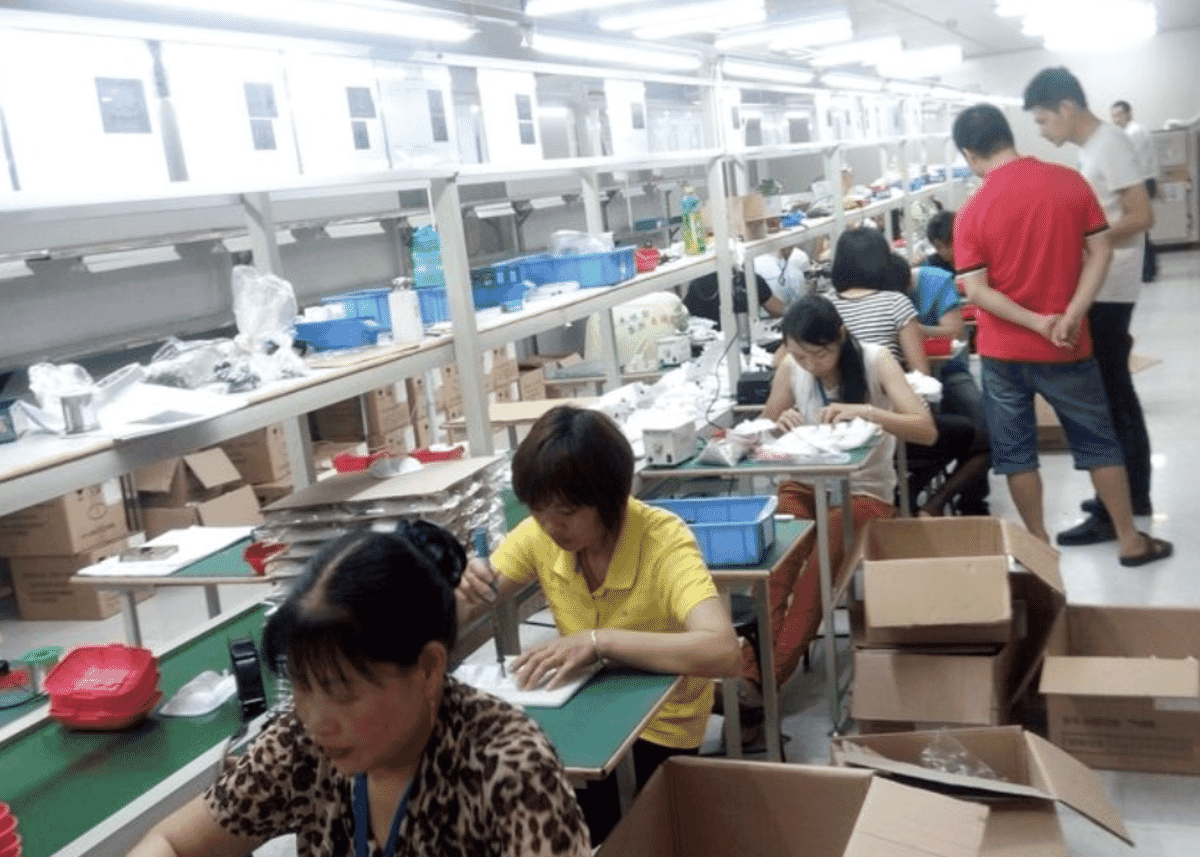
Which Payment Terms Are Safe?
None is risk-free; each moves the risk somewhere different. The common term in China trade is a 30% deposit with the 70% balance before shipment, paid by bank transfer (T/T). The law firm Harris Sliwoski points out the catch: on those terms the buyer pays in full before ever receiving or inspecting the goods (Harris Sliwoski, China Law Blog).
| Method | How it works | Who carries the risk |
|---|---|---|
| T/T 30/70 | Deposit on order, balance before shipment | Mostly you; inspect before paying the balance |
| Platform escrow | Payment held by the platform until you confirm receipt (e.g. Trade Assurance) | Shared, as long as you stay on the platform |
| Letter of credit | Bank pays against compliant documents under ICC UCP 600 | Balanced, but costly and document-heavy |
| Card or PayPal | Used for samples and small orders | Some protection; fees and limits apply |
Letters of credit run under the ICC's Uniform Customs and Practice for Documentary Credits (UCP 600).
The fraud that catches experienced buyers
One of the costliest risks is a criminal in a supplier's email sending "new bank details" before the balance is due. The FBI's Internet Crime Complaint Center recorded 24,768 business email compromise complaints with losses of over $3.04 billion in 2025, and it describes the scam as targeting businesses that work with suppliers and pay by wire (FBI IC3 2025 report).
The fix is dull and effective. Never act on a bank change by email alone. Call a number you already had, not one in the email, and confirm. Check that the account name is the registered company name. If a supplier asks you to pay a personal account or a different company, treat it as a red flag until it's explained in writing. Our guide to Alibaba scams covers the other patterns and what to do if you've already paid.
Citation Capsule: The standard 30% deposit and 70% balance before shipment, common in trade with Chinese suppliers, means the buyer has paid in full before receiving or inspecting the goods. Business email compromise, in which criminals send false bank details, accounted for reported losses of over $3 billion in 2025, according to complaints made to the FBI's Internet Crime Complaint Center.
Should You Inspect Before Shipment?
Yes, for any order where the balance is meaningful to you. A pre-shipment inspection is your last chance to find a problem while you still hold the money. QIMA, one of the large inspection companies, says pre-shipment inspections take place when production is at least 80% complete (QIMA).
Inspectors draw a random sample using ISO 2859-1 or ANSI/ASQ Z1.4 tables, which QIMA names as the recognised standards. Set the acceptable quality limit (AQL) before the inspection. A fail on agreed terms gives you a clear reason to hold the balance.
What to check on wholesale stock
- Quantity and assortment against your purchase list, carton by carton.
- Labelling: fibre content, care, size and origin labels that your market requires.
- Measurements of each size against the seller's chart.
- Workmanship: seams, stains, loose threads, print quality, zips and fastenings.
- Brand marks: anything that looks like someone else's logo or character.
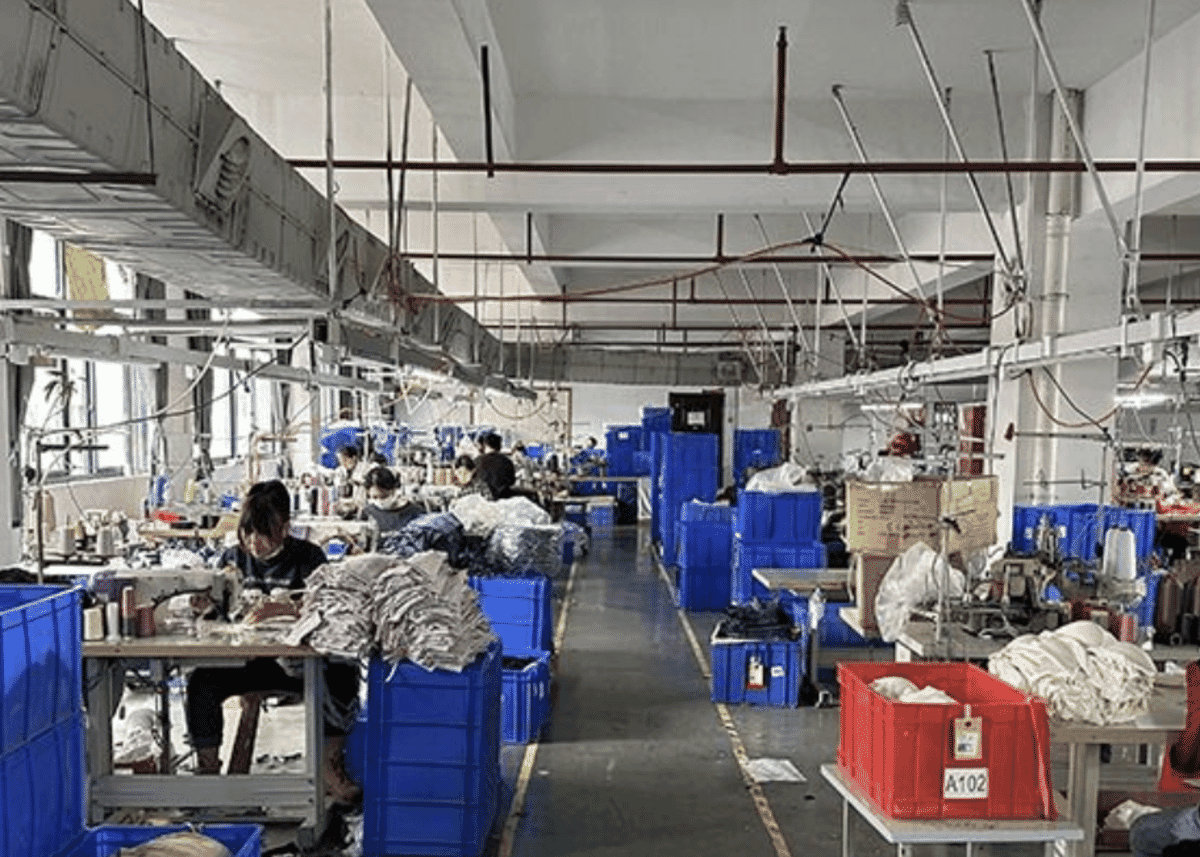
What Does Landed Cost Include?
The unit price plus everything it takes to get the goods into your warehouse: freight, insurance, port charges, brokerage, duty, any unrecoverable import tax and delivery. On cheap goods, these lines can exceed the goods themselves.
Start with the Incoterm. The ICC's Incoterms 2020 rules are eleven three-letter terms that set who pays and who carries risk at each stage (ICC). Market and 1688 sellers usually quote ex-works or delivered to a Chinese address. Export-facing sellers quote FOB or sometimes DDP. Put every quote on the same term before comparing.
- Freight mode. Courier for samples, air for small urgent orders, sea LCL for a few cubic metres, a full container only when you can fill it.
- Chargeable weight. Air and courier charge on whichever is greater, actual weight or volume weight. Bulky, light goods such as puffer jackets cost more than their weight suggests.
- Duty. Set by the tariff code in your import country, not by the seller. Get the code right before you order. Our guides to importing from China into the US and into the UK explain how duty is worked out.
Run your numbers through the China production cost calculator to see how duty and freight change the unit cost. If the margin only works at the seller's ex-works price, it doesn't work.
What Are the Red Flags?
Many bad buys show warning signs before payment: a name that differs from the registry, a price far below everyone else's, or a famous brand at a fraction of its price. One is a reason to slow down. Two is a reason to walk away.
- Branded goods at wholesale prices. US Customs and Border Protection reports that seizures from China and Hong Kong made up about 90% of the total quantity of counterfeit and IP-infringing goods it seized in fiscal year 2024 (CBP). The importer carries the risk of seizure, not the seller.
- Payment outside the platform, to a personal account or a company with a different name.
- Bank details changed by email, especially close to the balance date.
- No samples from stock, or samples that arrive from a different address.
- Refusal of inspection, or a demand for the full balance before goods are packed.
- A "factory" whose licence only lists trade in its business scope.
Citation Capsule: In fiscal year 2024, seizures from China and Hong Kong accounted for approximately 90% of the total quantity of goods seized by US Customs and Border Protection for intellectual property violations. Wholesale buyers who import branded or character goods at trade prices carry the seizure risk themselves.
Before you pay a wholesale supplier
- Get the 18-character credit code and check it on gsxt.gov.cn.
- Confirm the bank account name is the registered company name.
- Pay for samples of the exact SKUs, from stock.
- Put every quote on the same Incoterm and work out landed cost.
- Agree the AQL and book an inspection before the balance is due.
- Confirm any change of bank details by phone, on a number you already had.
Each of these takes minutes. Skipping one is how many wholesale losses happen.
Conclusion
Buying wholesale from China works well when you know which kind of supplier you're dealing with and treat every price as the start of the calculation. Factories, traders, market stalls and platform sellers all have a place. The trouble starts when one pretends to be another.
The habits that protect you are simple: check the registry, sample from stock, inspect before the balance, never trust a bank change by email, and avoid branded goods you can't prove are licensed. When a product sells well enough to want your own spec, move from wholesale to production.
We are a group of documented clothing factories in China, producing for brands from 100 units. Tell us the product and quantity, and we'll place the brief with the factory in our group built for it and come back with the real minimum and price. Flat fees, no factory commissions.
Get in contact Download the directory ($39)Need a tech pack? Get a factory-ready single-style tech pack for $79. See what's included.
Frequently Asked Questions
Where can I find wholesale suppliers from China?
On B2B platforms such as 1688, Alibaba.com, Made-in-China.com, DHgate and Global Sources; in physical markets such as Yiwu International Trade City and Guangzhou's Shahe, Shisanhang and Baima clothing markets; and at trade fairs such as the Canton Fair. Most buyers use platforms to compare and a visit or samples to confirm.
How do I know if a Chinese supplier is legitimate?
Ask for the 18-character Unified Social Credit Code and check it on gsxt.gov.cn, China's official enterprise registry. Confirm the legal name, business scope and registration date, and make sure the bank account is in that same name. Then order samples from stock and ask for a live video walk-through of the warehouse.
What is the minimum order for wholesale goods from China?
It depends on how the seller packs stock, not on a production run. Some sell by the carton, some by a size-run pack, some by order value. Because the goods already exist, wholesale minimums are usually far lower than factory production minimums. Confirm the pack ratio before ordering.
Is Alibaba Trade Assurance safe?
It holds payment in escrow until you confirm receipt, and offers refunds for unshipped, missing or defective orders, according to Alibaba. It only protects you when you pay through the platform. Any request to pay outside it removes that protection.
What payment terms are normal with Chinese suppliers?
A 30% deposit with the 70% balance before shipment, by bank transfer, is the common term. It means you've paid in full before receiving the goods, so book a pre-shipment inspection before releasing the balance and confirm any change of bank details by phone.
Editorial note: all company names, platform names, certification marks and trademarks referenced here are the property of their respective owners. Figures come from the sources below, checked on 24 October 2026, and change over time.
Sources
- Zhejiang China Commodities City Group (2025): 2024 annual report: 75,000 shops, 2.1m+ SKUs.
- PR Newswire APAC (2026): Yiwu market opening time.
- Travel China Guide: Guangzhou market locations, price levels and hours.
- Jiemian (2023): Shahe area, merchant count and trading hours.
- Ministry of Commerce of China (2026): 140th Canton Fair phases and dates.
- WorldFirst: 1688 as a domestic, Mandarin-language marketplace.
- Alibaba.com Trade Assurance: escrow and refund terms.
- Alibaba.com Verified Supplier: verification carried out by SGS and TÜV.
- Made-in-China.com: Audited Supplier reports produced by SGS.
- Made-in-China.com help centre: operator and founding year.
- DHgate.com (Wikipedia): founding and business model.
- Global Sources (Wikipedia): business model and ownership.
- State Taxation Administration of China (2015): the 18-character Unified Social Credit Code as taxpayer ID.
- Harris Sliwoski, China Law Blog (2025): 30/70 payment terms and buyer risk.
- International Chamber of Commerce: UCP 600 rules for documentary credits.
- FBI Internet Crime Complaint Center (2026): 2025 business email compromise complaints and losses.
- QIMA: inspection at 80% complete; ISO 2859-1 sampling.
- International Chamber of Commerce: Incoterms 2020, eleven trade terms.
- US Customs and Border Protection (2025): FY2024 IPR seizures; China and Hong Kong about 90% by quantity.
Related Reading
- Clothing Suppliers in China: How to Find and Vet a Factory
- China Sourcing Agent vs Working Direct With the Factory
- Is Alibaba Safe? What the Badges and Trade Assurance Cover
- Alibaba Scams: The Patterns, the Tells and How to Avoid Them
- Importing from China in 2027: De Minimis, Duty and Documents
No commissions. No markups. The factory bills you directly.