By David Stan, Brands Manager at China Clothing Manufacturer. Published October 2026.
Alibaba scams are rarely sophisticated. They follow a small number of patterns, they use the same handful of moves, and the outright frauds among them need the buyer to do one specific thing first: pay outside the platform, or pay to an account that does not match the company.
That is genuinely good news, because it means prevention is a checklist rather than an instinct. You do not need to be able to read a Chinese business licence to be safe. You need to know which requests are normal and which are the setup.
This guide covers the patterns that actually occur, the moves that precede them, what to do if money has already gone, and the checks that remove most of the risk in an afternoon.
Note: China Clothing Manufacturer is a group of documented clothing factories in China, producing for brands from 100 units. The official guidance quoted here comes from the FBI, the FTC and Alibaba.com, checked on 23 October 2026. This is general guidance, not legal advice.
Key takeaways
- The outright frauds need the buyer to pay off-platform or to a mismatched account name.
- The account name must match the business licence exactly. This one check exposes the fake-company and redirected-account frauds.
- Sample-and-switch is often not legally fraud, which makes it harder to recover from than theft.
- A price far below the market is a different product, not a bargain.
- Urgency is a technique. Genuine suppliers do not need your deposit today.
- Trade Assurance covers non-delivery and quality problems, but a quality claim is judged against the order terms you agreed.
- Recovery is difficult once funds leave the platform, so prevention is the entire strategy.
What Are the Actual Scam Patterns?
Six come up again and again, and three of them do most of the damage on a first order: the off-platform diversion, the account-name mismatch and sample-and-switch. None is sophisticated; each depends on the buyer doing one specific thing, and knowing what that thing is removes most of the exposure before any money moves, which is where this category is unusually forgiving. Redirected bank details and impersonated suppliers overlap with business email compromise, which the FBI describes as a scam targeting businesses and individuals performing a transfer of funds, often carried out by compromising legitimate business email accounts (FBI IC3).
The off-platform diversion. A conversation starts on the platform, then moves to email or a messaging app, and payment is requested by direct transfer. Sometimes a small discount is offered for the inconvenience. The discount is the price of removing your protection.
The account-name mismatch. The invoice names the company; the bank details name someone else, or a company you have never heard of. Explanations vary and all of them are stories.
Sample and switch. An excellent sample, then bulk in a lighter fabric, a coarser yarn or a simpler construction. It is a common commercial loss and often not legally fraud, because nobody wrote the specification down.
The impersonated supplier. A listing or an email that closely mimics an established company, sometimes with a domain differing by one character.
Quantity and quality drift. Short shipments, mixed grades, or cartons padded with seconds. Discovered on arrival, by which point the balance is paid.
The advance-fee variant. A request for an unusual upfront payment: a certification fee, an export licence charge, an inspection deposit. None of these are normal costs a buyer pays a supplier.
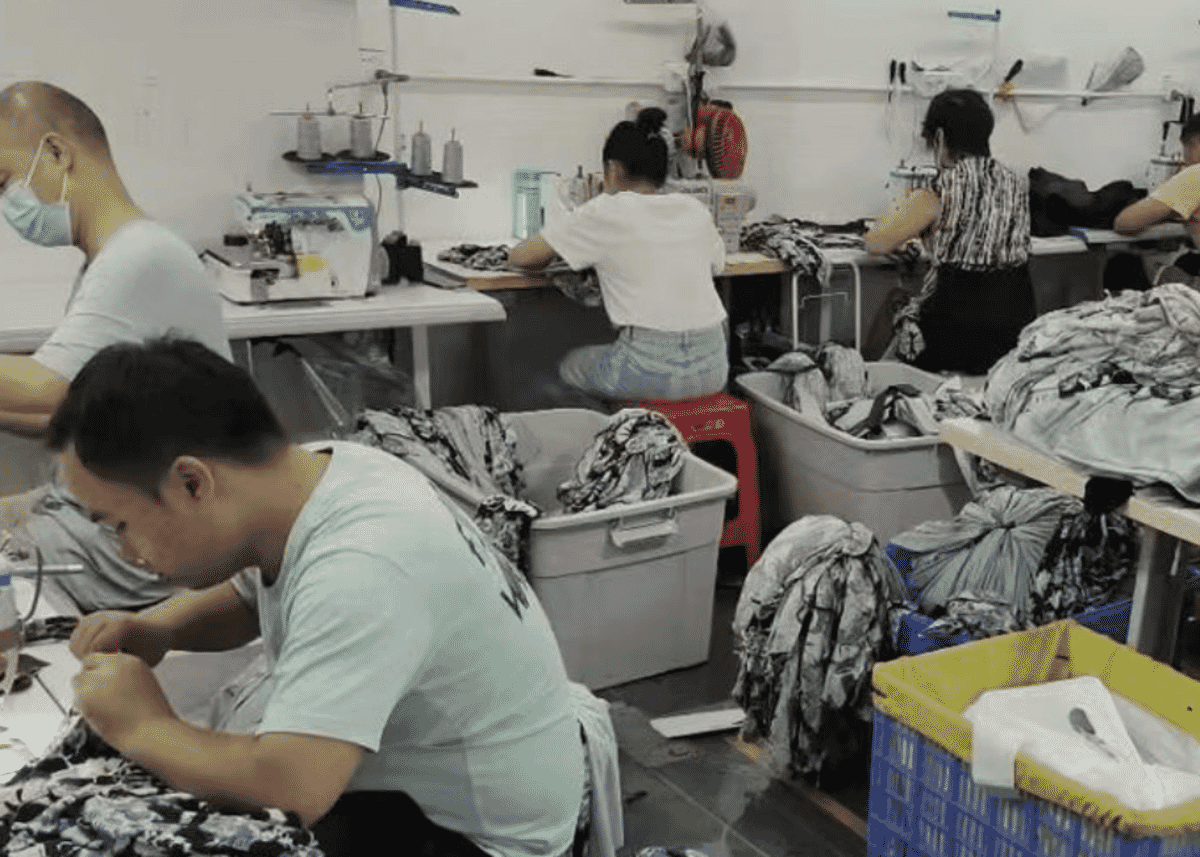
Citation Capsule: Scams on Chinese sourcing platforms follow a small set of patterns, and three do the most damage on a first order: diversion of payment off-platform to direct transfer, a receiving bank account whose name does not match the registered company, and substitution of specification between an approved sample and bulk production. The third is frequently not legally fraud because no written specification existed.
Had a request that felt wrong? Send us the message and the company name and we will tell you what we make of it, at no cost. Send it here.
Which Requests Should Stop You Immediately?
Five. Any one of them is a reason to pause and verify before another message goes out, and none requires technical knowledge to spot. They appear in the message thread rather than in the product, which is what makes them cheap to catch.
"Please pay to this personal account." There is no legitimate version of this. Companies receive money in the company name.
"Let's continue on WhatsApp to save fees." Moving the conversation is normal later; moving the payment before verification is the setup.
"The price is only valid today." Manufacturing quotes are valid for weeks because materials are priced in weeks. Urgency on a first order is a technique.
"We need the full amount upfront." Deposit and balance is the norm. Full prepayment to an unverified supplier removes every lever you have.
"We can declare a lower value for customs." Offered as a favour, and it is customs fraud with the liability sitting on the importer of record. A supplier willing to commit fraud on your behalf tells you what kind of counterparty they are.
Skip the search: the China factory directory ($39) lists documented factories by category, city and capability, with the verification status of each. One-time payment, instant download.
Why Is the Cheapest Quote Almost Always a Problem?
Because manufacturing costs are not mysterious. Fabric has a price, labour has a rate, and a factory that quotes well below the market has either misunderstood your brief or intends to make something different. Either way the quotation is information about a mismatch rather than an opportunity, and treating it as the latter is how the pattern works.
Send one written specification to six suppliers and the replies will cluster. That cluster is what your product costs. A quote significantly below it is not a negotiating triumph, it is a signal that somebody has substituted a lighter fabric, a coarser yarn or a simpler construction and has not mentioned it.
The dangerous version is when the low quote comes from a supplier who did understand the brief and intends to deliver the sample correctly and the bulk cheaply. The sample confirms your decision, the bulk funds their margin, and the specification you never wrote down is what makes it unarguable.
What a realistic saving looks like
Genuine cost advantages exist and they are explainable. A factory with spare capacity this month, one that already holds your fabric in stock, or one where your construction happens to match their line setup can be meaningfully cheaper, and they will tell you why when asked. A supplier who cannot explain their price is not cheaper, they are different.
Citation Capsule: When one written specification is sent to multiple Chinese suppliers, the central cluster of returned quotes represents the genuine cost of that specification. Quotes substantially below the cluster typically indicate undisclosed substitution in fabric weight, yarn type or construction. Legitimate cost advantages, such as spare capacity or fabric already held in stock, are explainable on request.
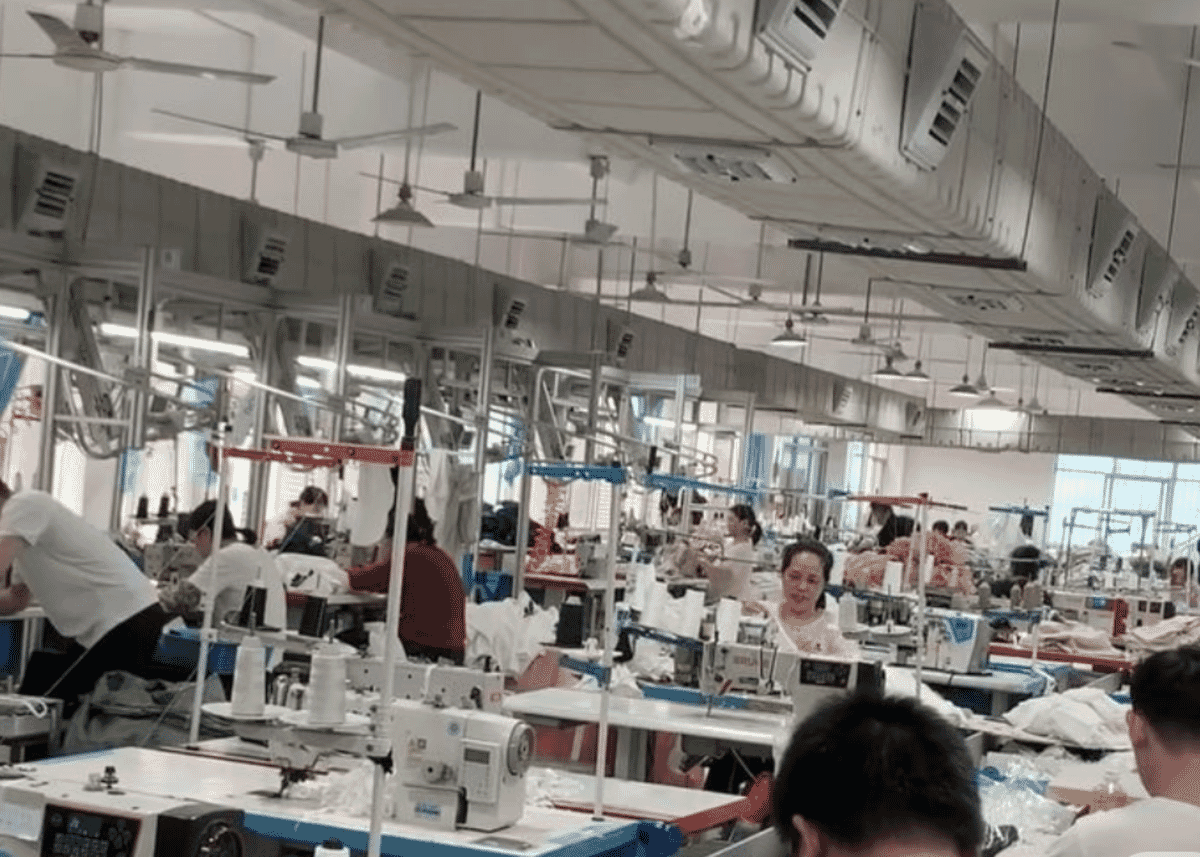
Which Checks Remove Most of the Risk?
Four, in order of risk removed per minute spent, and all four are free. Together they eliminate the large majority of what goes wrong on a first order, and none of them requires you to leave your desk or spend anything.
The business licence. Ask for the scan. Check the unified social credit code, and check that the registered company name matches the receiving bank account exactly. This single comparison exposes a fake company or a redirected account before any money moves.
The registered scope. Manufacturing, or wholesale and retail trade. This answers whether you are talking to a factory without anyone needing to be candid.
A live video call from the floor. During Chinese working hours, walking, unannounced. Twenty to thirty minutes, and it is the most informative thing available to you remotely.
A written specification. Fabric, weight, construction, colour standard, tolerance, and whether sample and bulk run in the same facility. Without this you cannot demonstrate that anything was wrong.
Citation Capsule: Four free checks remove much of the risk on a first marketplace order: confirming the bank account name matches the registered company on the business licence exactly, reading the licence's registered scope, running an unscheduled video call of the production floor, and agreeing a written specification. Certificate numbers should also be looked up in the issuing body's own database.
| Check | What it proves | Time | What it will not catch |
|---|---|---|---|
| Business licence scan | The company exists, and the unified social credit code matches the name on the receiving bank account | 10 minutes | A real company acting in bad faith |
| Registered scope | Manufacturing, or wholesale and retail trade: whether you are talking to a factory or a trading company | 5 minutes | A factory that subcontracts your order onward |
| Live video call from the floor | The machinery, the product type, and that the person you have been messaging is there | 20 to 30 minutes | A borrowed or rented floor |
| Certificate lookup in the issuing database | The certificate is current and issued to this company, not copied from another supplier | 10 minutes | Genuine certification that does not cover your product category |
Sources: company records are verified against the business licence and unified social credit code; certificates against the issuing body's own register, such as OEKO-TEX Label Check or the amfori BSCI programme.
How Should You Structure Payment?
Four rules that cover almost every situation on a first order. Each exists because a specific fraud pattern depends on it being broken, which is why they look restrictive until you see what they prevent, at which point they look obvious.
Pay through Alibaba.com with Trade Assurance. The payment is held and released to the supplier after you receive and confirm the product, and refund claims cover orders that are not shipped, go missing or arrive defective, incorrect or damaged, judged against the order terms (Alibaba.com, Trade Assurance). Our guide on whether Alibaba is safe covers what it does and does not settle. A direct transfer has none of this.
Deposit and balance, never full prepayment. The balance is your leverage at exactly the point where leverage matters, which is before shipment.
Release the balance against inspection, not against a promise. Pre-shipment inspection is the last moment at which a problem is still cheap.
Split the first order if the supplier will agree. Two shipments rather than one lets you see bulk quality before the second batch is cut. A refusal is not a warning sign, but willingness to discuss it is informative.
Citation Capsule: How a buyer paid largely decides what recourse exists after a marketplace scam. Payments made through the platform's protection scheme, such as Alibaba.com Trade Assurance, keep a dispute route open, while off-platform transfers and payments to accounts whose names do not match the registered company remove both the record and the remedy.
Why Does the Written Specification Matter So Much?
Because the loss buyers meet most often in practice is not theft, it is substitution, and substitution is only provable against a specification. Without one, a dispute reduces to your word about what you expected against theirs about what was agreed, and that argument has no resolution.
If you approved a photograph and a price, the supplier chose the fabric weight, the yarn, the construction and the colour tolerance. They chose them in their own interest, which is rational, and there is no document saying they should have chosen otherwise.
A specification does not need to be elaborate. Fibre content and percentages, fabric weight, construction, the decoration method, a colour standard with a tolerance, and a line confirming that sample and bulk come from the same facility. Six fields, and they convert a disappointment into a claim.
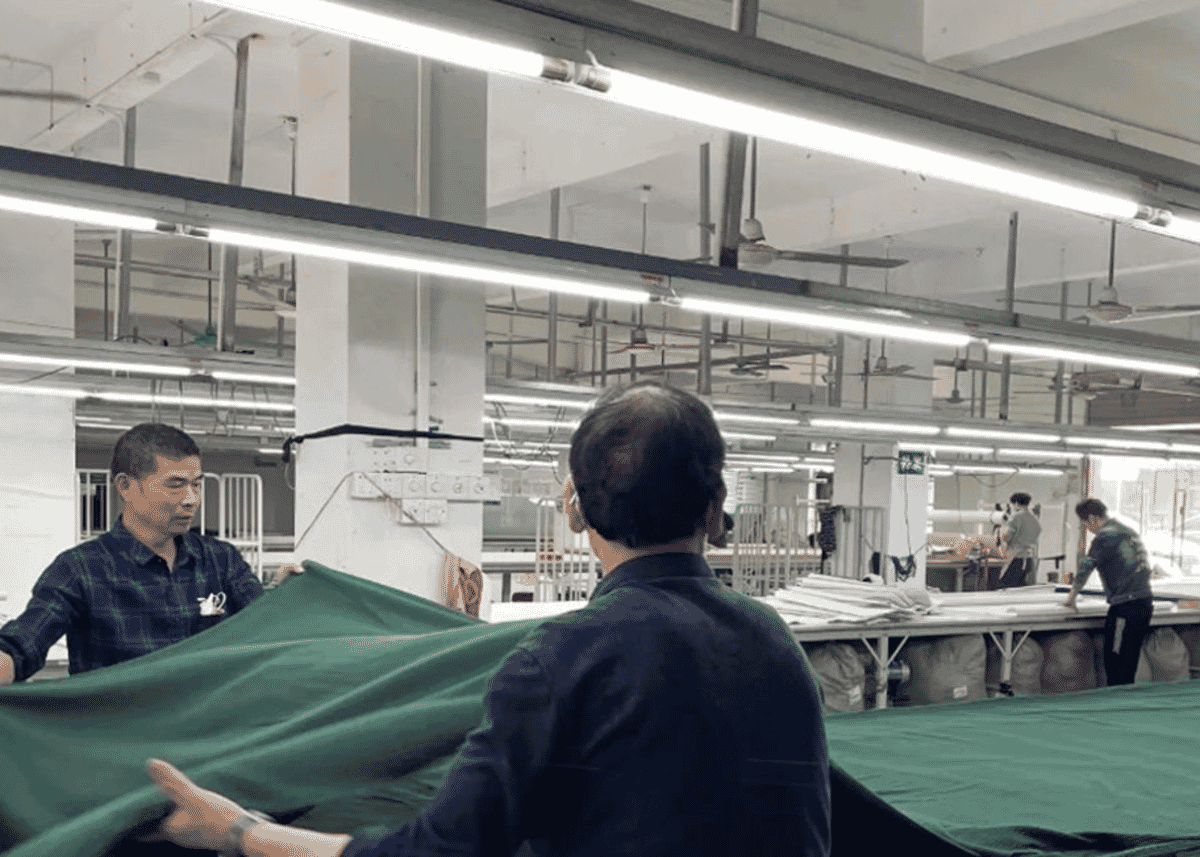
Citation Capsule: Specification substitution between approved sample and bulk production is a common commercial loss in Chinese apparel sourcing, and is frequently unrecoverable because no written specification existed. Six fields are sufficient to establish a claim: fibre content and percentages, fabric weight, construction, decoration method, colour standard with tolerance, and written confirmation that sample and bulk share a facility.
What Do the Messages Tell You?
Before any money moves, the message history is data. Three patterns are worth reading, and they concern how a supplier handles specifics rather than how quickly they reply or how good their English is, neither of which predicts anything useful.
Answers that do not match the question. Ask how many flatlock machines are on the floor and receive a paragraph about capacity in pieces per month. Once is a language issue. Repeatedly is avoidance.
Escalating warmth. A supplier who becomes rapidly personal, uses urgency, and frames the transaction as a friendship is running a technique. Manufacturing relationships get warm slowly, over delivered orders.
Reluctance to put anything in writing. A supplier happy to discuss specification on a call and unwilling to confirm it in a message is preserving deniability. The written confirmation is the whole point.
None of these is proof of anything on its own. Together they describe a counterparty who does not want a documented relationship, which is a reason to be careful regardless of intent.
What If the Money Has Already Gone?
Act quickly, and be realistic about the odds, which depend almost entirely on how you paid. The FTC organises its own recovery guidance by payment method for exactly that reason (FTC). How you paid decides what recourse you have more than the size of the loss or the strength of your case does, which is why it matters before the order rather than after.
If you paid within the platform, open a dispute immediately. Alibaba.com's refund policy gives 30 or 60 days from the delivery date, depending on the buyer's account type (Alibaba.com). Gather everything: the listing as it appeared, the written specification, photographs of what arrived, and the full message history. Disputes are decided on documentation.
If you paid by bank transfer, contact the originating bank at once and ask for a recall or reversal, and for a Hold Harmless Letter or Letter of Indemnity. The FBI's Internet Crime Complaint Center states plainly that requesting these as quickly as possible may reduce or eliminate the loss (IC3). The IC3 also asks victims to file a detailed complaint at ic3.gov. A recall is most likely on a very recent transfer, so call the bank the same day. Report to the platform anyway, because a reported account may protect the next buyer.
If the goods arrived but are wrong, do not ship them back unless the dispute process asks you to or you have taken advice. Possession is leverage, and goods sent back before the claim is settled can end the negotiation in the supplier's favour.
Document before you complain. Photograph the cartons sealed, then opened, then the goods. Measure against your specification. A complaint supported by measurements is a different conversation from one supported by disappointment.
The risk profile changes after the first order
Almost all of this applies to a supplier you have not used before. Once a factory has taken a deposit, produced to specification, passed inspection and shipped correctly, the relationship has a history and the calculus shifts.
That is why the effort belongs at the start. Front-loading verification on the first order is expensive in attention and cheap in money, and it buys you a supplier you can transact with more simply for years. Skipping it to save an afternoon is how brands end up repeating the whole search a season later.
Is Third-Party Inspection Worth It?
On any order large enough that a failure hurts, yes. An inspection is usually priced per inspector-day, which is small next to the value of most bulk shipments. The comparison that matters is not inspection against nothing, but inspection against discovering the same problem after goods have landed and been paid for.
Three points in the process are worth inspecting. Pre-production, confirming materials match the approved specification before cutting starts. During production, checking the first output off the line. Pre-shipment, verifying the finished goods and quantities before the balance is released.
Pre-shipment is the one to do if you only do one, because it is the last point at which a problem is still the supplier's to fix rather than yours to absorb.
An inspection report also changes the dynamics of any dispute. It is independent, contemporaneous documentation of what was in the cartons, which is exactly what a platform dispute process is looking for and exactly what most buyers cannot produce.
| Pattern | How it presents | The check |
|---|---|---|
| Payment redirection | Mid-order change of bank details | Verify via an established channel |
| Fake certification | Logos without numbers | Look up the certificate number |
| Sample switch | Perfect sample, different bulk | Test bulk, not the sample |
| Ghost factory | Trading company posing as producer | Business licence and registered scope |
| Escrow bypass | Pressure to pay off-platform | Keep payment on the platform |
The scam patterns and the single check that defeats each.
Before you send any money
- Ask for the business licence and compare the registered name to the bank account name, exactly.
- Read the registered scope: manufacturing, or wholesale and retail trade.
- Do a live video call from the production floor during Chinese working hours.
- Write a specification: fibre, weight, construction, decoration, colour standard, tolerance.
- Confirm in writing that sample and bulk come from the same facility.
- Keep payment inside the platform and structure it as deposit plus balance.
- Book a pre-shipment inspection and release the balance against the report.
Any request to skip one of these, particularly the first or the sixth, is the most useful signal you will get.
How we protect a first order
- Business licence compared to the receiving bank account name, exactly, before any payment is discussed.
- Registered scope read to confirm manufacturing rather than trade.
- Live video walk of the floor during Chinese working hours.
- Written specification agreed covering fibre, weight, construction, decoration, colour standard and tolerance.
- Pre-shipment inspection booked, with the balance released against the report rather than a promise.
These five close the off-platform, mismatched-account and sample-switch patterns described above.
Conclusion
The scams are not clever. They are repetitive, and nearly all of them need the buyer to move payment somewhere the platform cannot see it, or to send money to a name that does not match the company. Both are checkable in under a minute, which is why this category rewards procedure over judgement.
Two minutes comparing the business licence to the bank account details removes much of that risk. It is the highest-return check available and it is the one most buyers skip because it feels awkward to ask.
The larger loss is quieter. Sample-and-switch costs brands money without any fraud at all, and it is usually not illegal, because nobody wrote down what was agreed. A six-field specification is the fix.
And if something has already gone wrong, document before you complain and do not send goods back before taking advice. Possession is leverage, and measurements are evidence.
We are a group of documented clothing factories in China, producing for brands from 100 units. Every factory we place work with has been checked on licence, registered scope, certificate numbers and a walk of the floor. You work directly with the factory. Flat fees, no factory commissions.
Get in contact Download the directory ($39)Need a tech pack? Get a factory-ready single-style tech pack for $79. See what's included.
Frequently Asked Questions
What is the most common Alibaba scam?
Diversion of payment off-platform. A conversation begins on the platform, moves to email or a messaging app, and payment is requested by direct transfer, often with a small discount attached. The discount is the price of removing your escrow protection, and recovery afterwards is very difficult.
How do I check an Alibaba supplier is legitimate?
Ask for the business licence and compare the registered company name to the receiving bank account name, exactly. That single comparison exposes a fake company or a redirected account. Then read the registered scope to establish whether they manufacture or trade, and run a live video call from the production floor.
Is sample and switch actually a scam?
It is a common commercial loss and frequently not legally fraud, because no written specification existed. If you approved a photograph and a price, the supplier chose the fabric weight, yarn and construction in their own interest and no document says otherwise. A six-field specification prevents it.
What should I do if I have already paid and the supplier disappeared?
If you paid within the platform, open a dispute immediately and gather the listing, the specification, photographs and the full message history. If you paid by bank transfer, contact your bank at once and ask for a recall, as the FBI's IC3 advises, then file a complaint at ic3.gov. A recall is most likely on a very recent transfer.
Is third-party inspection worth the cost?
On any order large enough that a failure hurts, yes. Pre-shipment inspection is the one to do if you only do one, because it is the last point at which a problem remains the supplier's to fix. The report is also independent, contemporaneous evidence if a dispute follows.
Editorial note: all company names, certification marks and trademarks referenced here are the property of their respective owners. Official guidance and Alibaba.com policy terms were checked on 23 October 2026 against the sources listed below and can change; check the current terms before you rely on them. This is general guidance, not legal advice.
Sources
- FBI Internet Crime Complaint Center (IC3), Business Email Compromise: what to do in case of an incident
- Federal Trade Commission, What To Do if You Were Scammed
- Alibaba.com, Trade Assurance refund policy: what refund claims cover and the 30 or 60 day claim window.
- OEKO-TEX Label Check: public verification of certificate numbers.
- amfori BSCI: social audit system documentation.
Related Reading
- Clothing Suppliers in China: How to Find and Vet a Factory
- China Sourcing Agent vs Working Direct With the Factory
- Is Alibaba Safe? What the Badges and Trade Assurance Cover
- Alibaba Clothing Manufacturers: Finding the Real Factories
No commissions. No markups. The factory bills you directly.