By David Stan, Brands Manager at China Clothing Manufacturer. Published November 2026.
A backpack looks simple until it fails. The fabric is usually fine. What breaks is a strap anchor, a zip slider or a buckle that cracked in the cold, and every one of those parts was a line on a spec sheet that somebody left vague.
China is where most of the world's bag supply chain sits, and the clusters are big. One town in Hebei, Baigou, sells over 800 million bags and cases a year (Xinhua via People's Daily, 2024). Finding a backpack factory isn't the hard part. Briefing one well is.
This guide is for brands developing daypacks, school bags, outdoor packs and laptop backpacks. It covers where they're made and what Baigou is good for, what to specify, how to test, what the published MOQs look like, which rules apply before the bags can be sold, and how to inspect the order before you pay the balance.
Before you read: China Clothing Manufacturer places and manages production for brands from 100 pieces per style with documented factories in China. Price and MOQ ranges here are drawn from published industry sources; they describe the market, not a quote from one factory. Exact MOQ and price are confirmed with the factory once you send a brief.
What matters most
- Three areas dominate: Baigou (Hebei), Guangzhou and Shenzhen (Guangdong) and Quanzhou and Jinjiang (Fujian).
- Denier tells you yarn weight, not quality. Specify fibre, denier, weave, coating and finished weight together.
- Most backpacks fail at stress points: strap anchors, haul loops, zip ends and the base seam.
- Published MOQs run at roughly 300 to 1,000 units, and trim minimums can push them higher.
- A school bag for children 12 and under is a children's product in the US: third-party testing and a certificate are required.
- Duty on a man-made fibre backpack into the US starts at 17.6% before any Section 301 layer.
- Book the final inspection when all bags are finished and at least 80% are packed, and before the balance is paid.
Where Are Backpacks Made in China?
Mostly in three places, and each has a different centre of gravity. A 2026 sourcing guide groups China's bag production into Baigou in Hebei, Guangzhou and Shenzhen in Guangdong, and Quanzhou and Jinjiang in Fujian (Epic Sourcing, 2026).
Baigou, Hebei. The volume end of the market. Xinhua reports the town's industry covers only 50 square kilometres, supports jobs for more than two million people nearby, and accounts for about 28% of China's domestic bag market. Output value reached 41.9 billion yuan in 2023, and bag exports hit 7 billion yuan in the first half of 2024 (Xinhua via People's Daily). It's strong on budget school bags and everyday packs.
Guangzhou and Shenzhen, Guangdong. The same guide places premium, branded and technical packs here, with export-grade quality and private-label experience. If your pack has a laptop sleeve with suspended padding, a harness system or a laminated shell, this is where you'll usually start. Our Guangdong manufacturing overview covers the province's wider supply base.
Quanzhou and Jinjiang, Fujian. Known for sports and outdoor bags, often in the same streets as shoe and sportswear factories. See our Fujian manufacturing page for how the province's clusters fit together.
| Cluster | Typical strength | Good fit for |
|---|---|---|
| Baigou, Hebei | Volume, low unit price, school and everyday bags | Price-led ranges, promotional packs |
| Guangzhou / Shenzhen | Technical, premium and branded packs | Laptop, travel and design-led packs |
| Quanzhou / Jinjiang | Sports and outdoor bags near footwear supply | Gym, outdoor and athletic ranges |
Cluster profiles from Epic Sourcing (2026) and Xinhua (2024). Individual factories vary widely inside every cluster.
Quick read: China's backpack production clusters in Baigou (Hebei), Guangzhou and Shenzhen (Guangdong) and Quanzhou and Jinjiang (Fujian). Baigou alone sells over 800 million bags and cases a year, holds about 28% of China's domestic bag market and reported 7 billion yuan of bag exports in the first half of 2024, according to Xinhua.
What Is Baigou, and Is It Right for Your Backpacks?
Baigou is a bag town in north China's Hebei Province, and it is the reason China's bag numbers look the way they do. It is not a single factory district but a whole chain in one place. Xinhua describes a town with a household population of just 60,000 that has formed a complete industrial chain for bag production, from raw-material supply and product design to manufacturing and sales (Xinhua via People's Daily, 2024).
The scale has grown quickly. The total output value of Baigou's bags and cases rose from about 10 billion yuan in 2020 to 41.9 billion yuan in 2023, and more than 70% of that was achieved through online sales. Exports of bags and cases reached 7 billion yuan in the first half of 2024, up more than 17% year on year, and the town sells to 195 countries and regions.
Three details from the same report matter to a brand that is thinking of producing there.
- A lot of the selling happens online. Nearly 10,000 live shopping events are held there every day, and the town is building cross-border e-commerce industrial parks. A lot of the people you meet online are sellers of finished stock, not the workshop that will sew your design.
- Brands are newer than the factories. Baigou's bag trade started with hand-made bags sold at roadside stalls in the 1970s, and its producers competed on low prices for two decades. Things began to change in 2003, and businesses there registered more than 1,400 brands over five years.
- It still relies on people. Xinhua notes that the industry still relies heavily on craftsmen rather than automation, because the products change quickly and have irregular shapes and complex processes. An industrial transformation centre set up in 2022 provides digital services to more than 20,000 companies in the local bag and case industry.
What this means in practice: Baigou is very good at fast, price-led bags, and it is easy to source there. That ease is also the risk. With that many companies selling, it is common to deal with a seller who places your order with a workshop you never see. If your brief is a technical laptop pack or a design with your own moulded hardware, the Guangdong clusters are usually the better starting point. If it is a school bag or an everyday daypack built to a price, Baigou deserves a look, provided you confirm who actually sews the bags and inspect them before you pay the balance. Our guide to bag suppliers in China covers the wider bag supply base.
Quick read: Baigou in Hebei grew its bag and case output value from about 10 billion yuan in 2020 to 41.9 billion yuan in 2023, with more than 70% sold online, according to Xinhua. The town sells to 195 countries and regions, holds about 28% of China's domestic bag market and still relies heavily on craftsmen rather than automation.
Which Fabric Should You Specify?
Specify the fabric as a full description, not a single number. Denier is the mass in grams of 9,000 metres of yarn (units of textile measurement), so "600D" tells you how heavy the yarn is and nothing about the weave, the coating or how the fabric was finished.
A complete fabric line on a backpack spec reads something like: fibre (nylon or polyester, and which type of nylon), yarn denier, weave (plain, ripstop, oxford, twill), finished weight in grams per square metre, coating and its weight, any durable water repellent finish, and the colour reference.
Nylon or polyester?
Nylon is generally the tougher choice for abrasion and tear at a given weight, which is why it shows up on outdoor and travel packs. Polyester holds colour well, absorbs less water and usually costs less, which is why most school and everyday packs use it. Neither is waterproof on its own. Water resistance comes from the coating and the construction, not the yarn.
Coatings and laminates
Polyurethane (PU) coatings on the back face are the standard for everyday packs. Thermoplastic polyurethane (TPU) laminates and film coatings appear on more technical bags. Ask which side is coated, the coating weight, and whether the claim is "water resistant" or "waterproof", because a waterproof fabric sewn with unsealed seams is still a leaking bag.
Recycled PET
Recycled polyester made from PET bottles is widely available in China, but the claim needs paperwork. A 2026 sourcing guide notes that recycled rPET polyester is widely available and advises asking for GRS (Global Recycled Standard) certification to support any marketing claims (Epic Sourcing). Ask for the transaction certificate for your own order, not just the mill's certificate, and keep it with the shipment file.
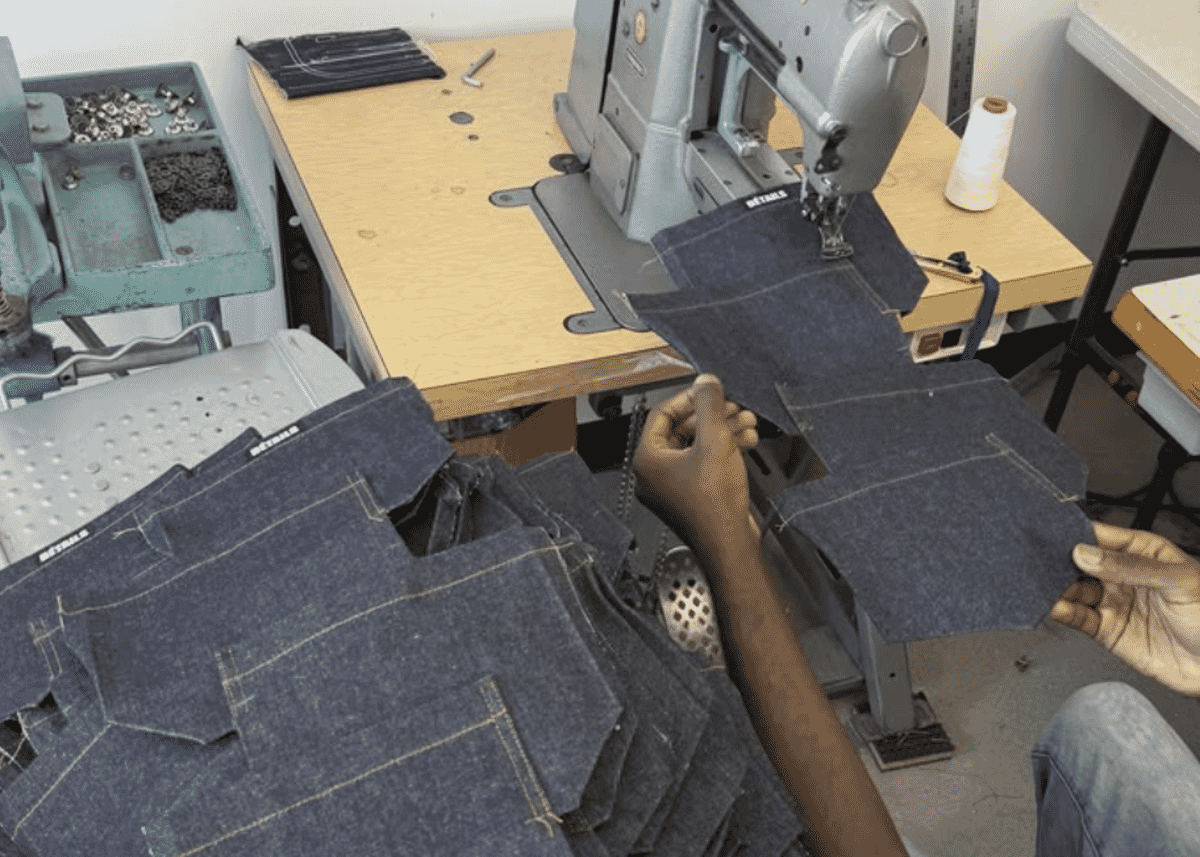
Quick read: Denier measures the mass in grams of 9,000 metres of yarn, so it describes yarn weight rather than fabric quality. A usable backpack fabric specification states fibre, denier, weave, finished weight, coating and finish together. Recycled polyester claims should be backed by Global Recycled Standard certification and a transaction certificate for the order.
Which Zips, Buckles and Webbing Should You Use?
Name every component by brand, type and size, or the factory will pick for you on price. A cheap slider that pops off the coil ends the bag's life just as surely as a torn panel.
Zips. YKK is the brand most spec sheets name, and Chinese zip makers offer lower-cost alternatives. Coil zips flex and recover, which is why they dominate on packs. Moulded-tooth zips (YKK calls them Vislon) are stiffer and handle grit well. A #5 chain is common on daypack pockets and main compartments, with #8 or #10 on heavily loaded packs and luggage-style openings.
Buckles and adjusters. Specify the material (acetal or nylon), the webbing width they fit, and whether they need to survive cold. Ask for the supplier name, not just "plastic buckle". Side-release buckles on sternum and hip straps carry real load and should be tested as such.
Webbing. Nylon webbing stretches more and holds knots and tension better. Polypropylene is lighter and cheaper but less durable in sunlight. Give width, thickness and break strength, and make sure the webbing and its buckles are sized to each other.
One commercial effect is easy to miss. A benchmark guide notes that hardware minimums for zips, buckles and clasps sometimes push the effective MOQ up (Sourcify). A custom-colour zip or a logo-moulded buckle has its own minimum, and it can be higher than the bag's.
Free tool: pressure-test your landed cost with the China production cost calculator. About a minute, and no email asked.
Where Do Backpacks Actually Fail?
At the points where load concentrates, almost never in the middle of a panel. Those are the places to spend stitches, reinforcement and inspection time.
- Shoulder strap anchors. Where the straps join the back panel. They need bar tacks or box-and-cross stitching through a reinforcement layer, not a single row of lockstitch.
- Haul loop. The top handle carries the whole bag, often with a jolt. It should be anchored into a structural seam rather than sewn onto the panel face.
- Zip ends. Overloaded compartments pull the zip apart at the ends first. End stops and a reinforced zip garage reduce this.
- Base seam. The base takes abrasion and weight. A double-layer or coated base panel and bound seams last longer.
Write these points onto the tech pack with a stitch type, stitches per inch and thread size for each one. If you don't have one yet, our factory-ready tech pack service covers this level of detail. "Reinforce straps" isn't an instruction a factory can be held to. "Bar tack, 42 stitches, through webbing and backing" is.
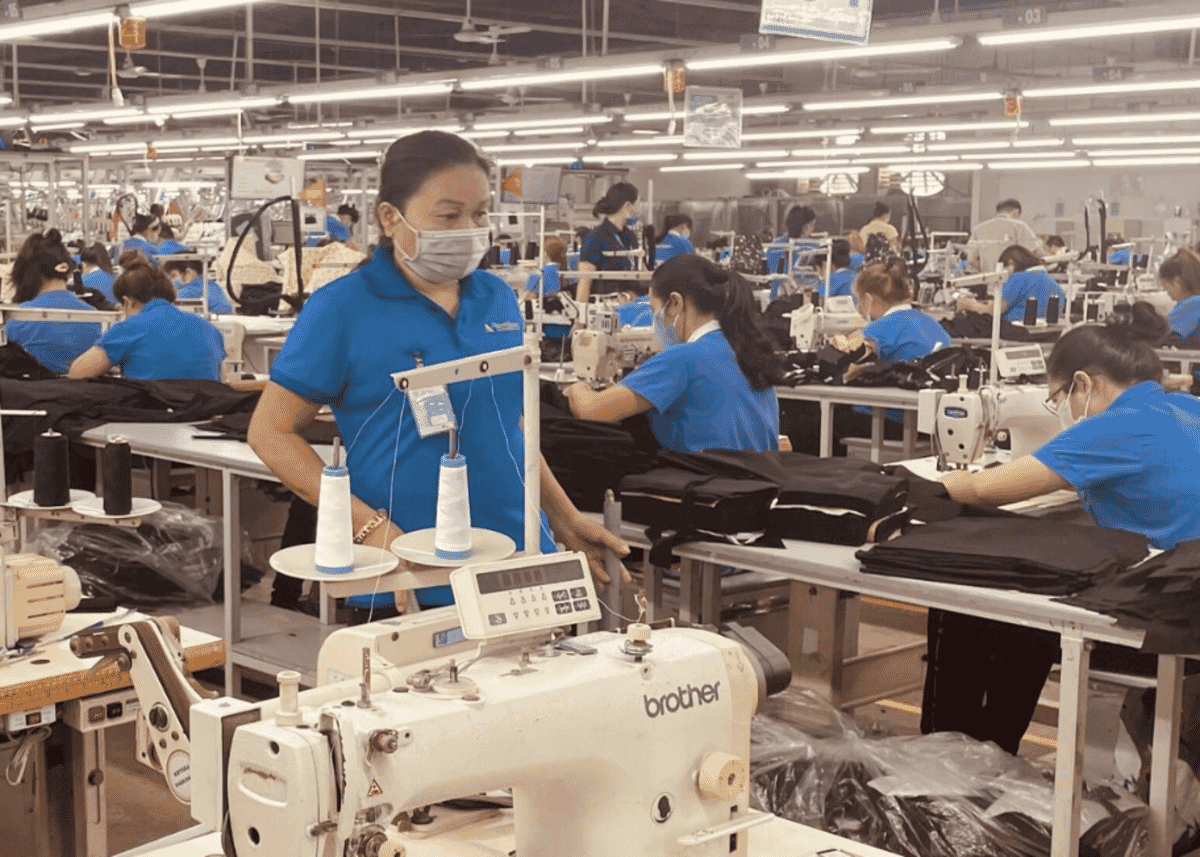
Quick read: Backpacks typically fail at load-concentration points rather than mid-panel: shoulder strap anchors, the haul loop, zip ends and the base seam. Specifying stitch type, stitch density, thread size and reinforcement for each stress point on the tech pack turns a vague request to reinforce straps into an instruction that can be checked.
How Should a Backpack Be Tested?
Test the finished bag for the way it's used, then test the fabric and trims for what they're made of. China's own light-industry standard for handbags and knapsacks, QB/T 1333 (current edition 2018), covers oscillation impact on loaded straps, zip durability, fastener and plastic buckle durability, hardware corrosion and stitching strength. In its test methods, zip durability is run for 200 opening and closing cycles, and fastener and plastic buckle durability for 1,000 cycles each (Chinese Standard listing for QB/T 1333).
Load and shake. The bag is loaded and swung or dropped on its straps for a set number of cycles, then checked for seam opening, strap slippage and hardware damage.
Seam strength. A grab-type seam test pulls across the seam until it ruptures or slips. It gives a breaking force rather than a wear prediction, so use it to compare factories and lots, not to promise a lifespan.
Abrasion. Martindale testing under ISO 12947-2 applies to textile fabrics, but the standard says it isn't applicable to coated or laminated fabrics, which are tested under ISO 5470 instead (ISO 12947-2 via AFNOR). Many backpack fabrics are coated, so check which method the mill's report actually used.
| Test | What it checks | When to run it |
|---|---|---|
| Load / oscillation impact | Strap anchors, haul loop, hardware under a swinging load | Approved sample and production lots |
| Seam strength | Force to rupture or slip a seam | Development, then per fabric lot |
| Abrasion | Face fabric wear (method depends on coating) | Fabric approval |
| Zip and buckle cycling | Opening, closing and release durability | Trim approval |
| Chemical tests | Lead, phthalates, restricted substances by market | Before shipment, per regulation |
Structural guidance. Choose methods and pass levels with your testing lab for each market.
What MOQs and Prices Are Published?
Published ranges put backpack MOQs at roughly 300 to 1,000 units, with about 300 to 500 for a custom design and 1,000 or more where you need bespoke moulded hardware (Epic Sourcing, 2026). A separate benchmark puts bags and accessories at 300 to 500 units, with trim minimums sometimes pushing that up (Sourcify).
The same 2026 guide gives indicative unit prices: about $1 to $3 for simple drawstring or tote bags, $4 to $8 for standard daypacks, and $9 to $15 for technical or laptop backpacks.
| Product type | Published unit price range | Published MOQ range |
|---|---|---|
| Simple drawstring or tote | $1 to $3 | About 300 to 1,000 units; 300 to 500 for a custom design; 1,000+ with bespoke moulded hardware |
| Standard daypack | $4 to $8 | |
| Technical or laptop backpack | $9 to $15 |
Source: Epic Sourcing (June 2026). Published market ranges, not factory quotes. Exact MOQ and price are confirmed with the factory once you send a brief.
Two things move the real number more than the headline range. If a factory's minimum applies to each colourway, three colours at 300 is 900 bags. And any component with its own minimum, such as a printed webbing or a custom zip puller, sets a floor that the bag order has to clear.
Quick read: Published sources put custom backpack MOQs in China at roughly 300 to 1,000 units, about 300 to 500 for a custom design and 1,000 or more with bespoke moulded hardware. Indicative 2026 unit prices run from about $4 to $8 for standard daypacks and $9 to $15 for technical or laptop backpacks.
How Does Backpack Sampling Work?
In rounds, and the number of rounds depends on how complete your first brief is. A brief that arrives with fabric codes, trim references and stress-point details often saves a whole round.
- Proto sample. Shape, volume, pocket layout and carry. Often sewn in substitute fabric. Judge the pattern, not the colour.
- Fit and function sample. Carried with a real load. Check strap length range, back-panel comfort, laptop sleeve size and how it sits on different body sizes.
- Salesman or photo samples. Correct fabrics and colours for selling. Don't treat them as production approval.
- Pre-production sample. Final fabric, trims, labels and packaging, sewn on the line that will run the order. This is the one you sign and keep as the reference.
Which Rules Apply Before You Can Sell?
It depends on the market and on who the bag is for. A school backpack aimed at children is regulated quite differently from an adult daypack, and the paperwork needs to exist before the goods ship. Here are the rules most brands meet first, checked on 8 November 2026.
CPSIA for children's school bags (US)
A children's product is one "designed or intended primarily for children 12 years of age or younger" (15 U.S.C. 2052). Before import, children's products must be tested by an accredited third party conformity assessment body, and a certificate of compliance must be issued based on that testing (15 U.S.C. 2063; the CPSC calls it a Children's Product Certificate). Limits include 100 ppm total lead in accessible parts (15 U.S.C. 1278a) and 0.009% lead in paint and surface coatings (16 CFR 1303.1). Zip pullers, printed logos and coated trims all count.
California Proposition 65
Prop 65 requires businesses to warn Californians about significant exposures to listed chemicals, and the list now includes over 900 chemicals (OEHHA Prop 65 Warnings). For bags, the usual concerns are phthalates in PVC or soft plastic parts and lead in metal hardware. Many brands prefer to specify materials that avoid the need for a warning.
EU REACH
The REACH Candidate List of substances of very high concern reached 253 entries in February 2026 (SGS). Suppliers of articles containing a listed substance above 0.1% by weight carry information duties. Separately, Annex XVII limits listed PAHs to 1 mg/kg in rubber or plastic parts in prolonged skin contact (Regulation (EU) No 1272/2013), which covers handles and strap padding.
Children's bags sold in China
If the range will also sell in China, GB/T 41002-2022 covers cases and bags for children under 14, including backpack ergonomics and limits on phthalates and other substances (STC).
Import duty
In the US, backpacks with an outer surface of man-made fibre textile fall under HTS 4202.92.31, at a general rate of 17.6% (USITC HTS). Section 301 duties on Chinese goods can apply on top (USTR). Confirm your code with a licensed customs broker before you price the range.
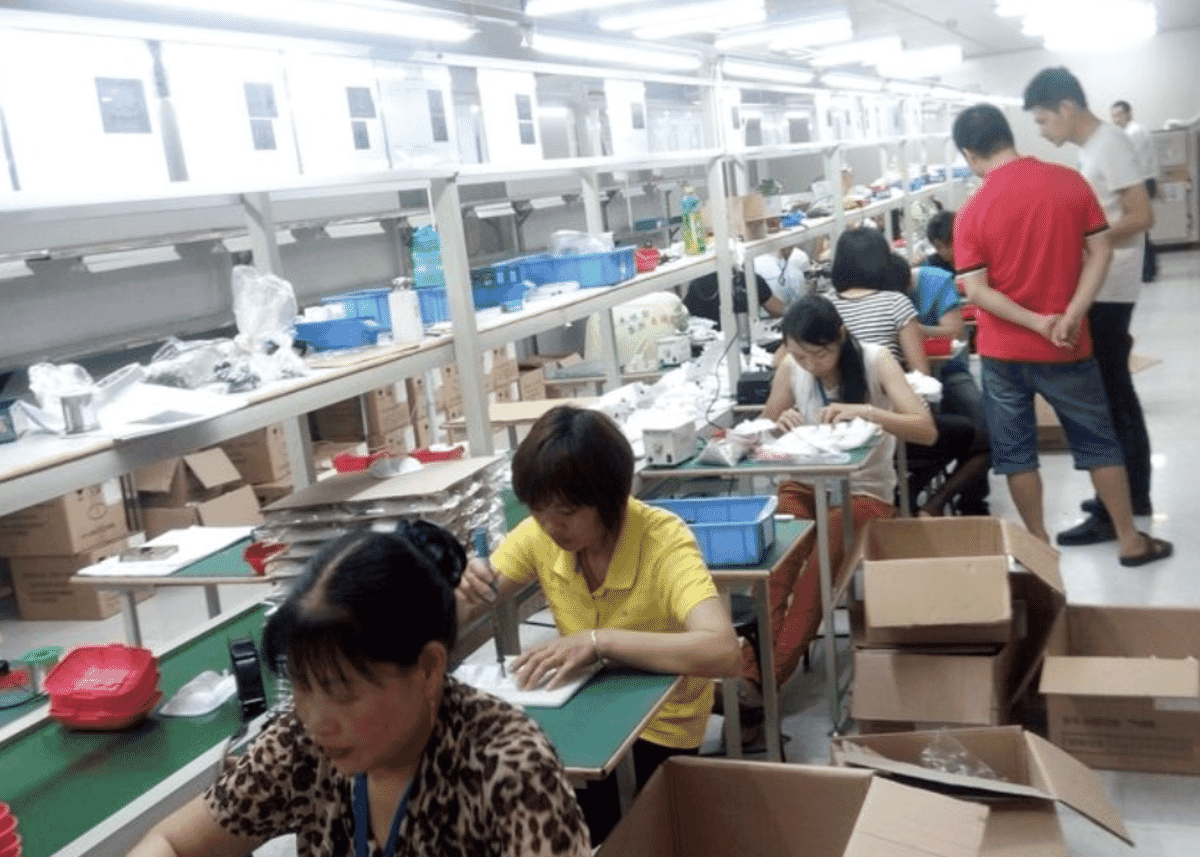
Quick read: A US school backpack designed primarily for children aged 12 or under is a children's product under CPSC rules, requiring testing by an accredited third party lab and a Children's Product Certificate. Accessible parts are limited to 100 ppm total lead, and paint and surface coatings to 0.009% lead by weight.
How Do You Inspect a Backpack Order Before Paying the Balance?
With a final random inspection, booked while the bags are still at the factory and before the balance leaves your account. Once the money is paid and the cartons are on a ship, your leverage to get a strap re-sewn or a zip replaced is mostly gone. The 2026 sourcing guide quoted above makes the same point in plainer terms: order a pre-production sample, run a factory audit or video inspection, and use AQL-based inspection before the goods ship (Epic Sourcing).
When to inspect
Most bag orders need one or two checks, not five. A during-production check can take place as soon as the first finished bags come off the line, which is the cheapest moment to catch a wrong webbing or a mis-sewn strap anchor. The final inspection comes at the end: inspectors can usually start after all products are finished and 80% or more of the shipment quantity is packed (QualityInspection.org). Ask the factory to tell you that date a week ahead, and tie the balance payment to the inspection report rather than to the shipping date.
How many bags get checked
Inspectors draw a random sample using the AQL tables of ISO 2859-1. Within normal severity there are three general levels, I, II and III, and level II is used for more than 90% of inspections. For an order between 3,201 and 10,000 pieces at level II, the code letter is L and 200 samples are checked. With the common limits of 0 critical, 2.5% major and 4.0% minor, that lot fails if one or more critical defects, eleven or more major defects or fifteen or more minor defects are found (QualityInspection.org).
| Example order | Level | Bags checked | Lot fails at |
|---|---|---|---|
| 3,201 to 10,000 bags | General level II, code letter L | 200 | One critical, eleven major or fifteen minor defects |
Source: QualityInspection.org worked example with AQL limits of 0 / 2.5 / 4.0. Use your inspection company's tables for other order sizes.
What a backpack inspection should cover
Give the inspector the approved pre-production sample and a written checklist built from your tech pack. For a backpack, the checklist usually covers:
- Stress points. Bar tacks or box stitching at every strap anchor and the haul loop, sewn where the tech pack says.
- Function. Every zip run end to end, every buckle clipped and released, every adjuster slid along its full length.
- Components. Zip brand and size, buckle and webbing as specified, not substitutes that look similar.
- Measurements. Height, width, depth, strap length range and laptop sleeve size against the spec.
- Appearance. Colour against the approved sample, print and logo position, loose threads, stains and glue marks.
- Labels and packing. Care and origin labels, carton marks, quantities per carton and the count of finished bags.
Define in writing what counts as critical, major and minor before the inspection. A strap anchor that pulls loose is critical. A crooked logo is probably major. A short loose thread is minor. If you agree this with the factory before production, the report becomes something both sides can act on instead of an argument.
Quick read: A final random inspection on a backpack order usually starts once all goods are finished and at least 80% are packed. Under ISO 2859-1 general level II, used for more than 90% of inspections, an order of 3,201 to 10,000 pieces has code letter L and a sample of 200, and with AQL limits of 0, 2.5 and 4.0 it fails at one critical, eleven major or fifteen minor defects.
What Are the Red Flags With a Backpack Supplier?
Most of them show up before the first sample, if you know where to look. The common thread is vagueness: about who makes the bag, what goes into it and what the price includes.
No named components. A quote that says "good zipper" or "strong buckle" leaves the factory free to substitute. Ask for brand, type and size on every trim.
A price far below the published ranges. A technical laptop pack quoted like a promotional drawstring bag means something has been removed, usually fabric weight, coating or reinforcement.
Pressure to pay everything up front. The same 2026 sourcing guide lists suppliers who refuse a sample or pressure you to pay 100% upfront among the red flags (Epic Sourcing). Keep part of the payment until the goods have passed inspection.
Showroom samples from someone else's brand. They show what the factory can sew, but they also raise an intellectual property question. CBP seized over 5.1 million handbags and wallets for intellectual property violations in fiscal 2024, more than any other commodity by quantity, and China and Hong Kong accounted for about 90% of all goods seized by quantity (CBP).
A trading company presenting as a factory. That isn't always bad, but you should know. Our guide to sourcing agents versus working direct covers the trade-offs, and how to find and vet a factory covers the checks.
No answer on testing. A factory that has made children's bags for the US will know what a Children's Product Certificate is. One that doesn't hasn't done it before.
Your logo filed by someone else. China generally gives priority to the earlier applicant, which is why lawyers call it a first-to-file country, so register the marks that appear on the product before artwork reaches a factory (Harris Sliwoski).
Before you send a backpack brief
- Fabric line written out in full: fibre, denier, weave, weight, coating and finish.
- Every trim named by brand, type and size, including zip pullers and webbing.
- Stress points marked on the tech pack with stitch type and reinforcement.
- Target market and age group stated, so the testing plan is set from the start.
- Colourways and quantities per colour, so the MOQ conversation is real.
- HTS code checked with a broker, so landed cost includes duty.
Doing these six before the first sample costs an afternoon. Doing them after the second round costs a season.
Conclusion
China has the capacity, the clusters and the component suppliers to make almost any backpack. Baigou can run volume, Guangdong can handle technical packs, and Fujian sits next to the sportswear and footwear trade. The constraint is rarely the factory. It's the brief.
Write the fabric in full, name every trim, mark the stress points, and decide who the bag is for before the first sample, because that decides the testing. Then inspect the finished bags at the factory before you pay the balance. Do that and the published MOQ and price ranges start to look like numbers you can plan against.
Our team places and manages production with the documented factories in our China group, from 100 pieces per style. Our core is apparel, so send the brief and we'll tell you plainly which parts of the range our group can produce and what to check on the rest. Our team replies within 24 hours. One flat fee, nothing from the factory side.
Send your brief China factory list, $49No spec sheet yet? We draw one style as a factory-ready tech pack for $79. What the $79 covers.
Frequently Asked Questions
Where are most backpacks made in China?
Three areas come up again and again: Baigou in Hebei for budget school bags and everyday packs, Guangdong around Guangzhou and Shenzhen for premium, branded and technical packs, and Quanzhou and Jinjiang in Fujian for sports and outdoor bags. Baigou alone sells over 800 million bags and cases a year, according to Xinhua.
What is the minimum order for custom backpacks in China?
Published ranges sit at roughly 300 to 1,000 units, with about 300 to 500 for a custom design and 1,000 or more where you need bespoke moulded hardware. Zip, buckle and webbing minimums can push the real figure up. Treat these as market ranges and confirm the number for your own spec.
Does a school backpack need CPSIA testing?
If it's designed or intended primarily for children aged 12 or under and sold in the US, it's a children's product. That means testing by an accredited third party lab and a Children's Product Certificate based on that testing, covering rules such as the 100 ppm total lead limit for accessible parts.
What denier should a backpack fabric be?
Denier measures yarn weight, not fabric quality. Daypacks commonly use mid-range nylon or polyester, while heavier-duty packs move up to higher-denier yarns for abrasion resistance at the cost of weight. Specify fibre, denier, weave, coating and finished fabric weight together, and ask for the mill's test data.
What import duty applies to backpacks from China?
In the US, backpacks with an outer surface of man-made fibre textile fall under HTS 4202.92.31, with a general duty rate of 17.6% as listed by the USITC when we checked on 8 November 2026. Section 301 duties on Chinese goods can apply on top. Confirm the code and the layers with a licensed customs broker.
When should a backpack order be inspected?
Book a final random inspection when all bags are finished and at least 80% are packed, and before you pay the balance. At general level II, an order of 3,201 to 10,000 pieces means 200 bags are checked against your approved sample and checklist.
Sourcing notes: brand names and certification marks mentioned here belong to their owners. MOQ, cost and lead-time figures come from the published sources listed below; they are market ranges rather than any one factory's quote, and they move with product, fabric and season. Tariff and regulatory figures were checked on 8 November 2026 and can change. Check your own HTS code and agree terms with the factory in writing before you pay a deposit.
Where the figures come from
- Xinhua via People's Daily (2024): Baigou bag output, area, jobs, domestic market share and exports.
- Epic Sourcing (2026): backpack cluster profiles, MOQ ranges and indicative unit prices.
- Sourcify: MOQ benchmarks for bags and accessories, and the effect of hardware minimums.
- Units of textile measurement: definition of denier.
- Chinese Standard: QB/T 1333 handbag and knapsack standard, test list and 2018 supersession.
- AFNOR: ISO 12947-2 Martindale abrasion scope, including exclusion of coated fabrics.
- 15 U.S.C. 2052: definition of a children's product.
- 15 U.S.C. 2063: third party testing and certification of children's products.
- 15 U.S.C. 1278a: 100 ppm total lead limit.
- 16 CFR 1303.1: 0.009% lead limit for paint and surface coatings.
- OEHHA, Proposition 65 Warnings: warning requirement and the size of the chemical list.
- SGS (2026): REACH Candidate List at 253 entries and article obligations.
- Regulation (EU) No 1272/2013: REACH Annex XVII PAH limit of 1 mg/kg in rubber and plastic parts.
- STC (2022): GB/T 41002-2022 for children's cases and bags in China.
- US International Trade Commission, HTS: 4202.92.31 general duty rate of 17.6%.
- Office of the United States Trade Representative: Section 301 tariff actions on Chinese goods.
- US Customs and Border Protection (2025): IPR seizure statistics for fiscal year 2024.
- QualityInspection.org: inspection timing, AQL levels and a worked sampling example.
- Harris Sliwoski: China's first-to-file trademark system.
Related Reading
- Clothing Suppliers in China: How to Find and Vet a Factory
- China Sourcing Agent vs Working Direct With the Factory
- Bag Suppliers in China 2027: Clusters, MOQs and Quality Checks
No commission and no mark-up on the factory price: the factory invoices you itself.