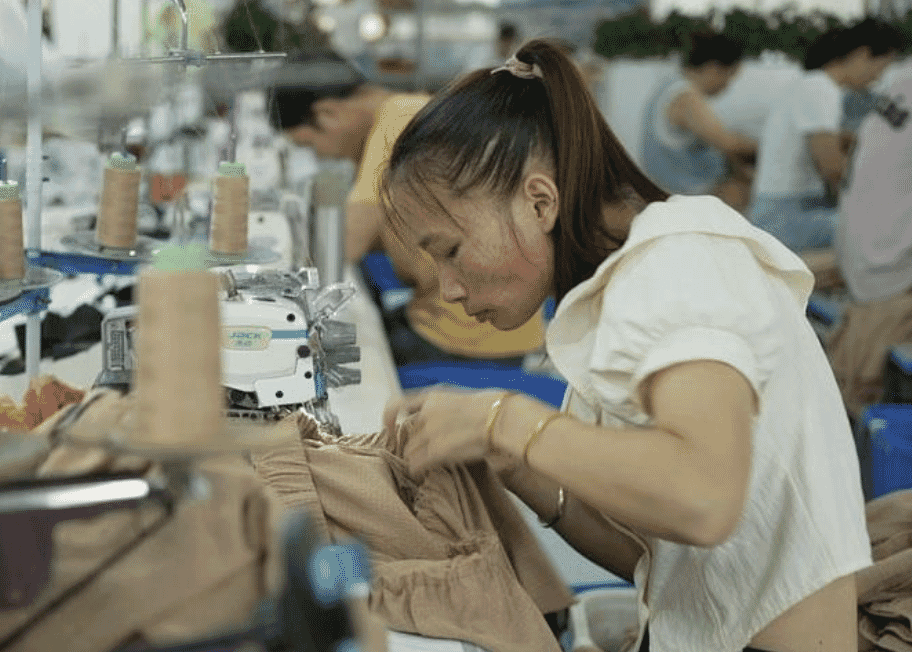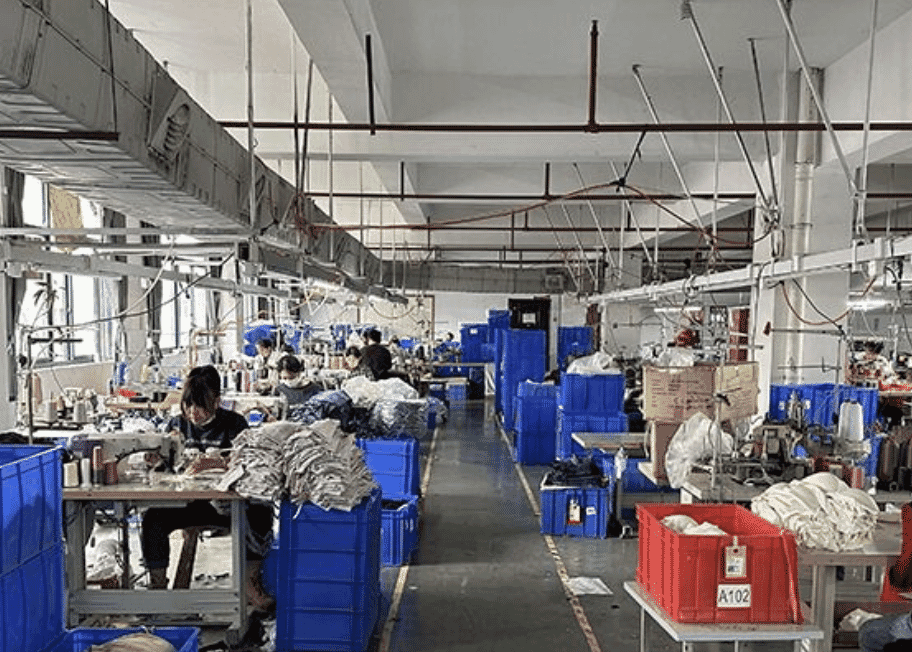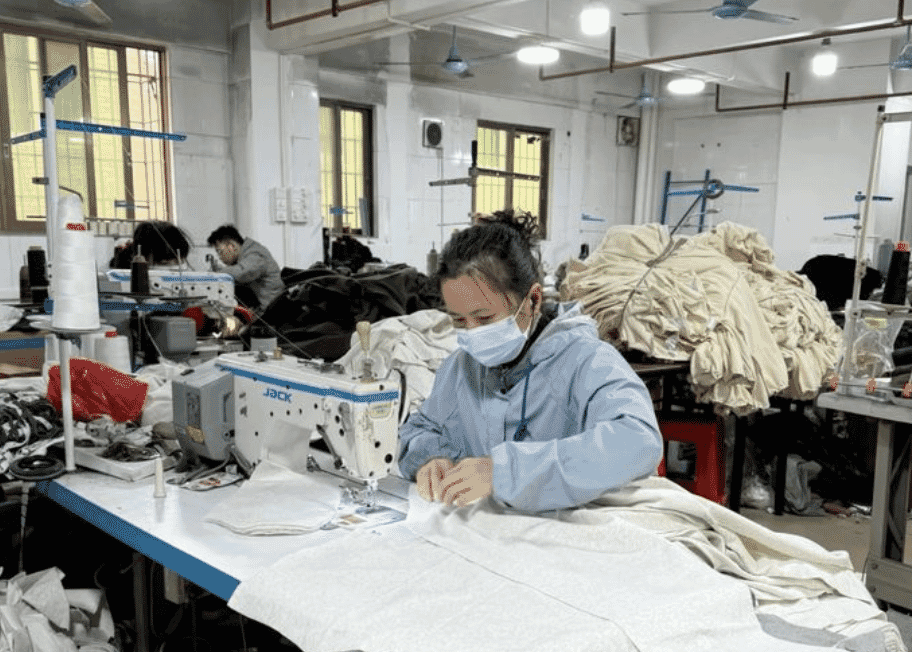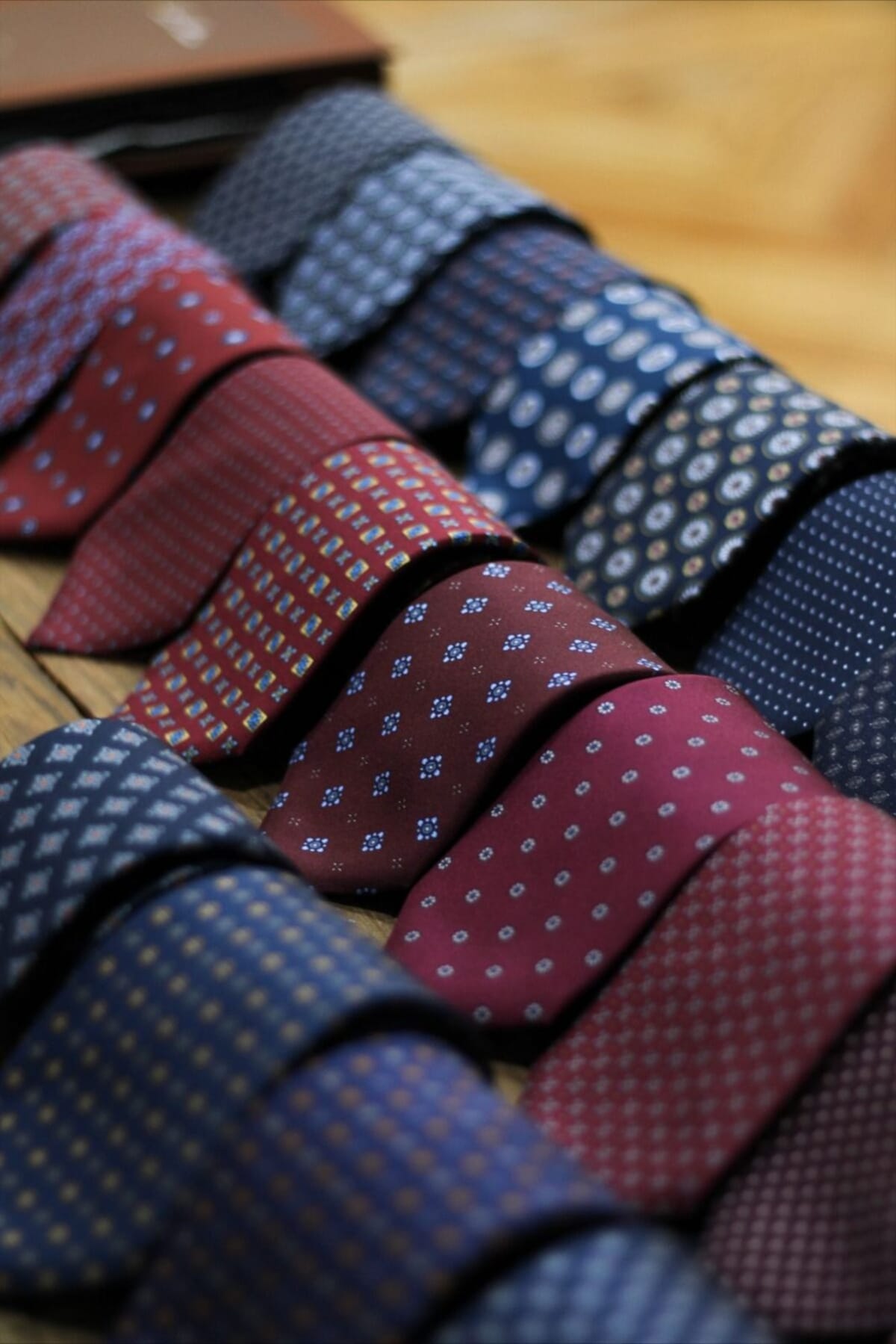
If you buy ties made in China, they very probably come from one county-level city in Zhejiang. Shengzhou, part of Shaoxing, is known as China's tie town: a 2009 report put its output at well over 200 million ties a year, almost all of China's production and at least three-quarters of the world's, citing the Shengzhou Tie Industrial Association.
That concentration changes how you should brief a tie. In Shengzhou the silk weaving, the jacquard design rooms, the interlining and the sewing sit close together, and a supplier that controls the weaving controls the product. The specification decisions that separate a good tie from a cheap one, the silk weight, the bias cut, the interlining and the slip stitch, are invisible in a photograph, so they have to be written down.
This guide covers how Shengzhou became the tie cluster, what China's tie exports look like by fibre in the latest trade data, and the silk, construction, labelling and testing points to put in a tie brief.
Before you read: China Clothing Manufacturer places and manages production for brands from 100 pieces per style with documented factories in China. Jacquard silk for ties is woven to order, so the fabric can carry its own minimum. Standards and trade figures in this guide come from the published sources listed at the end. Exact MOQ and price are confirmed with the factory once you send a brief.
What matters most
- Shengzhou is the cluster. A 2009 report citing the Shengzhou Tie Industrial Association put the city at well over 200 million ties a year and 1,100-plus tie companies.
- Shaoxing still counts ties in the hundred millions. Its larger textile firms made 130 million ties in 2018, and the city calls itself the world's most important production base for ties and socks.
- Polyester leads by value. China exported $122.2 million of man-made fibre ties and $63.6 million of silk ties in 2024 (WITS).
- Silk weight is a number. One momme is 4.340 g/m², so a heavier silk is a different fabric and a different price.
- Ties are cut on the bias so they fall from the knot without twisting, a method usually credited to Jesse Langsdorf in 1922.
- The interlining and the slip stitch decide how a tie knots and recovers, and neither shows in a photo.
- Test fibre on bulk. US labels must state fibre content by weight, and US duty on a silk tie is 7.2% against 24.8 cents per kg plus 12.7% for man-made fibres.
Why Is Shengzhou China's Tie Town?
Shengzhou is a county-level city in Zhejiang province, administered by Shaoxing, and Wikipedia's entry describes it as the national and international top producer of ties (Wikipedia). The industry is younger than the reputation suggests.
According to a February 2009 feature in China International Business, the first tie-producing joint venture in the city, Jiayou Necktie, was set up in 1984 with a Hong Kong investor. In the mid-1990s South Korean tie producers began transferring their clients to Shengzhou, and the magazine reported that many Koreans stayed on as middlemen between foreign buyers and local factories (China International Business, 2009).
By the time of that report the scale was hard to match: well over 200 million ties a year, more than 1,100 companies making ties, more than 50,000 people working in tie factories and at least 100,000 in companies connected to the industry, the last two figures attributed to the Zhejiang Daily. The same article said about five out of six ties made in Shengzhou were exported, with the United States the largest market, followed by Europe and then Japan, and that the city's necktie revenue was RMB 2.2 billion in 2007, according to the China Textile Association.
Two other sources confirm the shape of the cluster from different angles. A 2003 International Finance Corporation project summary called Shengzhou the necktie production base in China, with around 1,000 companies in the business, and described Babei as a leading silk necktie and necktie fabric producer and the largest company in the city (IFC). More recently, the Shaoxing government reported that its larger textile enterprises produced 130 million ties in 2018 and called Shaoxing the world's most important production base for ties and socks (Shaoxing government via China Daily).
Read the figures for what they are. The 2009 numbers come from an industry association and a magazine, not from a statistical census, and the 2018 figure counts only enterprises above the designated size. Both point the same way: if a Chinese supplier quotes you silk jacquard ties, the cloth was very probably woven in or near Shengzhou.
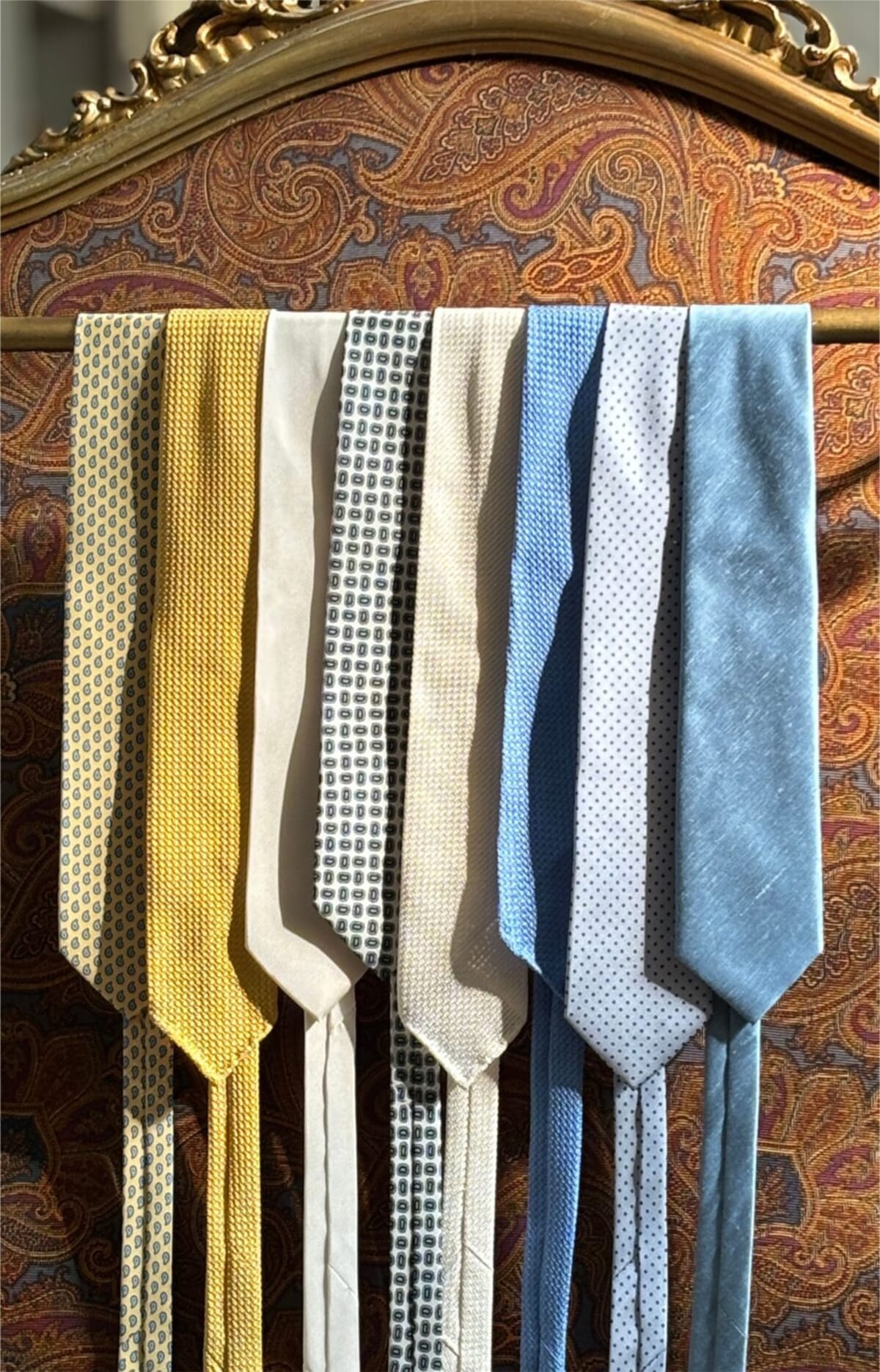
Quick read: Shengzhou, a county-level city in Shaoxing, Zhejiang, is China's tie cluster. A 2009 China International Business report, citing the Shengzhou Tie Industrial Association, put its output at well over 200 million ties a year, almost all of China's production and at least three-quarters of the global total, made by more than 1,100 companies. In 2018 Shaoxing's larger textile firms made 130 million ties.
How Big Is China's Tie Export Trade?
Ties have their own customs heading, HS 6215, split by fibre: silk (6215.10), man-made fibres (6215.20) and other textiles (6215.90). According to World Bank WITS data, China exported $63.6 million of silk ties in 2024, up from $60.4 million in 2023, and $122.2 million of man-made fibre ties, down from $128.3 million (WITS). Other fibres added $3.9 million in 2024.
The weights tell the price story. In 2024 China shipped 1,062,700 kg of silk ties against 5,974,820 kg of man-made fibre ties. Divide value by weight and a kilogram of silk ties left China at about $59.85, a kilogram of polyester and microfibre ties at about $20.45. Polyester is the volume product; silk is about a third of the value on about 15% of the weight.
The buyers are concentrated too. The United States took $17.7 million of China's silk ties in 2024 and $39.3 million of its man-made fibre ties, the largest market in both lines. Japan, the United Kingdom and Germany follow for silk (WITS).
Two cautions. Trade statistics count bow ties and cravats in the same heading, and they record where goods were exported from, not which town made them, so these are China totals, not Shengzhou figures. And a falling value line does not mean falling quality: it mostly tracks how many ties offices still buy.
Have a reference tie you want to reproduce? Send a photo of the front, the back and the label, and our team comes back with the questions a weaver will ask. Send it here.
Quick read: According to World Bank WITS data, China exported $63.6 million of silk ties and $122.2 million of man-made fibre ties in 2024. By weight the gap is wider: about 1.06 million kg of silk ties against 5.97 million kg of man-made fibre ties, so silk ties left China at roughly three times the value per kilogram. The United States was the largest buyer in both lines.
What Should a Tie Brief Say About the Silk?
Name the fibre, the weave and the weight. "Silk tie" alone leaves all three to the supplier.
Weight. Silk is weighed in momme (mm), a traditional unit: the weight in pounds of a piece of silk 45 inches wide and 100 yards long. One momme is 4.340 g/m², and 8 momme is about 35 g/m² (Apparel Search). Converting gives a feel for the range a supplier may offer:
| Momme | Grams per square metre | What it means for a tie brief |
|---|---|---|
| 12 mm | about 52 g/m² | A light silk. Ask what the supplier would use for a tie shell, because light cloth needs more support from the interlining. |
| 16 mm | about 69 g/m² | A middle weight. Agree it in writing with a tolerance. |
| 19 mm | about 82 g/m² | Heavier, with more body in the knot. |
| 22 mm | about 95 g/m² | Heavier again, and more silk in every tie. |
Grams per square metre = momme x 4.340, rounded. The right-hand column is guidance for writing the brief, not a grading standard.
Woven jacquard tie silk is often specified by its yarn and construction rather than by momme alone, so ask the weaver to state both on the fabric approval. What matters is that the number is written down: an order placed without a weight is filled with whatever the supplier considers standard.
Weave. A woven tie carries its pattern in the cloth, built from coloured warp and weft yarns on a jacquard loom, so the design is permanent and has texture. A printed tie carries the design on the surface of a plain or twill silk. The two are different supply chains: jacquard means weaving to order with a loom set-up, printing means a base cloth plus screens or a digital printer.
Colour approval. Approve colour on a fabric strike-off or a woven blanket, never on a paper print. Silk takes dye differently from paper, and a woven pattern changes colour as the yarns cross.
Quick read: A tie brief should name the fibre, the weave and the weight. Silk is weighed in momme, a traditional unit equal to 4.340 g/m², so 16 momme is about 69 g/m² and 19 momme about 82 g/m². Jacquard ties carry the pattern in the weave and need a loom set-up; printed ties carry it on a base cloth. Approve colour on fabric, not on paper.
Why Are Ties Cut on the Bias?
So that the tie falls straight from the knot and does not twist. Cloth cut along the grain is stable in one direction and has little give; cut at 45 degrees to the grain, on the bias, it gains stretch and recovery.
The method is usually credited to Jesse Langsdorf, a New York tie maker who in the early 1920s began cutting the fabric on the bias and sewing it in three segments, which improved elasticity and helped the tie return to its shape (Wikipedia, Necktie). It is also why the stripes on a striped tie run diagonally across the tie, while on the cloth itself they run parallel or perpendicular to the selvage.
Bias cutting costs cloth, because diagonal pieces nest less efficiently on the fabric than straight ones. That is one reason the three-piece construction exists: shorter bias pieces waste less than one long one. When you check a reference tie, look at the pattern direction along the blade. A pattern that runs straight down the tie on a cloth that was woven with straight stripes is a sign it was not cut on the bias.
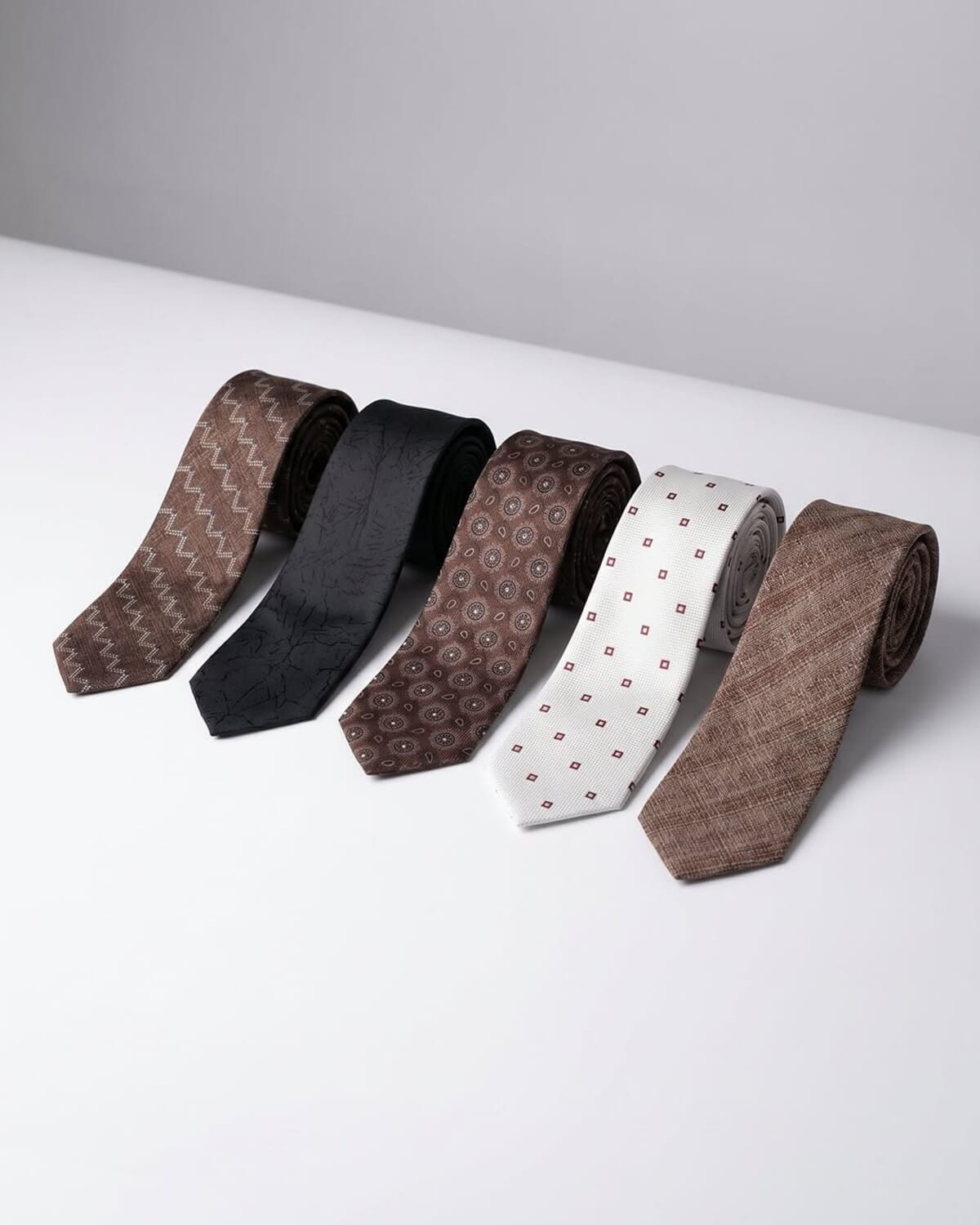
Quick read: Ties are cut on the bias, at 45 degrees to the grain, so they fall from the knot without twisting and recover after wear. The method is usually credited to New York tie maker Jesse Langsdorf in the early 1920s, who cut the fabric on the bias and sewed it in three segments. It is why stripes run diagonally on a finished tie.
What Is Inside a Tie, and Why Does It Matter?
The interlining. It runs the length of the tie inside the silk shell and gives the tie its body, the shape of its knot and its ability to recover after a day of wear. A brief that names only the silk has left the part that decides how the tie behaves to the factory's house standard.
Interlinings vary in fibre and weight. A heavier interlining gives a fuller knot; a lighter one gives a slimmer knot and a softer drape. Wool and wool-blend interlinings are prized for recovery; synthetic ones cost less. Ask the supplier which interlinings it stocks, handle them, and write the chosen one into the spec by name and weight.
Fold construction is the next variable. A seven-fold tie is an unlined construction made entirely from silk, folded on itself instead of using an interlining; a six-fold tie is a modern variant that does have an interlining and is self-tipped (Wikipedia, Necktie). Most ties are a simpler construction with a lining at the tips, and the tipping, either self-tipped in the same silk or tipped in a contrast lining, is a spec choice too.
Then there is the slip stitch: a single loose thread running along the back seam, left with a little slack, sometimes with a bar tack and a small loop at the ends. It lets the tie stretch as it is knotted and settle back afterwards. Pulled too tight, it puckers the back and stops the tie recovering.
None of this shows in a product photo, which is precisely why it belongs in the specification:
- Interlining fibre and weight, by the supplier's reference name.
- Construction: standard lined, self-tipped, six-fold or seven-fold.
- Slip stitch present and finished with slack, plus bar tacks at the ends.
- Keeper loop: separate or a label loop, and its position.
- Finished length and blade width, with a tolerance.
Quick read: The interlining runs inside a tie's silk shell and decides its body, knot shape and recovery. A seven-fold tie is unlined and made entirely of silk; a six-fold tie adds an interlining. The slip stitch, a loose thread along the back seam, lets the tie stretch and recover. None of these show in a photo, so a tie brief has to state them.
What Labels and Duties Apply When Ties Ship to the US?
Two rules shape a tie order bound for the United States. The first is the fibre content label: under the Textile Fiber Products Identification Act rules, the required information includes the generic names and percentages by weight of the fibres present in amounts of 5 percent or more (16 CFR Part 303). A tie with a silk shell and a polyester interlining cannot simply be labelled pure silk, so agree the label wording with the factory before bulk.
The second is duty. In the US tariff schedule, ties of silk (6215.10.00) carry a general rate of 7.2%, ties of man-made fibres (6215.20.00) 24.8 cents per kg plus 12.7%, and ties of other textiles (6215.90.00) 5% (USITC Harmonized Tariff Schedule). The silk line has a statistical breakout for ties whose outer shell contains 70 percent or more by weight of silk, which is one more reason to know exactly what your shell is made of. These are the general rates; goods from China can carry additional duties, so check the current schedule before you price.
| HTS line | What it covers | General US duty |
|---|---|---|
| 6215.10.00 | Ties, bow ties and cravats of silk or silk waste | 7.2% |
| 6215.20.00 | Of man-made fibres | 24.8 cents per kg + 12.7% |
| 6215.90.00 | Of other textile materials (wool, cotton, other) | 5% |
Source: US International Trade Commission, Harmonized Tariff Schedule, checked November 2026. Additional duties on Chinese goods are not included.
Chemical safety is a separate check. If a supplier claims an OEKO-TEX STANDARD 100 certificate, confirm it by number on the OEKO-TEX label check.
How Do You Verify That a Silk Tie Is Silk?
You test it, because you cannot reliably see it. Polyester satin and microfibre can look and feel close to silk in a photograph and even in the hand. They are legitimate products sold as what they are; the problem starts when they are labelled as silk, and the brand on the label carries that exposure.
Two checks cover it. A laboratory fibre composition test on bulk goods, not on the sample, because the sample is the piece that gets made correctly. Keep the tested specimen so a later dispute has evidence. And a burn test on a loose thread as a quick screen: silk, a protein fibre, smells of burnt hair and leaves a crushable ash, while polyester melts into a hard bead. A burn test proves nothing on paper; it tells you whether a lab test is worth paying for.
Test the interlining and the lining as well when the label will name them, and test after any finishing that adds weight or sheen.
How Does the Shengzhou Cluster Change Your Sourcing?
A tie is a weaving product first and a sewing product second. In a cluster like Shengzhou, that makes three kinds of supplier worth telling apart:
- Weaving and making companies that design and weave jacquard silk and also cut and sew ties. They control colour, pattern and weight.
- Making-only workshops that buy woven or printed tie fabric and sew it. They control construction, not cloth.
- Trading companies that place orders with either. Useful for small mixed orders; ask who weaves.
Ask any supplier which of the three it is, and ask to see the loom room or the fabric source on a video call or a visit. The 2009 report noted that the pricing power in the cluster sat with buyers and margins were thin, which is why the specification matters: a supplier competing on price will fill an unspecified order at the lightest silk and the simplest interlining it can (China International Business, 2009).
Zhejiang's wider textile base is the backdrop. China Daily reported that the province's textile and garment industry generated 1.12 trillion yuan in revenue in 2025 (China Daily Ningbo), and silk weaving, dyeing and printing capacity sits around Hangzhou and Shaoxing within reach of Shengzhou. For other categories in the province, see our page on clothing manufacturers in Zhejiang.
Where the Money Goes in a Tie
| Element | Effect on cost | What to decide |
|---|---|---|
| Fibre | Silk exports at roughly three times the value per kg of polyester (WITS 2024) | Silk, polyester, microfibre or a blend |
| Silk weight | More silk per square metre at higher momme | Momme or yarn spec, with a tolerance |
| Weave or print | Jacquard needs a loom set-up; screen print needs screens per colour | Jacquard for woven patterns, digital print for short runs |
| Bias cutting | Uses more cloth than straight cutting | Not optional on a tie |
| Interlining | Wool and wool blends cost more than synthetics | Knot fullness and recovery |
| Construction | Six- and seven-fold use more silk and more hand work | Standard, self-tipped, six-fold or seven-fold |
| Duty into the US | 7.2% for silk, 24.8 cents per kg + 12.7% for man-made fibres, before extra duties | Fibre content and HTS line |
| Packaging | Boxes and tissue for gifting | Plain polybag, box or roll |
Try it free: pressure-test your landed cost with the China production cost calculator. About a minute, and no email asked.
Where Tie Orders Fail
The tie twists. Cut on the grain instead of the bias, or the slip stitch was pulled tight. Check pattern direction and the back seam on the sample.
The knot is limp. Interlining too light, or a synthetic where the reference had wool. Name the interlining.
The silk feels thin. The weight was never specified. Put momme or the yarn construction on the fabric approval.
The colour shifts. Approved on paper, not on fabric. Approve a strike-off or a woven blanket.
The label is wrong. A pure silk label on a tie with a polyester interlining or lining. Agree fibre content by weight before bulk.
Before you order ties in China
- Name the fibre, the weave and the silk weight.
- Approve colour on a fabric strike-off or a woven blanket.
- Confirm the bias cut on the sample by pattern direction.
- Specify interlining fibre and weight, construction and tipping.
- Ask for the slip stitch with slack and bar tacks at the ends.
- Agree the fibre content label by weight, shell and interlining included.
- Check the HTS line and current duty before pricing.
- Test fibre composition on bulk goods before they ship.
Conclusion
Shengzhou turned a narrow product into a city's industry, and the consequence for a buyer is simple. The capacity is there, from jacquard weaving to sewing, and most of it competes hard on price. What it builds depends on what you write down.
For the silk, write the fibre, the weave and the weight, and approve colour on fabric. For the construction, write the bias cut, the interlining and the slip stitch, because none of them shows in a photo. For the US market, agree the fibre label by weight and price with the right duty line. Then test the bulk, not the sample.
Our team places and manages production with the documented factories in our China group, from 100 pieces per style. Send a reference tie or a photo with your fibre, weight and market, and we place production with the factory in our group built for the product. Our team replies within 24 hours. Samples, invoices and shipping run straight between you and the factory; our fee is flat and we take nothing from the factory side.
Send your brief China factory list, $49No spec sheet yet? We draw one style as a factory-ready tech pack for $79. What the $79 covers.
Frequently Asked Questions
Where are most ties made in China?
In and around Shengzhou, a county-level city in Shaoxing, Zhejiang province. A 2009 China International Business report, citing the Shengzhou Tie Industrial Association, put its output at well over 200 million ties a year, almost all of China's production.
How much does China export in ties?
According to World Bank WITS data, China exported $63.6 million of silk ties and $122.2 million of man-made fibre ties in 2024, plus $3.9 million in other fibres. The United States was the largest buyer.
What is momme in silk?
Momme is a traditional weight unit for silk: the weight in pounds of a piece 45 inches wide and 100 yards long. One momme equals 4.340 g/m², so 16 momme is about 69 g/m².
Why are ties cut on the bias?
Cutting at 45 degrees to the grain gives the fabric stretch and recovery, so the tie falls from the knot without twisting and returns to shape. The method is usually credited to New York tie maker Jesse Langsdorf in the early 1920s.
What is the US import duty on ties?
The general rate is 7.2% for silk ties (HTS 6215.10.00), 24.8 cents per kg plus 12.7% for man-made fibre ties (6215.20.00) and 5% for other textiles (6215.90.00). Goods from China can carry additional duties.
How do I check a tie is real silk?
Have a laboratory test the fibre composition on bulk goods rather than on the sample. A burn test is a quick screen: silk smells of burnt hair and leaves crushable ash, while polyester melts into a hard bead.
Sourcing notes: all company names, certification marks and trademarks referenced here are the property of their owners. Figures from 2003 and 2009 are historical and labelled as such. Reviewed and updated 11 November 2026 by David Stan.
Where the figures come from
- China International Business: Tough Times in Tie City, February 2009 (archived copy). Shengzhou output, company and worker counts, history, export share, markets and 2007 revenue.
- Shaoxing government via China Daily: Textile, March 2020. 130 million ties from larger enterprises in 2018; ties and socks production base.
- International Finance Corporation: Babei Silk Tie, summary of proposed investment, 2003. Around 1,000 necktie companies in Shengzhou; Babei profile.
- Wikipedia: Shengzhou. County-level city in Shaoxing; top producer of ties.
- World Bank WITS: China exports of HS 621510 (ties of silk), 2024, by partner.
- World Bank WITS: China exports of HS 621510, 2023.
- World Bank WITS: China exports of HS 621520 (ties of man-made fibres), 2024.
- World Bank WITS: China exports of HS 621520, 2023.
- World Bank WITS: China exports of HS 621590 (ties of other textiles), 2024.
- World Bank WITS: China exports of HS 621590, 2023.
- Apparel Search: Mommes. Definition and the 4.340 g/m² conversion.
- Wikipedia: Necktie. Bias cutting and Jesse Langsdorf; six- and seven-fold ties.
- US International Trade Commission: Harmonized Tariff Schedule, heading 6215, general duty rates.
- eCFR: 16 CFR Part 303, Rules and Regulations under the Textile Fiber Products Identification Act.
- OEKO-TEX: Label check.
- China Daily Ningbo: (2026): Zhejiang textile and garment revenue.
Related Reading
- China Suit Manufacturers
- Clothing Manufacturers in Zhejiang
- Label Manufacturers in China
- Clothing Suppliers in China: How to Find and Vet a Factory
No commission and no mark-up on the factory price: the factory invoices you itself.